
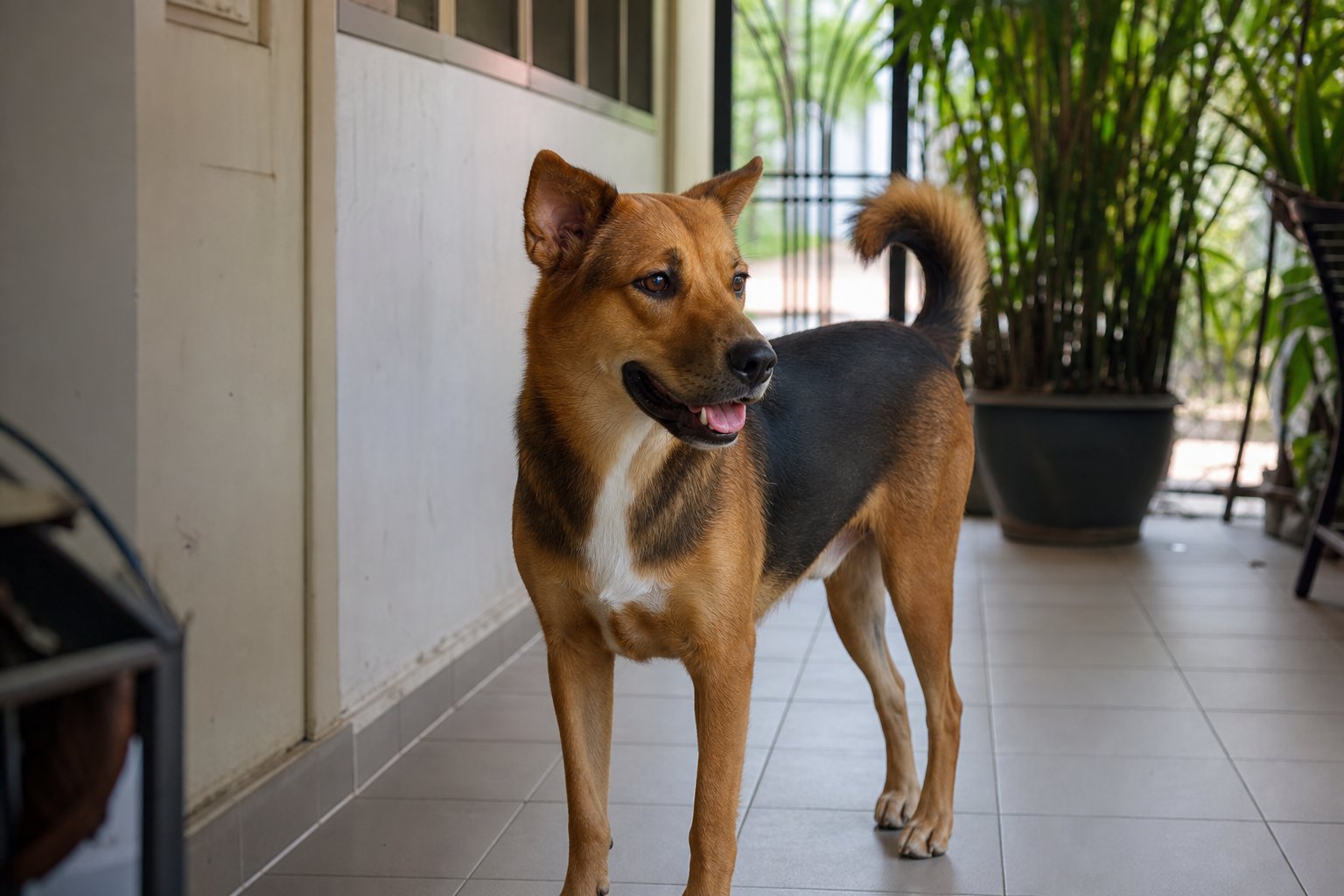
Quick answer: Dogs bark for four main reasons — excitement, fear or loneliness, attention-seeking, and guarding. The fix that works across all four is simple: give zero attention while the dog barks, then reward the moment it goes quiet, and address the underlying cause. If barking worsens after three days of training, or comes with appetite loss, pacing or drooling, see a vet.
Barking is not your dog being naughty. It is your dog talking. Once you can tell which of four messages is being delivered, the response becomes far less stressful for both of you — and far easier on your neighbours in a KL apartment or a Johor terrace house.
Why Dogs Bark: The Four Main Reasons
Most barking falls into one of four categories. Knowing which one you are dealing with decides which technique you reach for.
| Reason | What it looks and sounds like | What works |
|---|---|---|
| Excitement | Wagging tail, jumping, loose body; barks when you come home or grab the lead | Stop all movement the instant barking starts; continue only when the dog sits and settles |
| Fear or loneliness | Ears pinned back, tail tucked, pacing; triggered by thunder, vacuum cleaners or being left alone | Reduce isolation with chews and background sound; pair the scary noise with feeding time |
| Attention-seeking or sound response | Looks straight at you, barks, then waits for your reaction; doorbells, phones, corridor noise | Walk away with zero engagement; interact only after roughly two minutes of quiet |
| Guarding or alerting | Stands facing the door, stiff posture, low growl before the bark | Move the dog to the farthest room before the visitor arrives; give a high-value stuffed chew |
1. Excitement barking
Play, your arrival home, or the moment before a walk can all push a dog into vocal overdrive. The tail is wagging, the body is loose, and the dog looks happy because it is happy — it simply has not learned that noise cancels the thing it wants.
2. Fear and loneliness
Dogs are social animals. Being left alone, or hearing sudden loud sounds, produces barking as a distress signal. Separation-related barking is common enough that many behaviour textbooks cite figures around seven in ten dogs showing some version of it at some point.
3. Attention-seeking or responding to sounds
Every reaction counts as a reply. If you say "shush" gently, ask what it wants, or even sigh loudly, the dog has learned that barking produces you. That is why well-meant comfort so often makes things worse.
4. Alerting and guarding
Warning the household about a stranger at the gate is hardwired. The problem is that the person outside usually leaves shortly after the barking starts, so the dog concludes: barking worked. Every delivery visit then rehearses the same lesson.
Read the Body Language Before You React
The same noise can come from very different emotions, so pause and look at the whole dog.
- Wagging tail, jumping, soft eyes: excitement. Your dog wants the walk, the food or the greet.
- Ears back, tail tucked, body low, whale eye: fear. Your dog wants the thing to go away.
- Staring at you, barking in short bursts, then waiting: a demand. Your dog is testing whether you respond.
- Standing square, facing the door, stiff tail, low growl: alerting. Your dog is doing the job it believes it was hired for.
Context matters as much as posture. A bark at 7pm during a Penang rainy-season downpour is usually weather anxiety; the same bark at 11am when the courier knocks is guarding.
The Core Rule: Zero Attention While Barking, Big Rewards for Quiet
Whatever the cause, the training spine stays the same.
While the dog barks:
- Do not shout, scold, push, or pull.
- Do not pick the dog up or hold its muzzle.
- Do not offer soothing words — to a dog, any speech is social contact.
- Remove yourself if needed: stand up, turn, leave the room. If barking escalates, close the door behind you.
When the dog is quiet for about two minutes:
- Re-engage warmly.
- Mark the quiet with a treat, a stroke or an enthusiastic "good."
- Resume whatever was interrupted — opening the door, greeting the dog, starting the walk.
The sequence teaches one clean idea: barking switches things off, silence switches things on. Expect a temporary spike in barking when you first ignore it; that is the dog testing an old, reliable strategy before giving it up.
Five Everyday Scenarios and Exactly What to Do
Scenario 1: Barking the moment you reach for the lead
Often this is not poor socialisation — it is you replying. Each time you talk to a barking dog at the door, you have started a conversation, and the dog keeps it going.
Do this: apply resource control. The door opens only for a quiet sit. Barking freezes everything; the instant the dog settles, the door continues. On the walk, if barking starts, turn and head home without comment. When the dog is quiet, respond with exaggerated warmth. With consistency, many owners see a clear difference within a single day.
Scenario 2: Barking at the delivery rider or a stranger at the gate
Arrivals and departures are short, so the dog reads its barking as successful eviction.
Do this: prepare a hollow chew stuffed with peanut butter or cheese — a treat reserved exclusively for these moments. Move the dog to the room farthest from the door before the knock, hand over the chew, and put it away within a couple of minutes of the visitor leaving. The visitor becomes the signal that something wonderful appears.
Scenario 3: Barking because you stopped petting
A soft "don't bark" or "what do you want?" still delivers attention and touch, which reinforces exactly what you want to end.
Do this: stand up and walk away the moment barking starts. Return only after roughly two minutes of silence. If the dog barks harder when you leave, leave again without a word. A handful of repetitions usually gets the message across.
Scenario 4: Night barking at sounds
The noise has not changed — your presence has. Because you are worried about complaints, you respond quickly at night, and the dog learns that after-dark barking gets the biggest reaction of the day.
Do this: no response at all, including scolding. Wait it out calmly and reward the silence afterwards. During the day, expose the dog gradually to ordinary household and street sounds so nights feel less dramatic. Make sure it has toileted and has had adequate exercise before bedtime.
Scenario 5: Barking at other dogs on the walk
Tightening the lead or shouting teaches the dog that barking earns access to the other dog.
Do this: intervene before the bark. Use food or a toy to redirect while the dog is still quiet, keep the lead slack, and walk on at a calm pace. Reward immediately once you have passed successfully.
| Scenario | Immediate response | Longer-term training |
|---|---|---|
| Pre-walk excitement | Freeze movement; wait for a sit | Reward only calm, quiet behaviour |
| Delivery or visitor | Move dog to far room with stuffed chew | Visitor equals chew, gone equals chew removed |
| Attention demand | Walk away; return after two minutes of quiet | Barking ends contact, silence restores it |
| Night noise | No response of any kind | Daytime sound habituation |
| Other dogs | Redirect before the bark; slack lead | Reward every calm pass |
Five Training Principles That Make It Stick
1. Never reinforce the bark. Comfort, scolding, touching and restraining are all attention. Attention is the reward, whatever your intention was.
2. Reward the quiet. Catch your dog being still and silent, even outside training sessions, and pay for it. Quiet behaviour that is never noticed disappears.
3. Burn the energy. A dog that has walked, sniffed and explored is far less likely to bark at nothing. Build a daily routine of at least 30 minutes of walking, adjusted for breed, age and the midday heat.
4. Reduce loneliness. Leave a favourite toy, fresh water and food. Background sound from a radio or television makes an empty home feel occupied. Avoid an energetic play session in the 20 minutes before you leave — ending fun abruptly makes the departure harder to absorb. A puzzle feeder loaded with treats can occupy a dog for a good while.
5. Lower environmental sensitivity. Feed the dog near the vacuum cleaner or the lawnmower so good things happen beside scary things. For gate-barking, close the window curtains or apply a frosted film so the dog cannot rehearse every passing sight.
A Practical Home Setup for Malaysian Living
In a compact Kuala Lumpur apartment, one barking dog is audible from the corridor to the lift — so preparation matters as much as training.
Kit to have ready:
- Hollow chew reserved for visitors only, stored out of sight
- High-value training treats such as freeze-dried meat or small cheese cubes, used exclusively during practice
- A puzzle feeder or treat ball issued 20 minutes before departures
- Baby gate or exercise pen to block access to the front door
- Frosted window film to reduce street-view triggering
- Weather app alerts so you can start a calming routine before a storm arrives
A workable daily rhythm:
- Morning, before leaving: dog sits; door opens only after 10 seconds of quiet.
- Return home: enter calmly, put your bag down, change shoes, and greet only once the dog has settled.
- Afternoon: walk and sniff time, avoiding the hottest hours in warm states.
- Evening: background sound on; chew handed out ahead of expected deliveries.
- Before bed: toilet break, brief walk, lights down, no conversation about noise.
Neighbour etiquette: a short friendly note — "training in progress, please let me know if noise disturbs you" — turns a potential complaint into shared goodwill. In a Penang rainy-season week, warn them that you are working on storm sensitivity too.
In a landed Johor terrace house with a gate and a compound, the delivery knock is usually the biggest trigger. Stage the routine before it happens: dog positioned at the back of the house with the stuffed chew, gate opened without commentary, and the dog released only after the rider has left.
Prices for chews, puzzle feeders, baby gates and training treats vary widely by brand and retailer, so check current pricing with your local pet shop or Malaysian retailer rather than relying on any figure you see online.
Common Mistakes That Keep the Barking Going
- Replying to the bark. Even a tired "quiet" is a conversation opener.
- Comforting a scared dog mid-bark. Calm company is fine; soothing chatter during the bark rewards it. Move the dog away from the trigger instead.
- Punishing after the fact. Correcting a dog minutes later teaches only that the owner is unpredictable.
- Inconsistency between household members. One person ignores the bark while another rewards it, and the behaviour survives.
- Skipping exercise. An under-walked dog will find its own entertainment, and noise is the cheapest option.
- Stopping training after the first good day. Habits fade without maintenance; keep rewarding quiet for weeks, not days.
- Using a shock or citronella collar as a shortcut. These suppress the symptom without addressing the cause and can worsen fear. Ask a veterinarian or a certified reward-based trainer before considering any device.
When to See a Vet
Book a veterinary appointment, ideally with someone experienced in behaviour, if you notice any of the following:
- Barking frequency rises or fails to drop after three full days of consistent training
- Loss of appetite, repeated pacing, or drooling alongside the barking
- Frantic charging at doors, walls or windows, or inability to settle
- Sudden-onset night barking in a previously quiet, older dog — pain, cognitive changes and hearing loss all need ruling out
- Any growling, snapping or biting attached to the barking
- Self-harm behaviours such as chewing paws raw or rubbing noses sore
A medical cause — dental pain, ear infections, skin irritation, thyroid issues — will not respond to training alone, so rule it out first. For anxiety-driven cases, a veterinary behaviour consult may be paired with a certified trainer following reward-based methods. Contact details and guidance are available from the Department of Veterinary Services and the Malaysian Veterinary Council, and welfare organisations such as the SPCA can point you toward reputable training help.
Related reading
- Dog Training Basics in Malaysia: When to Start, How Long to Practise, and the Five Steps of Positive Reinforcement
- Yorkshire Terrier Personality in Malaysia: 8 Traits Every Owner Should Know
- Dog Training Basics in Malaysia: When to Start, How Long to Practise, and the Five-Step Positive Reinforcement Method
- French Bulldog Malaysia: Temperament, Training and Care for Flat-Faced Companions
- Poodle in Malaysia: The Honest Guide to 7 Drawbacks, Grooming Costs and How to Manage Them
- Bichon Frise Price in Malaysia 2026: What You'll Pay, Adopt or Buy, and the Costs People Forget
- Chihuahua Disadvantages in Malaysia: The 7 Drawbacks Every Owner Should Read First
- Dog Food Malaysia: How to Pick the Right Bag for Your Dog (2026 Guide)
- Dog Heat Care in Malaysia: Preventing Heatstroke and What to Do in an Emergency
- German Shepherd in Malaysia: Climate, Housing and Care Guide
- German Shepherd Malaysia: Housing, Heat, Exercise and Vet Care