
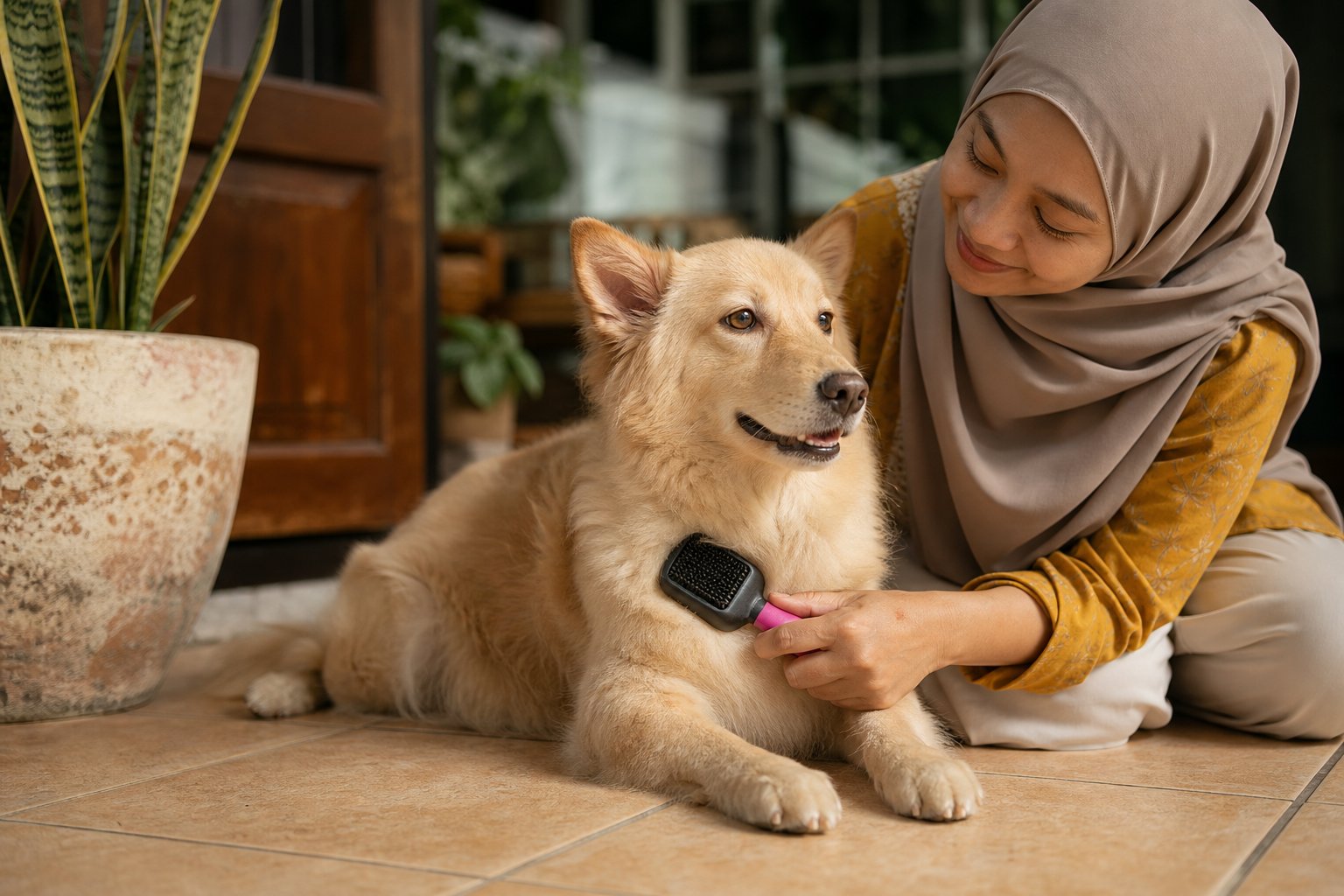
Chapter 1: Brushing, moulting and coat care in humidity
Humidity is a constant companion for pet owners in Malaysia, and it shapes how we care for our cats' and dogs' coats. A cat's coat can feel heavier and more prone to matting in damp air, especially for longhair breeds like Persians or Maine Coons. Regular brushing removes loose fur, distributes natural oils and allows you to spot any skin issues early. Even short‑hair cats benefit from a weekly session to reduce shedding on furniture and clothing. Dogs benefit too: a weekly brush keeps their coat aired, reduces loose fur around the home, and gives you a chance to check the skin underneath. This chapter builds on those basics with practical routines for tropical living, whether you share a flat or a house with a garden.
Setting up a simple brushing routine
Start with a soft bristle or slicker brush, working in the direction of hair growth. For longhair cats, add a wide‑tooth comb to gently untangle any knots, taking care not to pull. A gentle, short session each day is often more effective than a long, forced one. If you notice redness or excessive scratching, consult a veterinarian.
In a humid climate, little and often beats occasional marathon sessions. Aim for five to ten minutes at a time, ideally when your pet is relaxed — after a meal, during a quiet evening, or while they settle on their favourite spot. Keep the session calm and stop before either of you gets frustrated. For dogs, the same principle applies: short, regular sessions are easier on the coat and the animal than a long grooming battle. Match the tool to the coat — a slicker or bristle brush for most short coats, a wide‑tooth comb for longer fur — and always work gently in the direction of hair growth.
Pay attention to the areas where damp air and friction combine: behind the ears, under the front legs, around the collar or harness line, and along the belly and hindquarters. These spots trap warmth and moisture and are where mats and tangles tend to start. Lift the fur gently to check the skin beneath, and part the coat to let air reach it. If you find a small knot, work it loose slowly with your fingers or a wide‑tooth comb rather than tugging. Never cut mats out with scissors close to the skin — it is easy to nick a pet that moves suddenly.
Managing moulting and humidity at home
Moulting happens year‑round in Malaysia's warm climate, though you may notice heavier shedding at certain times. More loose fur means more hair on floors, sofas and clothes, and in humid air that fur can clump and cling. Brushing regularly removes it before it lands on your furniture, and it also keeps the coat from holding dampness against the skin.
A few home habits help. Dry your pet's coat thoroughly if they get wet — after a bath, a walk in the rain, or a splash in a puddle — since a damp coat left to sit is more likely to mat and can leave skin feeling clammy. Keep bedding and favourite resting spots clean and aired; wash soft bedding regularly and let it dry fully. In apartments, where air can feel still, open windows when you can or use a fan to keep air moving around your pet's sleeping area. Avoid leaving a wet or damp pet in a closed, humid room.
For dogs, coat type matters. Short‑coated dogs need little more than a regular brush and a rub‑down with a towel after wet walks. Longer or double coats need more consistent combing, especially around the chest, behind the ears and under the tail. If your dog wears a harness or collar daily, check underneath it regularly — trapped moisture and rubbing there can irritate the skin.
Reading the coat and skin as you brush
Brushing is also a health check. As you work through the coat, look for redness, flaky patches, scabs, bald spots, fleas or ticks, and any areas your pet flinches away from. Note excessive scratching, licking or chewing at the skin. In a humid climate, skin that stays damp or irritated deserves attention, and early spotting makes a difference. Keep a simple note of anything unusual — where it is and when you first noticed it — so you can describe it clearly if you need advice.
Make brushing a calm, positive experience. Let your pet sniff the brush first, keep sessions short, and offer praise or a gentle scratch afterwards. If your pet is anxious or wriggly, break the routine into even shorter bursts and build up gradually. A relaxed pet is easier to groom and less likely to be hurt by sudden pulling.
Checklist
- Brush for five to ten minutes, several times a week (daily for longhairs where possible).
- Use a soft bristle or slicker brush in the direction of hair growth; add a wide‑tooth comb for longhairs.
- Check behind the ears, under the front legs, along the collar or harness line, and around the belly and hindquarters.
- Part the coat to let air reach the skin, and check for redness, flakes, scabs, bald spots, fleas or ticks.
- Dry your pet thoroughly after baths, rain or puddles.
- Wash and fully dry soft bedding regularly; keep air moving around sleeping areas.
- Stop if your pet is stressed, and never tug at knots or cut mats with scissors close to the skin.
Common mistakes
- Long, forceful grooming sessions instead of short, gentle ones.
- Brushing only the top of the coat and missing the areas where mats start.
- Leaving a wet coat to dry on its own in a humid room.
- Ignoring small knots until they tighten into mats.
- Using the wrong tool for the coat type, or pulling through tangles.
- Forgetting to check under collars and harnesses.
When to ask a vet If you notice redness, excessive scratching, persistent licking or chewing, flaky or scabby skin, bald patches, fleas or ticks, or a mat you cannot loosen gently, consult a veterinarian. Seek advice promptly if your pet seems uncomfortable when touched in a particular area, or if the skin looks sore, weepy or smells unpleasant. A vet can check for skin problems and advise on coat care suited to your pet.
- Practical check: note one change you can make this week.
- Local context: adapt the advice to your home, climate and routine in Malaysia.