
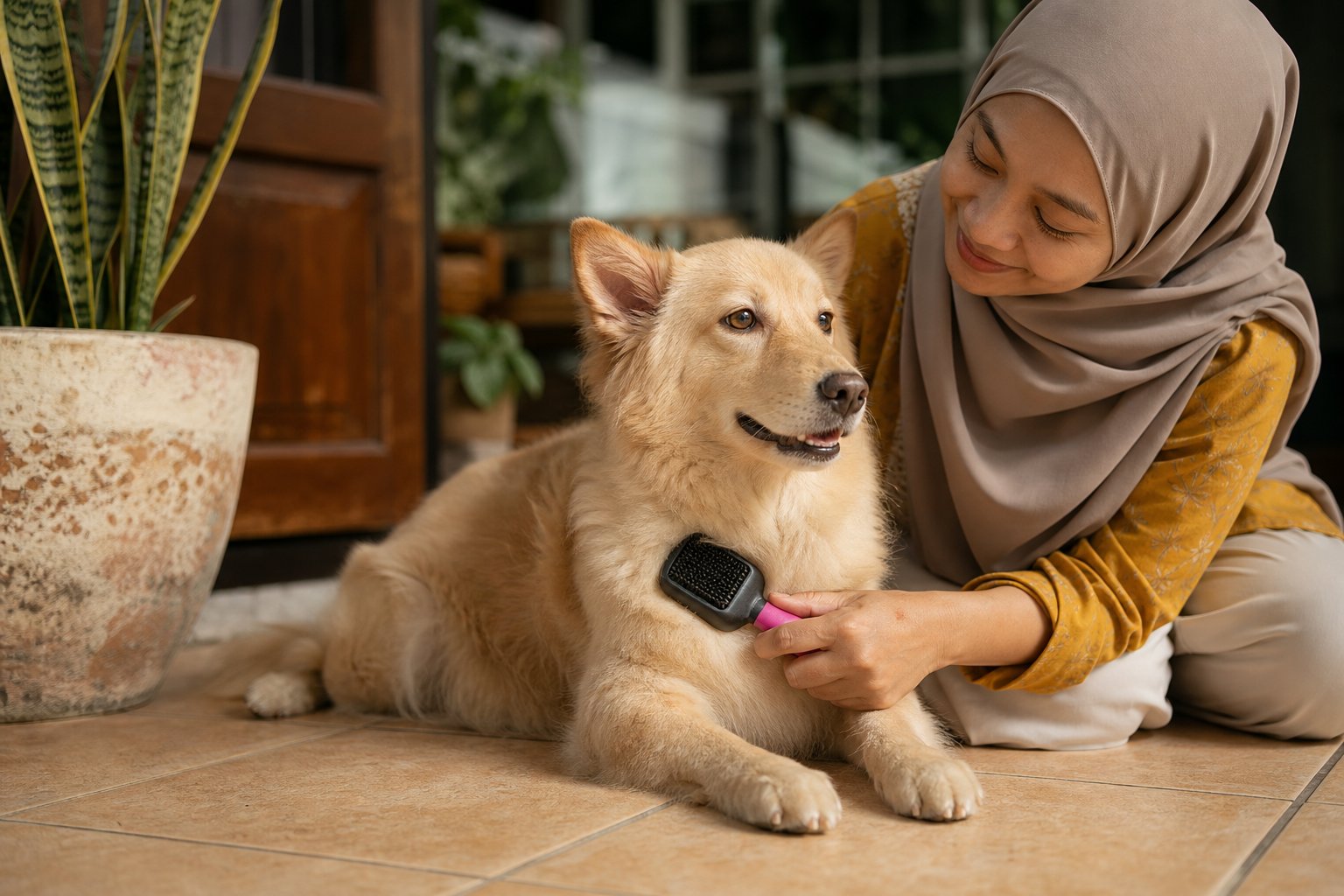
Chapter 10: Setting a simple weekly grooming routine
A short, regular routine beats occasional long sessions. Many Malaysian owners do a quick five-minute brush a few evenings a week after the aircon or fan has cooled the room, plus quick checks of eyes and ears on bathing days. Keep a small pouch of tools near where your cat usually rests so grooming becomes part of normal life rather than a special event.
Watch your cat's mood and keep sessions brief, ending on a calm note with a treat or gentle play. Adjust the schedule to the seasons: more frequent brushing during heavy moulting or the humid months, and a lighter touch when the coat is thin.
The aim of this chapter is to help you build a routine you can actually keep. In Malaysia's heat and humidity, grooming is less about fancy styling and more about comfort, hygiene and early detection. A five-minute habit done often will do more for your pet than an hour-long session once a month.
Building the weekly rhythm
Think of grooming as three layers: a quick daily glance, a few short brushing sessions each week, and a slightly longer weekly check. The daily glance takes seconds — run your eyes over your pet when they come to you for a fuss. The brushing sessions are the five-minute evenings described above. The weekly check is when you look properly at ears, eyes, paws, nails and skin, ideally on a bathing day when your pet is already used to being handled.
For dogs in apartments, the walk home is a natural grooming moment. Wipe paws and check between the toes after walks in wet grass or on hot pavement, and give the coat a quick once-over for ticks and burrs. For cats, pick a time when they are already settled — after a meal, or while the room is cool and they are drowsy. Keep a small pouch of tools near where your cat usually rests so grooming becomes part of normal life rather than a special event.
Keep sessions short and predictable. Same place, same order of steps, same calm ending. Predictability is what turns grooming from a wrestling match into a habit.
Grooming for the tropical climate
Humidity and heat change what your pet needs. During heavy moulting or the humid months, brush more often — a few minutes most evenings — to lift loose fur before it mats or ends up on your floor. When the coat is thin, use a lighter touch and less frequent brushing so you are not irritating skin.
Damp fur is the enemy of comfort in this climate. After a bath, a swim, or a rainy walk, dry the coat properly, especially in the armpits, between the toes, inside the ears and under the tail. Never leave a pet damp in an air-conditioned room for long. Check skin folds and any areas that stay moist for redness or a sour smell.
Air-conditioning dries coats and skin, so watch for flaking in pets that spend most of the day indoors. Fans and tiled floors are where many pets choose to cool down; that is also where loose fur collects, which is a useful reminder of how much they are shedding.
Handling, checks and the calm ending
Approach grooming as a series of small, positive touches. Stroke the pet, then touch a paw briefly, then reward. Build up to holding a paw for a few seconds, then to trimming or checking nails. The same gradual approach works for ears and eyes.
Watch your cat's mood and keep sessions brief, ending on a calm note with a treat or gentle play. If your pet pulls away, stop and try again later — never force a session to finish. For dogs, keep the tone cheerful and use the same cue word each time so they learn what is coming.
Quick checks to fold into the week:
- Eyes: clear, no heavy discharge, no squinting.
- Ears: no strong smell, no dark debris, no head shaking.
- Coat and skin: no mats, no bald patches, no fleas or ticks, no hot or broken skin.
- Paws: nails not overgrown or curling into the pad, no cuts or swelling between toes.
- Mouth: no strong odour, no obvious tartar build-up or red gums.
- Overall: normal appetite, energy and toilet habits — grooming is also a health check.
Common mistakes
- Doing one long session instead of short, frequent ones.
- Grooming when the room is hot and the pet is already uncomfortable.
- Brushing hard over mats instead of working them out gently or seeking help.
- Leaving ears or paws damp after a bath or rainy walk.
- Skipping nail checks because the pet dislikes having paws touched.
- Using the same brush on every coat type without checking it suits the fur.
- Ignoring a small skin change until it becomes a bigger problem.
When to ask a vet
Grooming is not a substitute for veterinary care. Ask a vet if you notice: persistent scratching, hair loss or a spreading rash; a bad smell from ears or skin; discharge from eyes or nose; a lump, wound or hot, swollen area; nails that are cracked, infected or growing into the pad; sudden changes in appetite, thirst, energy or toilet habits; or any sign of pain when you touch your pet. If your pet becomes distressed or aggressive during grooming, or if a mat is tight against the skin, stop and get professional help rather than risk injury.