
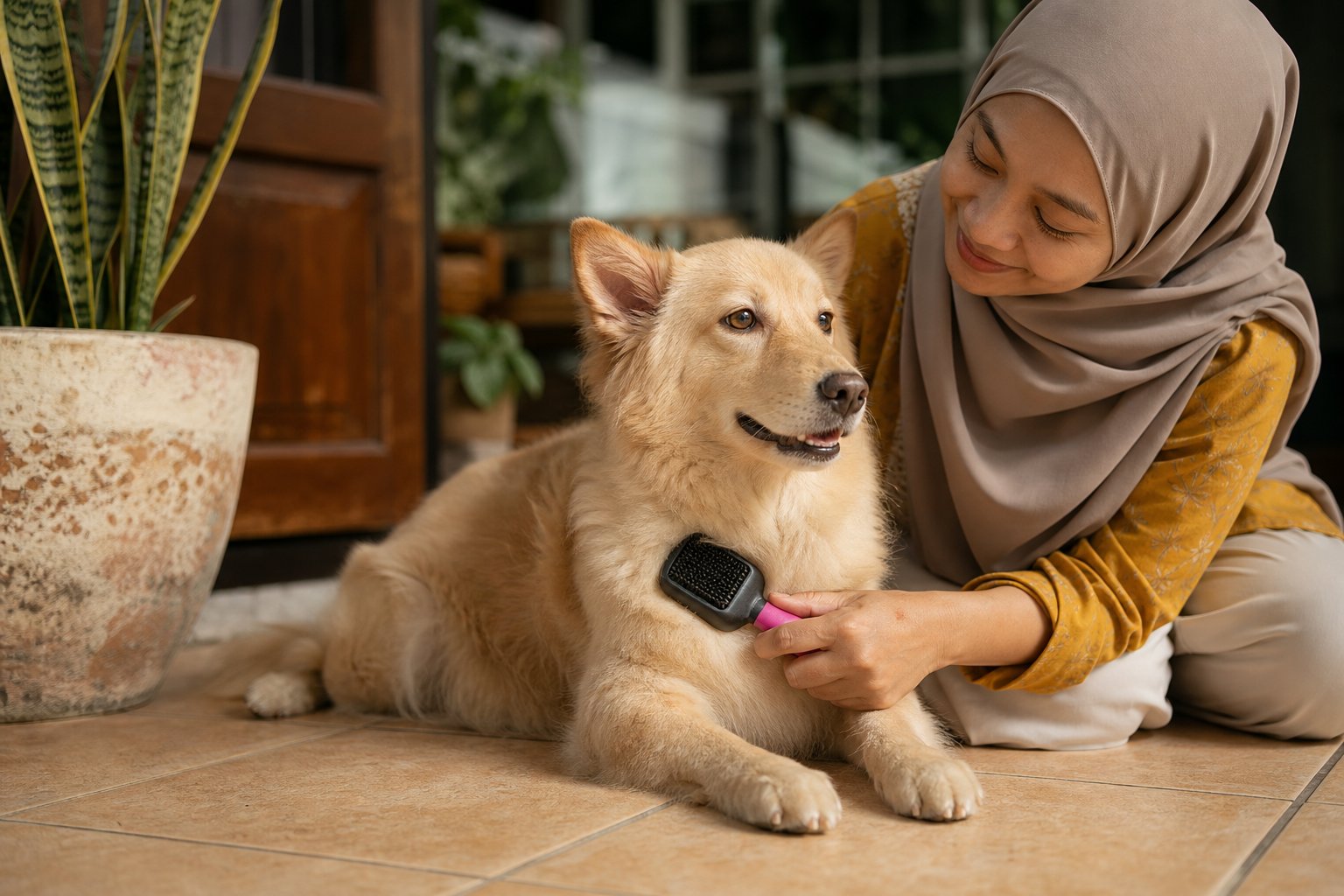
Chapter 2: Nails, ears and eye cleaning without stress
Chapter 2: Nails, ears and eye cleaning without stress
Grooming small, fiddly areas like nails, ears and eyes is where many owners quietly give up — not because it is hard, but because the pet resists and the whole thing turns into a wrestling match. The good news is that these tasks take only a few minutes when done regularly, and the goal is not a perfect salon finish. It is a calm pet, a safe technique, and a routine you can actually keep up with in a Malaysian home, whether that is a high-rise apartment or a house with a garden.
Trimming nails regularly prevents them from becoming overgrown and snagging on carpets or curtains. Use a pair of cat‑specific nail clippers and aim to cut only the clear, sharp tip of the nail, avoiding the pink quick. A calm environment, a gentle hold and a treat afterward help keep the experience positive.
Ears and eyes also need occasional attention. Inspect the ears for any dark buildup or odor; if present, clean gently with a vet‑approved ear solution on a cotton ball, never inserting anything deep into the ear canal. For eyes, a soft, damp cloth can wipe away any discharge, always moving from the inner corner outward.
Nails: little and often beats one big session
The quick — the pink part containing blood vessels and nerves — is the part to protect. On clear or light nails it is usually visible; on dark nails it is harder to see, so take off only the very tip and check the cut surface as you go. If you are unsure, stop earlier rather than later. A pet that has had one painful trim will remember it, and the next session becomes harder for everyone.
For cats, use cat‑specific clippers as the chapter advises; dog nails are thicker and need clippers sized for dogs. Work in short bursts — one or two nails, then a break — rather than forcing a full set in one go. A calm environment, a gentle hold and a treat afterward help keep the experience positive. In a Malaysian apartment, a quiet room away from the corridor noise and the afternoon heat is often the easiest place to do this. Many owners find it helps to handle paws briefly during ordinary cuddling, so the pet does not associate touch only with the clipper.
Ears: inspect more than you clean
Inspect the ears for any dark buildup or odor; if present, clean gently with a vet‑approved ear solution on a cotton ball, never inserting anything deep into the ear canal. In a humid tropical climate, ears that stay damp — after a bath, a swim, or a walk in wet grass — are worth checking more often. Lift the ear flap, look and smell; that quick check is most of the job.
Never push cotton buds or fingers down the canal, and never use home remedies or human ear drops unless your vet has recommended them. If the ear looks red, swollen, or the pet flinches when the ear is touched, that is a reason to see a vet rather than to clean harder.
Eyes: gentle wiping only
For eyes, a soft, damp cloth can wipe away any discharge, always moving from the inner corner outward. Use a separate clean corner of the cloth for each eye so you do not carry anything from one eye to the other, and use plain water on the cloth. Keep the wipe gentle — no pressing on the eyeball. Some breeds with flat faces or prominent eyes need more frequent wiping, and your vet can advise on what is normal for your pet.
A simple routine checklist
- Trim nails in short sessions, cutting only the clear tip and avoiding the pink quick.
- Use cat‑specific clippers for cats and appropriately sized clippers for dogs.
- Check ears by looking and smelling; clean only with a vet‑approved solution on a cotton ball.
- Never insert anything deep into the ear canal.
- Wipe eyes with a soft, damp cloth, inner corner outward, a clean corner per eye.
- Keep the setting calm, hold gently, and reward afterward.
- Note one change you can make this week — for example, a weekly two‑minute check of nails, ears and eyes.
- Adapt the advice to your home, climate and routine in Malaysia: choose a cool, quiet time of day, and dry ears after baths or wet walks.
Common mistakes to avoid
- Cutting too much nail at once in the hope of “catching up” after months of skipping trims.
- Holding a pet too tightly or restraining it on its back, which increases fear.
- Cleaning ears when they are not dirty, or digging into the canal.
- Using cotton buds inside the ear, or sharing one cloth corner between both eyes.
- Skipping checks because the pet “seems fine” — a quick look and smell catches problems early.
When to ask a vet
Ask your vet if a nail is bleeding or looks cracked, or if you cannot see the quick and are unsure how much to remove. See a vet for ears that are painful, smelly, red, swollen, or producing dark discharge, and for eyes with persistent discharge, redness, squinting or swelling. Also ask for guidance if your pet becomes very stressed by handling, or if you are unsure what is normal for your pet’s breed — your vet can show you the technique safely.