
Chapter 3: Bathing: when it is needed and how to do it safely
Most cats keep themselves clean and only need a bath if they have gotten into something sticky, oily or particularly dirty. Over‑bathing can strip natural oils and dry out the skin, so limit baths to truly necessary situations. If your cat’s coat feels greasy or you notice skin irritation, a gentle bath may be appropriate.
Prepare a shallow basin of lukewarm water, a cat‑friendly shampoo and a towel. Wet the cat’s body while avoiding the face, lather the shampoo, then rinse thoroughly to remove all residue. Dry the cat with a towel, allowing it to finish grooming itself in a quiet, warm spot. Always end the session with praise or a treat.
This chapter builds on those basics so you can decide when a bath is truly needed, set up safely in a Malaysian home, and handle the session with less stress for both of you. The same principles apply whether you live in a high-rise apartment with a small bathroom or a landed house with an outdoor tap, and whether your pet is a cat or a dog.
Deciding when a bath is actually needed
For cats, the default is no bath. Healthy cats groom themselves effectively, and their skin and coat rely on natural oils that frequent washing removes. Reserve baths for genuine situations: something sticky, oily or particularly dirty on the coat, a greasy feeling when you run your fingers through the fur, or skin irritation where a gentle bath may be appropriate. If you are unsure whether a bath will help a skin problem, ask your vet first rather than experimenting with shampoos.
Dogs differ mainly in routine. Many dogs benefit from a bath on a regular but not frequent schedule, and the right interval depends on coat type, lifestyle and how much time they spend outdoors. Short-coated dogs that mostly stay indoors generally need less frequent bathing than dogs that roll in mud, swim, or spend time in long grass. Judge by the coat and skin rather than by the calendar: a dog that smells clean, feels clean and shows no skin irritation usually does not need a bath yet.
In Malaysia’s tropical climate, heat and humidity change the picture slightly. Pets can get clammy and pick up odours faster, and damp fur dries slowly in a closed apartment. That is a reason to dry thoroughly and to keep living areas ventilated, not a reason to bathe more often. Over‑bathing still strips natural oils and dries out the skin, so resist the urge to wash every time your pet feels warm or slightly sweaty.
Setting up safely at home
Choose a spot where you can work without slipping and where your pet cannot jump out unexpectedly. A bathroom with a closed door is usually easiest. Prepare everything before you bring your pet in: a shallow basin of lukewarm water, a cat‑friendly shampoo (for cats) or a dog‑appropriate shampoo (for dogs), and a towel. Lukewarm means comfortably warm to your wrist, never hot. In a tropical home, water straight from the tap is often already close to lukewarm, so test it rather than assuming.
Keep the water shallow. A basin that reaches only partway up the legs is enough for most pets and feels less threatening than a full tub. Put a non-slip mat or a towel on the floor of the basin or tub so paws have grip. Have a second towel nearby for the floor, and keep the shampoo within reach so you are not searching with a wet, wriggling pet in one hand.
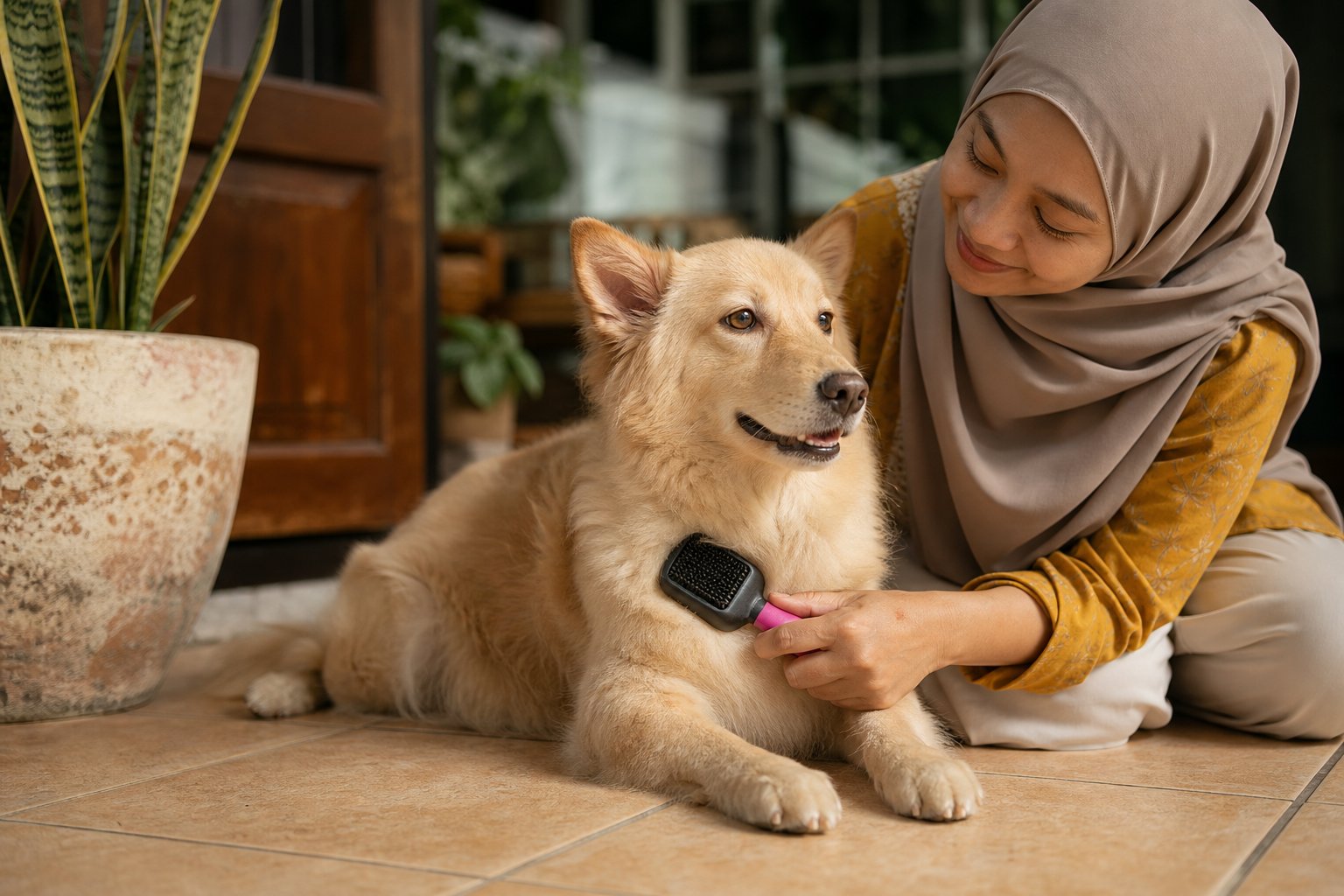
Brush your pet before bathing if the coat is matted or has loose fur; wet mats tighten and become harder to remove. Never pour water over the head or into the ears. Keep a damp cloth aside for wiping the face if needed, and leave the ears alone apart from a gentle external wipe.
Doing the bath step by step
Wet the cat’s body (or your dog’s body) while avoiding the face. Use a jug or your hands rather than a running shower if your pet is nervous, since the sound of water can be startling. Lather the shampoo, working it gently into the coat and avoiding the eyes, ears and mouth. Rinse thoroughly to remove all residue — this is the step most often rushed, and leftover shampoo can irritate skin and leave the coat dull or sticky. Rinse again if you are unsure.
Dry the pet with a towel, pressing rather than rubbing hard, and paying attention to the belly, armpits, between the toes and behind the ears where moisture lingers. Then allow the pet to finish grooming itself in a quiet, warm spot. In a humid Malaysian home, a damp pet left in a closed, air-conditioned room or on a cool tiled floor can stay damp for a long time; a dry towel and a draught-free spot help. Always end the session with praise or a treat, even if the bath was short.
For dogs, the same sequence applies. Some dogs tolerate a hand-held shower better than a basin; either is fine as long as the water is lukewarm, the shampoo is appropriate and the rinse is thorough. Keep sessions short, especially in warm weather, and watch for signs of stress such as panting, trembling or trying to climb out.
Checklist before and after every bath
- Confirm the bath is genuinely needed (sticky, oily, particularly dirty, greasy coat, or skin irritation where a gentle bath may be appropriate).
- Brush out loose fur and any mats first.
- Gather a shallow basin, lukewarm water, the correct shampoo and at least two towels.
- Put a non-slip surface under your pet’s feet.
- Keep the face, ears and eyes clear of water and shampoo.
- Lather, then rinse thoroughly to remove all residue.
- Towel dry well, including hidden areas.
- Move your pet to a quiet, warm, ventilated spot to finish grooming.
- Offer praise or a treat at the end.
- Clean and dry the basin and towels afterwards so they do not stay damp.
Common mistakes to avoid
- Bathing too often out of habit, which strips natural oils and dries out the skin.
- Using human shampoo or a product meant for another species; use a cat‑friendly shampoo for cats and an appropriate dog shampoo for dogs.
- Rushing the rinse and leaving residue in the coat.
- Letting water run into the ears or over the face.
- Using hot water, or assuming tap water is the right temperature without testing.
- Leaving a pet damp in a cool, closed room in an already humid home.
- Bathing a pet with irritated or broken skin using a random product instead of checking with a vet first.
- Forgetting the treat, so the next bath starts with a pet that already expects something unpleasant.
When to ask a vet
Ask a vet before bathing if your pet has skin irritation that is spreading, weeping, crusty or painful; if there are open sores, rashes or patches of hair loss; if your pet is scratching persistently or seems uncomfortable; or if you do not know which shampoo is safe for the condition. Also check with a vet if your pet has a health condition, is very young, elderly or pregnant, or is on medication, since bathing routines may need adjusting. If a bath does not resolve a greasy coat or an odour, or if the problem returns quickly, that is a sign to seek advice rather than to bathe more often. And if your pet becomes distressed, struggles violently or shows breathing difficulty during a bath, stop and contact your vet.
- Practical check: note one change you can make this week — for example, switching to a lukewarm shallow basin, adding a non-slip mat, or setting a reminder to check the coat before deciding on a bath.
- Local context: adapt the advice to your home, climate and routine in Malaysia — for instance, drying your pet thoroughly in a humid apartment, bathing earlier in the day so the coat dries before evening, or using a bathroom with a closed door in a high-rise flat.