
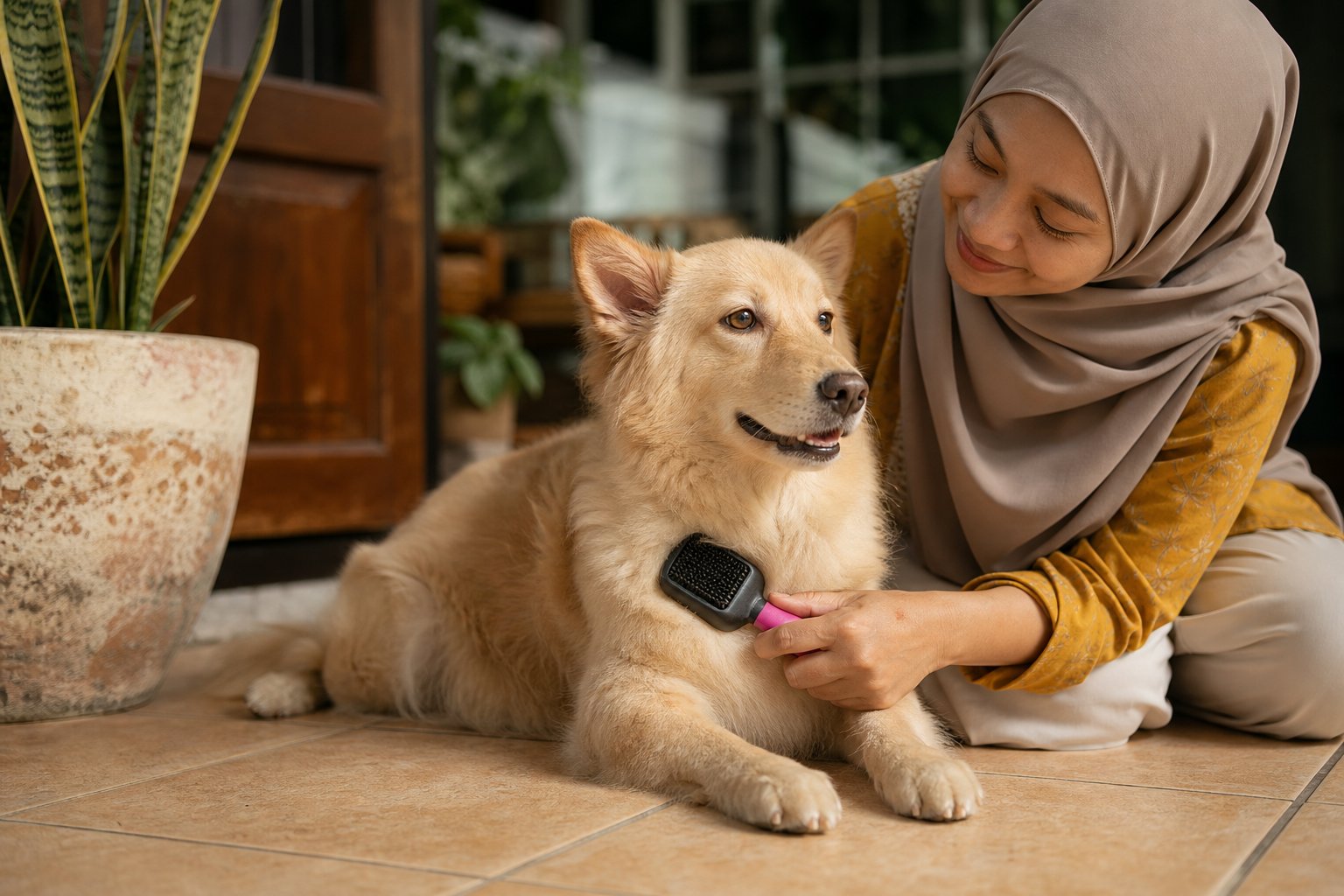
Chapter 4: Grooming in the heat: timing, cooling and hydration
In Malaysia's tropical heat, grooming is less about keeping up appearances and more about timing and comfort. A cat or dog that is already warm can tip into distress quickly during a session, so the goal is to work when the house is coolest and to stop before your pet gets uncomfortable. The guidance below applies to both cats and dogs unless stated otherwise, and it builds on the core rules: groom in the coolest part of the day, keep sessions short, watch for warning signs, and always offer water.
Choosing the right time and place
Groom your cat when the house is coolest, such as early morning or after sunset, and choose a spot with good air flow or near a fan. The same timing works well for dogs. In Malaysian homes, early morning often means before the sun hits the windows, and after sunset means the walls have had time to release the day's heat. If you live in an apartment, a spot near a window with a breeze or in a room with a fan on low is usually more comfortable than a bathroom, which can trap humid air. Avoid grooming on a balcony or in direct sun, and avoid the kitchen right after cooking, when the room is warm and steamy.
For dogs, walk first thing in the morning or after the sun goes down, and groom after the walk has cooled down, not immediately. For cats, pick a time when your cat is relaxed, often after a meal or during a quiet household moment. Keep the area free of clutter so your pet has room to move away if it wants to.
Keeping sessions short and reading your pet
Keep sessions short, around five minutes, and pause if your cat starts panting, drooling or feels hot to the touch. These signs apply to dogs too. Panting in a cat is not normal the way it can be in a dog, so treat any panting in a cat as a reason to stop. Drooling, restlessness, trying to move away, or skin that feels unusually warm are all signals to pause. Offer fresh water before and after grooming, and make sure wet food is part of the daily routine, since wet food adds moisture to the diet.
Break grooming into small tasks across several short sessions rather than one long one. For example, brush one side today and the other side tomorrow. If your pet tolerates only a minute, stop at a minute and build up over time. Never groom a cat that is overheated until it has cooled down. The same applies to dogs: if your pet is panting heavily or seems overheated, move it to a cool spot with water and wait before continuing.
Cooling and hydration around grooming
Cooling starts before you pick up the brush. Make sure your pet has access to shade and a cool floor, and keep water bowls filled and placed in several rooms so your pet does not have to travel far to drink. In apartments, a bowl in the living area and one near the grooming spot helps. Fresh water before and after grooming is part of the routine, not an afterthought.
After grooming, let your pet settle in a cool spot rather than immediately going outside. If you use a fan, direct it at the room rather than at your pet's face, and make sure your pet can move away from the airflow. Wet food as part of the daily routine supports hydration, and you can offer a little water or a small wet meal after a session. Avoid heavy exercise right after grooming, especially in the warmer parts of the day.
Checklist before and after each session
- Time it for early morning or after sunset, when the house is coolest.
- Choose a spot with good air flow or near a fan, and keep it out of direct sun.
- Keep the session to around five minutes, or shorter if your pet is restless.
- Have fresh water available before and after grooming.
- Watch for panting, drooling, or skin that feels hot to the touch, and pause if you see them.
- Never groom an overheated cat until it has cooled down; do the same for dogs.
- Confirm wet food is part of the daily routine.
- End with a cool resting spot and no immediate outdoor activity.
Common mistakes
- Grooming in the middle of the day or in a hot, stuffy room.
- Letting a session run long because your pet seems calm at first.
- Ignoring early signs such as restlessness or warm skin.
- Grooming right after a walk or play session when your pet is still warm.
- Forgetting water before the session and only offering it afterwards.
- Assuming a cat that pants is fine because dogs pant; in cats, panting is a stop signal.
- Grooming an overheated pet instead of letting it cool down first.
When to ask a vet
If your pet shows heavy panting that does not settle in a cool spot, drooling, weakness, wobbliness, vomiting, or seems disoriented, stop grooming and contact your vet. These can be signs of heat stress and need professional advice. Also ask your vet if your pet has a skin condition, a wound, or a coat problem that is not improving with gentle grooming, or if you are unsure whether a behaviour during grooming is discomfort or just impatience. For pets with ongoing health conditions, check with your vet before changing grooming routines.