
Chapter 6: Keeping your cat calm: low-stress handling basics
Most beginner groomers restrain too hard, which makes the cat fight back. Low-stress handling is not about being soft for its own sake; it is about getting the job done with less scratching, less hissing, and a cat that is easier to handle next time. In a Malaysian apartment, where the cat may have limited escape routes and the session often happens in a warm, humid room, small adjustments to the environment and your own body language make a real difference. The aim is a short, calm session that ends before your cat decides it has had enough.
Set up before you touch the cat
Let your cat sniff the tools first. Lay the brush, comb, and any cloth on the floor and let the cat approach on its own terms. A non-slip mat or a folded towel gives your cat something to grip, which matters on tiled or polished floors common in Malaysian homes. Choose a time when the flat is quiet — after a meal, or when the household is not rushing out — and keep the session short. If the room is hot, work in a shaded spot with a fan moving air, not blowing directly on the cat, and keep a dry towel handy for condensation or drool.
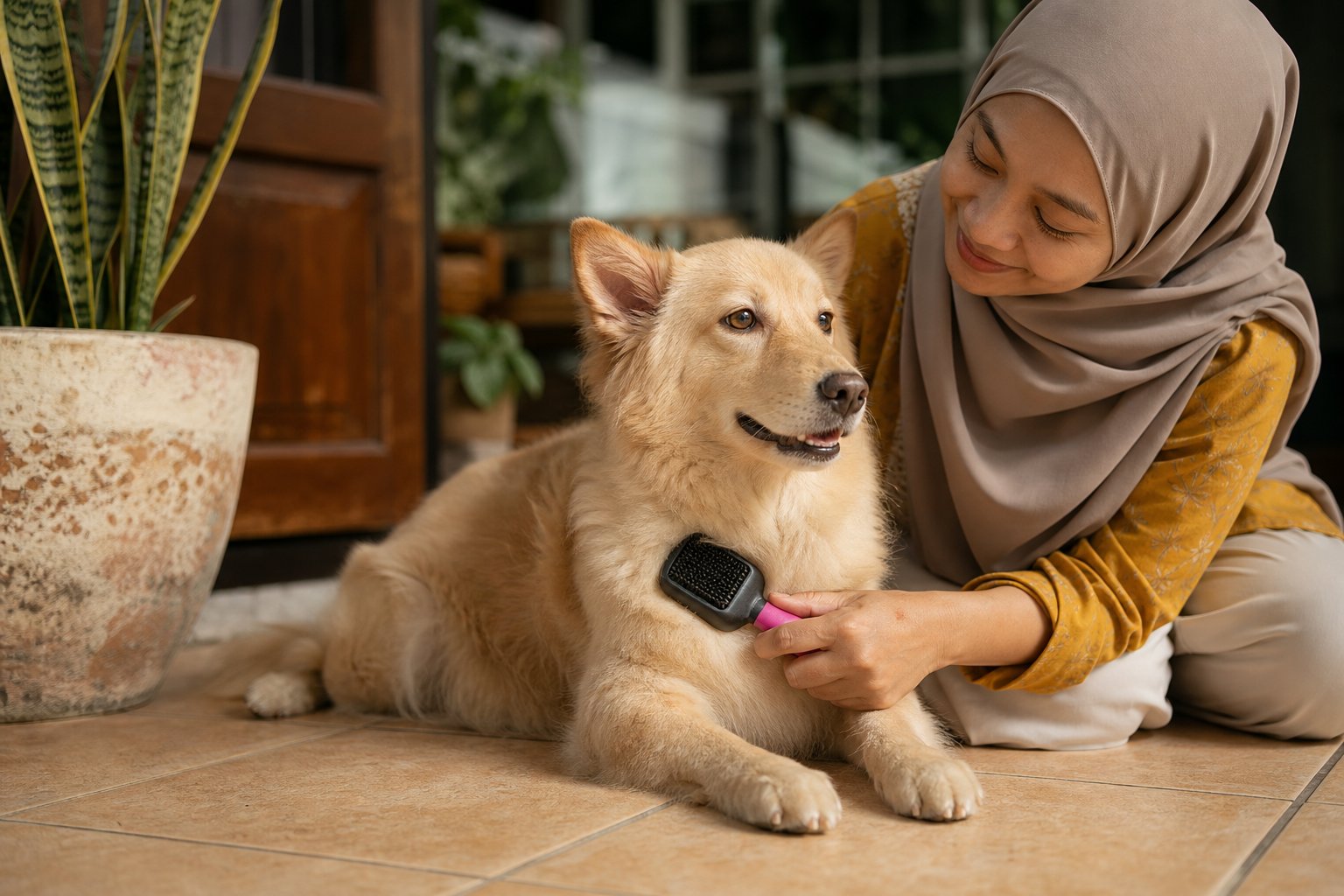
Handle the cat at its level rather than looming over it. Sit on the floor, keep your voice low, and let the cat stay in its own space. Start with a few strokes on the head and shoulders, where most cats accept touch, and watch the tail and ears for the first signs of annoyance. Stop while things are still going well so the session ends on a positive note. A treat or a few minutes of play afterwards helps the cat link handling with something good.
Restraint that works with the cat, not against it
Some cats tolerate being wrapped loosely in a towel with only one paw out. This "purrito" style keeps the body contained without squeezing, and it lets you work on one paw or one patch of coat at a time. The towel should be loose enough that the cat can breathe easily and pull free if it panics; never bind it tight or leave a wrapped cat unattended. For cats that dislike the towel, a second person can hold the scruff area gently or simply steady the cat's body while you work, but pressure should be light.
Never chase a cat that has already said no; try again later. A cat that runs has told you the session is over, and pursuing it teaches the cat that handling means being cornered. If your cat hides under the bed or behind the sofa, leave it and pick a calmer moment — perhaps the next day. For long-haired cats in a humid climate, matting can build up quickly, so short, frequent sessions beat one long battle.
Reading the early warning signs
Cats rarely go from calm to scratching without signals. Learn your cat's early signs: a twitching tail tip, flattened ears, dilated pupils, a low growl, or skin rippling along the back. When you see them, pause, give the cat a moment, and if the signs continue, end the session. Dogs in the same household should be kept in another room during cat grooming so the cat is not watching for a housemate. Keep the session to a few minutes at first and build up gradually.
Checklist before each session
- Tools laid out for the cat to sniff; non-slip mat or folded towel in place
- Quiet room, comfortable temperature, no dogs or visitors crowding the cat
- Loose towel ready if your cat tolerates wrapping, with one paw out
- Treats or a favourite toy ready for the end
- A clear plan to stop early if the cat shows stress signals
- Phone away and no rush — short sessions only
Common mistakes
- Gripping too hard or holding the cat down, which triggers fighting
- Chasing a cat that has walked away or hidden
- Wrapping the towel too tightly or leaving a wrapped cat alone
- Grooming in a hot, stuffy room or right after a stressful event
- Pushing through warning signs to "finish quickly"
- Starting with the belly, paws, or tail instead of the head and shoulders
When to ask a vet
Ask a veterinarian if your cat shows sudden aggression or fear around handling that is new, if there are painful areas, lumps, skin wounds, or signs of fleas and skin disease, or if matting is so severe that the coat cannot be worked out gently. A vet can also advise if your cat has a health condition that makes restraint risky. Do not attempt to cut out severe mats with scissors near the skin; ask a professional for help.