
Chapter 7: Choosing, cleaning and storing your grooming tools
Chapter 7: Choosing, cleaning and storing your grooming tools
A basic home kit needs a wide-toothed comb, a slicker brush, nail clippers and a soft cloth. That short list is enough for most Malaysian households, whether you live in a high-rise apartment with one cat or a terrace house with a dog and two cats. What matters more than the number of tools is how you choose them, how you clean them after every session, and how you store them between uses. In our heat and humidity, a brush that is put away damp can turn into a source of smell, bacteria and skin irritation by the next grooming day. This chapter walks through choosing tools that suit your pet and your home, cleaning them properly, and storing them so they stay dry and ready.
Choosing tools that fit your pet and your space
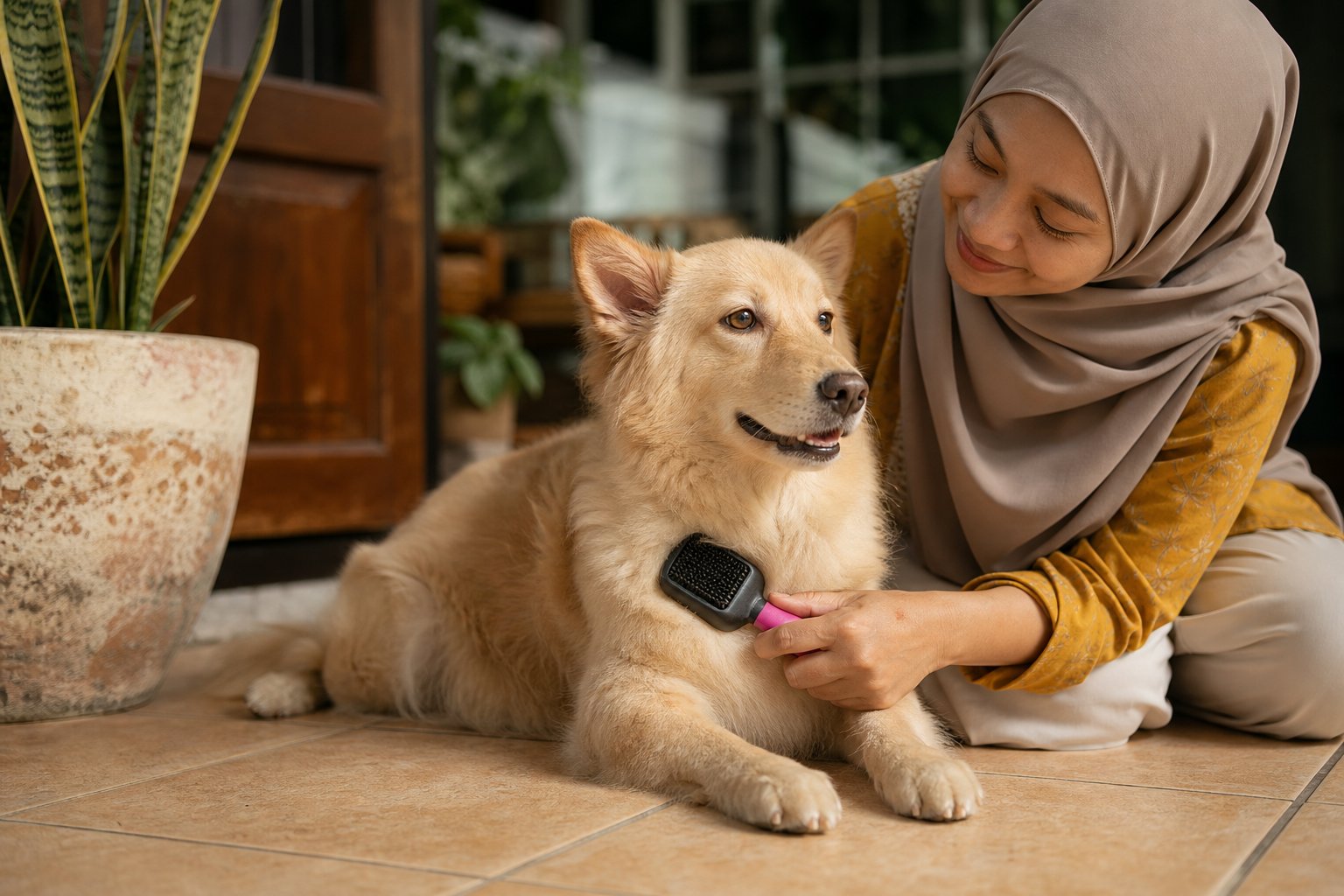
Start with the coat in front of you. A wide-toothed comb is the workhorse for detangling and for checking the skin underneath the coat; it suits most cats and many dogs, including double-coated breeds during shedding. A slicker brush removes loose hair and surface debris and is useful for most short- and medium-coated pets, but use a light touch on sensitive areas such as the belly and the inside of the legs. Nail clippers should match your pet's size: small clippers for cats and small dogs, sturdier ones for larger dogs. A soft cloth is for wiping ears, faces and clipper blades, and for a final once-over.
If you have more than one pet, keep one set per cat where possible so you are not spreading dander or parasites between pets. The same principle applies to dogs in a multi-pet home, and it matters even more if one pet has had a skin problem or fleas. Labelling sets, or storing them in separate pouches, makes it easy to keep them apart.
In a small apartment, you do not need a grooming table. A towel on the bathroom floor or a non-slip mat on the balcony gives you a contained space that is easy to sweep afterwards. Choose tools with handles that are comfortable for you to hold for ten or fifteen minutes in the tropical heat, and avoid metal combs with sharp, unfinished teeth that can scratch skin. Store the kit in one small box or pouch so it is quick to find and quick to put away.
Cleaning after every session
After every session, remove trapped hair and wash brushes with warm, soapy water, then dry them completely before storage. Trapped hair is the first thing to deal with: pull it out of the slicker bristles and comb teeth with your fingers or the tail of the comb, and tap the tools against a bin rather than shaking hair onto the floor. Then wash the brush heads and combs in warm, soapy water, rinse well, and shake off excess water.
Drying is the step most people rush. Damp tools left in a closed drawer will smell and harbour bacteria in our climate. Spread the tools out on a dry cloth or a dish rack in a well-ventilated spot, ideally with some air movement from a fan, and leave them until they are completely dry to the touch, including the joins between bristles and the handle. If you groom in the evening, leave the tools out overnight rather than putting them away damp.
Wipe clippers with a clean cloth and keep them in a dry place away from bathroom humidity. Wipe the blades after each use to remove hair and moisture, and check that the hinge or spring is dry before you close them. Do not leave clippers on a bathroom counter where steam from showers collects.
Storing tools between sessions
Once everything is dry, store the kit in a dry, ventilated place. A closed drawer is fine for dry tools, but a sealed plastic bag is not: it traps any remaining moisture. A fabric pouch or a small box with a lid that is not airtight works well in Malaysian homes. Keep the kit away from bathroom humidity, and away from kitchens where cooking steam and oil can settle on bristles.
Keep tools out of reach of children and pets. Clippers are sharp, and a curious cat or dog may chew a brush handle or a cloth. If you groom outdoors on a balcony or in a car park, bring the kit back inside and clean it before storing, since outdoor damp and dust will otherwise sit on the tools until the next session.
Checklist before you put the kit away
- All trapped hair removed from combs, brushes and clipper blades
- Brushes and combs washed in warm, soapy water and rinsed
- Tools completely dry, including bristle bases and handles
- Clippers wiped with a clean cloth and dry at the hinge
- Soft cloth washed or replaced if soiled
- Each pet's set kept separate and labelled
- Kit stored in a dry, ventilated place away from bathroom humidity
- Tools out of reach of children and pets
Common mistakes
- Putting brushes away while still damp, which leads to smell and bacterial growth in our climate
- Storing the kit in a sealed plastic bag or an airtight container
- Leaving clippers on a bathroom counter where shower steam collects
- Sharing one brush between pets without cleaning it between uses
- Using a slicker brush with too much pressure on thin-coated or sensitive pets
- Forgetting to clean the base of the bristles, where hair and moisture collect
- Grooming outdoors and storing the kit without drying it first
When to ask a vet
Ask your vet if you notice a bad smell from the skin or ears that does not clear after cleaning your tools, or if your pet develops redness, itching, scabs or bald patches after grooming. Seek advice if you find fleas, ticks or other parasites on the tools or the pet, if a nail trim causes bleeding that does not stop with gentle pressure, or if your pet becomes very stressed or aggressive during grooming. If your pet has a skin condition, a recent surgery or a wound, check with your vet before grooming that area, and ask whether a separate set of tools should be kept for that pet.