
Chapter 5: Keeping your pet cool and hydrated in hot weather
Malaysia's heat is rarely dry. Most afternoons bring high humidity on top of high temperatures, and that combination is harder on cats and dogs than heat alone, because panting and sweating are less effective at cooling them down. Add apartment living, tiled floors that soak up sun through the day, and the habit of walking pets on hot pavements, and it is easy for a pet to overheat without anyone noticing until they are in trouble. This chapter turns the basics into a routine you can follow at home, on walks, and when you are out for the day.
Water: the simplest habit that matters most
Always provide fresh, cool water indoors and outdoors, and refresh the bowl at least twice a day because water warms quickly in Malaysian heat. In practice, twice a day is a minimum, not a target. On very hot or humid days, change the water more often, and check bowls placed on balconies or near windows in the afternoon, when they are most likely to be warm.
- Place bowls in more than one spot. A bowl in the kitchen, one in the living room, and one on a shaded balcony or patio means a pet does not have to travel far to drink. Cats in particular are more likely to drink from a bowl that happens to be near them.
- Use wide, shallow bowls. Cats often prefer drinking from a wide bowl where their whiskers do not touch the sides. Some cats drink more from a running water fountain, but a clean bowl refreshed often works well too.
- Keep water out of direct sun. A bowl on a sunny balcony can become unpleasantly warm within an hour. Move it into shade or bring it indoors.
- Wash bowls daily. Warm water and leftover food or saliva encourage bacterial growth and slime, which puts pets off drinking. A quick wash with soap and water each time you refill keeps water appealing.
- Top up rather than wait for empty. Some pets drink in small amounts throughout the day. A half-empty bowl that has been sitting in warmth is less inviting than a freshly topped-up one.
If your pet seems to drink very little, try adding a little water to their wet food, or offering a few extra small bowls around the home. If your pet suddenly drinks much more or much less than usual, mention it to your vet.
Shade, flooring and the indoor environment
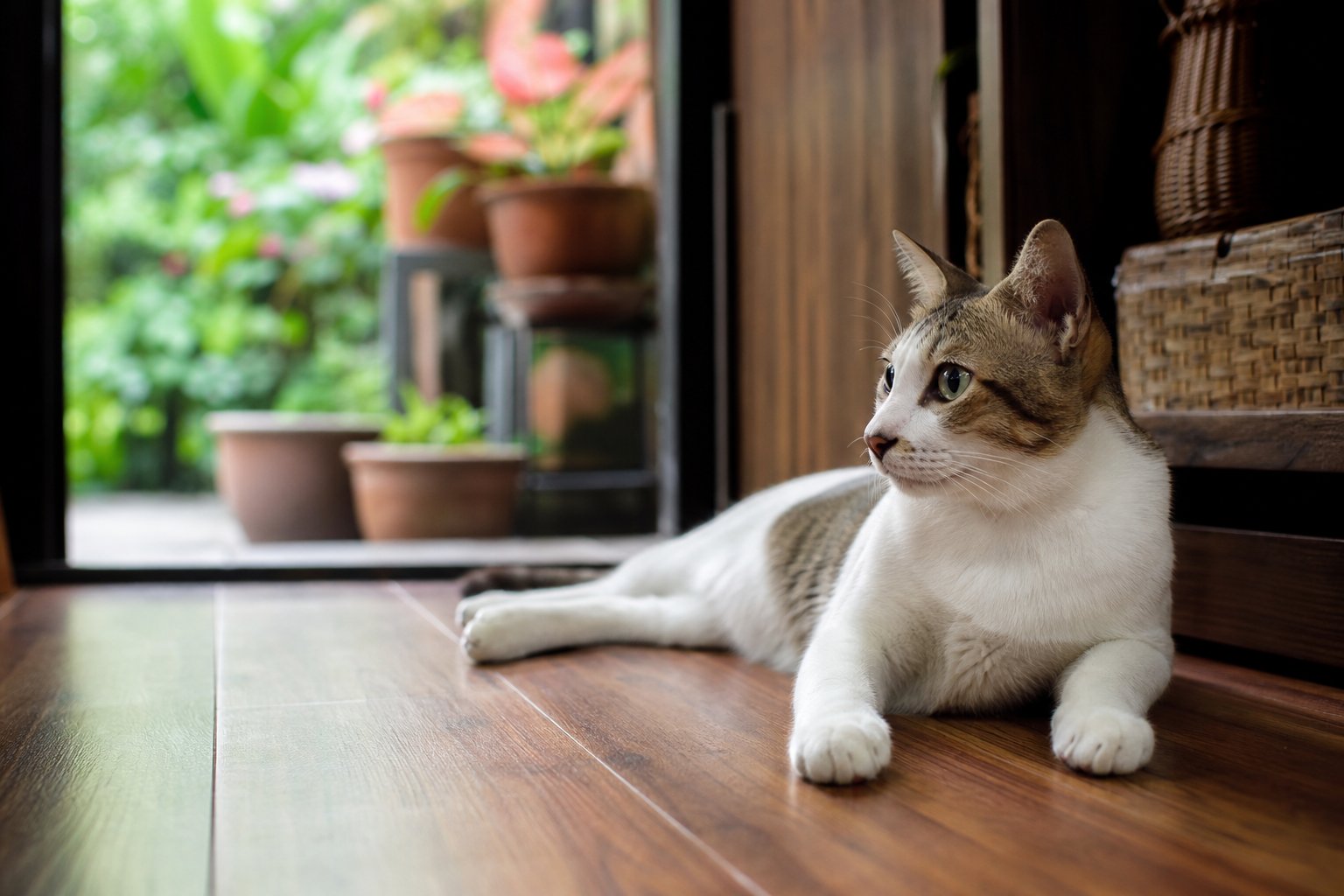
On humid afternoons, offer a shaded resting spot away from tiled floors that hold heat, and never leave your pet in a parked car. Tiled floors can feel cool in the morning but store heat through the day, especially in rooms with direct sun. A shaded spot with good airflow, such as a ventilated corner away from windows, is often more comfortable than the floor itself.
- Check where the sun falls. Walk through your home in the afternoon and note which rooms and floor areas get direct sun. Close curtains or blinds on those sides during the hottest hours.
- Create a cross-breeze. Open windows on opposite sides of the apartment where it is safe to do so, and use fans to move air. Make sure pets can move away from the fan if they want to.
- Offer a cool mat or damp towel. A damp towel on the floor in a shaded spot gives pets the option to lie on something cooler. Let them choose; do not force a pet onto a cool surface.
- Never leave your pet in a parked car. Even with windows cracked, a car in Malaysian sun heats up far faster than outdoor air, and shade moves. If you cannot take your pet with you, leave them at home.
- Watch outdoor pets and balcony pets. Provide shade that lasts through the afternoon, not just the morning, and check that water bowls outdoors stay cool and full.
Exercise, walks and hot pavements
Shorten intense exercise during peak sun hours and walk on grass or shaded paths when pavements feel hot. A simple test: place the back of your hand on the pavement for a few seconds. If it feels too hot for your hand, it is too hot for paws. Walk earlier in the morning or later in the evening, and choose grassy verges, park paths and shaded routes over bare concrete.
- Adjust the pace. Let your dog sniff and stop in shade. Short, frequent walks are usually better than one long midday outing.
- Carry water for walks. A small bottle and a foldable bowl make it easy to offer a drink partway through.
- Watch cats too. Indoor cats can overheat in a hot, stuffy room, and cats that go outside may seek shade under cars or in warm spots. Check where your cat settles during the day.
- Avoid strenuous play at midday. Save fetch, chase games and training sessions for cooler hours, and keep sessions short.
Signs of overheating and when to ask a vet
Signs of overheating include heavy panting, drooling, wobbliness and collapse, which need immediate veterinary care. These are emergencies, not wait-and-see situations. While you arrange transport, move your pet to a shaded, ventilated spot and offer cool water to drink. Do not plunge an overheated pet into ice water or force them to drink.
Ask a vet promptly if you notice:
- Heavy panting that does not settle after rest in a cool place
- Excessive drooling, restlessness or confusion
- Wobbliness, weakness or collapse
- Vomiting or diarrhoea after heat exposure
- A pet that seems unusually quiet, off food, or reluctant to move
Flat-faced breeds, thick-coated pets, very young or elderly animals, and pets that are overweight can struggle more in heat. If your pet has a health condition, ask your vet for specific advice on hot-weather exercise and cooling.
Quick checklist
- Fresh, cool water available indoors and outdoors, refreshed at least twice a day
- Water bowls in shade, washed daily, and placed in more than one room
- A shaded, ventilated resting spot away from heat-holding tiled floors
- Curtains closed on sunny sides during the hottest hours
- Fans or cross-breeze available, with room for pets to move away
- Walks timed for cooler hours, on grass or shaded paths
- Pavement tested with the back of your hand before walking
- Water carried on walks
- Never leave your pet in a parked car
- Know the signs of overheating and where your nearest vet is
Common mistakes
- Refilling only when the bowl is empty. Water warms and goes stale long before then.
- Assuming shade is enough. Shade moves with the sun; check the spot again in the afternoon.
- Walking at midday because it is convenient. Hot pavements and peak sun are a poor combination.
- Leaving a pet in the car "just for a minute". A parked car heats up quickly even in shade.
- Using ice water on an overheated pet. Cool water and shade while you get veterinary help is safer.
- Missing the quiet signs. Not every overheated pet collapses; heavy panting that will not settle is a warning.
- Forgetting indoor cats. A stuffy apartment room can be as uncomfortable as the outdoors.