
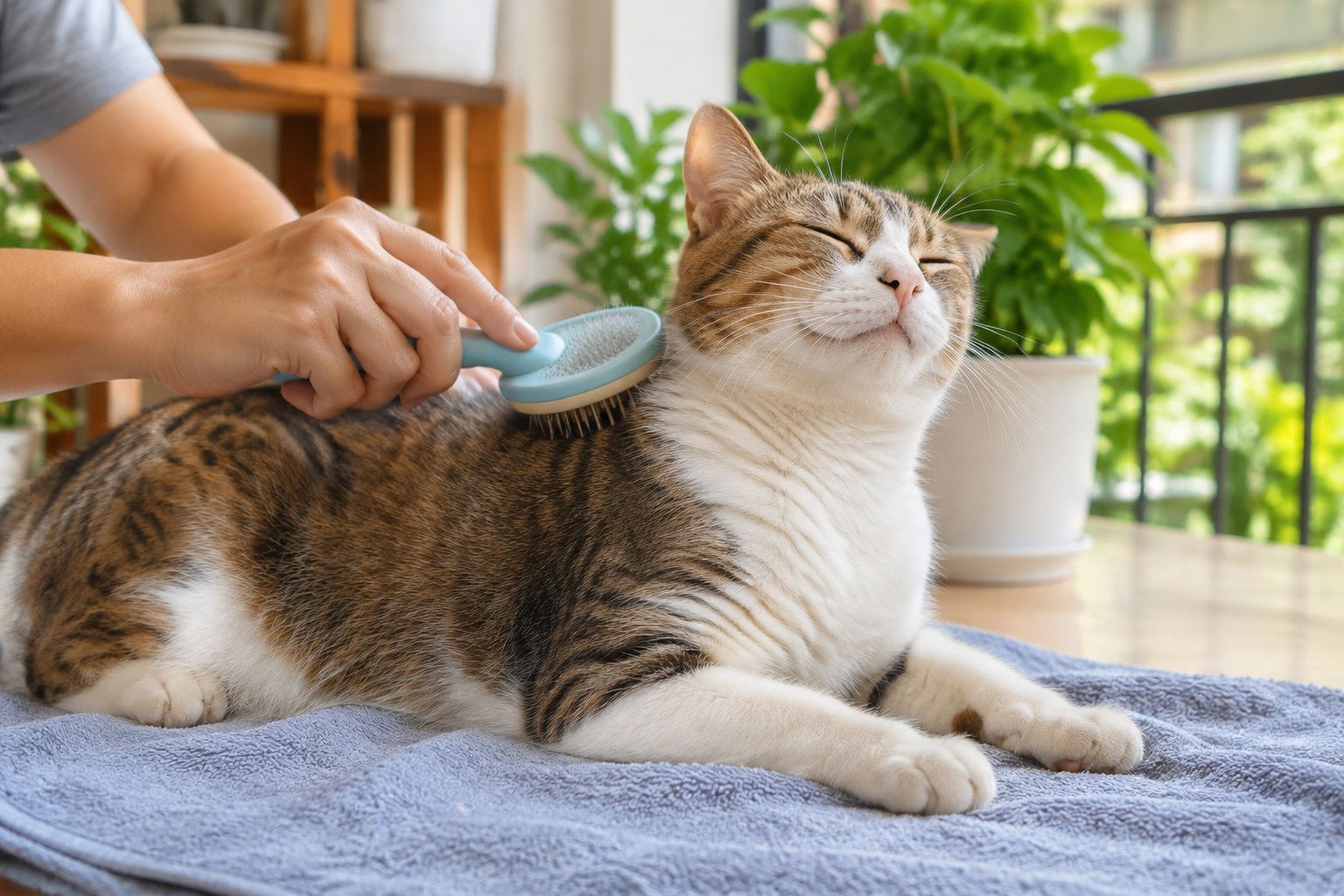
Why exercise matters for indoor cats
Indoor cats in Malaysia live in a comfortable but often predictable world. Air-conditioned apartments, screened windows and regular meals remove many of the challenges a cat's body and brain evolved to handle. The result is a cat that sleeps a lot, eats well and moves little. Over time that can lead to weight gain, boredom, stress-related behaviour and a weaker bond with the people it lives with.
Exercise for cats is not about running a marathon. It is about giving your cat short, regular chances to stalk, pounce, climb, stretch and solve problems. Think of it as daily maintenance for the body and the mind. The plan below is step by step, so you can start today even if your cat has never played much.
Step 1: Check health and set a baseline
Before you change your cat's routine, spend a few days observing. Note how much your cat sleeps, when it is most active, what it eats and how it moves. Cats are crepuscular, meaning they are often most active around dawn and dusk. Use those windows for play.
If your cat is overweight, senior, pregnant, recovering from illness or has a known heart, joint or breathing condition, ask a veterinarian before starting a new exercise plan. This is especially important for cats that tire quickly or breathe heavily. A vet can tell you what intensity is safe and whether weight loss is needed.
A simple baseline checklist:
- Body shape: can you feel the ribs easily, or is there a thick pad over them?
- Activity: how many minutes a day does your cat move purposefully?
- Appetite and water intake: any recent changes?
- Breathing: any coughing, wheezing or open-mouth breathing?
- Mobility: does your cat jump less, limp or hesitate on stairs?
Write these down. In two weeks you will have a clearer picture of progress.
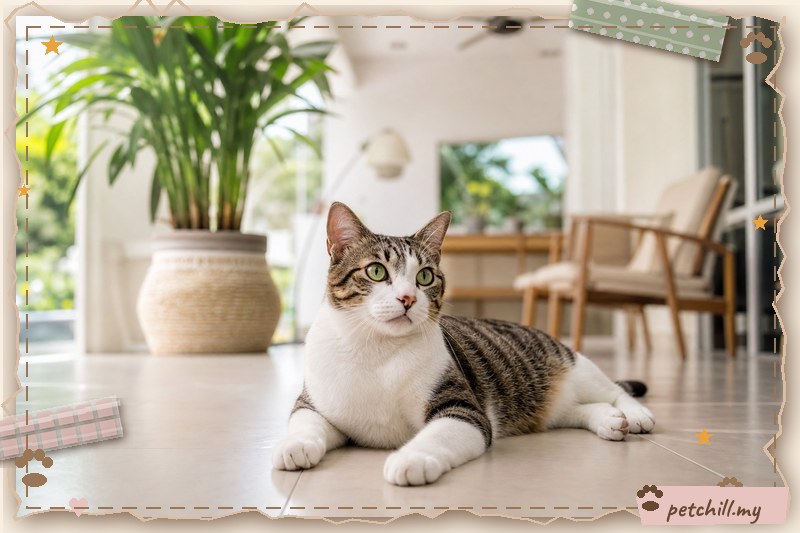
Step 2: Build a daily play routine
Cats thrive on routine. Aim for two or three short sessions each day, ideally before meals. A hungry cat is more motivated to chase, and ending play with food mirrors the natural hunt-eat-groom-sleep cycle.
A practical daily template:
| Time | Activity | Duration |
|---|---|---|
| Morning | Wand toy session, then breakfast | 5–10 minutes |
| Midday | Food puzzle or scatter feeding | 5–10 minutes |
| Evening | Active play, then dinner | 10–15 minutes |
| Before bed | Calm grooming or gentle toy play | 5 minutes |
This is a guide, not a rule. A kitten may want three or four short bursts. A senior cat may do better with two gentle sessions. The key is consistency: same times, same order, same reward.
How to run a wand toy session
- Start in a room with space and no breakable objects.
- Move the toy away from your cat, like prey fleeing, not toward its face.
- Let your cat stalk, pause, then pounce. Allow a catch every so often.
- Vary speed and direction: along the floor, over a low stool, around a chair leg.
- End while your cat is still interested, not exhausted.
- Put the wand away in a cupboard so the toy stays special.
How to use food puzzles
Food puzzles turn a bowl of kibble into a hunting game. Start easy with a shallow puzzle or a muffin tin with a few treats, then increase difficulty. Scatter feeding on a clean floor or snuffle mat also works. Always supervise new puzzles and avoid small parts that can be chewed off.
Step 3: Add vertical space and climbing
Cats feel safer and exercise more when they can go up. In a Malaysian apartment, vertical space is often the easiest way to add activity without floor area. A sturdy cat tree near a window, wall-mounted shelves, or a secured bookshelf can become a daily route.
Safety points for vertical space:
- Fix shelves and trees to the wall or floor so they cannot topple.
- Avoid placing climbing furniture where a cat could fall onto a hot stove, balcony edge or glass table.
- Check that window screens are secure; cats can push through loose mesh.
- Provide a soft landing spot and a hiding box at the top.
Encourage use by placing a treat or toy on a shelf, or by feeding a meal on a high perch. Never force a cat onto a height it is unsure about.
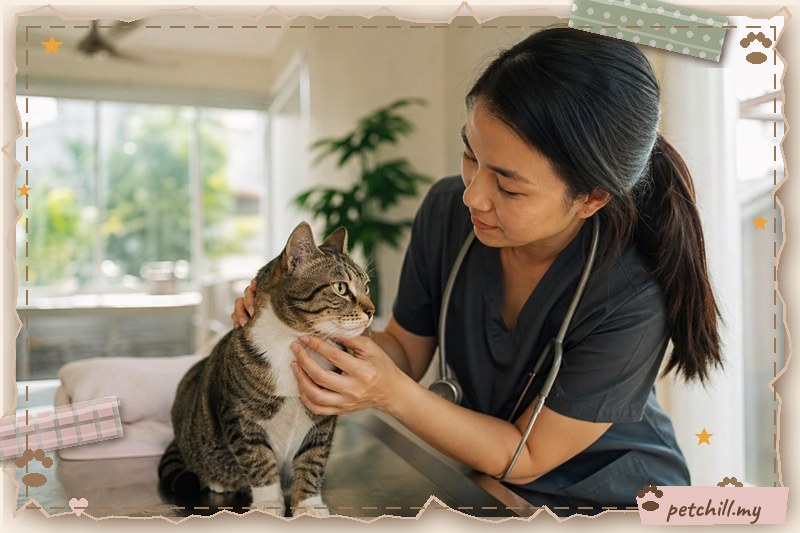
Step 4: Use the environment as a gym
You do not need expensive equipment. Everyday household items can create a safe obstacle course:
- Paper bags with handles removed, laid on their side.
- Cardboard boxes with holes cut for paws.
- A crinkle tunnel or a long cardboard tube.
- A low stool to jump onto and off.
- A towel draped over two chairs to make a tunnel.
Rotate these every few days so the environment stays novel. Cats are more likely to explore something new than something that has been in the same spot for months.
Step 5: Match exercise to age and ability
| Life stage | Suggested play | Watch for |
|---|---|---|
| Kitten | 3–4 short sessions, 5–10 minutes | Over-tiring; kittens self-limit but need rest |
| Adult | 2–3 sessions, 10–15 minutes | Weight gain, boredom, destructive behaviour |
| Senior | 2 gentle sessions, 5–10 minutes | Stiffness, reluctance to jump, weight loss |
| Overweight | Short, frequent, low-impact play | Panting, limping, refusal to move |
| Post-surgery | Vet-guided only | Any sign of pain or swelling |
Kittens have bursts of energy and then crash. Do not wake a sleeping kitten to play. Adult cats often need encouragement to move, especially if they have been indoor-only for years. Senior cats may prefer gentle batting and food puzzles to jumping.
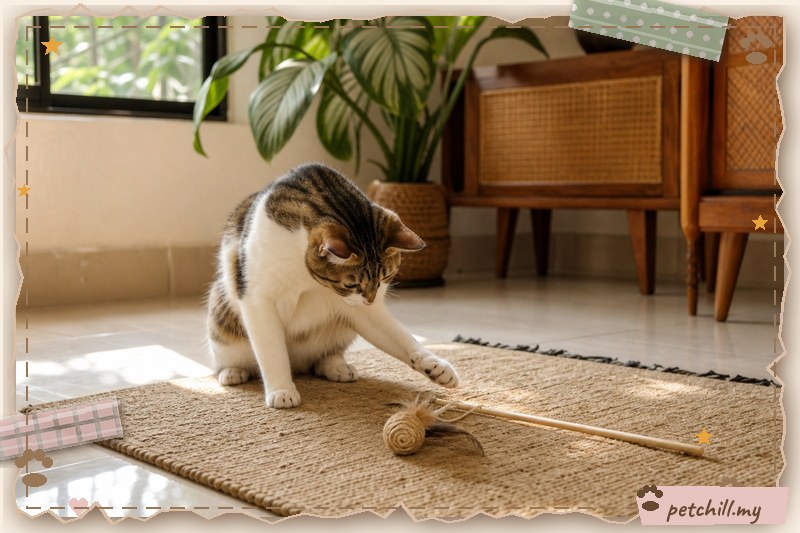
Step 6: Make mealtimes part of the exercise plan
Food is a powerful tool. Instead of one bowl, split the daily ration into several small portions. Use puzzle feeders, scatter feeding or hide small amounts around the home for your cat to find. This increases movement and mental activity without adding calories.
If your cat is overweight, measure the daily ration with a kitchen scale or measuring cup and adjust only with veterinary advice. Never restrict food suddenly. Cats that stop eating can develop a serious liver condition, so any diet change should be gradual and monitored.
Step 7: Keep play safe and stress-free
Play should be fun, not frightening. Watch your cat's body language. Ears flat, tail thrashing, dilated pupils and a crouched posture can mean overstimulation. Stop and give space. A cat that hides after play is not enjoying it.
Safety rules:
- Never use your hands or feet as toys; it teaches biting.
- Put string, ribbon and wand toys away after sessions.
- Avoid laser pointers that end without a catch.
- Do not play rough with kittens or encourage chasing hands.
- Keep play away from hot surfaces, open windows and balconies.
- Supervise children during play.
In a Malaysian home, also consider the heat. Play in the cooler parts of the day, provide fresh water, and avoid intense sessions in a hot room without ventilation.
Step 8: Track progress and adjust
Every two weeks, review your notes. Is your cat more active? Is it jumping onto furniture again? Is it waking you at night less often? Small changes matter. If your cat seems bored, rotate toys and change the play location. If your cat seems tired or reluctant, reduce intensity and check with a vet.
A simple progress log:
- Date and session length
- Toy used
- Cat's interest level (low, medium, high)
- Any coughing, panting or limping
- Changes in appetite or litter box use
Common mistakes to avoid
- One long session instead of short frequent ones.
- Playing only when the cat demands it, which can reward night-time waking.
- Leaving wand toys out so the cat loses interest.
- Using food as the only reward, which can add weight.
- Ignoring signs of pain or breathlessness.
- Expecting a senior cat to play like a kitten.
When to see a vet
Stop exercise and contact a veterinarian if your cat:
- Pants during light activity or takes a long time to recover.
- Coughs, wheezes or breathes with an open mouth.
- Limps, drags a leg or refuses to jump.
- Collapses, faints or seems weak.
- Shows sudden reluctance to move or hides more than usual.
- Loses weight despite a good appetite.
- Has a sudden change in appetite, water intake or litter box habits.
- Becomes aggressive or fearful during play.
These signs can have many causes, and only a vet can diagnose them. Do not delay if breathing is laboured or your cat cannot settle.
A sample week for a Kuala Lumpur apartment cat
Monday: morning wand play, evening food puzzle. Tuesday: vertical shelf route with treats, short evening play. Wednesday: tunnel and box obstacle course. Thursday: scatter feed, gentle grooming. Friday: wand play with a new toy. Saturday: longer evening session with family. Sunday: rest and calm enrichment. Adjust to your cat's energy and the weather.
Final thoughts
Exercise for cats is simple but not automatic. It needs a plan, a few minutes twice a day and a willingness to watch your cat's signals. Start small, keep sessions short, use food wisely and make the home more interesting. Your cat will show you what works.
This article is general information only and is not a substitute for veterinary advice. If you are worried about your cat's health, behaviour or weight, consult a licensed veterinarian in Malaysia.
Related reading
- Cat Exercise: Practical Cat Tips for Malaysian Homes
- Daily Care Guide Malaysia: A Practical Routine for Dogs and Cats
- Best Puzzle Feeder for Cats in Malaysia: A Practical Buying Guide
- Pet Daily Care Guide Malaysia: Brushing, Nails, Ears, Eyes, Teeth and Weight (2026)
- Puzzle Feeder for Indoor Cats: A Complete Malaysian Guide
- Best Catnip for Cats in Malaysia: A Practical Buyer's Guide
- Best Scratching Post for Cats in Malaysia: A Practical Buying Guide
- Cat Massage: A Practical Guide for Malaysian Cat Owners
- Cat Massage for Cats Step by Step: A Gentle Guide for Malaysian Pet Parents
- Cat Tree for Indoor Cats: The Complete Malaysia Guide



