
Why a fountain might help your cat drink more
Cats evolved as desert hunters and naturally have a low thirst drive. In Malaysia's warm, humid climate, mild dehydration can creep up quietly, especially in cats fed mostly dry food. A water fountain keeps water moving, which many cats find more appealing than a still bowl. The sound and motion can trigger curiosity and encourage sipping through the day.
But a fountain is not a magic solution. Some cats ignore them completely. Others prefer a wide, shallow bowl. The best approach is to offer both and watch what your cat actually uses. If you are dealing with a cat that rarely drinks, a fountain is one tool, not a cure. Your vet can assess hydration and check for underlying issues.
This guide walks through what makes a fountain work in a Malaysian home: climate, electricity, cleaning routine, noise, filter availability and cat behaviour. You will find a comparison table, a buying checklist and practical placement tips. Prices vary widely, so treat any figure you see online as a rough guide and confirm with local retailers.
What Malaysian cat owners should consider first
Malaysia's humidity and warmth affect how quickly water bowls grow biofilm and how often filters need changing. A fountain that is easy to dismantle and scrub will be used more consistently than a complex model that feels like a chore. Look for smooth surfaces, few crevices and parts that can be rinsed without tools.
Power supply matters too. Most fountains use a low-voltage pump with an adapter. Check that the adapter suits Malaysian sockets and that the cable is long enough for your intended spot. If your home has frequent short outages, a fountain without battery backup will simply stop; that is usually fine, but the pump should restart reliably when power returns. Avoid cheap pumps with exposed wiring, and keep cables away from chewing cats and toddlers.
Filter availability is another practical point. Some imported models use proprietary filters that are hard to find locally. Before buying, check whether replacement filters are stocked by Malaysian retailers or whether a generic carbon pad can be cut to fit. A fountain with no filter is not necessarily better; carbon helps reduce odours and debris, but it must be changed regularly.
Noise is a common complaint. A trickling sound can be pleasant, but a loud hum or gurgle may put a nervous cat off. Reviews often mention noise, but your own tolerance matters. If the fountain sits in a living area, choose a model described as quiet and look for rubber feet or a suspended pump. Ceramic fountains tend to dampen sound better than thin plastic.
Types of cat water fountains compared
There are several broad designs. Each has trade-offs for Malaysian homes.
| Type | Pros | Cons | Best for |
|---|---|---|---|
| Plastic gravity or pump fountain | Light, affordable, widely available | Can scratch and harbour odour; may be noisy | Budget buyers, trial use |
| Ceramic fountain | Heavy, stable, quiet, easy to clean | Can chip; heavier to move; higher price | Owners wanting durability and quiet |
| Stainless steel fountain | Hygienic, durable, resists scratches | Can be noisy if thin; water spots | Cats prone to chin acne; easy sanitation |
| Battery or USB fountain | Portable; no mains cable near bowl | Battery life varies; pump power may be weak | Renters, temporary setups |
| Smart fountain with app | Alerts for low water or filter change | Higher cost; more parts to fail | Tech-friendly owners |
Plastic is the most common and cheapest option, but scratched plastic can develop a slimy layer that is hard to remove. If you choose plastic, look for BPA-free material and replace any badly scratched parts. Ceramic is popular for its weight and quiet operation, but check for lead-free glaze and avoid chipped edges. Stainless steel is excellent for hygiene, especially for cats that get chin acne, but thin steel can amplify pump noise.
Battery and USB fountains appeal to renters or those who want flexibility, but pump strength and battery life vary. A weak pump may only dribble, which some cats dislike. Smart fountains can be convenient, but they add complexity and cost; a simple model with a mechanical float or low-water cut-off may be more reliable.
Key features to look for
Capacity. A larger tank means fewer refills, but stale water is worse than fresh. For one cat, 1.5 to 2.5 litres is often enough; multi-cat homes may need more. In hot weather, water evaporates faster, so check levels daily.
Pump quality. A magnetic or low-voltage pump is generally quieter and safer. Look for a pump that can run dry briefly without burning out, though it is still best to keep water above the minimum line. Some pumps have adjustable flow; a gentle stream suits shy cats.
Filtration. Carbon filters reduce odours and catch hair. Some models add foam pre-filters that need rinsing weekly. Avoid fountains with hard-to-find filters unless you are prepared to source them online.
Ease of cleaning. Count the parts. A fountain with a wide opening, removable spout and no narrow tubes is easier to scrub. If cleaning takes more than ten minutes, you may delay it, and biofilm will build up.
Stability. Cats jump and bump. A wide base or rubber feet prevent tipping. Ceramic is heavy but can crack if dropped; plastic is lighter but may slide.
Cable safety. Look for a braided or chew-resistant cable and keep it tucked away. If your cat chews cables, use a cable cover or choose a battery model placed away from reach.
Noise level. If possible, listen to a demo or read multiple reviews. A quiet pump and rubber dampeners make a big difference in small apartments.
Setting up the fountain in a Malaysian home
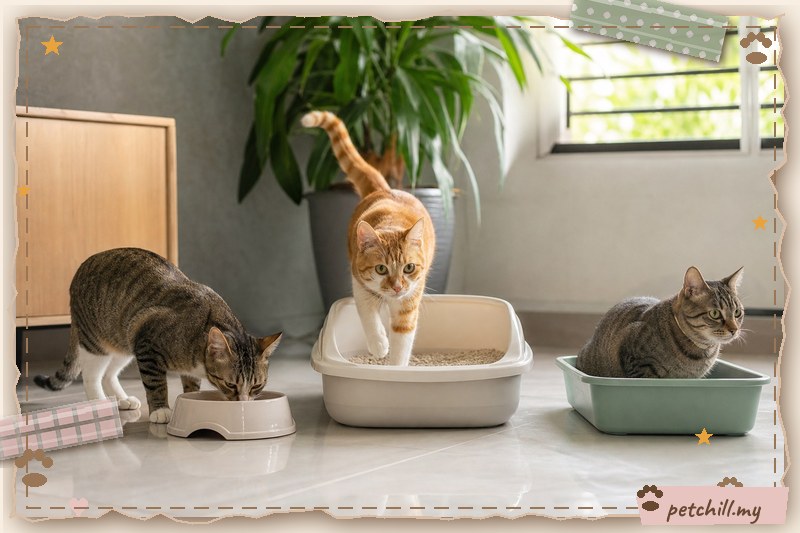
Placement can make or break a fountain. Cats often prefer water away from their food, so try a corner of the living room or a quiet hallway. Avoid placing it next to the litter box or in a noisy area near the washing machine. In a Kuala Lumpur apartment, a spot near a power point but out of the main walkway works well; in a Johor terrace house, a shaded area away from direct sun keeps water cooler and reduces algae.
During the rainy season in Penang, humidity is high and water bowls can develop slime faster. Clean the fountain more often and dry the pump housing between cleanings. If you use air-conditioning, the air can be dry, and cats may drink more; check the water level daily.
Introduce the fountain gradually. Some cats are startled by the sound. Run it for short periods, then leave it on. Keep a familiar bowl nearby so your cat always has a backup. Never force a cat to drink from the fountain; let curiosity win.
Cleaning and maintenance routine
A fountain is only as good as its cleaning routine. A dirty fountain can harbour bacteria and put cats off drinking. Here is a practical schedule:
- Daily: Top up water, remove visible hair, check the pump is running.
- Weekly: Unplug, disassemble, scrub the basin and spout with a pet-safe cleaner, rinse thoroughly. Clean the pump impeller according to the manual.
- Every two to four weeks: Replace the carbon filter or as recommended. Rinse foam pre-filters weekly.
- Monthly: Descale the pump with a pet-safe descaling solution if you notice mineral build-up. In hard water areas, this may be needed more often.
Avoid using harsh chemicals or dish soap residue. Rinse all parts well. If you see pink or black slime, clean more frequently and consider a fountain with fewer crevices. Replace cracked or scratched plastic parts; ceramic chips should be smoothed or the piece retired.
Safety and electrical considerations
Water and electricity need respect. Use a fountain with a low-voltage adapter and keep the cable away from water. Plug into a socket with earth leakage protection if available. Do not attempt to repair a pump unless you are qualified; replace it. If the pump makes a grinding noise, unplug it and check for hair or debris.
Cats with long fur may get their fur caught in exposed impellers; choose a covered pump. Kittens and cats that chew should be supervised around cables. Battery fountains avoid mains cables but still contain batteries; keep them out of reach.
When to see a vet
A fountain can support hydration, but it cannot treat illness. See a vet if your cat shows any of these signs:
- Straining to urinate, crying during urination, or frequent trips to the litter box with little urine.
- Blood in the urine.
- Sudden increase in thirst, especially with weight loss.
- Vomiting, diarrhoea or refusal to eat.
- Lethargy or hiding.
- Dry gums, skin that stays tented when gently pinched, or sunken eyes.
Urinary blockages are emergencies, especially in male cats. Do not wait. If your cat is not drinking at all, or you are worried about hydration, contact your vet. A fountain is a comfort tool, not a medical device.
Frequently asked questions
Do cats really drink more from a fountain? Many cats are attracted to moving water and may drink more, but not all. Some prefer still water in a wide bowl. Offer both and observe your cat's preference.
What type of fountain is best for Malaysian homes? A quiet pump, large tank and simple design suit most homes. Ceramic or BPA-free plastic resists odour. Consider a model with a local plug or USB adapter and easy-to-find filters.
How often should I clean a cat fountain? Rinse the bowl and top up daily, clean the pump and basin weekly, and replace the filter every two to four weeks or as instructed. In humid weather, clean more often to prevent slime.
Are plastic fountains safe for cats? BPA-free plastic is generally safe, but scratched plastic can harbour bacteria. Ceramic or stainless steel are more durable and easier to sanitise. Replace badly scratched plastic parts.
Can a fountain help a cat with urinary problems? Increased water intake may help, but a fountain is not a treatment. If your cat strains to urinate, cries or has blood in urine, see a vet immediately.
Where should I place the fountain? Place it in a quiet, familiar spot away from the litter box and food bowl. Cats often prefer water away from their food. Keep the cable out of reach and secure.
Bottom line
The best water fountain for your cat is the one you will clean regularly and your cat will actually use. Prioritise quiet operation, easy cleaning, a safe low-voltage pump and filters you can find locally. In Malaysia's climate, daily topping up and weekly scrubbing are non-negotiable. Offer a backup bowl, place the fountain thoughtfully, and watch your cat's behaviour. If you have any health concerns, speak to your vet. Prices and availability vary, so check with Malaysian retailers and your vet before deciding.
This article is for general information only and is not a substitute for veterinary advice. Always consult a licensed veterinarian about your cat's health.
Related reading
- Daily Care Guide Malaysia: A Practical Routine for Dogs and Cats
- Best Litter Scoop for Cats in Malaysia: A Practical Buying Guide
- Pet Daily Care Guide Malaysia: Brushing, Nails, Ears, Eyes, Teeth and Weight (2026)
- Best Cat Carrier for Cats in Malaysia: A Practical Buying Guide
- Best Cat Grass for Cats in Malaysia: A Practical Buying & Growing Guide
- Best Cat Tree for Cats in Malaysia: A Practical Buying Guide
- Best Interactive Toys for Cats in Malaysia: A Practical Buying Guide
- Best Scratching Post for Cats in Malaysia: A Practical Buying Guide
- Cat Fur Matting: A Step-by-Step Guide for Malaysian Cat Owners



