
The short answer
Cats are built for short bursts, not marathons. Two or three play sessions of 10 to 15 minutes a day, plus climbing spots and food puzzles, keep most indoor cats active. The goal is daily movement and mental work, not a single exhausting session. In Malaysian homes — apartments, terrace houses, rainy-season afternoons — indoor play is usually the most reliable option.
Why exercise matters for cats
Cats sleep a lot, often 12 to 16 hours a day. That is normal. But a cat that only eats and sleeps can gain weight, lose muscle, and become bored. Boredom in cats can show up as over-grooming, scratching furniture, night yowling, or aggression.
Exercise does more than burn calories. It:
- supports healthy joints and muscle tone
- gives mental stimulation and reduces stress
- helps prevent obesity, which is linked to diabetes and joint strain
- strengthens the bond between you and your cat
- gives shy cats confidence and gives active cats an outlet
You do not need a big house or expensive equipment. You need a routine, a few toys, and a little patience.
How much play does a cat need?
There is no single number that fits every cat, but a practical starting point is:
| Cat life stage | Suggested daily play | Notes |
|---|---|---|
| Kitten (under 1 year) | 3–4 short sessions, 5–10 min | Kittens self-limit; stop before they get overtired |
| Adult (1–7 years) | 2–3 sessions, 10–15 min | Morning and evening suit most cats |
| Senior (8+ years) | 2–3 gentle sessions, 5–10 min | Watch for stiffness; short and frequent is better |
| Overweight cat | 3–4 short sessions plus food puzzles | Ask your vet before starting a weight plan |
These are general guides, not rules. A young Bengal may want far more; a sleepy Persian may want less. Watch your cat, not the clock.
Build a daily play routine that actually sticks
Cats are creatures of habit. A predictable routine works better than random play.
A simple structure:
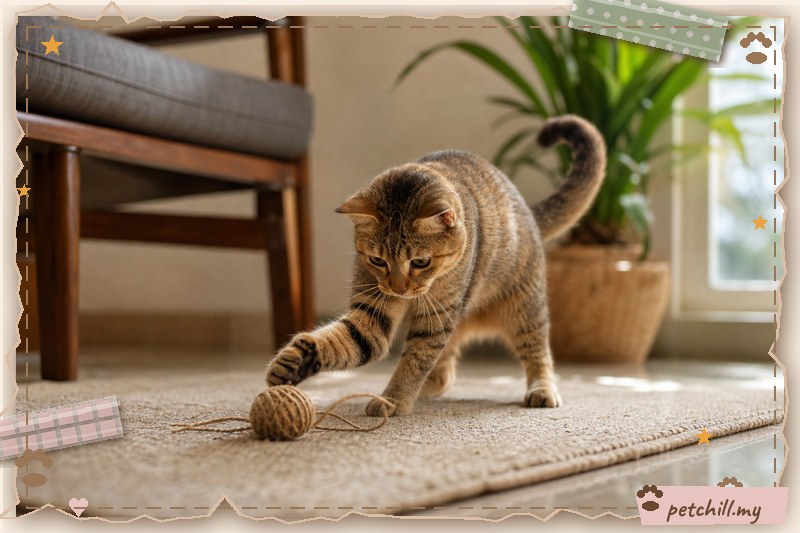
- Morning play (10 minutes). Use a wand toy. Move it like prey — along the floor, behind a chair, pause, then dart.
- Meal or puzzle. After play, offer food or a food puzzle. This mimics the natural hunt-eat-groom-sleep cycle.
- Evening play (10–15 minutes). Another wand session or chase game.
- Wind-down. End with a small treat or a few kibble, then let your cat groom and settle.
Ending play with food matters. Cats are hunters; a hunt with no catch can be frustrating. A treat or meal closes the loop.
Make play feel like hunting
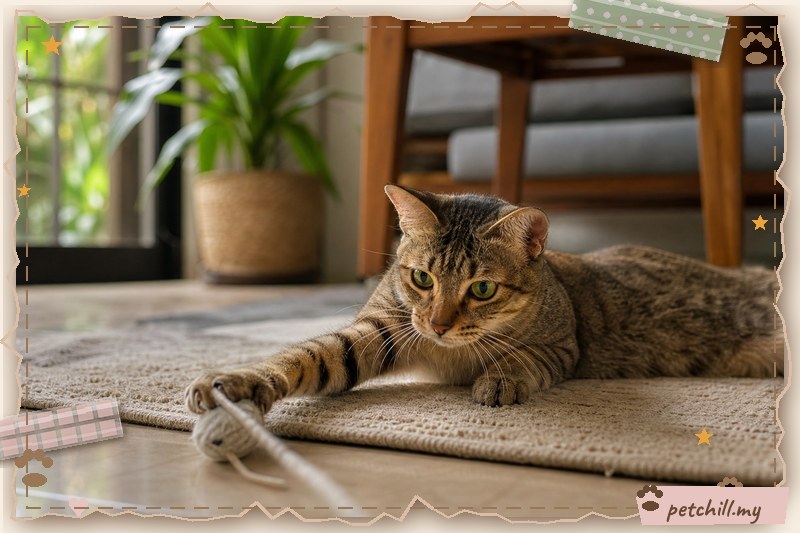
A wand toy dragged slowly along the floor is more interesting than one waved wildly in the air. Try these moves:
- hide the toy behind a corner, then peek it out
- drag it along a wall or under a rug edge
- let it "escape" under a cardboard box
- pause for a few seconds — stillness makes cats stalk
Rotate toys every few days. Put some away and bring them out later. Novelty matters more than quantity.
Exercise ideas for Malaysian homes
Small apartments and condos
Space is tight, but cats use vertical space well. A cat tree near a window, a wall shelf, or a sturdy bookshelf gives climbing exercise. Clear a safe path so your cat can jump up and down without knocking things over.
A corridor is perfect for fetch with a soft ball or crinkle toy. Some cats learn to bring toys back; others just chase. Either is fine.
Terrace houses and landed homes
More rooms mean more places to explore. Try:
- hiding treats or kibble around a room for a sniff-and-seek game
- setting up a cardboard box maze
- placing a scratching post near a doorway so your cat stretches and climbs
- using a secure balcony only if it is fully netted or screened
Never leave a cat on an open balcony or let it roam outdoors unsupervised. In Malaysia, outdoor risks include traffic, dogs, and disease.
Rainy-season and hot-weather days
When it is too hot or raining, indoor play matters more. Schedule play for cooler times — early morning and evening. Keep water available. Some cats drink more from a running fountain, but a clean bowl refreshed daily is enough.
Multi-cat homes
Play with cats separately if one bullies the other. A confident cat may hog the wand. Give each cat its own short session, then allow calm group time. Food puzzles can be placed in different rooms to reduce competition.
Toys and enrichment on a budget
You do not need imported toys. Everyday items work well:
- Cardboard boxes — cut holes for a peek-and-pounce game.
- Paper bags — remove handles first; supervise.
- Crinkle balls and ping-pong balls — cheap and easy to chase.
- Toilet-roll tubes — hide treats inside and fold the ends.
- Wand toys — a stick, string and a soft fabric scrap; put away after play to avoid swallowing.
- Food puzzles — start easy, then increase difficulty.
Safety first: avoid string, ribbon, rubber bands and hair ties left unattended. Linear objects can cause serious internal damage if swallowed. Avoid small toys that fit entirely in a cat's mouth.
Food puzzles and feeding for activity
Food puzzles turn a meal into exercise. Instead of a bowl, try:
- a muffin tin with kibble in some cups, covered with tennis balls
- a treat ball that releases food as it rolls
- a snuffle mat
- scattered kibble on a clean floor for sniffing
Start with an easy puzzle so your cat succeeds. If your cat gives up, make it simpler. Never restrict food suddenly; ask your vet before changing portions, especially if your cat is overweight.
Weight checks at home
You can track body condition without a scale. Once a month:
- Run your hands along your cat's sides. Ribs should be easy to feel under a thin layer of fat.
- Look from above. There should be a visible waist behind the ribs.
- Look from the side. The belly should tuck up slightly.
- Weigh your cat if possible — a baby scale or a vet visit helps.
If ribs are hard to find, or your cat has a large belly pouch, ask your vet to assess body condition score. Do not put a cat on a crash diet; cats can become seriously ill if they lose weight too fast.
Exercise for senior cats and cats with arthritis
Older cats still need movement, but comfort comes first. Signs of pain include stiffness after rest, reluctance to jump, limping, or hiding. Try:
- short wand sessions at floor level
- placing food and water within easy reach
- ramps or steps to favourite spots
- soft bedding in warm, quiet places
- gentle grooming and massage if your cat accepts it
If your cat seems painful, see a vet. Pain relief and joint support can make play possible again.
Common mistakes to avoid
- One long session instead of short ones. Cats tire quickly and lose interest.
- Playing with hands. It teaches biting. Use toys, not fingers.
- Punishing play behaviour. Scratching and night activity are often boredom. Add play and scratching posts instead.
- Leaving string toys out. Swallowing string is dangerous.
- Overfeeding treats during training. Count treats as part of daily food.
- Forcing a shy cat. Let it approach; sit quietly and drag a toy nearby.
A simple weekly plan
| Day | Morning | Evening | Extra |
|---|---|---|---|
| Mon | Wand, 10 min | Food puzzle | Brush |
| Tue | Chase ball | Wand, 10 min | Box maze |
| Wed | Wand, 10 min | Snuffle mat | Window perch time |
| Thu | Food puzzle | Wand, 10 min | Grooming |
| Fri | Chase game | Laser + real toy finish | Cat tree climb |
| Sat | Wand, 15 min | Hide treats | New box |
| Sun | Gentle play | Wand, 10 min | Weight check monthly |
Adjust to your cat. The table is a template, not a strict schedule.
When to see a vet
See a vet if your cat:
- suddenly refuses to move or cries when picked up
- limps or drags a leg
- pants or breathes heavily during light play
- stops eating or drinking
- gains or loses weight quickly
- hides more than usual or seems withdrawn
- has trouble jumping or climbing stairs
- shows aggression when touched
These signs can point to pain, dental disease, arthritis, thyroid problems or other illness. Exercise should never be forced on a sick cat.
Vet disclaimer
This article is general information for Malaysian cat owners and is not a substitute for veterinary advice. Every cat is different. Ask your veterinarian before starting a weight-loss plan, changing diet, or if you notice pain, lameness, breathing difficulty or sudden behaviour changes.
Related reading
- Cat Exercise for Cats Step by Step: A Practical Daily Plan for Malaysian Homes
- Daily Care Guide Malaysia: A Practical Routine for Dogs and Cats
- Pet Daily Care Guide Malaysia: Brushing, Nails, Ears, Eyes, Teeth and Weight (2026)
- Best Catnip for Cats in Malaysia: A Practical Buyer's Guide
- Best Puzzle Feeder for Cats in Malaysia: A Practical Buying Guide
- Cat Massage: A Practical Guide for Malaysian Cat Owners
- Cat Massage for Cats Step by Step: A Gentle Guide for Malaysian Pet Parents
- Cat Tree for Indoor Cats: The Complete Malaysia Guide
- Catnip for Indoor Cats: A Complete Malaysian Guide
- Harness Training a Cat in Malaysia: Step-by-Step Tips for a Calm, Safe First Walk



