
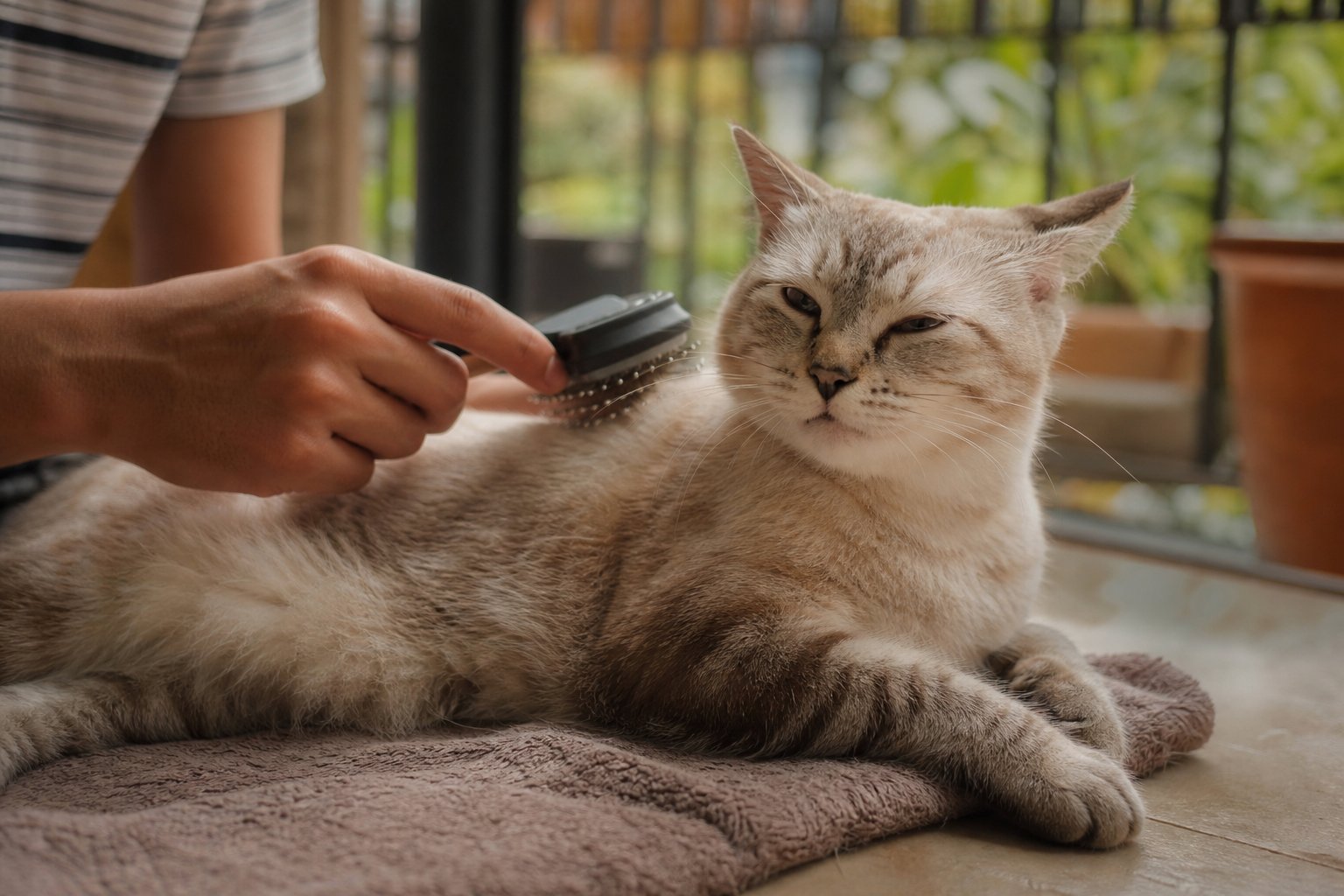
Why paw care matters for Malaysian cats
A cat's paws are built for walking, jumping, climbing, and grooming, but they are not indestructible. In Malaysia's tropical climate, paws face extra challenges: hot pavements, humid floors that stay damp, and the risk of fungal or bacterial infections. Indoor cats are not exempt either—dry air from air-conditioning, rough carpet, and litter box chemicals can all affect paw health.
Good paw care is simple but consistent. It means regular inspections, gentle cleaning, proper nail trimming, and knowing when something is wrong. This guide walks you through a practical routine that fits into daily life, whether you live in a high-rise apartment or a terrace house.
The daily paw check: what to look for
You don't need a full grooming session every day. A quick visual and tactile check takes less than a minute. Pick a time when your cat is relaxed—after a meal or during a cuddle.
What to check:
- Pads: Look for cuts, cracks, redness, swelling, or peeling. Healthy pads are smooth and slightly rough, not dry and flaky.
- Between the toes: Check for foreign objects like grass seeds, small stones, or splinters. Also look for redness or discharge, which can indicate infection.
- Claws: Ensure they are not overgrown, split, or ingrown. Indoor cats especially need regular nail checks because they may not wear them down naturally.
- Fur around the paw: Matted fur or knots can trap moisture and debris. Trim if necessary, but be careful not to cut the skin.
- Odour: A bad smell can signal infection or a foreign object.
If your cat pulls away or shows pain, stop and consult your vet. Never force a paw examination.
Cleaning paws: simple and safe
Cats are fastidious groomers, but they still need help removing dirt, grit, and irritants. How often you clean depends on lifestyle.
Indoor cats: Wipe paws with a damp, soft cloth once a week, or after any unusual exposure (e.g., spilled cleaning products).
Outdoor cats: Clean paws after every outing, especially if they walk on soil, sand, or wet grass. Use a damp cloth and gently wipe each paw, including between the toes. Dry thoroughly with a towel—moisture between toes can lead to fungal infections.
What to use:
- Plain water or a pet-safe paw wipe. Avoid human baby wipes if they contain alcohol, fragrance, or aloe vera, which can be irritating.
- Never use harsh soaps or disinfectants unless your vet recommends them.
- For sticky substances (e.g., sap, oil), use a small amount of pet-safe oil (like coconut oil) on a cloth, then wash with mild pet shampoo and rinse well.
What to avoid:
- Do not soak paws in water for long periods; this softens pads and can lead to cracking.
- Do not use human hand sanitiser—it can be toxic if licked.
Nail trimming: a step-by-step guide
Overgrown nails can curl into the paw pad, causing pain and infection. Indoor cats need trimming every 2–3 weeks; outdoor cats may need it less often but still check regularly.
Tools: Cat-specific nail clippers (scissor or guillotine style), styptic powder (for accidental bleeding), and a towel.
Steps:
- Hold your cat gently on your lap or have a helper hold them. Wrap in a towel if they are wriggly, leaving one paw out.
- Press the paw pad gently to extend a claw.
- Identify the quick—the pink part inside the nail. On clear nails it's visible; on dark nails, trim only the very tip.
- Trim a small amount at a time. If unsure, ask your vet or groomer to show you.
- Reward your cat with a treat after each paw.
What if you cut the quick? Apply styptic powder or cornstarch and apply gentle pressure. If bleeding doesn't stop within a few minutes, call your vet.
Alternatives: If you cannot trim nails, ask your vet or a professional groomer. Scratching posts help wear down nails but do not replace trimming.
Moisturising and protecting paw pads
Paw pads can become dry and cracked, especially in air-conditioned homes or during dry spells. A pet-safe paw balm can help, but use it sparingly.
When to moisturise:
- If pads look dry, flaky, or slightly cracked.
- After exposure to harsh surfaces (e.g., rough concrete).
- During recovery from minor abrasions (under vet advice).
How to apply: Clean and dry the paw first. Apply a thin layer of pet-safe balm and distract your cat for a few minutes so it absorbs. Wipe off excess to prevent licking.
What not to use: Human lotions, petroleum jelly (in large amounts), or essential oils. Many essential oils are toxic to cats.
Protection: Avoid walking your cat on hot pavements during midday. Provide cool, shaded areas indoors. If your cat has sensitive paws, consider indoor play areas with soft flooring.
Common paw problems in Malaysia
Malaysia's climate and urban environment create specific paw risks. Here are the most common issues and what to do.
| Problem | Signs | What to do |
|---|---|---|
| Hot pavement burns | Redness, blisters, limping, reluctance to walk | Cool the paw with room-temperature water, do not pop blisters, see a vet. |
| Fungal infection (e.g., yeast) | Itchy, red, smelly paws; brown discharge; licking | Keep paws dry, see a vet for diagnosis and treatment. |
| Bacterial infection | Swelling, pus, pain, fever | See a vet; may need antibiotics. |
| Foreign object | Sudden limping, licking one paw, visible object | Gently remove if easy; otherwise see a vet. |
| Overgrown nails | Curling into pad, difficulty walking | Trim nails; if ingrown, see a vet. |
| Allergies | Itchy paws, redness between toes, chewing | Identify trigger with vet; may need medication or diet change. |
| Cuts and abrasions | Bleeding, visible wound | Clean with saline, apply pressure, see a vet if deep. |
Hot pavement alert: Asphalt can reach high temperatures in Malaysian sun. Test with your hand for five seconds—if it's too hot for you, it's too hot for your cat. Walk your cat early morning or evening, or keep them indoors.
Humidity and dampness: Floors that stay wet (e.g., near bathrooms or after mopping) can soften paw pads and promote fungal growth. Dry floors promptly and encourage your cat to avoid wet areas.
Paw care for indoor vs outdoor cats
Indoor and outdoor cats have different paw care needs. Use this table as a quick reference.
| Aspect | Indoor cat | Outdoor cat |
|---|---|---|
| Paw checks | Weekly | Daily |
| Cleaning | Weekly wipe | After every outing |
| Nail trimming | Every 2–3 weeks | Every 3–4 weeks (check weekly) |
| Moisturising | As needed (dry air) | As needed (after cleaning) |
| Risk of hot pavement | Low (unless balcony) | High |
| Risk of foreign objects | Low | High |
| Parasite control | Essential (fleas can affect paws) | Essential |
Indoor cats still need paw care. Air-conditioning can dry pads, and rough carpet can cause abrasions. Litter boxes with dusty or clumping litter can leave residue between toes—clean paws if you notice.
Outdoor cats face more hazards: sharp stones, thorns, insects, and hot surfaces. Consider keeping cats indoors during peak heat and providing a litter box indoors.
When to see a vet
Some paw issues are minor and can be managed at home, but others need professional care. See a vet if you notice:
- Persistent limping that lasts more than 24 hours.
- Swelling, redness, or heat in the paw.
- Discharge (pus or foul-smelling fluid) from between toes.
- A wound that is deep, bleeding heavily, or won't stop bleeding.
- A foreign object you cannot safely remove.
- Ingrown nail that has pierced the pad.
- Signs of pain when you touch the paw (growling, pulling away, biting).
- Blisters or burns from hot surfaces.
- Excessive licking or chewing at one paw.
- Changes in gait or reluctance to walk.
Your vet may examine the paw, take a sample for testing, or prescribe medication. Never give human painkillers to cats—many are toxic.
Building a paw care routine
A consistent routine makes paw care easier for you and less stressful for your cat. Here's a sample weekly schedule you can adapt.
Daily (2 minutes):
- Quick visual check of paws, especially if your cat goes outside.
- Wipe paws if dirty or wet.
Weekly (10 minutes):
- Full paw inspection: pads, between toes, nails.
- Clean paws with a damp cloth.
- Check nail length; trim if needed.
- Moisturise if pads are dry.
Monthly:
- Review parasite control (fleas can cause paw irritation).
- Check litter box hygiene—dusty litter can affect paws.
- Inspect scratching posts for rough edges.
Seasonal:
- During hot months, avoid midday outdoor exposure.
- During rainy season, dry paws thoroughly after outdoor trips.
Tips for reluctant cats: Start when they are young. Pair paw handling with treats and praise. Use a soft towel to wrap if needed. If your cat is very stressed, ask your vet for advice or consider a professional groomer.
Local considerations for Malaysian cat owners
Malaysia's urban and suburban environments present unique paw care challenges. Here are some practical examples.
Kuala Lumpur apartment: High-rise living means your cat may not go outside, but air-conditioning can dry paw pads. Use a humidifier or place water bowls near vents. Balcony floors can get hot—check before letting your cat out. Also, condo corridors may have rough carpet that can abrade paws; provide soft bedding and scratching posts.
Johor terrace house: With an outdoor area, your cat may roam the garden. Check for sharp stones, thorny plants, and standing water. After rain, dry paws to prevent fungal infections. Hot afternoons can make paving stones hot—provide shaded areas and fresh water.
Penang rainy season: Frequent rain means wet paws and muddy floors. Keep a towel by the door and dry your cat's paws after outings. Watch for signs of fungal infection (itchy, smelly paws) and keep indoor floors dry.
General Malaysian tip: Many homes have tiled floors, which can be slippery. Cats generally cope well, but older cats or those with arthritis may struggle. Provide non-slip mats in key areas.
Frequently asked questions
1. How often should I check my cat's paws? Check weekly for indoor cats and daily for outdoor cats. Look for cuts, swelling, redness, cracked pads, or foreign objects.
2. Can I use human moisturiser on my cat's paw pads? No. Human moisturisers can be toxic if licked. Use only pet-safe paw balm, and consult your vet before applying anything to cracked pads.
3. How do I trim my cat's nails safely? Use cat-specific clippers, trim only the clear tip, and avoid the pink quick. Do one nail at a time and reward with treats. If unsure, ask your vet or groomer.
4. Why is my cat limping on one paw? Limping can signal a cut, foreign object, sprain, or infection. Gently examine the paw, but do not force it. If you cannot see a cause or limping lasts more than a day, see a vet.
5. Are hot pavements dangerous for cat paws? Yes. Asphalt and concrete can burn paw pads. Test with your hand for five seconds; if it's too hot for you, it's too hot for your cat.
6. Should I put socks or booties on my cat? Most cats dislike them and they can affect balance. Instead, avoid hot surfaces and provide cool indoor areas. Booties are rarely necessary and should only be used under veterinary advice.
Final thoughts
Paw care is a simple habit that pays off in comfort and health. By checking, cleaning, and trimming regularly, you can prevent many common problems. Remember that every cat is different—some need more frequent care, especially if they have allergies or health conditions. When in doubt, ask your vet. They can show you how to trim nails, recommend pet-safe products, and check for underlying issues.
Disclaimer: This article provides general information only and is not a substitute for veterinary advice. Always consult a licensed veterinarian for diagnosis and treatment of your cat's health issues.
Related reading
- Paw Care for Cats Step by Step: A Simple Weekly Routine
- How to Groom Senior Cats: A Gentle Daily-Care Guide for Malaysian Owners
- Pet Daily Care Guide Malaysia: Brushing, Nails, Ears, Eyes, Teeth and Weight (2026)
- Best Catnip for Cats in Malaysia: A Practical Buyer's Guide
- Best Food Bowl for Cats in Malaysia: A Practical Buying Guide
- Best Puzzle Feeder for Cats in Malaysia: A Practical Buying Guide
- Cat Fur Matting: Causes, Fixes and Daily Grooming Tips for Malaysian Cats
- Cat Fur Matting: A Step-by-Step Guide for Malaysian Cat Owners
- Cat Grass for Indoor Cats: A Practical Malaysian Guide



