
The short answer
Haze smoke is a real respiratory irritant for cats. Fine particles and gases in smoky air inflame the lining of the nose, throat and airways, which can make a cat sneeze, cough, wheeze or breathe faster. Most healthy cats cope once the air clears, but flat-faced breeds, senior cats, overweight cats and cats with asthma or heart disease can struggle. The practical response is to cut exposure: close up the home, filter the air, keep the cat calm and cool, and watch breathing closely. If breathing becomes laboured, noisy or open-mouthed, treat it as an emergency.
Why haze affects cat breathing
A cat's respiratory system is small and sensitive. Smoke from vegetation fires, peat fires and general burning contains particulate matter, carbon monoxide and a mix of irritant gases. When a cat inhales these, the airways respond by swelling and producing more mucus. That narrows the passages, so the cat has to work harder to move air.
Cats are also creatures of habit. A cat that normally spends the day on a balcony or in a garden may keep asking to go out, and may sit near an open window. That repeated low-level exposure adds up. Indoor air is not automatically clean either: cooking smoke, incense, mosquito coils, candles and dusty litter can stack on top of haze and make the total irritant load worse.
It helps to think in terms of dose. A short sniff of smoky air is unlikely to harm a healthy cat. Hours of lying beside an open window in hazy conditions is a different matter. Your job is to reduce the dose as much as you reasonably can.
Which cats are most at risk
Not every cat reacts the same way. Some sail through haze season with nothing more than a occasional sneeze. Others need close watching.
| Cat profile | Why haze matters more | What to do |
|---|---|---|
| Flat-faced breeds (Persian, Exotic Shorthair, British Shorthair with very short muzzle) | Narrowed nostrils and short airways make breathing effortful even in clean air | Keep indoors, avoid heat, use a purifier, watch for noisy breathing |
| Cats with feline asthma | Smoke is a known trigger for airway narrowing and coughing | Keep medication plan current, avoid dust and sprays, have a vet review |
| Senior cats | Lung capacity and immunity decline with age | Provide quiet, cool resting spots, check breathing at rest |
| Overweight cats | Extra body mass presses on the chest and reduces exercise tolerance | Gentle weight management over months, not crash diets |
| Cats with heart disease | Fluid build-up and poor circulation worsen breathlessness | Follow vet plan, weigh regularly, report new coughing |
| Kittens | Small lungs and immature immunity | Limit exposure, keep warm and hydrated |
| Outdoor or balcony cats | Direct exposure to smoky air | Bring indoors, set up an indoor toilet area |
If your cat falls into more than one group, be more cautious. A senior flat-faced cat with a heart murmur deserves a low threshold for calling the vet.
Signs your cat is struggling with the haze
Cats hide discomfort well. Learn what normal looks like for your cat so changes stand out. At rest, a healthy cat breathes quietly, usually with the mouth closed. You should not see obvious rib heaving from across the room.
Watch for:
- Faster breathing at rest, especially if it stays fast when the cat is asleep or relaxed
- Coughing, especially a dry hack or a cough that ends in a swallow
- Wheezing or whistling sounds
- Sneezing fits or a new nasal discharge
- Noisy breathing that you can hear without leaning in
- Open-mouth breathing, which is almost always abnormal in cats
- Neck stretched forward, elbows out, ribs visibly working
- Blue, grey or pale gums and tongue
- Lethargy, hiding, refusing food or water
- Restlessness, inability to settle, or pacing
A simple home check is to count breaths for 15 seconds while the cat is asleep or calm, then multiply by four. Do this a few times over a week so you know your cat's baseline. If the number climbs and stays up, or if the effort of breathing increases, call your vet.
Setting up a cleaner room
You do not need to seal the whole house. Pick one room where the cat spends most time, ideally a bedroom or living area away from the kitchen, and make it the clean-air zone.
- Close windows and doors. Use towels along gaps under doors if smoke seeps in.
- Run a HEPA air purifier sized for the room. Keep it on a low or medium setting continuously rather than blasting it for short periods.
- Avoid ozone generators and air ionisers that produce ozone. HEPA filtration is the safer choice.
- Switch off mosquito coils, incense, scented candles and plug-in fragrances. These add particles and irritant chemicals.
- Cook with the kitchen door closed and the exhaust fan on. Boil, steam or use a rice cooker rather than high-heat frying when the air is bad.
- Use a damp cloth or mop for dusting instead of a broom or feather duster, which sends dust into the air.
- Keep the cat's bed, blankets and toys in the clean room so the cat chooses to stay there.
- Provide fresh water in several places. Smoke can dry out airways, and hydration helps.
If you do not have a purifier, closed windows and a clean, dust-free room still help. Avoid running a fan that blows air directly at the cat for long periods, as it can stir up dust and dry the eyes.
Litter, humidity and temperature
Litter choice matters more during haze. Clay litters and heavily perfumed litters throw up dust when poured or dug. A low-dust litter, poured gently and away from the cat, reduces the particles your cat inhales. Keep the litter tray in a ventilated spot but not next to an open window.
Malaysian haze often arrives with hot, still weather. Heat adds to breathing effort, especially for flat-faced cats. Keep the clean room cool with air conditioning or a fan that circulates air without pointing at the cat. If you use air conditioning, clean or replace filters so you are not blowing dust around.
Some owners run a humidifier to ease dry airways. Use it cautiously: too much humidity encourages mould and dust mites, which are also asthma triggers. Aim for comfortable, not damp. Clean humidifiers regularly.
Grooming, play and stress
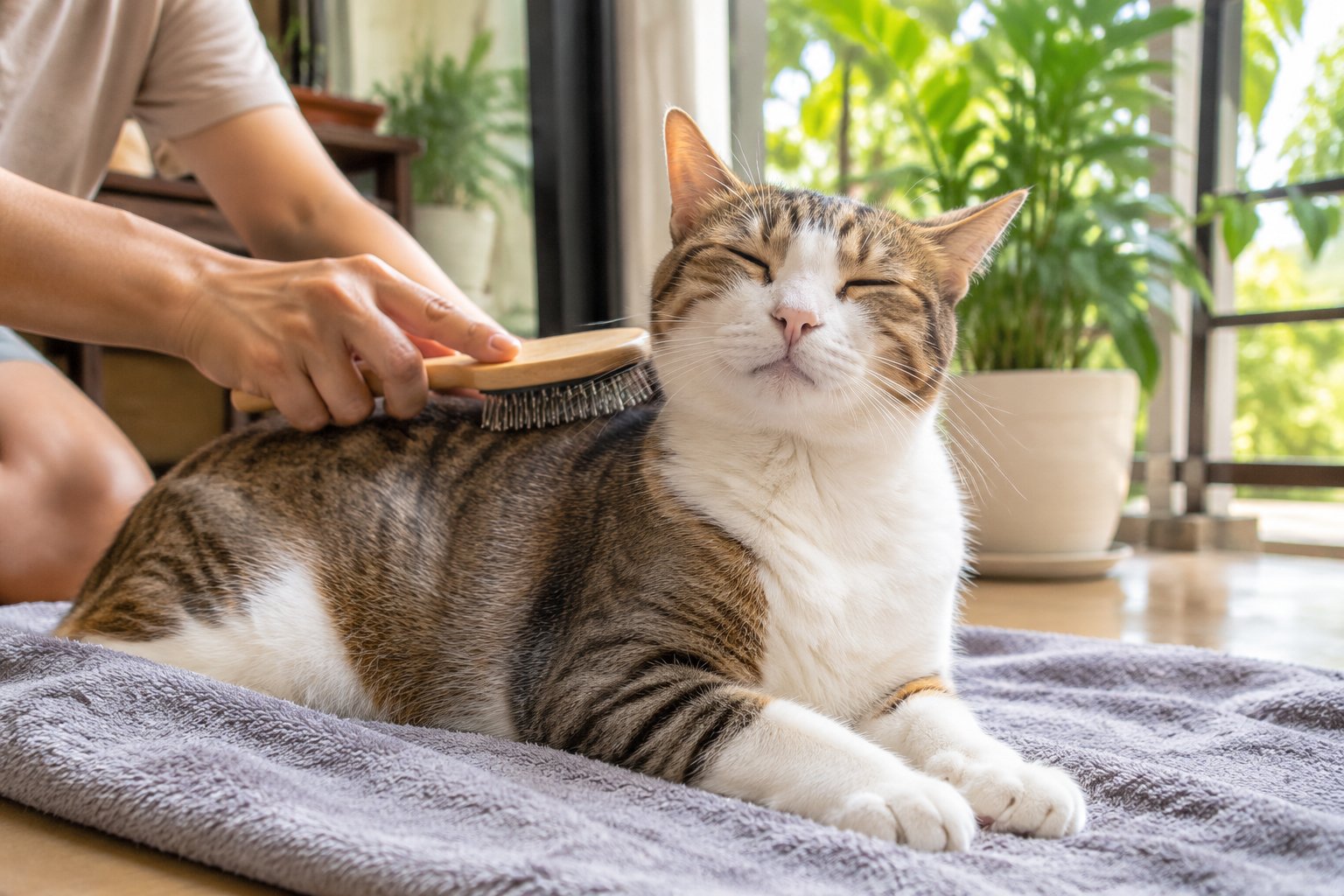
Smoke particles settle on a cat's coat. Gentle brushing removes some of them, and wiping the coat with a damp, clean cloth can help, especially for cats that go outside. Do not bathe a cat that is already breathing hard; stress makes breathing worse.
Keep play calm. Intense chasing games make a cat breathe hard, which is harder on irritated airways. Short, gentle sessions are better than long, wild ones during bad air days. Puzzle feeders and food toys keep cats mentally busy without raising their breathing rate.
Stress matters too. A cat that is anxious or panting from fear will breathe faster. Keep routines predictable, avoid loud renovations or parties in the clean room, and give the cat hiding places.
Outdoor cats and balcony cats
If your cat normally roams, bring it indoors when the air turns hazy. Set up a litter tray, water and a bed before the cat starts asking to go out. Some cats protest loudly for a day or two; a calm, enriched indoor space usually settles them.
For balcony cats, close the balcony door. A mesh screen can keep the cat safe while allowing some airflow, but during heavy haze it is better to keep the door shut and rely on filtered indoor air. Never leave a cat on a balcony in smoky conditions.
If your cat is used to harness walks, skip them on smoky days. Toilet breaks in a small garden are acceptable if brief, but bring the cat in promptly and wipe paws and coat afterwards.
What not to do
- Do not give human cough syrups, decongestants, antihistamines or painkillers. Several common human medicines are toxic to cats.
- Do not use essential oil diffusers around cats. Many essential oils, including tea tree and eucalyptus, are harmful to cats.
- Do not assume a cat is fine because it is quiet. Hiding and reduced appetite can be signs of trouble.
- Do not delay a vet visit because you are waiting for the haze to pass. Breathing problems can worsen quickly.
- Do not smoke indoors or in the car with the cat.
When to see a vet
Call your vet promptly if your cat has any of the following:
- Open-mouth breathing, gasping or obvious effort to breathe
- Blue, grey or very pale gums or tongue
- Breathing that stays fast at rest and does not settle
- A new cough that lasts more than a day or two, or worsens
- Noisy breathing, wheezing or a whistling sound
- Refusing food or water for more than 24 hours
- Hiding, weakness, collapse or confusion
- Known asthma with more frequent coughing or increased medication use
If your cat is in respiratory distress, keep it calm and cool, avoid handling it more than necessary, and phone the clinic before you travel so they can prepare. Do not wait to see if it improves overnight.
A simple haze-day checklist
- Windows and doors closed in the cat's main room
- HEPA purifier running
- No coils, incense, candles or sprays
- Low-dust litter, tray away from open windows
- Fresh water in several bowls
- Cool, quiet resting spots
- Gentle grooming and calm play
- Breathing rate checked at rest
- Vet contact details to hand
Living with haze season in Malaysia
Haze episodes in Malaysia are often seasonal and can vary from mild to severe. The practical approach is to prepare early rather than scramble when the air turns bad. Keep a purifier filter in stock, know which room will be the clean zone, and have a plan for bringing outdoor cats in. If your cat has asthma or a heart condition, ask your vet for a written plan before haze season so you know what to do and when to call.
Local conditions matter. A Kuala Lumpur apartment with sealed windows and air conditioning may stay cleaner than a Johor terrace house with many open doors and a garden. A Penang rainy season can bring relief by washing smoke out of the air, but it also brings humidity, so balance air cleaning with mould control. Adapt the basics to your home rather than following a rigid rule.
This article is general information and not a substitute for veterinary advice. If you are worried about your cat's breathing, contact a licensed veterinarian.
Related reading
- Daily Care Guide Malaysia: A Practical Routine for Dogs and Cats
- Haze and Cat Breathing: A Malaysian Cat Owner's Guide to Protecting Your Cat
- Best Cat Tree for Cats in Malaysia: A Practical Buying Guide
- Best Window Perch for Cats in Malaysia: A Practical Buying Guide
- Cat Odour Control: Practical Cat Tips for Malaysian Homes
- Cat Sitter for Cat Owners in Malaysia: A Practical Guide
- Cat Sunscreen & Sun Safety Tips for Malaysian Cats: What Actually Works
- Cat Sunscreen for Cats: Step-by-Step Guide for Malaysian Pet Parents
- Cat Tree for Indoor Cats: The Complete Malaysia Guide
- Catnip for Indoor Cats: A Complete Malaysian Guide



