
The short answer
Exercise a cat with two to three short daily play sessions of 10 to 15 minutes, using wand toys, chase games and puzzle feeders. Finish each session with a small meal or treat, add climbing and scratching zones, and rotate toys so your cat stays interested.
Why exercise matters for cats
Cats are natural hunters, but indoor life removes most of the chase, stalk and pounce that once filled their day. Without a substitute, many cats sleep more, gain weight and become frustrated. Regular play supports healthy body condition, keeps joints and muscles working, and gives cats an outlet for normal predatory behaviour.
Exercise is also a behaviour tool. A cat that has had a satisfying play session is often calmer in the evening, less likely to ambush ankles, and less prone to boredom-related habits such as over-grooming or night-time yowling. For indoor cats in Malaysian homes, where windows are often screened and outdoor access is limited, planned play is one of the most useful things an owner can do.
How much exercise does a cat need?
Most adult indoor cats do well with 20 to 30 minutes of active play spread across the day. That does not mean one long marathon. Cats are built for short bursts, so two or three sessions of 10 to 15 minutes suit them better than a single half-hour.
| Cat | Suggested daily active play | Notes |
|---|---|---|
| Kitten under 6 months | 3 to 4 short sessions, 5 to 10 minutes each | Kittens tire quickly; keep sessions gentle |
| Young adult (6 months to 3 years) | 2 to 3 sessions, 10 to 15 minutes | Often the most energetic group |
| Adult (3 to 8 years) | 2 sessions, 10 to 15 minutes | Adjust to body condition and interest |
| Senior (8 years plus) | 2 to 3 gentle sessions, 5 to 10 minutes | Watch for stiffness; avoid jumping games |
| Overweight cat | 3 to 4 short sessions plus food puzzles | Combine with a vet-guided weight plan |
These are starting points, not rules. A cat that is already lean and active may want more; a cat with arthritis or a heart condition may need a vet-approved plan. The best guide is your cat: bright eyes, forward ears and a wagging tail tip mean keep going; flattened ears, a lashing tail or walking away mean stop.
Build a daily play routine
Cats are crepuscular, meaning they are most active around dawn and dusk. Use those windows for your main sessions.
- Morning session (10 to 15 minutes). A wand toy with a feather or fabric strip. Move it away from the cat, let it hide, then twitch it out. Let your cat catch it occasionally so the hunt feels successful.
- Daytime enrichment. Hide part of the daily food in puzzle feeders or scatter it on a clean floor for foraging. This keeps the cat busy while you are out.
- Evening session (10 to 15 minutes). A second wand session or a game of chase with a ball. End with a small meal or treat.
- Wind-down. Put toys away and leave the cat to groom and rest. A predictable end helps the cat settle for the night.
A simple rule: play, then eat, then sleep. This hunt-catch-eat sequence is how cats naturally behave and it makes play more satisfying.
The best types of exercise for cats
Wand and flirt toys
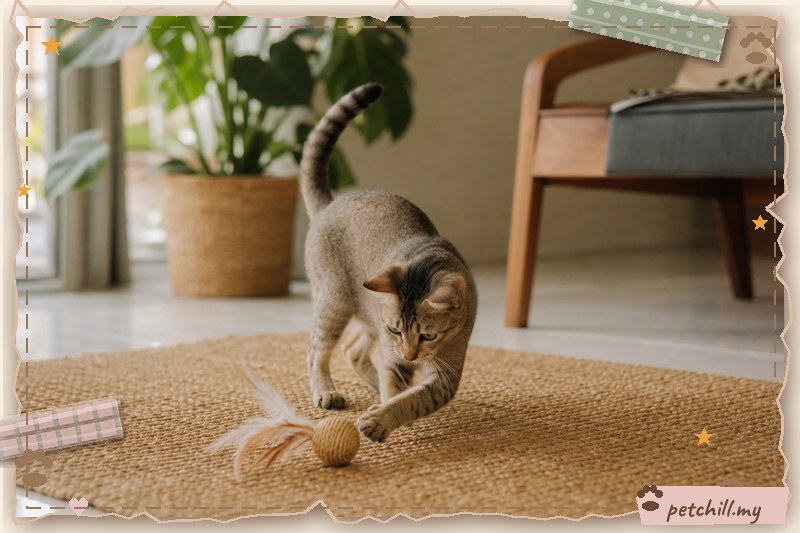
A wand toy is the closest thing to prey. Drag it along the floor, over a cat tree, behind a chair and under a rug. Let the cat stalk, then pounce. Avoid dangling it directly in the cat's face; prey runs away, so the toy should too.
Chase and fetch
Some cats learn to fetch small soft balls or crumpled paper. Roll the toy away and praise any chase. Not every cat will bring it back, and that is fine; the running is the point.
Puzzle feeders and foraging
Food puzzles turn a meal into exercise. Start easy with a shallow puzzle or a muffin tray with treats in the cups, then increase difficulty. Scattering dry food across a clean floor also encourages movement and sniffing.
Climbing and vertical space
Cats exercise by climbing. A sturdy cat tree, wall shelves or a secured bookshelf gives them a place to jump, stretch and survey the room. Place one near a window so the cat can watch birds and lizards, which is mental exercise too.
Clicker and trick training
Short training sessions with a clicker and treats teach sits, high-fives and targeting. Training is low-impact exercise and builds communication. Keep sessions to five minutes and end before the cat loses interest.
Harness walks
Some cats accept a well-fitted harness and a quiet outdoor area. This is optional and not suitable for every cat. Start indoors, reward calm behaviour, and never force a frightened cat outside. In Malaysia, choose cool times of day and check for ticks and fleas afterwards.
Setting up an indoor exercise space
You do not need a large house. You need safe vertical space and a clear floor area.
- Cat tree or shelves: secure to the wall if tall. Place near a window with a screen.
- Scratching posts: sisal or cardboard, tall enough for a full stretch.
- Clear corridor: a hallway or living room edge where you can drag a wand toy safely.
- Puzzle feeders: two or three, rotated weekly.
- Toy basket: rotate toys every few days so they feel new.
- Safe hiding spots: boxes and tunnels for stalking games.
Remove breakable items, secure cables and check that window screens are sturdy. Cats can push through loose screens, so this matters in high-rise apartments.
Exercise ideas for Malaysian homes
- Kuala Lumpur apartment: use a tall cat tree by the balcony screen, a hallway for wand chase, and puzzle feeders during the day. Keep play indoors during thunderstorms.
- Johor terrace house: use the upstairs landing for fetch and climbing shelves, and a screened patio for supervised bird-watching. Check for mosquitoes and keep heartworm prevention up to date with your vet.
- Penang rainy season: plan more indoor puzzle and training sessions when outdoor time is limited, and rotate toys to prevent boredom.
Common mistakes to avoid
- Playing with hands and feet. This teaches cats to bite and scratch people. Always use toys.
- Long, forced sessions. Better three short sessions than one long one that ends in frustration.
- No catch. A toy the cat can never catch is frustrating. Let it win sometimes.
- Playing right after a big meal. Wait at least an hour to reduce the risk of vomiting or discomfort.
- Ignoring pain signals. Limping, reluctance to jump or panting are reasons to stop and see a vet.
- Leaving string toys out. Strings and ribbons can be swallowed and cause serious internal injury. Put them away after play.
Exercise and weight management
If your cat is overweight, exercise alone rarely fixes it. Combine play with measured meals and a vet-guided weight plan. Use a kitchen scale to weigh food, and replace some bowl meals with puzzle feeders. Weigh your cat monthly and record it. Gradual loss is safer than crash dieting, which can cause serious liver problems in cats.
Exercise for kittens and senior cats
Kittens need frequent short play and safe toys. Avoid rough play and supervise children. Kittens learn bite inhibition through appropriate play with toys, not hands.
Senior cats benefit from gentle, low-impact play. Shorter sessions, floor-based toys and food puzzles keep them moving without stressing stiff joints. Warm, soft bedding and easy access to litter trays support activity. If your senior cat stops jumping or seems stiff, ask your vet about pain management.
When to see a vet
Stop play and contact a veterinarian if your cat:
- pants heavily or breathes with an open mouth during gentle play
- limps, cries out or refuses to jump
- collapses or seems weak after exercise
- vomits repeatedly after meals or play
- suddenly loses interest in play, food or grooming
- shows a swollen abdomen or unexplained weight change
- has a wound or bite from another animal
These signs can point to heart, joint, dental or metabolic problems. Early checks are easier than emergencies.
A simple weekly exercise plan
| Day | Morning | Daytime | Evening |
|---|---|---|---|
| Monday | Wand play 10 min | Puzzle feeder | Wand play 10 min |
| Tuesday | Fetch 10 min | Scattered food | Training 5 min |
| Wednesday | Wand play 10 min | Puzzle feeder | Chase game 10 min |
| Thursday | Climbing and shelves | Food puzzle | Wand play 10 min |
| Friday | Fetch 10 min | Scattered food | Training 5 min |
| Saturday | Wand play 15 min | New toy rotation | Gentle play 10 min |
| Sunday | Rest or gentle play | Puzzle feeder | Grooming and calm time |
Adjust to your cat. The goal is consistency, not perfection.
Final thoughts
Exercising a cat is mostly about short, frequent, satisfying play. Use wand toys to mimic prey, let your cat catch and win, feed after play, and add climbing and puzzle feeders to fill the day. Rotate toys, watch your cat's body language and stop when interest fades. With a simple routine, most cats become more active, calmer and easier to live with.
This article is general information only and is not a substitute for veterinary advice. If you are worried about your cat's health, weight or behaviour, consult a licensed veterinarian in Malaysia.
Related reading
- Daily Care Guide Malaysia: A Practical Routine for Dogs and Cats
- Best Interactive Toys for Cats in Malaysia: A Practical Buying Guide
- Catnip for Indoor Cats: A Complete Malaysian Guide
- Harness Training for Cats Step by Step: A Safe, Calm Guide for Malaysian Homes
- How to Use Catnip for Cats: A Practical Malaysian Guide
- Interactive Toys for Indoor Cats: A Practical Malaysian Guide
- Pet Daily Care Guide Malaysia: Brushing, Nails, Ears, Eyes, Teeth and Weight (2026)
- Best Cat Grass for Cats in Malaysia: A Practical Buying & Growing Guide
- Best Catnip for Cats in Malaysia: A Practical Buyer's Guide



