
The short answer
Getting a cat to drink more is less about forcing water and more about removing the reasons cats avoid bowls. Feed wet food every day, offer water in several wide, clean bowls placed away from food and litter, refresh it often, and try moving water if your cat is interested. Then watch the litter tray, because urine output tells you more than a bowl ever will.
Cats evolved as desert-adapted hunters, so their bodies are built to extract moisture from prey and concentrate urine. That works well on a mouse-based diet and less well on dry kibble in a hot, humid climate. The goal is not to make your cat gulp water; it is to raise total daily moisture intake and keep the urinary tract flushed.
Why cats are naturally poor drinkers
A cat's thirst drive is genuinely weaker than a dog's. Many cats will not drink enough to compensate for dry food alone, and some are fussy about temperature, taste, bowl shape and location. This is normal feline behaviour, not stubbornness.
Several everyday factors make it worse:
- Bowl width. Whiskers are sensitive. A deep, narrow bowl can cause whisker fatigue, so the cat drinks the minimum and leaves.
- Water freshness. Standing water picks up dust, hair and biofilm. Cats can smell stale water long before we notice it.
- Plastic taste. Some cats seem to prefer ceramic, glass or stainless steel over plastic, which can retain odours.
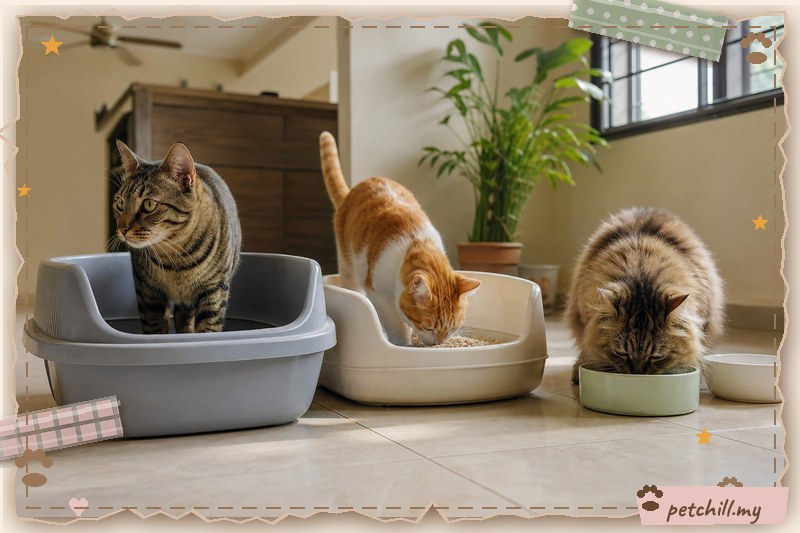
- Location. Water beside the food bowl or litter tray is often ignored. Cats prefer resources spaced apart.
- Competition. In a multi-cat home, a shy cat may be blocked from the only water source.
- Stress and change. A new home, a new pet or renovation can reduce drinking for days.
Understanding these points matters because most hydration problems are solved by changing the setup, not by buying something expensive.
Set up water stations properly
Think of water as a resource to be placed, not a bowl to be filled once a day.
Use wide, shallow bowls. Ceramic, glass or stainless steel with a wide mouth let the whiskers clear the rim. Fill to about two-thirds so the surface is easy to lap.
Offer at least three stations. A common layout is one near the sleeping area, one in a quiet hallway, and one away from the food. In a two-storey terrace house, put one upstairs so an older cat does not have to manage stairs for a drink.
Separate water from food and litter. Ideally, water sits at least a metre or two from the food bowl and well away from the litter tray. Cats are fastidious about contamination.
Refresh twice daily. Empty, rinse and refill morning and evening. A full scrub with hot water every few days prevents the slippery biofilm that puts cats off.
Keep it cool and shaded. In a Malaysian afternoon, a bowl on a sunny balcony heats up fast. Shade the station and consider a second bowl in an air-conditioned room if your cat spends time there.
Watch the water level. A cheap way to monitor intake is to fill bowls to the same mark each morning and note how far the level drops. This is rough, but it flags sudden changes.
Water type, temperature and taste
Cats are sensitive to smell and temperature, and small preferences add up.
| Option | What to try | Watch out for |
|---|---|---|
| Tap water | Let it stand 20 to 30 minutes in an open jug so chlorine dissipates | Strong chlorine or pipe taste may put cats off |
| Filtered water | A simple jug filter can improve taste | Change filters on schedule; old filters harbour bacteria |
| Bottled water | Useful as a short-term test | Not necessary long term; check sodium content if your vet has restricted salt |
| Rain or distilled water | Not recommended as a routine | Distilled lacks minerals and rainwater can carry contaminants |
| Cool water with ice | A single ice cube on hot days | Some cats dislike cold water; never force it |
| Warm water | A splash of warm (not hot) water mixed into wet food | Avoid overheating food |
A useful experiment is a taste test week: put filtered water in one bowl, tap water in another, and see which empties faster. Cats often vote clearly.
Wet food is the biggest lever
If you change only one thing, change the food. Wet food is roughly 70 to 80 per cent water, so a cat eating a standard pouch or can takes in a large share of daily moisture without drinking a drop.
Practical ways to add moisture:
- Feed at least one wet meal daily. Even cats on dry food can have a wet meal in the evening.
- Add warm water to wet food. A tablespoon or two makes a soupy texture many cats enjoy.
- Transition dry food gradually. Mix a little warm water into kibble, increasing over one to two weeks. Some cats refuse soggy kibble, so go slowly.
- Try different textures. Pate, shredded, flaked and mousse textures hold water differently. Some cats prefer a chunky texture with gravy.
- Use a lick mat or shallow plate. Spreading wet food thinly encourages licking and slows eating.
- Freeze wet food in small portions. In hot weather, a chilled portion can be more appealing, but never leave wet food out for long.
Food safety matters in a tropical climate. Discard uneaten wet food within about 30 minutes, and never leave a bowl of watered kibble sitting through the afternoon.
Fountains, taps and running water
Many cats are drawn to moving water, probably because it signals freshness. A fountain can meaningfully raise intake for the right cat.
Before buying, test cheaply. Leave a tap dripping for ten minutes and see whether your cat investigates. Try a wide bowl with a small aquarium pump, or simply refill the bowl while the cat watches.
If you buy a fountain:
- Choose one that dismantles fully; pumps and spouts grow biofilm quickly.
- Rinse the reservoir every two to three days and do a full clean weekly.
- Replace filters as the manufacturer directs, more often in a dusty home.
- Place it near a power point but away from the food bowl.
- Check the pump is quiet; a noisy motor defeats the purpose.
If your cat ignores it, do not force the issue. Some cats dislike the sound, the plastic taste or the splash. A plain wide bowl refreshed twice daily often works just as well.
Make drinking easier for older or unwell cats
Senior cats, cats with arthritis and cats recovering from illness may drink less simply because reaching the bowl hurts.
- Raise bowls on a stable stand so the cat does not have to crouch.
- Use non-slip mats so the bowl does not slide.
- Place water within easy reach of the sleeping spot.
- Offer a shallow plate if the cat has neck stiffness.
- Keep the path clear of furniture and other pets.
- In a Kuala Lumpur apartment with a single bathroom, keep a water station in the living area so an older cat does not queue at the bathroom tap.
For cats with dental pain, soft wet food and slightly warm water may be more comfortable than hard kibble.
Track intake without gadgets
You do not need an app to notice a problem. A simple routine works:
- Fill bowls to the same line each morning. Note roughly how much is gone by evening.
- Count urine clumps. Scoop at the same time daily and note the number and size. Fewer, larger clumps or none at all is a red flag.
- Weigh your cat monthly. A kitchen scale works; weigh yourself holding the cat, then subtract your own weight. Weight loss with increased drinking needs a vet.
- Check the skin tent weekly. Gently lift the scruff and release; it should snap back.
- Note gum moisture. Gums should be slick, not tacky.
- Keep a short log. A note on the fridge or phone is enough.
This is especially useful in a Penang rainy season, when humidity rises and some cats drink less while sleeping more. A written baseline helps you spot a real change rather than guessing.
Common mistakes that reduce drinking
- One bowl, one spot. Most cats do better with choices.
- Water next to food. Many cats avoid it.
- Dirty bowls. A slimy bowl is a strong deterrent.
- Narrow, deep bowls. Whisker contact puts cats off.
- Forcing water with a syringe. Never do this unless a vet has shown you how and why.
- Sudden food changes. Abrupt switches can cause refusal and stomach upset.
- Ignoring a sudden increase. More drinking is not always good news.
- Assuming a fountain solves everything. It still needs cleaning and a willing cat.
When to see a vet
Contact a veterinarian promptly if you notice any of the following:
- No urine in the litter tray for 12 to 24 hours, especially in a male cat. This can be a urethral blockage and is an emergency.
- Straining, crying or licking the genital area while in the tray.
- Blood in the urine or unusually smelly urine.
- Sudden increase in drinking with larger urine clumps, weight loss or increased appetite.
- Sudden decrease in drinking with lethargy, hiding or refusal to eat.
- Tacky gums, sunken eyes or skin that stays tented.
- Vomiting, diarrhoea or fever alongside changes in drinking.
- A cat that stops eating wet food and only picks at dry food for more than a day.
Increased thirst can be an early sign of kidney disease, diabetes or an overactive thyroid, and these are best caught early. Do not restrict water unless a vet has specifically told you to.
A simple daily hydration routine
| Time | Action |
|---|---|
| Morning | Empty, rinse and refill all bowls; note levels |
| Morning | Serve a wet meal with a spoonful of warm water |
| Midday | Check shaded bowls on hot days; top up if needed |
| Evening | Scoop litter and count clumps |
| Evening | Refill bowls; rinse the fountain if you use one |
| Weekly | Full bowl scrub, fountain deep clean, weigh the cat |
| Monthly | Review the log and note any pattern changes |
Small, consistent habits beat one-off purchases. If you do only three things, feed wet food, place several wide clean bowls, and watch the litter tray.
Frequently asked questions
See the FAQ section above for quick answers on daily volume, bowl refusal, fountains, watered kibble and dehydration signs.
Disclaimer
This article is general information for cat owners and is not a substitute for veterinary advice. Every cat is different, and health conditions, medications and diets affect water needs. Always consult a licensed veterinarian about your cat's hydration, diet or any change in drinking or urination.
Related reading
- Daily Care Guide Malaysia: A Practical Routine for Dogs and Cats
- Cat Water Intake for Cats: A Step-by-Step Daily Hydration Plan
- How to Groom Senior Cats: A Gentle Daily-Care Guide for Malaysian Owners
- Best Water Fountain for Cats in Malaysia: A Practical Buying Guide
- Cat Sitter Tips for Cat Owners in Malaysia: A Complete Guide
- Cat Water Intake: Essential Tips for Malaysian Pet Owners
- Ear Cleaning Cat Tips Malaysia: Safe At-Home Routine for Malaysian Owners
- How to Cat Massage a Cat: A Gentle, Step-by-Step Guide for Malaysian Owners
- How to Clean a Cat's Ears Safely: A Step-by-Step Guide for Malaysian Owners
- How to Monsoon-Care a Cat in Malaysia: A Practical Daily-Care Guide
- How to Use Cat Grass for Cats: A Practical Malaysian Guide
- How to Use a Scratching Post for Cats: A Complete Malaysian Guide