
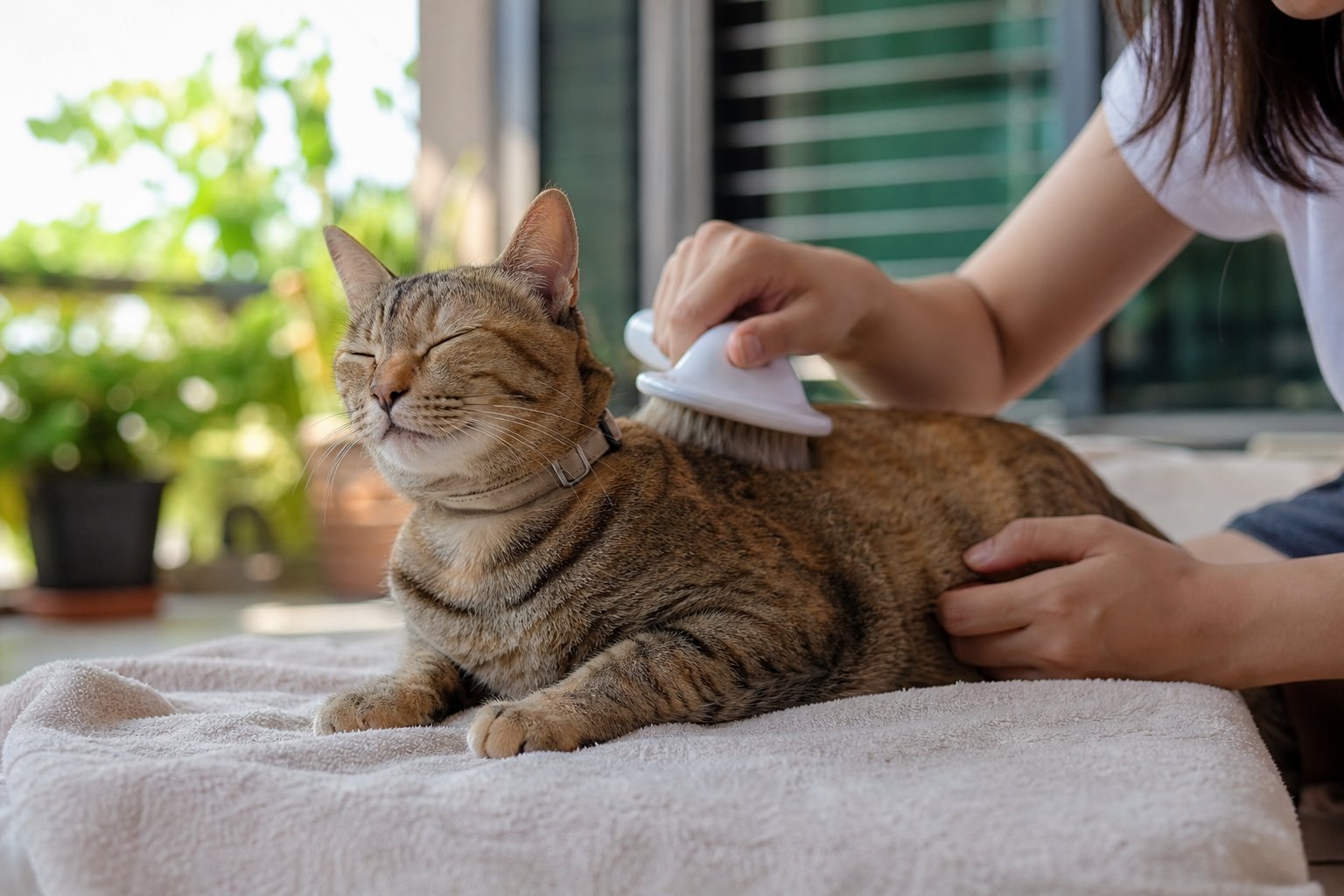
Why indoor cats need more than a bowl
Indoor cats live longer, safer lives, but they often miss the mental and physical stimulation that outdoor hunting provides. A puzzle feeder for indoor cats bridges that gap. Instead of eating from a bowl in two minutes, your cat paws, nudges and problem-solves for each piece of kibble. The result is a slower meal, a tired brain and a more content cat.
This guide explains how puzzle feeders work, which types suit different cats, how to introduce one safely, and how to adapt the idea to Malaysian homes, from Kuala Lumpur apartments to Penang's rainy season.
What a puzzle feeder actually does
A puzzle feeder is any container that holds food and requires your cat to perform an action to release it. That action might be pawing, rolling, flipping, fishing with a paw, or pushing a slider. The food is the reward, and the puzzle is the work.
Three things happen when a cat uses one:
- Eating slows down. Fast eaters swallow air and may vomit soon after meals. Puzzle feeders stretch a meal from seconds to minutes.
- The brain gets a workout. Problem-solving is enrichment. Indoor cats that lack things to do may over-groom, vocalise or nap out of boredom.
- Activity increases. Even a small amount of pawing and walking between feeders adds movement to a sedentary indoor day.
A puzzle feeder is not a substitute for play, scratching or social contact. It is one tool in a wider enrichment plan.
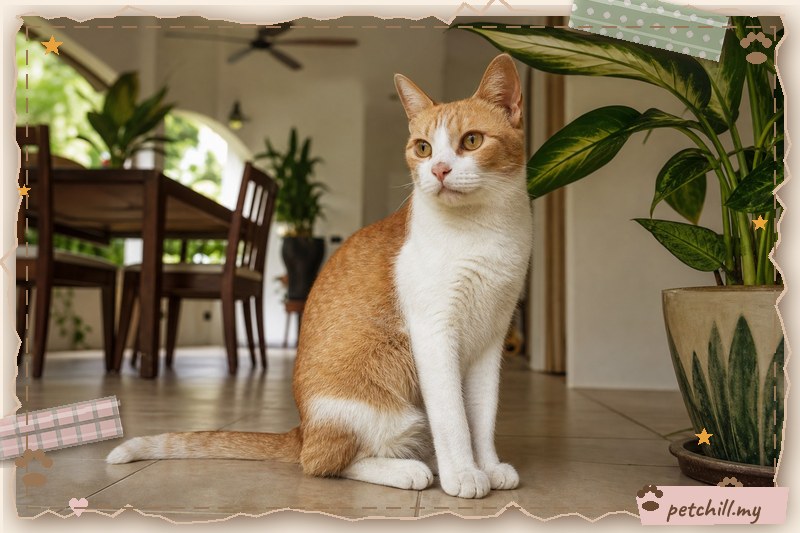
Types of puzzle feeder for indoor cats
There is no single best feeder. The right choice depends on your cat's age, appetite, teeth and personality.
| Feeder type | How it works | Best for | Watch out for |
|---|---|---|---|
| Roller ball | Cat rolls the ball; kibble drops out of a hole | Beginners, active cats | Rolls under furniture; noisy on hard floors |
| Maze bowl | Kibble sits in channels; cat licks or paws it out | Fast eaters, flat-faced breeds | Some cats give up if channels are too deep |
| Flip board | Cat flips lids or sliders to reveal food | Confident problem-solvers | Loose parts; check hinges |
| Tower or dispenser | Cat paws a lever or pushes a button | Experienced cats | Can jam with large kibble |
| Snuffle mat | Fabric strips hide kibble | Gentle eaters, senior cats | Not for chewers; wash regularly |
| Lick mat | Wet food spread into grooves | Wet-food meals, hot days | Use small portions; clean thoroughly |
Roller balls and treat balls
These are the easiest entry point. Fill the ball with kibble, show your cat how it rolls, and let instinct take over. Choose a ball with an adjustable opening so you can make it harder later. On tiled floors in Malaysian homes, a ball can be loud at night. A rubber ball is quieter than hard plastic.
Maze bowls
A maze bowl is a shallow dish with raised ridges that force your cat to eat around obstacles. It is excellent for cats that gulp food, because the ridges slow the mouth without requiring complex learning. Flat-faced cats such as Persians may find deep mazes frustrating; choose a shallow design.
Flip boards and puzzle boxes
These have compartments hidden under lids, sliders or drawers. They suit curious cats that already understand simple feeders. Start with all lids open, then close one at a time. Check for small parts that could be chewed loose.
Snuffle mats and lick mats
A snuffle mat is a fabric mat with strips that hide kibble. It mimics foraging and suits gentle cats. A lick mat holds wet food or puree and encourages licking, which is calming. In Malaysia's heat, freeze a lick mat with wet food for a cooling treat. Wash both types after use to prevent bacteria growth.
Matching the feeder to your cat
Kittens
Kittens learn fast but tire quickly. Use a shallow maze bowl or a roller ball with a wide opening. Supervise, and do not let a kitten go hungry while learning. Offer part of the meal in a normal bowl until the kitten is confident.
Adult indoor cats
Most healthy adult cats can use a roller ball or maze bowl within a few days. Rotate feeders to prevent boredom. A cat that masters one puzzle may ignore it after a week, so keep two or three options.
Senior cats
Older cats may have arthritis, dental pain or reduced vision. Choose a snuffle mat or a shallow maze bowl that requires minimal movement. Place it on a non-slip mat. If your senior cat seems reluctant, ask your vet to check for pain before assuming fussiness.
Flat-faced breeds
Persians, British Shorthairs and similar breeds may struggle to reach deep channels. Choose wide, shallow feeders and avoid narrow towers. A lick mat is often easier than a paw-operated puzzle.
Cats on prescription diets
Some cats need a veterinary prescription diet for kidney, urinary or other conditions. A puzzle feeder can still be used if the kibble fits, but check with your vet first. Do not mix prescription food with treats or other kibble in a puzzle.
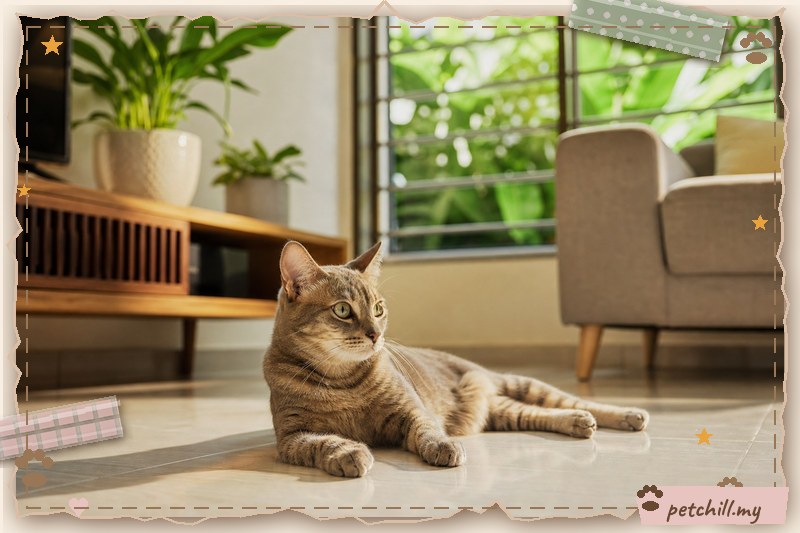
How to introduce a puzzle feeder
Introducing a puzzle feeder is a training exercise, not a test. Follow these steps:
- Start easy. Choose the simplest feeder and place a few kibble on top so your cat eats without effort.
- Use one meal a day. Keep the other meal in a normal bowl so your cat is not hungry while learning.
- Supervise the first sessions. Watch for frustration, chewing or guarding.
- Increase difficulty slowly. Close one compartment or narrow the opening only after your cat finishes confidently.
- Never force it. If your cat walks away, put the feeder away and try again later with an easier version.
- Keep fresh water nearby. Puzzle feeders can make cats thirsty, especially in hot weather.
Most cats learn within a few sessions. Some take longer. Patience matters more than speed.
DIY puzzle feeders for Malaysian homes
You do not need to buy a feeder to start. Simple household items can work if they are safe.
- Cardboard box with holes. Cut paw-sized holes in a shallow box, add kibble, and tape the edges so your cat cannot chew cardboard. Replace when soggy or torn.
- Muffin tray. Place kibble in a few cups of a muffin tray and cover some with tennis balls. Your cat must move the balls to eat. Supervise, because balls can be chewed.
- Plastic bottle roller. Use a clean, sturdy bottle with smooth edges and a small hole. Remove the cap and label. Check daily for cracks. This is not suitable for cats that chew plastic.
- Toilet roll tube. Fold one end, add kibble, and leave the other end partly open. This is a short-lived toy; discard once chewed.
DIY feeders are not as durable as commercial products. Inspect them before every use and throw away anything cracked, sharp or small enough to swallow.
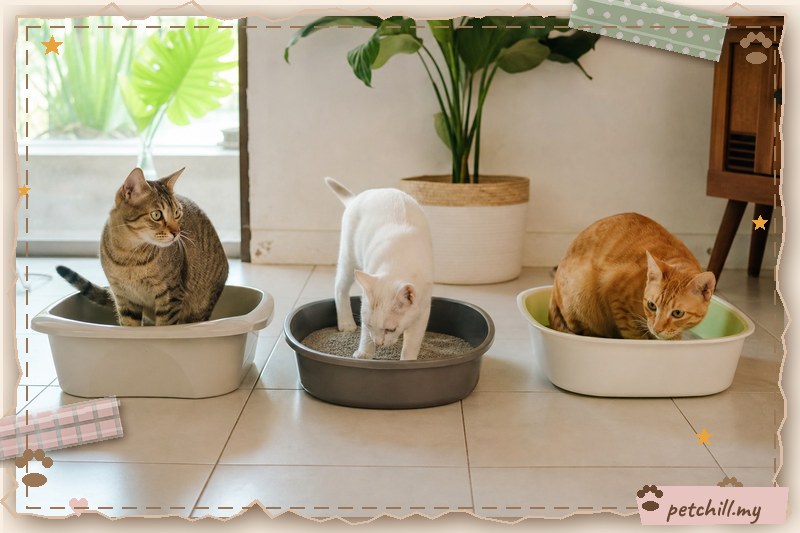
Safety rules for every puzzle feeder
- No loose parts. Remove ribbons, bells or small lids that could be swallowed.
- Non-toxic materials. Avoid painted wood, soft plastics and anything with a strong chemical smell.
- Right size kibble. Kibble that is too large jams the feeder; kibble that is too small falls out too easily.
- Supervise chewers. Some cats chew plastic. If yours does, choose rubber or fabric feeders and supervise.
- Wash regularly. Saliva and kibble dust build up. In Malaysia's humidity, damp feeders can grow mould quickly.
- Separate multi-cat households. Feed cats in different rooms or use separate feeders to prevent guarding.
- Check teeth. A cat that suddenly avoids hard kibble may have dental pain. See a vet.
Puzzle feeders and weight control
A puzzle feeder can support weight control, but it does not replace portion control. The key is total daily calories, not the bowl type.
Weigh your cat's food with a kitchen scale rather than using a cup. Cups vary, and a few extra kibble a day adds up. Ask your vet for a target weight and a daily portion. Then split that portion across meals and puzzle feeders.
Puzzle feeders help in two ways. First, they slow eating, which may help your cat feel satisfied. Second, they add activity. Neither effect is a licence to overfeed. Treats used in puzzle feeders count toward the daily total.
If your cat is overweight, do not put it on a crash diet. Cats can develop serious liver problems if they lose weight too fast. Ask your vet for a safe plan.
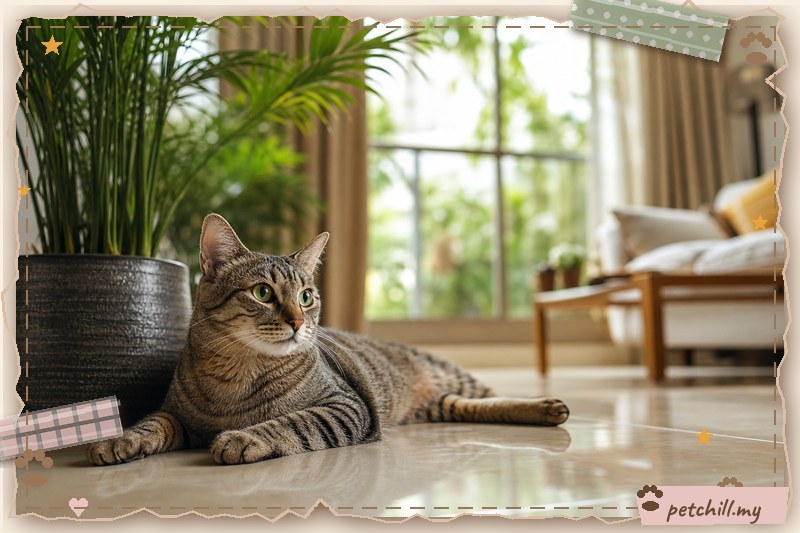
Enrichment beyond the feeder
A puzzle feeder is one part of indoor enrichment. Pair it with:
- Daily play. Two short sessions with a wand toy can satisfy hunting instincts.
- Vertical space. Shelves, cat trees and window perches give indoor cats territory.
- Scratching posts. Place them near sleeping areas and entrances.
- Safe outdoor access. A secure balcony or window screen gives fresh air and birdwatching.
- Rotation. Swap toys and feeders weekly so novelty stays high.
Adapting to Malaysian homes
Kuala Lumpur apartment
In a high-rise apartment, noise and space matter. Choose a rubber roller ball or a snuffle mat to reduce clatter on tiled floors. Place feeders away from balcony edges and open windows. If your apartment is small, rotate one feeder at a time rather than leaving several out.
Penang rainy season
During heavy rain, indoor cats may have less window time and more boredom. Keep a stash of puzzle feeders and rotate them. Humidity can make fabric snuffle mats damp, so dry them in sunlight or a well-ventilated area after washing. Check kibble in feeders for clumping.
Johor terrace house
In a multi-level terrace house, place feeders on different floors to encourage movement. Keep them away from car porches and open doors. If you have other pets, feed cats in a separate room to avoid competition.
When to see a vet
Contact a veterinarian if your cat:
- Vomits repeatedly after meals, even with a puzzle feeder
- Refuses food for more than 24 hours
- Shows pain when eating, drops food, or chews on one side
- Loses weight despite a normal appetite
- Becomes aggressive around food or guards feeders
- Has diarrhoea, constipation or straining to defecate
- Is a kitten, senior or pregnant cat with a sudden change in appetite
A puzzle feeder is not a treatment for a medical problem. If your cat's eating changes, get a check-up.
Quick comparison: which feeder first?
| Your cat | First feeder | Why |
|---|---|---|
| Fast eater, healthy | Maze bowl | Slows eating without complex learning |
| Curious adult | Roller ball | Easy to learn, adjustable |
| Senior with arthritis | Snuffle mat | Low movement, gentle |
| Flat-faced breed | Shallow maze bowl | Easier reach |
| Wet-food only | Lick mat | Holds puree or wet food |
| Chews plastic | Rubber roller or fabric mat | Safer materials |
Final thoughts
A puzzle feeder for indoor cats is a simple, low-cost way to add enrichment and slow eating. Start easy, supervise, and match the feeder to your cat's health and personality. Combine it with play, vertical space and portion control for the best results. If you are unsure whether a feeder suits your cat, ask your veterinarian.
This article is general information only and is not a substitute for veterinary advice. Always consult a licensed veterinarian about your cat's health, diet and weight.
Related reading
- Cat Grass for Indoor Cats: A Practical Malaysian Guide
- Daily Care Guide Malaysia: A Practical Routine for Dogs and Cats
- Interactive Toys for Indoor Cats: A Practical Malaysian Guide
- Best Catnip for Cats in Malaysia: A Practical Buyer's Guide
- Best Interactive Toys for Cats in Malaysia: A Practical Buying Guide
- Cat Exercise for Cats Step by Step: A Practical Daily Plan for Malaysian Homes
- Catnip for Indoor Cats: A Complete Malaysian Guide
- Harness Training for Cats Step by Step: A Safe, Calm Guide for Malaysian Homes
- How to Use Cat Grass for Cats: A Practical Malaysian Guide



