
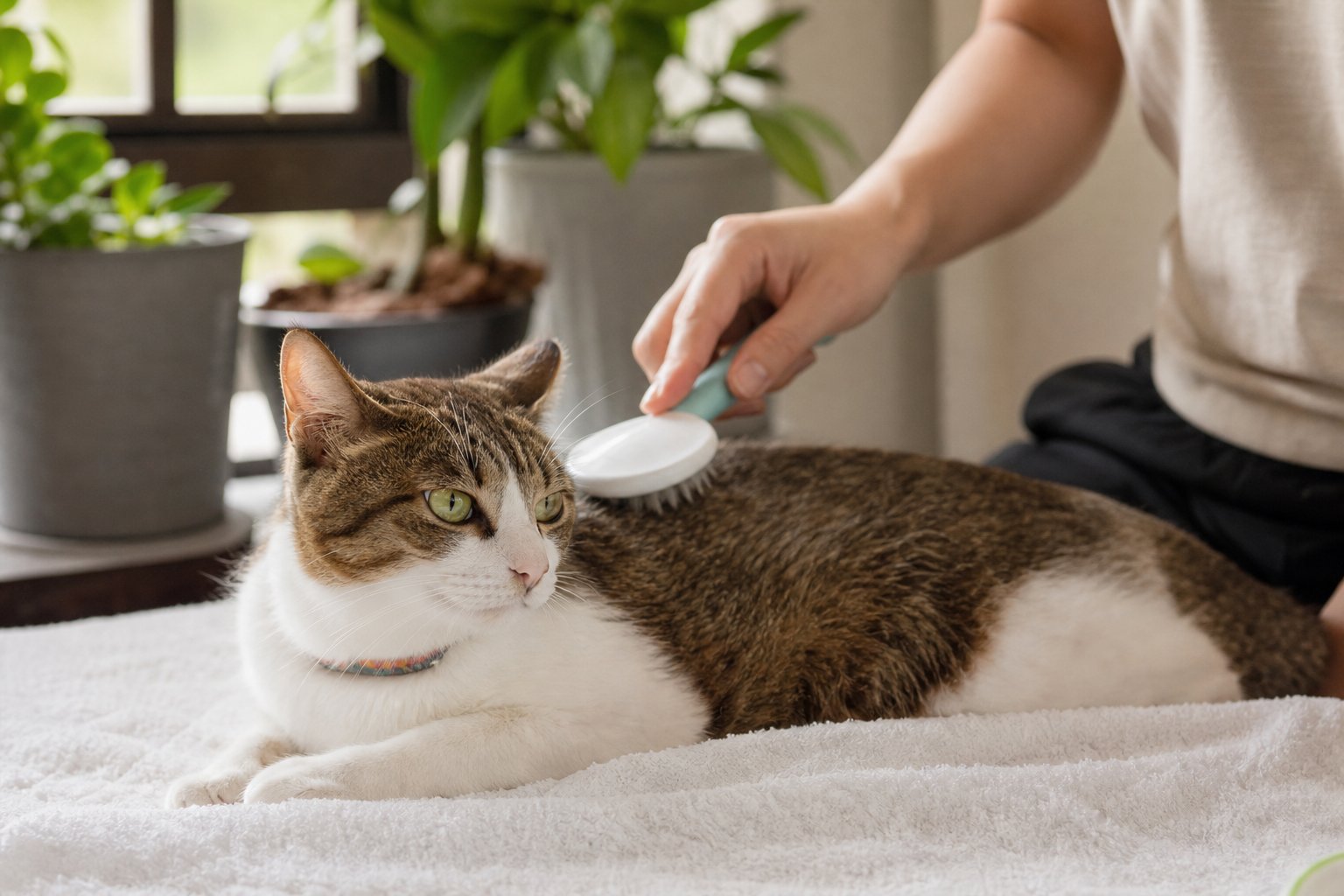
Why interactive toys matter for cats
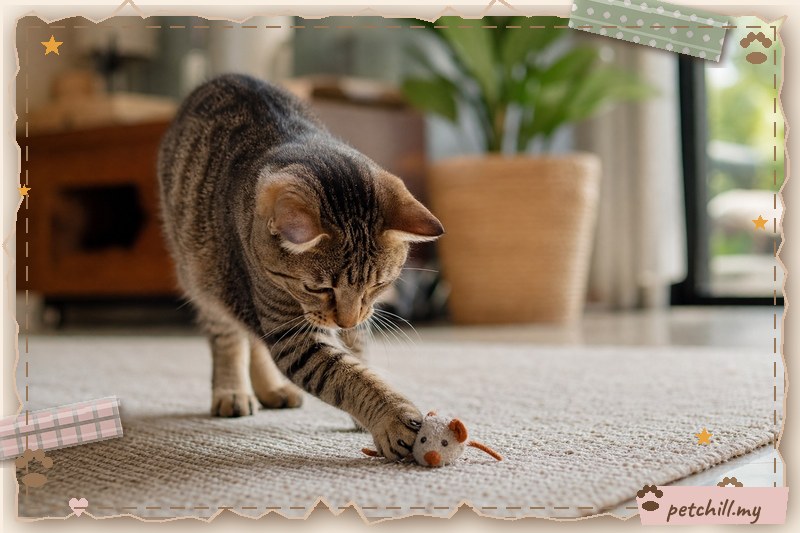
Interactive toys for cats are designed to trigger natural hunting instincts — stalking, chasing, pouncing and catching. Unlike a ball left on the floor, they require your involvement or electronic movement, which makes play more engaging and mentally stimulating. In a Malaysian home, where many cats live indoors in apartments or terrace houses, interactive play is often the main source of exercise and enrichment. It helps prevent boredom, supports weight management and strengthens the bond between cat and owner.
This guide explains how to use interactive toys effectively, safely and in a way that suits your cat's personality. It covers toy types, session structure, rotation, safety checks and when to seek veterinary advice.
Know your cat's prey drive first
Not all cats play the same way. Before buying toys, observe your cat's natural style:
- Chasers love fast-moving wand toys and balls.
- Stalkers prefer slow, creeping movements and hide-and-pounce games.
- Pouncers enjoy toys that pop out from behind furniture.
- Watchers may prefer toys that move at a distance before they engage.
Match the toy to your cat's style. A stalker may ignore a fast, erratic wand but become riveted by a toy dragged slowly along the floor. A chaser may lose interest in a stationary toy. Trying different movement patterns is part of learning how to use interactive toys for cats effectively.
Types of interactive toys and how to use them
| Toy type | Best for | How to use | Safety notes |
|---|---|---|---|
| Wand/teaser toys | Most cats; bonding | Move like prey: drag, pause, twitch, hide behind furniture | Supervise; store out of reach; check strings and feathers |
| Puzzle feeders | Food-motivated cats; mental stimulation | Start easy; use part of daily ration | Wash regularly; avoid if cat gets frustrated |
| Electronic motion toys | Independent play; busy owners | Introduce on low setting; let cat investigate | Check battery compartment; avoid small parts |
| Laser pointers | High-drive cats | End on a real toy or treat | Never shine in eyes; can cause frustration |
| Ball tracks | Kittens and active cats | Let cat bat and chase; place on non-slip surface | Ensure parts are secure |
| Catnip toys | Cats that respond to catnip | Offer for short periods; replace when worn | Not all cats respond; avoid overuse |
Wand toys
Wand toys are the gold standard for interactive play because you control the movement. Move the lure away from your cat, not toward it, to mimic fleeing prey. Let the toy disappear behind a cushion or around a corner, then reappear. Pause frequently — cats are ambulatory hunters and need time to stalk. At the end of the session, allow your cat to catch and hold the toy briefly before putting it away. This 'win' is important for satisfaction.
Puzzle feeders
Puzzle feeders turn mealtime into a mental workout. Start with an easy puzzle and gradually increase difficulty. Use a portion of your cat's regular food rather than extra treats to avoid weight gain. In Malaysian humidity, wash puzzle feeders frequently to prevent mould and bacteria build-up.
Electronic toys
Electronic toys that move on their own can entertain a cat while you are busy, but they are not a substitute for your involvement. Introduce them on a low setting and let your cat approach at its own pace. Some cats find unpredictable movement stressful, so monitor the first few sessions. Always check battery compartments are secure and there are no small parts that could be swallowed.
Laser pointers
Laser pointers are popular because they are easy and cats often chase them enthusiastically. However, the cat never catches the light, which can lead to frustration. If you use a laser, end each session by landing the beam on a real toy or a treat so your cat gets a tangible reward. Never shine the laser in your cat's eyes or at other pets.
How to structure a play session
A good interactive play session follows a simple arc:
- Warm-up (1–2 minutes): Move the toy slowly to get your cat's attention.
- Active chase (3–5 minutes): Increase speed and vary direction. Let your cat almost catch the toy.
- Cool-down (1–2 minutes): Slow the toy, allow a catch, then offer a small treat or meal.
- Put the toy away: Store wand toys out of reach to prevent unsupervised chewing.
Keep sessions short. Cats are sprinters, not marathon runners. Two to three sessions per day is ideal for most indoor cats. If your cat walks away, end the session — forcing play can create aversion.
The importance of rotation
Cats habituate quickly to toys. A toy that is exciting today may be ignored tomorrow. Rotate toys every few days: keep a small selection available and store the rest. When you bring a 'new' toy back out, it often regains its appeal. This is one of the simplest ways to get more value from interactive toys for cats without buying more.
Safety checks for interactive toys
Interactive toys can pose hazards if not maintained. Before each session, check:
- Strings and ribbons: Frayed or loose strings can be swallowed, causing intestinal obstruction. Replace damaged wand toys.
- Small parts: Bells, feathers and plastic eyes can detach. Remove loose parts immediately.
- Batteries: Ensure battery compartments are screwed shut. Keep spare batteries out of reach.
- Catnip: Some cats become over-excited or aggressive. Use in moderation.
- Supervision: Wand toys and string toys should never be left with an unsupervised cat.
In Malaysian homes, humidity can cause mould on fabric toys and rust on metal parts. Inspect toys regularly and dry them thoroughly after cleaning.
Using interactive toys for behaviour support
Interactive play can help with common behaviour issues:
- Night-time activity: A vigorous play session before bed can help your cat settle.
- Aggression toward hands: Redirect play to toys. Never use hands as toys.
- Boredom-related destructiveness: Puzzle feeders and rotation can reduce boredom.
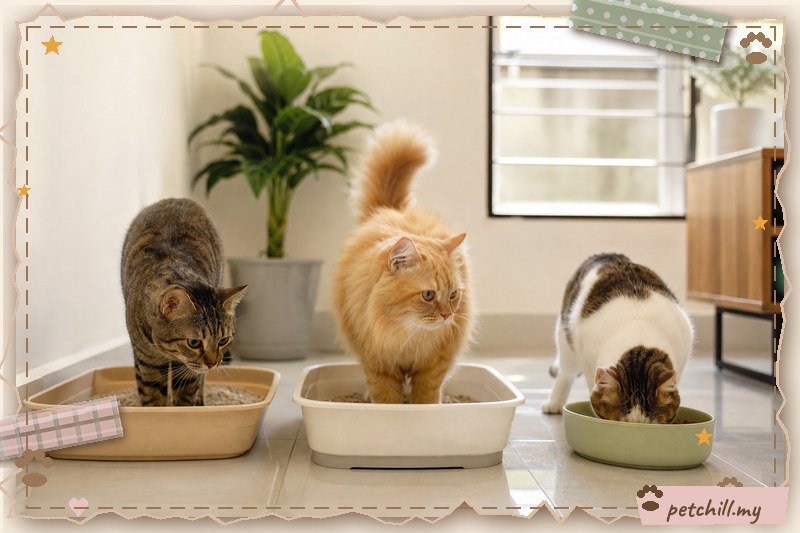
- Multi-cat households: Play with cats separately if one monopolises toys, then supervise group play.
If your cat shows aggression, anxiety or sudden changes in play behaviour, consult your veterinarian. Pain and illness can masquerade as behaviour problems.
Adapting play for Malaysian homes
Most Malaysian cats live indoors, so interactive play is especially important. In a Kuala Lumpur apartment, space may be limited, so choose toys that work in small areas — wand toys with short lures, puzzle feeders and ball tracks. In a Johor terrace house, you may have more room for chasing games along a corridor or in a safe enclosed area. During the Penang rainy season, when outdoor time is limited, interactive toys become essential for preventing boredom.
Always play on non-slip surfaces. Tiled floors can be slippery for enthusiastic cats, especially seniors. Provide a rug or play mat.
When to see a vet
Interactive play is generally safe, but seek veterinary advice if you notice:
- Your cat suddenly loses interest in play or becomes lethargic.
- Your cat shows pain, limping or reluctance to jump during play.
- Your cat swallows a toy part or string — this is an emergency.
- Your cat becomes aggressive or over-aroused during play and cannot calm down.
- Your cat has difficulty breathing or coughs during play.
These signs may indicate underlying medical issues. Your veterinarian can assess your cat and advise on appropriate activity levels.
Building a play routine
Consistency helps. Try to play at similar times each day, such as after breakfast and before bed. Use play as a reward and as a transition between activities. Over time, your cat will learn the routine and may even remind you.
Common mistakes to avoid
- Playing with hands: This teaches cats that hands are toys and can lead to biting.
- Overly long sessions: Cats lose interest; short and frequent is better.
- No catch: Always let your cat catch the toy at the end.
- Leaving toys out: Unsupervised wand toys are a hazard.
- Ignoring frustration: If your cat hisses or walks away, stop.
Choosing toys for kittens and seniors
Kittens need gentle, safe toys that are not small enough to swallow. Senior cats may prefer slow-moving toys and shorter sessions. Consult your vet for age-specific advice.
Final thoughts
Interactive toys for cats are a simple, effective way to improve your cat's physical and mental health. By matching toys to your cat's prey drive, structuring short sessions, rotating toys and checking for safety, you can create a enriching play routine that benefits both of you. Start today with one wand toy and one puzzle feeder, and build from there.
This article is for general information only and is not a substitute for veterinary advice. Always consult a licensed veterinarian for health concerns.
Related reading
- Daily Care Guide Malaysia: A Practical Routine for Dogs and Cats
- Best Catnip for Cats in Malaysia: A Practical Buyer's Guide
- How to Harness Train a Cat: A Step-by-Step Guide for Malaysian Owners
- Pet Daily Care Guide Malaysia: Brushing, Nails, Ears, Eyes, Teeth and Weight (2026)
- Cat Grass for Indoor Cats: A Practical Malaysian Guide
- Cat Massage for Cats Step by Step: A Gentle Guide for Malaysian Pet Parents
- Catnip for Indoor Cats: A Complete Malaysian Guide
- Harness Training for Cats Step by Step: A Safe, Calm Guide for Malaysian Homes
- How to Exercise a Cat: A Practical Daily Play Plan for Malaysian Homes



