
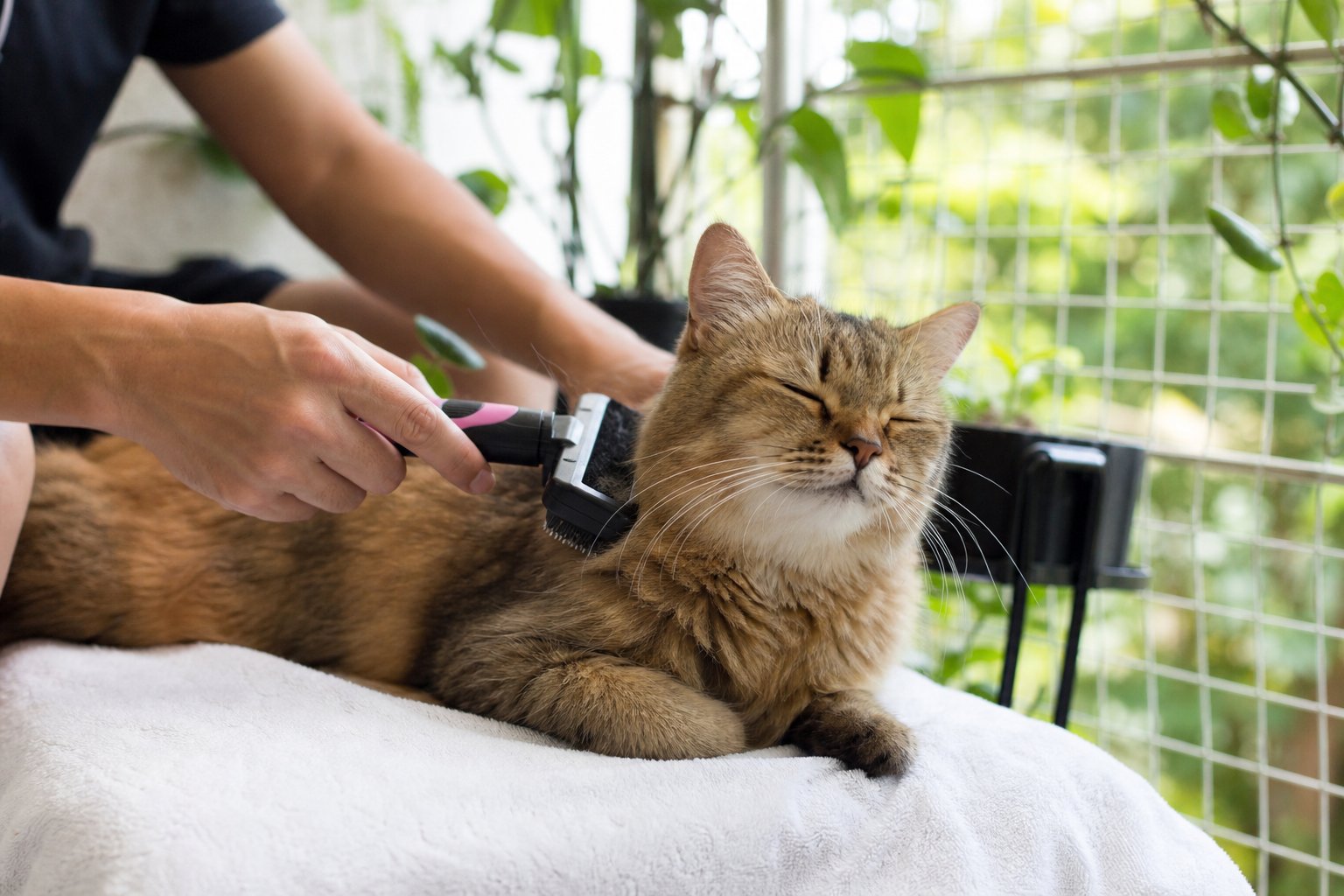
Quick answer: turn daily care into a fixed timetable you can follow without thinking. Brush cats daily to three times a week and dogs two to three times, trim nails every two to four weeks, brush teeth daily (minimum three to four times a week), check eyes every day but clean only when there is discharge, weigh monthly, and clean the house with properly diluted products kept away from pets until surfaces are fully dry. Short and frequent beats long and rare.
The weekly care schedule
Care frequency is never random. It depends on three things: coat type and breed, age and activity level, and any existing condition. Long-haired cats and double-coated dogs need brushing three to four times as often as short-haired pets. A pet with joint discomfort needs gentler handling and shorter sessions, because holding one position for too long hurts. Older pets need more frequent weight records, because weight change is often the earliest sign that something is wrong.
The table below is a starting point. Adjust it to your own pet, and remember the guiding rule: five minutes every day works better than one long session every fortnight, and it is far less stressful for the animal.
| Care task | Cats | Dogs | What to check each time |
|---|---|---|---|
| Brushing | Short coat: daily to 3x weekly; long coat: daily | Short coat: 2-3x weekly; long or double coat: daily | Rashes, bald patches, lumps, flea droppings |
| Nail trimming | Every 2-4 weeks | Every 3-6 weeks (longer if walks are frequent) | Cracked nails, swelling at the nail bed |
| Ear cleaning | Healthy ears monthly or as needed | Drop-eared breeds every 2-4 weeks; erect ears monthly | Smell, colour, reluctance to let ears be touched |
| Eye care | Observe daily, wipe only if discharge appears | Observe daily; wipe daily if tear staining is heavy | Redness, discharge colour, squinting |
| Teeth brushing | Daily ideal, minimum 3-4x weekly | Daily ideal, minimum 3-4x weekly | Breath, tartar, bleeding gums |
| Weight record | Monthly; every two weeks from age seven | Monthly; every two weeks for large and senior dogs | Unexplained rise or fall over a short period |
| Full-body hands-on check | Weekly, done together with brushing | Weekly, done together with brushing | Lumps, belly, joint abnormalities |
Coat care: brushing and bathing
Brushing gives the best return of any care task because it does three jobs at once: it removes loose hair that would otherwise be swallowed and form hairballs, it massages the skin and boosts circulation, and it gives you a legitimate reason to run your hands over the whole body and notice problems early. Cats shed far more hair than most owners expect, and unbrushed hair ends up either in the digestive tract or drifting through the house.
You do not need a full toolkit. A rubber grooming glove or a fine-toothed comb suits short-haired cats. Long-haired cats and double-coated dogs need an undercoat rake used first against the skin layer, followed by a wide comb through the topcoat. A de-shedding tool is useful during moulting season but should not be used daily, because over-scraping irritates the skin.
Three technique rules matter. Work in the direction of hair growth, split the coat into sections and go slowly, and never yank a mat. Pulling hurts, and it teaches the pet to flee whenever a comb appears, turning every future session into a struggle. Work mats apart gently with your fingers, use a small amount of pet detangling spray if needed, and leave anything impossible to a groomer. While brushing, pay attention to the areas where fleas and skin trouble hide: behind the ears, the armpits, the belly and the base of the tail.
Bathing is a different calculation. Cats are self-cleaning animals, and a healthy indoor cat may only need a bath every few months, or once or twice a year, depending on how it lives and whether it has a skin condition. Dogs generally need one every three to eight weeks, adjusted for breed, skin health and how much they run outdoors. Washing too often strips the natural oils that keep the skin barrier intact, leaving it drier and itchier.
Choose a shampoo that is pet-specific, gentle and pH-appropriate for animals; human shampoos are formulated for human skin and are not suitable for repeated use. If your pet has a skin condition, medicated shampoo frequency and contact time (usually five to ten minutes before rinsing) must follow your vet's instructions, not your own judgement. Before the bath: brush out tangles, use comfortably warm water, place cotton balls in the ear openings to keep water out, rinse thoroughly because leftover shampoo is a common cause of itchiness, and dry completely, especially the undercoat and belly, since damp fur invites fungal problems. Fragranced shampoos need an extra thorough rinse because pets lick their coats; unscented formulas suit sensitive skin or airways. Patch-test any new product on the inside of a hind leg and watch for redness for 24 hours. Local prices vary widely, so ask your nearest vet or pet retailer for a recommendation suited to your pet's skin.
Nail trimming
Overgrown nails hurt. A cat's claws curve inward, so excessively long nails can press into the paw pads. On dogs, long nails force the toes to tilt upward, which changes the whole gait and loads the joints over time. For a pet that already has joint trouble, nail length matters even more: if every step hurts, the pet walks less, and muscle wastes away.
Before cutting, understand the structure. Inside a clear nail you will see a pinkish core containing blood vessels and nerves, usually called the quick. White nails are easy to read; black nails are not, so trim only a small slice at a time and stop as soon as a pale circle appears in the middle of the cut surface.
A practical sequence:
- Use pet nail clippers made for the job; scissor-type for cats and guillotine or plier-type for dogs. Human clippers can crush and split the nail.
- Work in good light, ideally daylight or a desk lamp.
- Position the pet facing away from you with the paw raised, or let it lie across your lap rather than dangling in mid-air.
- Press the pad gently to extend each nail, clip one at a time, and reward immediately after each nail.
- File the cut edge so sharp corners cannot scratch floors or skin.
- If you cut into the quick and it bleeds, hold styptic powder against the spot, comfort the pet and let it rest. If bleeding does not stop, contact your vet.
Some pets resist from the start. The fix is to shrink the task: touch the paw, press the nail, release after a few seconds, then treat. One or two nails per session, spread over several days, is a completely acceptable way to work. Forcing the issue usually creates a lasting aversion.
Ears and eyes
A healthy ear canal is pale pink, clean and free of strong odour. Many owners assume the more often they clean ears the better, but over-cleaning damages the canal's natural protective layer and can increase infection risk. A healthy cat may need no routine cleaning at all, just a look and a sniff during brushing sessions.
To clean, use a vet-approved ear cleaner rather than human alcohol or hydrogen peroxide. Put in an appropriate amount, massage the base of the ear for about fifteen seconds, let the pet shake its head, then wipe out the loosened debris with a cotton ball. Never push cotton swabs deep into the canal; that packs dirt further in and can damage the eardrum. Always finish by drying the ear opening with a dry cotton ball, because a warm, humid climate makes trapped moisture a breeding ground for yeast and bacteria.
Do not clean at home and see a vet instead if you notice a clearly red, swollen or hot canal, yellow-green pus or heavy dark discharge, a strong smell, pain when the ears are handled, or persistent head shaking and ear scratching. An ear infection needs medication aimed at the actual cause; cleaning supports treatment but will not cure it alone.
Eyes follow the rule that observation matters more than cleaning. A quick daily look at whether both eyes are symmetrical, whether there is discharge, and whether the whites are unusually red is worth more than any wiping routine. When cleaning is needed, use a clean cotton ball dampened with saline or warm water, wipe from the inner corner outward, and use a separate ball for each eye to avoid spreading infection.
Tear staining is common in flat-faced breeds such as Persians and Exotic Shorthairs, whose tear ducts are naturally shorter, so overflow spills onto the fur. Other contributors include inward-rolling eyelids, environmental irritants such as dust, aerosol fragrances and tobacco smoke, and food sensitivity.
On the question of red blood vessels and diet: possibly related, but never treat it as the only explanation. Food sensitivity can inflame the conjunctiva, yet the same redness appears with conjunctivitis, a scratched cornea, a foreign body or a viral infection. Practically, write down the date redness appeared and compare it with the date you changed food or treats. If redness lasts more than a day, or comes with discharge, squinting or light sensitivity, stop observing and book a vet. Human eye drops must never be used on pets; preservative and pH differences can cause harm, and any eye medication should come from a vet.
Teeth brushing
Dental disease is one of the most common problems seen in cats and dogs, and most pets over three years old have some degree of plaque and tartar buildup. The important point is that oral bacteria do not stay in the mouth. Chronic gum inflammation lets bacteria enter the bloodstream, and that is linked with ongoing strain on the heart, kidneys and liver. Brushing is therefore a whole-body investment, not a breath-freshening exercise.
Guidance from international veterinary dental bodies recommends brushing daily, with a minimum of three to four times a week. The reason is timing: plaque begins to mineralise into tartar within roughly two days, and once it has hardened, brushing cannot remove it. Only a professional veterinary scaling can.
How to build the habit:
- Use a pet toothbrush: a fingertip sleeve works well for beginners, a dual-headed brush suits pets already accustomed to the routine.
- Use pet enzymatic toothpaste in flavours such as chicken or malt. Human toothpaste is unsafe; fluoride and sweeteners including xylitol are harmful to animals.
- Start before brushing: let the pet lick the paste off your finger so the flavour becomes a good signal.
- Then rub a few front teeth with a finger or sleeve for a few seconds, gradually reaching the back teeth and inner surfaces.
- Keep the whole session to one or two minutes and reward straight after.
- Dental chews, treats and water additives are supporting tools only; nothing matches direct brushing.
If you already see obvious bad breath, yellow-brown tartar, red or bleeding gums, reduced appetite, or a pet chewing on one side only, the problem has moved beyond home care. Arrange a veterinary dental check. Scaling requires anaesthesia, and pre-anaesthetic bloodwork must be assessed by a vet before anything proceeds.
Weight monitoring at home
If you can only add one piece of home monitoring, make it weight. Weight change shows up early, is easy to measure, and needs almost no skill. Chronic kidney trouble, thyroid imbalance, diabetes and reduced activity from joint pain often announce themselves first as a shift on the scale, long before it becomes obvious to the eye.
Keep the conditions identical every time: same scale, same time of day, ideally before a meal, recorded in the same notebook or phone note. Vets pay attention to unexplained changes over short periods, such as losing more than five per cent of body weight within a month. Pair the number with a body condition check: you should be able to feel the ribs without seeing them, and see a waist when looking down from above. Together the two give a far clearer picture.
| Device | Best for | Strengths | Watch-outs |
|---|---|---|---|
| Baby digital scale with a fixed basket | Cats, small dogs | Accurate, tare function, good value | Pick a flat, stable model and always use the same basket |
| Pet scale with a built-in tray | Cats, very small dogs | Purpose-built, non-slip, clear units | Larger dogs exceed the capacity |
| Household bathroom scale, two-step method | Medium to large dogs | No extra purchase needed | Subtracting two readings adds error; keep the same scale and posture |
| Smart pet scale with an app | Households tracking long-term trends | Automatic logging, trend charts, reminders | Costs more, and data still needs a vet to interpret |
Household cleaning product safety
This is the section most owners skip, yet most home cleaning poisonings happen because an owner assumed a product was safe. The difference between us and our pets is simple: they live close to the ground, they lick their paws and coats, and their sense of smell is far sharper than ours. A dilution that feels harmless to a person can already be an irritant or a toxin to an animal.
Four rules cover most situations. Dilute every product exactly as the label states, never stronger because stronger seems cleaner. Keep the room ventilated during cleaning and, where possible, confine the pet to another room. Make sure a pet cannot lick any wet surface or cleaning tool. After cleaning, wipe the area once more with clean water, let it dry completely, and only then let the pet back in.
Iodine products come in two forms that differ mainly by solvent: tincture contains iodine in alcohol and stings more, while iodophor is water-based and gentler, which is why vets tend to prefer it. Their place is limited to very small superficial wounds and post-procedure care under veterinary instruction. Routine house cleaning never needs iodine, and it should never be wiped into an ear canal or around the eyes. Large, deep or continuously weeping wounds, and any question about concentration or frequency, belong to a vet.
White vinegar is a popular natural alternative. Diluted vinegar has low toxicity to cats, and acetic acid does have some antimicrobial action, but it has real limits: it can irritate airways and skin, it corrodes some stone and metal surfaces, and it does not kill every pathogen, so it should not be treated as a disinfectant. Always follow up with a clean-water wipe and let the surface dry fully. Households with a cat that has skin disease, a pet with a sensitive trachea, or young kittens should ask a vet before using it routinely.
Bleach carries the highest risk. International public health guidance suggests a household dilution of roughly five tablespoons of bleach per gallon of water, but even when diluted, contact with a pet's mouth or digestive tract can cause burns. Two rules are non-negotiable: never mix diluted bleach with acidic cleaners such as vinegar or with ammonia-containing cleaners, because that produces toxic chlorine gas or chloramines; and always ventilate and fully isolate the pet while using it.
Two further categories deserve suspicion. Cleaners containing phenols are particularly dangerous for cats, whose livers have limited capacity to process these compounds, so exposure can turn serious quickly. Products containing essential oils are also risky: tea tree, eucalyptus and several citrus oils are known to be toxic to cats, so keep them off any surface a pet contacts.
| Product | Typical use | Safe handling | Main risk |
|---|---|---|---|
| Iodophor (water-based) | Tiny superficial wounds, vet-directed aftercare | Small area, short duration; avoid eyes, ear canals, mucosa | Absorption over large areas; follow vet advice only |
| Iodine tincture (alcohol) | Same, with more sting | Not recommended for open wounds without vet advice | Alcohol stings and inflames damaged tissue |
| Diluted white vinegar | Wiping counters, removing scale, deodorising | Follow with clean water, dry fully, ventilate | Airway irritation, incomplete disinfection, surface corrosion |
| Diluted bleach | Floors, toilets, after accidents | Label dilution, use alone, isolate pet, ventilate, rinse clean | Burns if licked; toxic gas if mixed with acidic or ammonia cleaners |
| Phenol-based disinfectants | Traditional disinfectants | Best avoided in homes with cats | Cats metabolise phenols poorly, raising poisoning risk |
| Essential-oil cleaners | Fragrance and natural cleaning | Keep off pet-contact surfaces | Tea tree, eucalyptus and some citrus oils are toxic to cats |
Home environment and safety checks
The aim of home cleaning is not a sterile house; it is a dry, ventilated, orderly one. Wash food and water bowls daily and change the water daily. A cat's water bowl works best placed away from both its food and its litter tray, because cats instinctively avoid drinking next to where they eat or eliminate, and poor placement leads to lower water intake and long-term urinary risk. Scoop the litter tray every day, replace part or all of the litter weekly, and wash the tray monthly with a pet-safe cleaner, drying it completely before refilling. Wash bedding and washable toys every two to four weeks.
Hazard checks belong in the routine too. Secure electrical cables or sleeve them, especially while pets are young. Keep toxic plants out of homes with cats; lilies are dangerously toxic to them. Mosquito coils, sprays, glue traps and pest-control products should only be used with the pet out of the room and the area aired afterwards. Managing humidity and keeping air moving is the most effective household defence against fungal skin problems. In a Kuala Lumpur apartment during the wetter months, that means running a dehumidifier or air-conditioner in the room where the litter tray and bedding sit, and washing bowls and trays more often. In a Penang rainy season, drying pet bedding fully between washes matters more than adding another cleaning product.
When to see a vet
Daily care earns its keep by catching problems early, but it cannot replace a diagnosis. Stop home observation and arrange a veterinary visit promptly if you notice any of the following: fast or difficult breathing, repeated vomiting or diarrhoea, refusing food or water for more than a day, severe lethargy or inability to stand, seizures, swallowed cleaning product or medication, heavy bleeding, a clearly distended belly, sudden eye swelling or a cloudy cornea, or difficulty passing urine, which is especially urgent in cats. For any question about doses, medication or exposure to a cleaning product, contact a vet rather than inducing vomiting or giving medicine yourself.
Emergency situations need a vet immediately. This article is for general reference and does not replace veterinary diagnosis.
Related reading
- Pet Daily Care Guide Malaysia: Brushing, Nails, Ears, Eyes, Teeth and Weight (2026)
- Litter Box Cleaners in Malaysia: Safe Choices That Won't Irritate Your Cat
- Pet Daily Care, Behaviour Signals and Seasonal Supplies in Malaysia (Part 1)
- Cat Hypoglycaemia First Aid: 5 Mistakes to Avoid (Malaysia)
- Cat Nail Trimming in Malaysia: Frequency, Technique and Quick Bleeding First Aid
- Cat Toy Cleaning and Care Tips for Malaysian Homes: A Practical Maintenance Schedule
- Cat Tree and Home Pet Device Safety in Malaysia: Coatings, Carbon Sachets, Microchips and Smart Gadgets
- Iodine Tincture vs Povidone-Iodine: Where It's Safe to Use on Pets in Malaysia
- Pet Daily Care in Malaysia: Measuring Your Dog, Getting Cats to Drink, Litter Maths and Small-Pet Basics