
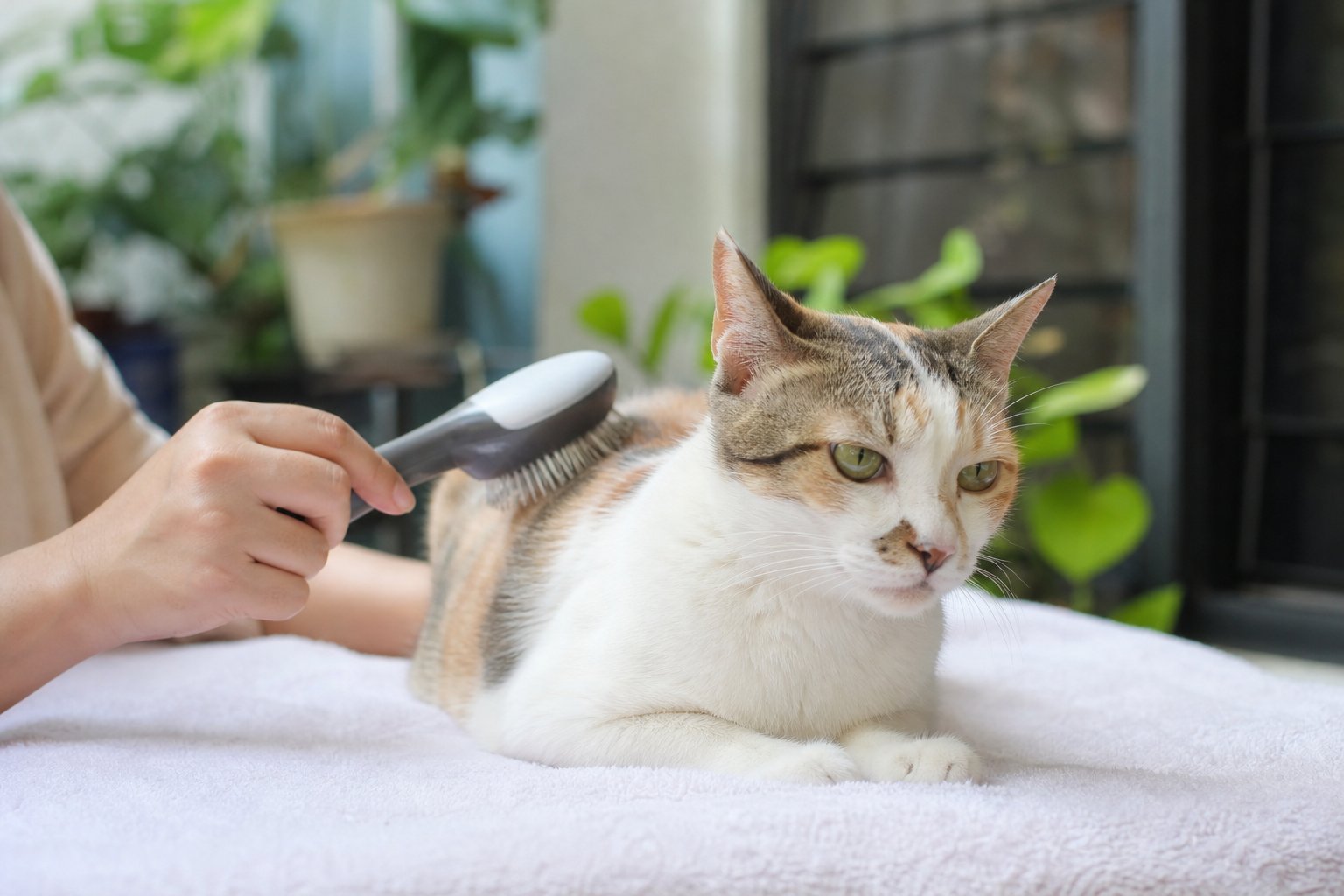
Cleaning pet gear works best as a fixed routine rather than a reaction to smell. Scoop the litter box twice a day, wash food and water bowls daily, strip-wash beds weekly, and give fountains, feeders and automated litter boxes a proper dismantle-and-scrub session each week. Store food sealed, cool and off the floor. This guide sets out the schedule, the right agents to use, and the signs that mean a vet visit today.
Quick answers: what to clean, and how often
- Litter box: scoop solids and clumps at least twice daily; full wash every 2–4 weeks with clumping litter, weekly with non-clumping.
- Bowls and mats: wash after every meal, or at minimum once a day, in hot water and detergent.
- Water fountain: top up daily; strip and scrub the pump and impeller weekly; replace filters on the manufacturer's schedule.
- Beds and blankets: machine wash weekly; dry completely before your pet uses them again.
- Toys: plush items weekly; hard and rubber items after heavy chewing; replace anything cracked, sticky or musty.
- Floors and cage bases: spot clean daily, deep clean weekly with a pet-safe product.
International Cat Care guidance notes that cats prefer a litter layer around 3 cm deep and a tray roughly 1.5 times their nose-to-tail-base length. Avoid strongly scented detergents and phenol-type disinfectants when washing trays; hot water plus a mild detergent, followed by thorough rinsing and drying, is enough.
Laundry: pet-safe detergent vs the bottle under your sink
Pets spend hours lying on beds and blankets, then groom themselves, so residue on fabric ends up ingested. Ordinary detergents are formulated for human clothes: optical brighteners, heavy fragrance, softening agents and stronger surfactants leave an invisible film. A pet resting on that fabric, or chewing a blanket, takes in the residue — sometimes showing up as tummy upsets, itchiness or sneezing.
Pet-oriented formulas are usually shorter on ingredients, lightly scented or fragrance-free, and easier to rinse away. The bigger difference, though, is usage: use less product, run one extra rinse cycle, skip fabric softener and scented beads, and dry the item fully. Damp fabric is a mould starter, and mould spores cause the same skin and respiratory trouble you were trying to avoid.
Also clean the machine itself: the door gasket, detergent drawer and filter collect grime and mildew, which transfers straight onto the next load. Run an empty hot wash with a little mild detergent occasionally and leave the door open to air.
| Ordinary detergent | Pet-appropriate product | What to do | |
|---|---|---|---|
| Fragrance | Long-lasting, strong | Light or none | Choose fragrance-free; skip scent beads |
| Brighteners | Often contain optical brighteners | Usually none | Read the ingredient list, not the colour |
| Residue | Heavier film | Lighter, rinses easily | Add an extra rinse cycle |
| Softener | Commonly used | Not recommended | Air-dry or tumble-dry instead |
| Scope | Human clothing | Pet beds, blankets, fabric toys | Wash pet laundry separately |
Bathing water, drying and summer cooling
Use lukewarm water — warm to the touch but never hot. Water that is too hot damages the skin barrier and can scald; water that is too cold makes pets shudder and resist, and kittens, puppies and seniors are less tolerant. Wash with a shampoo made for pets, keep it out of the eyes, ears and nose, and note that feline and canine skin pH differ, so cats and dogs should not share one bottle. General guidance suggests bathing a dog no more than about once a week unless a vet advises otherwise; over-bathing dries the coat and skin.
Drying matters as much as washing. Blot with a towel first to remove most water, then use warm — not scorching — air, keeping the nozzle moving so no single spot overheats. Face, ears, belly, paws and armpits have thinner skin: lower heat, shorter passes. Never seal a pet in an enclosed drying box without ventilation; if it pants, scratches at the door or tries to bolt, stop. Long-haired, flat-faced, elderly and heart- or lung-conditioned pets need short, low-heat sessions with someone watching throughout.
Summer gear falls into three groups: contact cooling (cooling mats, gel pads, aluminium or marble slabs), airflow (fans, mesh beds, good cross-ventilation) and aids such as a towel-wrapped ice pack. A bitten gel pad leaks, so choose tough material or supervise; never hold an ice pack against the skin for long. Coats insulate against heat as well as cold — trim if needed but do not shave double coats bare. Shade and several bowls of fresh water matter more than any single gadget.
Litter box, fountain and feeder: the weekly routine
Litter box. Scoop at least twice a day. With clumping litter, empty, wash and refill every 2–4 weeks; with non-clumping litter, do it weekly. An automatic litter box still needs a human: the drum, screen, sensors and base seams collect dust and urine odour, and caked litter can jam the mechanism. A dirty machine often puts cats off using it — they may eliminate elsewhere, or hold on long enough to develop urinary trouble. Replace deodoriser blocks and litter on schedule; topping up is not the same as changing.
Water fountain. The most underestimated item. Reservoirs and pump impellers develop a slimy biofilm; if it feels slippery, bacteria are already established, and topping up water does nothing. Strip the pump and impeller weekly, rinse all parts, and replace filters as instructed. A noticeably weaker stream usually means a blocked impeller or a saturated filter pad.
Feeder. For a scheduled feeder, keep mains power on and fit backup batteries so a power cut does not skip a meal; a feeder used only for top-ups can be switched on as needed. Sealed hoppers keep food dry; oil residue along the dispensing chute oxidises and turns rancid, which pets may simply refuse. Wipe the outlet daily, dismantle the hopper and chute weekly, check door seals monthly.
Pheromone diffusers. Treat these as an adjunct, not a cure. Studies on synthetic feline pheromones give mixed results, with wide individual variation and some cats showing no response at all. Pair any diffuser with real environmental changes: extra hiding places, high perches, and one resource (bowl, bed, tray) per cat plus a spare. Cats with asthma or chronic respiratory disease should be assessed first; coughing, watery eyes or laboured breathing means stopping the diffuser and calling the vet.
| Equipment | Daily | Weekly | Monthly / per manual | Consumables |
|---|---|---|---|---|
| Manual litter box | Scoop 2+ times | Non-clumping: full wash | Clumping: full wash every 2–4 weeks | Litter, scoop |
| Automatic litter box | Empty bin, wipe sensors | Wash drum and screen, wipe base | Check motor and sensors, update app | Deodoriser blocks, litter |
| Water fountain | Top up, check flow | Strip pump and impeller | Replace filter per instructions | Filters, pads |
| Feeder | Wipe outlet, check power | Wash hopper and chute | Check seals, back up settings | Desiccant, batteries |
| Bowls and mats | Wash after each meal | Hot-water deep clean | Replace cracked items | — |
Toys, beds and cages: deep cleaning
Toys. Sort by material. Plush items go in a laundry bag on a cold gentle cycle with mild detergent plus an extra rinse, then dry fully. Rubber and silicone chew toys, including hollow ones, soak in hot water with a little mild detergent, get brushed inside the cavity, then air-dry completely. Skip bleach and strongly scented sanitisers: residue irritates the mouth and gut. Know when to replace rather than wash — cracks, bite-throughs, a sticky surface, a blackened interior or a smell that survives washing all mean bacteria are trapped where no brush reaches. Rope, feather and yarn toys cannot be cleaned thoroughly; rotate and replace them.
Beds. Washable covers follow the laundry rules above. Foam or memory-foam cores are not machine washable: spot-clean, deodorise with baking soda, then dry in moving air. In damp weather the drying step is the critical one — a mattress that stays moist grows mould, and mould triggers skin and breathing problems. Replace any bed that has collapsed, lost shape or carries a musty smell.
Small-animal cages. Give rabbits a solid floor rather than bare wire; if wire is unavoidable, lay newspaper, cardboard or a deep layer of bedding and change it daily. Remove soiled litter tray material every day and wash the tray with mild detergent before re-laying. Move the animal to a secure pen while you clean, and avoid strong-fragrance disinfectants — rabbits tolerate scent poorly. Rabbits do not need baths; a damp cloth and an alcohol-free baby wipe on the feet are enough.
Cleaning agents: foam, disinfectant, vinegar and wipes
Order of operations is always clean first, disinfect second. A foaming cleaner lifts grease, food and organic soil; a sanitising liquid targets bacteria and odour but does not remove grime. Follow the label, rinse afterwards if it says to, and never blend products — mixing, or combining anything with bleach, can release dangerous fumes. Confirm the label states it is safe for use around pets before it goes anywhere near a food bowl, tray or a surface a pet licks.
White vinegar dissolves scale and some odours, but there is no fixed timetable for it to evaporate: strength, ventilation and the material all change the wait. Do not rely on waiting it out — rinse the container two or three times with clean water, air-dry until no vinegar smell remains, then refill. Discard any container with cracks or unreachable corners. Vinegar must never be mixed with bleach.
Wipes are judged by the ingredient list, not the packaging. Watch for alcohol (drying and irritating with frequent use), fragrance (cats are scent-sensitive and may develop contact reactions), preservatives with sensitising potential, and chloroxylenol-type sanitisers, which are toxic to cats. Choose alcohol-free, fragrance-free formulas with short ingredient lists; use only on intact skin and specified areas; never make them a whole-body routine, especially for cats that groom the residue off their fur. Do not wipe open wounds, red patches or areas of hair loss — and use dedicated products for faces and ears.
| Product | Main job | Where it fits | Watch out for |
|---|---|---|---|
| Pet-safe cleaning foam | Degreasing and soil removal | Bowls, hard surfaces, fabric | Rinse away all foam residue |
| Pet-safe sanitising liquid | Kills bacteria, deodorises | Hard surfaces, outside of trays | Does not clean; clean first |
| White vinegar | Scale and some odours | Hard surfaces, containers | Rinse fully; never with bleach |
| Hot water plus mild detergent | Everyday washing | Bowls, tray, fountain parts | Rinse trays completely, then dry |
| Chlorine bleach, strongly scented sanitisers | Not for pet items | — | Residue; toxic to cats |
Wash food and water bowls frequently in hot water with detergent, and never use an unwashed bowl as a food scoop — both are classic grease and bacteria traps.
Storing food and litter
Opened cans. Seal and refrigerate at about 4 °C or below and use within the label's timeframe, or discard. A sour smell, foam or a swollen can means throw it out — never taste-test. Long-term storage in the open tin invites oxidation and odour absorption; transfer to a sealed glass or ceramic container instead. Serve only the meal's portion and return the rest immediately; warm food just to lukewarm, testing with a finger, rather than piping hot.
Dry food. Keep it cool and dry — roughly 27 °C or below — ideally in the original bag inside a clean sealed container so batch codes and dates stay readable. Insects, a rancid or sour oil smell, hard clumps, dull colour or mould specks each mean the whole bag goes, and the storage bin gets cleaned out. Food can look fine and still be rejected because the fat has oxidised. Portion a week or two at a time, add a desiccant, keep it away from the stove and window, and never store it on the floor.
Litter. Dates are usually a manufacture date plus a shelf life, so read both. Keep unopened bags cool and dry. Once opened, tofu and cassava litters soften, clump and go mouldy in damp air — seal them in a tub. Hard clumps, a musty or sour smell, or a sudden jump in dust all mean discard, replace, and wash the tray.
| Item | Ideal storage | Spoilage signs | Action |
|---|---|---|---|
| Opened cans | Sealed, about 4 °C or below, use promptly | Sour smell, foam, swollen can | Discard immediately |
| Dry food | Cool, dry, about 27 °C or below, sealed | Insects, rancid smell, clumps, mould | Discard whole bag, clean bin |
| Litter | Unopened cool and dry; opened sealed | Hard clumps, musty smell, more dust | Discard, wash tray |
| Pads and wipes | Sealed packaging, off the floor | Damp, musty, poor absorption | Discard, check storage spot |
| Cleaning products | Away from pets, out of sunlight | Separation, colour change, odd smell | Dispose per label |
When to see a vet
Do not wait and observe in these situations:
- Cleaning product contact or ingestion: drooling, vomiting, ulcerated or swollen gums, lethargy or seizures. Do not induce vomiting; take the product container with you.
- Urinary trouble: repeated trips to the tray with little or no urine, blood, crying or a hunched posture. A blocked cat is an emergency measured in hours.
- Breathing changes: open-mouth breathing, rapid or laboured panting. Flat-faced and long-haired breeds are higher risk; in hot weather also consider heatstroke.
- Skin or wounds worsening: spreading redness, discharge, pus, a bad odour, large bald patches or relentless scratching.
- Eating and drinking changes: nothing at all for over a day, a sharp rise or drop in water intake, or visible weight loss.
- Rabbits and small pets: refusing food, no droppings (possible gut stasis), drooling, sore hocks or noisy breathing — seek care quickly.
This article is general information only and does not replace veterinary diagnosis, prescription or treatment. In an emergency, contact your vet immediately.
Related reading
- Pet Daily Care Guide Malaysia: Brushing, Nails, Ears, Eyes, Teeth and Weight (2026)
- Cat Hypoglycaemia First Aid: 5 Mistakes to Avoid (Malaysia)
- Cat Nail Trimming in Malaysia: A Calm, Step-by-Step Guide for Indoor Cats
- Cat Nail Trimming in Malaysia: Frequency, Technique and Quick Bleeding First Aid
- Cat Toy Cleaning and Care Tips for Malaysian Homes: A Practical Maintenance Schedule
- Cat Tree and Home Pet Device Safety in Malaysia: Coatings, Carbon Sachets, Microchips and Smart Gadgets
- Iodine Tincture vs Povidone-Iodine for Pets in Malaysia: When It's Actually Needed (and When It's Not)
- Iodine Tincture vs Povidone-Iodine: Where It's Safe to Use on Pets in Malaysia
- Pet Behaviour & Training Part 1: Toxic Plants, Fruit & Veg Portions, Oils and Anxiety Panting
- Pet Daily Care, Behaviour Signals and Seasonal Supplies in Malaysia (Part 1)
- Pet Daily Care in Malaysia: Measuring Your Dog, Getting Cats to Drink, Litter Maths and Small-Pet Basics