
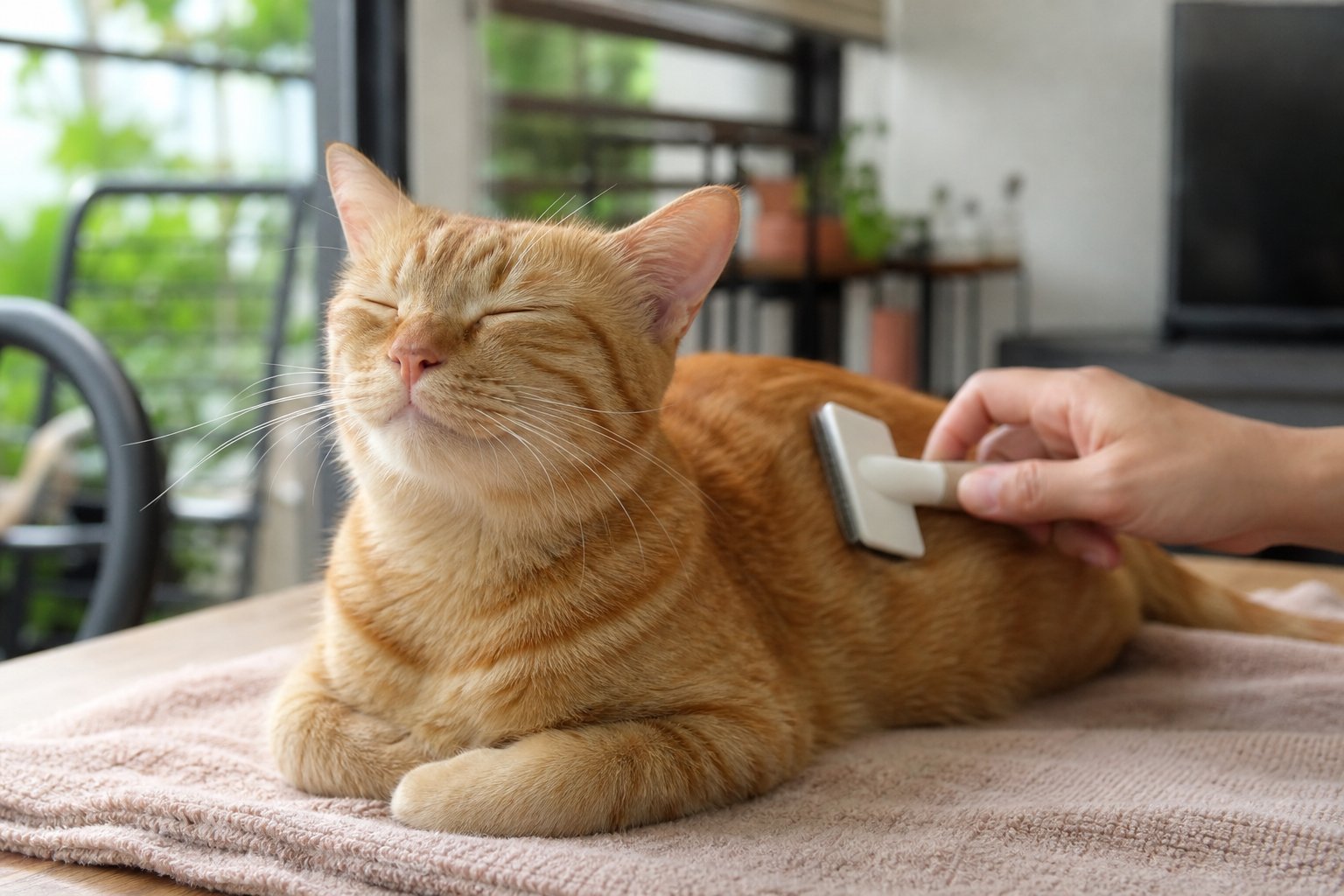
Quick answer: trim your indoor cat's nails every 2–4 weeks with cat-specific clippers, cutting only the white translucent tip 1–2 mm and stopping before the pink quick. Keep styptic powder — or plain cornflour — within reach, reward after each paw, and spread the work over several sessions. If bleeding will not settle, or a nail has curled into the pad, see a Malaysian vet.
The single golden rule of cat nail care is simple: cut the clear tip, never the pink line. Everything else — tool choice, timing, restraint, treats — exists to help you follow that one rule without a struggle.
Why Indoor Cats Need Trims Most
Cats that roam outdoors naturally file their claws on tree bark, concrete and hard ground. A cat that lives indoors mostly meets sofa fabric, tiled floors and a scratching post, all of which remove far less keratin. The result is a claw that keeps lengthening week after week.
Left alone, overlong claws cause four predictable problems:
- Snagging. Tips hook into curtains, clothing, upholstery and mosquito netting. A panicking cat that pulls away can tear a claw and bleed.
- Curling into the pad. The claw grows in a curve and presses into the toe pad. This is genuinely painful, causes lameness, and often ends with an inflamed or infected pad — most common in senior cats.
- Scratching people. A playful swipe or a shift in your arms draws blood, especially around small children and elderly family members.
- Posture changes. If a cat cannot fully retract a claw, it walks oddly, and the discomfort can spread to how the cat sits and jumps.
A practical judgement rule: press the pad to push the claw out, and if the point extends roughly 3–4 mm beyond the toe, or you can hear it ticking on the floor, it is time to trim. If you can hook the tip on a fingernail, that is also a clear signal.
A quick self-check every fortnight
Work through this list while your cat is asleep on your lap:
- Press each front pad and look at the claw length.
- Run a fingertip lightly along the tip — does it feel sharp or hooked?
- Check the back claws, which grow slower but curl more.
- Look at the pads themselves for redness, swelling or discharge.
- Note anything unusual and add it to your grooming log.
Understanding the Quick Before You Cut
A claw has two zones, and knowing them is half the job done.
The white or translucent tip is hard keratin with no nerves and no blood vessels. Cutting it does not hurt the cat any more than clipping your own fringe of hair.
The quick is the living core: a blood vessel and a nerve running down the centre of the nail. Cut into it and the cat feels pain immediately and bleeds — which is exactly what makes a cat resist future handling.
On pale or clear nails the quick is easy to read: hold the claw up to a light and you will see a pink line running down the middle. On black or dark nails the quick is invisible from outside, so you cannot rely on sight alone.
The shave-down method for dark nails
When you cannot see the quick, use an incremental approach:
- Clip an extremely thin slice off the tip — about 1 mm.
- Look at the fresh cut surface.
- If you see a small pink or dark dot appearing at the centre, stop immediately on that nail.
- If the cut is still solid white or clear, take one more shallow slice.
- Move on. It is far better to shorten nails across three sessions than to cut deep once.
With regular trimming, the quick slowly recedes, so each session becomes easier and safer over time.
Tools to Prepare in Advance
Gather everything before you pick up the cat. Hunting for supplies mid-trim is how sessions fall apart.
| Item | Why it matters | Notes |
|---|---|---|
| Cat-specific nail clippers | Guillotine or scissor styles sized for small claws give a clean cut | Human nail clippers crush and split the nail |
| Styptic powder | Stops bleeding from an accidental quick cut | Keep it sealed and dry |
| Cornflour or plain flour | Household stand-in when styptic powder runs out | Press and hold, do not blow on it |
| Treats your cat loves | Turns the session into something worth repeating | Small, strong-smelling pieces work best |
| A folded towel | Gives traction and a familiar surface | Lay it on a non-slip floor |
| A small torch | Helps read the quick on pale nails | Useful in dim living rooms |
Optional extras include a soft nail file for smoothing a rough edge, and a notebook or phone note to record the date of the last trim so you never lose track of the 2–4 week rhythm.
The Five-Step Trimming Routine
Step 1 — Set up. Lay the towel where your cat already likes to rest, put the treat bowl beside it, switch off the television and close windows to reduce street noise. A calm room keeps a nervous cat calmer.
Step 2 — Choose the moment. The best time is when your cat is drowsy or just waking, when muscles are relaxed. Some owners work successfully just before the morning meal, because the hunger makes treats more persuasive.
Step 3 — Extend the claw. Press the sides of the pad gently between thumb and forefinger. The claw slides out on its own. Do not dig at it or squeeze hard.
Step 4 — Cut shallow. Line the clippers up across the translucent tip and remove 1–2 mm only. If your cat tenses or pulls, stop that nail and move to another — never wrestle.
Step 5 — Reward. Give a treat after each paw, or even after each nail for a beginner cat. Ending on a positive note is worth more than finishing the whole set.
Front paws have five claws each and back paws four, so there are eighteen to nineteen nails in total. There is no rule saying you must finish in one sitting. Two claws a night is still progress.
Common mistakes to avoid
- Forcing a struggling cat. Holding a cat down hard teaches it that nail handling equals danger, and the next session will be worse.
- Cutting while the cat is fully alert and tense. A frightened cat retracts the claws tight against the bone, making it much easier to cut too deep.
- Rushing the back claws. They are neglected most often, yet they are the ones most likely to curl into pads.
- Using dull blades. A blunt clipper crushes instead of slicing, which can crack an older cat's thick nail.
- Skipping the session because you are busy. Skipping is fine; letting nails go months without inspection is not.
How Often to Trim: A Practical Schedule
Frequency depends on lifestyle, age and how quickly your individual cat's claws grow. Use this table as a starting point, then adjust based on what you see.
| Cat situation | Suggested rhythm | What to watch for |
|---|---|---|
| Fully indoor adult cat | Every 2–4 weeks | Tips extending past the toe, ticking on floors |
| Indoor cat with limited scratching surfaces | Every 2 weeks | Claws snagging on fabric or curtains |
| Kitten under six months | Handle paws weekly; trim tiny tips as needed | Habit formation matters more than length |
| Senior cat | Check monthly; trim back claws monthly | Thick, brittle, curling nails; reluctance to jump |
| Cat with regular outdoor access | Check every 2–4 weeks; trim less often | Wear from ground surfaces usually keeps length in check |
| Cat using a sisal post heavily | Every 4 weeks | Uneven wear; one claw may still grow long |
Back claws grow more slowly than front claws but are the ones most likely to become ingrown, so they deserve a monthly inspection regardless of your overall schedule.
Fitting trimming into everyday life
Rather than blocking out a grooming afternoon, attach the task to an existing habit. Some owners pair the check with the weekly food-top-up, others set a phone reminder every third Saturday. Consistency beats intensity — a short, calm session you repeat is far better than a rare marathon that ends in scratches.
First Aid: If You Cut the Quick
Even careful owners cut too short occasionally, so prepare for it rather than feel guilty.
- Stop and apply pressure. Dip the nail into styptic powder, or press cornflour or plain flour onto the bleeding point, and hold steady for 10–20 seconds. Do not keep dabbing and checking — continuous gentle pressure is what seals the vessel.
- Stay quiet. Yelping, sighing or moving abruptly teaches the cat that this situation is frightening.
- Observe. Most quick cuts stop within a minute or two. If seeping continues past roughly 10 minutes despite pressure, telephone a vet for advice.
- Reward. Offer a treat and a calm stroke, then end the session if your cat is unsettled.
- Learn from it. The next time, cut less. Because the quick recedes with regular trimming, shallower cuts will still make progress.
Keep the first-aid pouch with the clippers so it is impossible to forget. Check expiry dates on styptic powder periodically; a container that has been in the drawer for years may have hardened and become useless.
When Your Cat Refuses to Cooperate
Not every cat will accept home trimming, and that does not make you a failure. Alternatives, in rough order of preference:
Build handling tolerance. For two weeks, touch the paws daily without clippers — press a pad, extend a claw, release, reward. Only introduce the clipper once the handling alone is uneventful.
Split and shorten. Do one paw, stop, reward. Come back tomorrow for the next. Progress over a week is still a successful trim.
Ask a professional. Groomers and veterinary clinics handle resistant cats every day. If you are travelling for a routine check-up, ask whether nails can be done at the same visit. Local fees vary by outlet and location, so confirm the current price directly with your Malaysian vet or groomer rather than assuming a figure.
Use nail caps. Soft plastic or rubber caps are glued over the trimmed tip and fall off naturally as the claw sheds, typically within four to six weeks. They protect furniture and children temporarily, but they need checking regularly: a loose cap that is swallowed or chewed off can be a hazard.
Increase scratching surfaces. Sisal-wrapped posts, sturdy corrugated cardboard scratchers and a rough mat near a favourite resting spot all increase natural wear and can stretch the interval between trims.
What not to do
Declawing — surgical removal of the last toe bone — is not a shortcut. It is amputation of the digit, causes lasting pain and gait problems, and is rejected by veterinary ethics in many places. No responsible Malaysian vet should offer it as routine care; discuss humane alternatives instead.
Working With Your Home and Weather
Kuala Lumpur apartment: space is tight and a startled cat has nowhere to go, which turns a routine trim into a chase. Pick the cat's own favourite sofa corner or a low table rather than a bathroom floor, lay a towel for grip, switch off the fan directly overhead if it dries out your eyes, and close the balcony door. If you live alone, cradle the cat on your lap with one forearm along its body and clip with the free hand — then release immediately rather than trying for one more nail.
Penang rainy season: high humidity makes claws softer and slightly more pliable, which can make cutting feel easier, but it also means a cut nail holds moisture against the pad. Dry the paws after trimming, keep the first-aid powder sealed in a small zip bag to stop it clumping, and inspect pads more often for redness or fungal irritation during prolonged wet spells.
When to See a Vet
Contact a Malaysian veterinary clinic promptly if you notice any of the following:
- A claw has grown into the pad, or the pad is swollen, warm, red or oozing.
- Bleeding from a cut nail has not stopped after 10 minutes of firm pressure.
- Your cat is limping, favouring a foot, or refuses to put weight on it the day after trimming.
- A nail is thickened, crumbling, discoloured or splitting — possible signs of a fungal or metabolic issue.
- The claw was torn rather than cut, with the nail bed visibly damaged.
- An ingrown nail has formed an abscess that needs cleaning and possibly antibiotics.
Do not attempt to dig out an embedded claw at home, and never cut across a cracked nail hoping to shorten it. These situations need proper instruments and, often, pain relief.
Your Seven-Day Starter Plan
- Day 1. Buy cat-specific clippers and styptic powder; store both together in one drawer.
- Day 2. Handle each paw gently for 30 seconds with no clippers present; treat afterwards.
- Day 3. Extend the claws and identify the quick on two nails — do not cut yet.
- Day 4. Trim the two easiest front claws, one millimetre at a time, and reward heavily.
- Day 5. Rest. Handling only.
- Day 6. Trim two more claws, then stop while the session still feels positive.
- Day 7. Record the date in your phone and set a reminder for two to four weeks later.
Repeat until all claws are short, then keep the cycle going. A cat that grows up with regular, gentle handling will generally accept nail care for life — which is the real goal behind the clippers.
This article is general guidance only. If your cat shows signs of pain, persistent bleeding, swelling or lameness, please consult a registered Malaysian veterinarian.
Related reading
- Pet Daily Care Guide Malaysia: Brushing, Nails, Ears, Eyes, Teeth and Weight (2026)
- Cat Nail Trimming in Malaysia: A Calm, Step-by-Step Guide for Indoor Cats
- Cat Hypoglycaemia First Aid: 5 Mistakes to Avoid (Malaysia)
- Cat Toy Cleaning and Care Tips for Malaysian Homes: A Practical Maintenance Schedule
- Cat Tree and Home Pet Device Safety in Malaysia: Coatings, Carbon Sachets, Microchips and Smart Gadgets
- Iodine Tincture vs Povidone-Iodine for Pets in Malaysia: When It's Actually Needed (and When It's Not)
- Iodine Tincture vs Povidone-Iodine: Where It's Safe to Use on Pets in Malaysia
- Litter Box Cleaners in Malaysia: Safe Choices That Won't Irritate Your Cat
- Pet Behaviour & Training Part 1: Toxic Plants, Fruit & Veg Portions, Oils and Anxiety Panting
- Pet Daily Care, Behaviour Signals and Seasonal Supplies in Malaysia (Part 1)
- Pet Daily Care in Malaysia: Measuring Your Dog, Getting Cats to Drink, Litter Maths and Small-Pet Basics
- Pet Daily Care Hub: Grooming, Nails, Ears, Teeth and Weight for Malaysian Owners