
The short answer
Haze season in Malaysia is a stretch of weeks when the air outside smells smoky, looks grey and carries fine particles. Cats are smaller and closer to the floor than we are, and they groom dust off their coats, so poor indoor air can affect their eyes, nose and airways. The practical response is simple: keep cats indoors, close windows, filter or recirculate indoor air, reduce indoor dust from litter and cleaning, keep water available, and watch breathing closely. Most healthy cats ride out haze comfortably with these steps. Cats with asthma, heart disease, kittens and seniors need closer attention, and any cat breathing with an open mouth or with blue gums needs a vet straight away.
This guide is written for Malaysian cat owners in apartments, terrace houses and shared homes. It covers what haze does to cats, how to set up a clean-air room, litter and dust control, hydration and grooming, warning signs, and a simple daily checklist. It does not replace a vet's advice for a cat with a known health condition.
What haze does to a cat's body
Haze is a mix of smoke, ash and fine particulate matter. The smallest particles travel deep into the lungs, and the gases and volatile compounds in smoke irritate the eyes, nose and throat. For cats, the main concerns are:
- Airway irritation. Smoke particles can trigger sneezing, a runny nose, coughing or wheezing. Cats with feline asthma are especially vulnerable because their airways are already inflamed.
- Eye irritation. Red, watery or squinting eyes are common when air quality drops.
- Dust load indoors. When windows are shut for days, dust, litter dust, hair and cooking fumes build up inside. Indoor air can become its own problem.
- Stress from routine changes. An outdoor cat suddenly kept inside may pace, cry or spray. Stress affects appetite and immunity, so plan enrichment.
- Heat and dehydration. A closed-up home can get warm and stuffy, and cats may drink less than they should.
Healthy cats usually cope. The risk rises for flat-faced breeds such as Persians and British Shorthairs, cats with asthma or heart disease, very young kittens and senior cats. If your cat has a diagnosed breathing condition, treat haze season as a reason to review their management plan with your vet before the air gets bad.
Set up a clean-air room
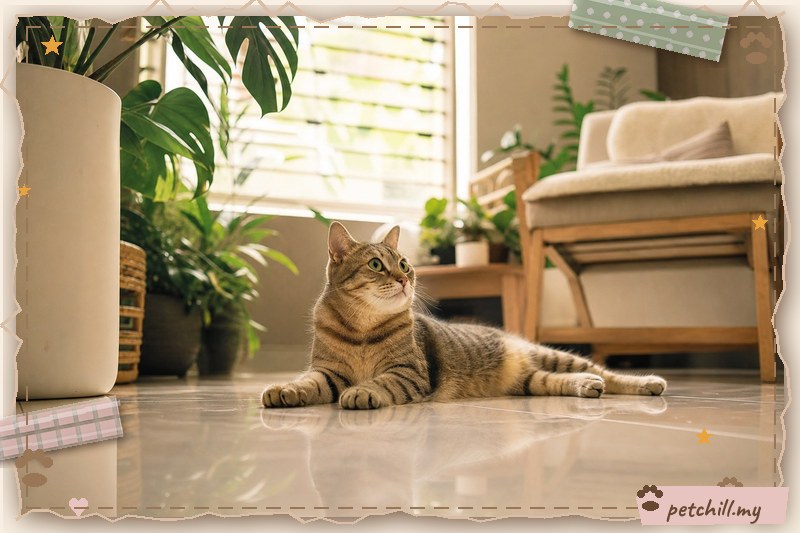
You do not need to seal the whole house. Pick one room where the cat spends most of its time, usually the living room or bedroom, and make it the clean-air zone.
- Close windows and doors. Keep them shut while the air outside is smoky. Use towels along gaps under doors if smoke seeps in.
- Run an air-conditioner on recirculate. Cooling helps comfort, and recirculation avoids pulling outside air in. Clean the filters regularly; a dirty filter just blows dust around.
- Use a HEPA air purifier if you have one. Choose a unit sized for the room, keep it running on low continuously, and check that it does not have an ozone generator. Place it so the cat cannot chew the cable.
- Avoid indoor smoke. No cigarettes, incense, mosquito coils, candles or open-kitchen frying in the clean-air room. Mosquito coils are common in Malaysian homes and produce smoke that is just as irritating as haze.
- Keep the room uncluttered. Soft furnishings trap dust. Wash cat beds and blankets weekly in hot water, and damp-wipe surfaces instead of dry-dusting.
If you do not have a purifier, closed windows plus a clean air-conditioner filter and regular damp cleaning still help a lot. Do not use ozone air cleaners or strong air fresheners around cats.
A simple comparison of indoor air options
| Option | Helps with haze? | Cat-safety notes |
|---|---|---|
| HEPA air purifier | Yes, captures fine particles | Sealed unit, no ozone, cables hidden |
| Air-conditioner on recirculate | Yes, cools and reduces outside air | Clean filters monthly in haze season |
| Ozone generator | No, and risky | Avoid around cats and people |
| Essential-oil diffuser | No | Many oils are toxic to cats; skip |
| Mosquito coil | No, adds smoke | Use screens or vet-approved repellents instead |
| Damp mopping and wiping | Yes, reduces settled dust | Use pet-safe cleaners, rinse well |
Litter, dust and grooming
When the windows are shut, litter dust stays in the room. A few changes make a real difference.
- Switch to low-dust litter. Clumping clay litters vary a lot in dust. Pellet or paper-based litters may produce less dust, but transition slowly by mixing old and new litter over a week.
- Scoop at least once a day. Twice daily is better in a closed-up home. Bag waste and take it outside promptly.
- Keep the tray away from the clean-air room. If that is not possible, use a covered tray with a filter, or place it near an extractor fan.
- Avoid scented litter and strong cleaners. Cats have sensitive noses. Unscented, pet-safe cleaning products are kinder during haze.
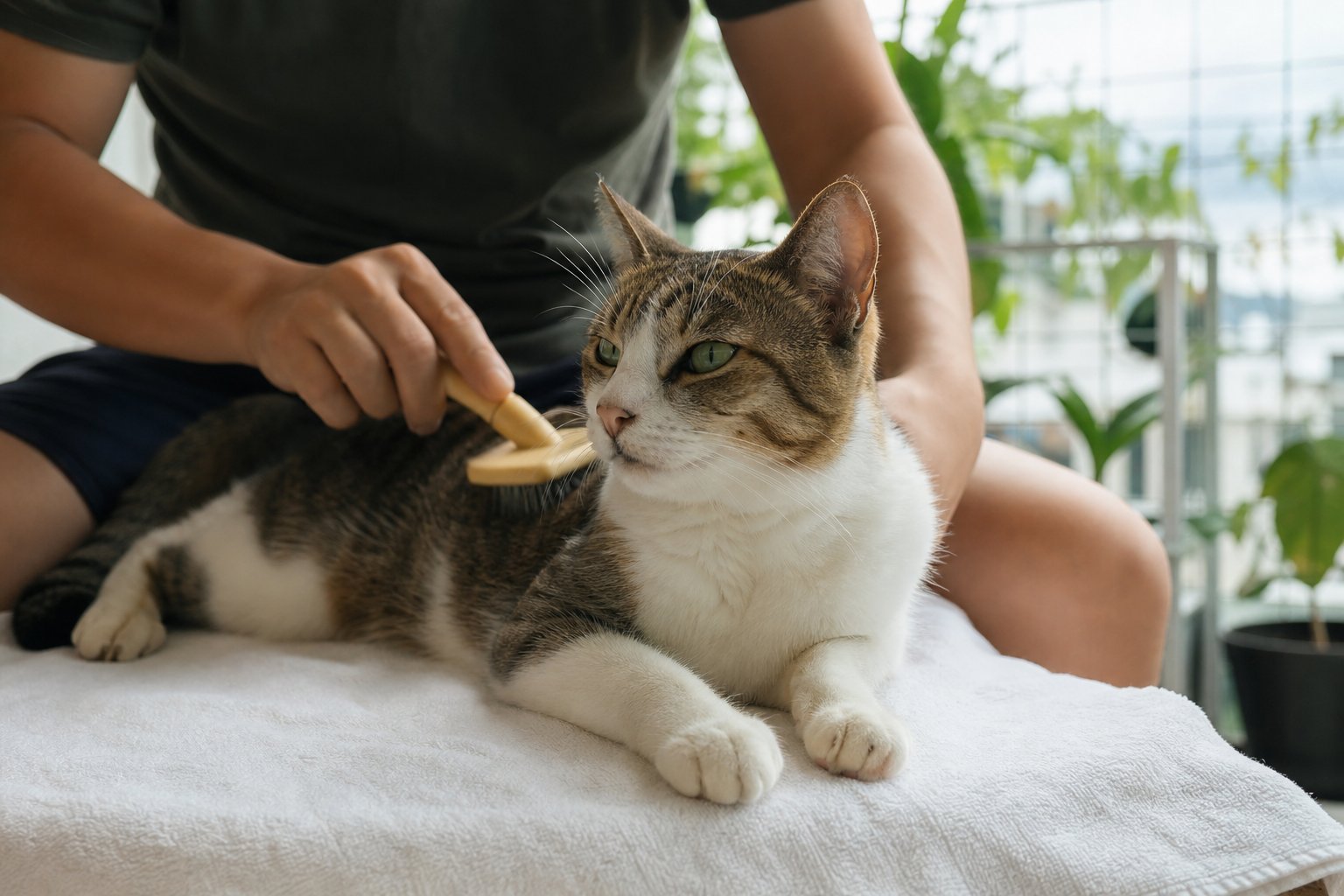
- Brush your cat daily. Grooming removes loose hair and dust before the cat swallows it. Wipe the coat with a damp, clean cloth if it feels dusty after time near an open window.
- Wash bedding weekly. Cat beds, blankets and soft toys hold dust and dander.
If your cat sneezes more after you change litter, the litter may be the trigger. Try a low-dust option and see whether symptoms settle.
Water, food and comfort
Haze season often comes with hot, stuffy days. Cats are not big drinkers by nature, so make water easy and appealing.
- Place several water bowls around the home, away from food and litter.
- Try a pet water fountain if your cat likes running water, but clean it often.
- Offer wet food, which adds moisture. Warm it slightly if your cat is off its food.
- Keep meals small and frequent if your cat seems unsettled.
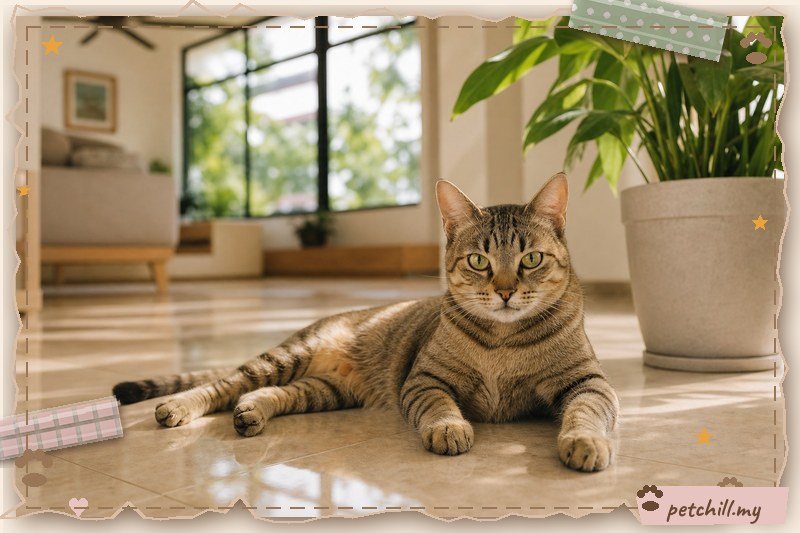
- Provide cool, quiet resting spots, such as a tiled floor or a shaded room.
- Do not leave a cat in a closed car or a hot, unventilated room.
If your cat stops eating or drinking for more than a day, contact your vet. Cats that stop eating can become seriously ill quickly.
Enrichment for indoor-only days
An outdoor cat kept inside for days can become frustrated. Boredom and stress can show up as over-grooming, spraying, yowling or aggression.
- Set up a window perch looking at a safe view, but keep the window closed.
- Rotate toys every few days so they feel new.
- Use puzzle feeders and hide treats around the room.
- Spend ten to fifteen minutes twice a day playing with a wand toy.
- Provide scratching posts and vertical space, such as shelves or a cat tree.
- Keep a routine for meals and play so the day feels predictable.
If you have a balcony, check that it is properly secured. Do not rely on open balcony doors for ventilation during haze; use a fan or air-conditioner instead.
When to see a vet
Contact a vet promptly if your cat shows any of these signs during haze season:
- Open-mouth breathing, which is never normal in a resting cat.
- Fast breathing at rest, or visible effort with the belly moving in and out.
- Wheezing, coughing that persists, or noisy breathing.
- Blue, grey or pale gums and tongue.
- Squinting, swollen eyes or thick eye discharge.
- Refusing food or water for more than 24 hours.
- Hiding, weakness, collapse or confusion.
- A cat with known asthma whose usual management is not controlling symptoms.
Breathing problems can worsen quickly. Keep your cat calm, avoid handling it roughly, and phone your vet for advice on the way. Do not give human cough or cold medicines to cats; some are toxic.
Daily haze-season checklist
- Check the outdoor air each morning and keep windows closed if it is smoky.
- Run the air purifier or air-conditioner on recirculate in the main cat room.
- Scoop litter at least once, ideally twice.
- Refill water bowls and wash them.
- Brush your cat and check eyes, nose and breathing.
- Damp-wipe surfaces and vacuum with a HEPA-filter vacuum if available.
- Wash or rotate cat bedding weekly.
- Play with your cat twice a day.
- Keep the cat indoors, especially at night and early morning when haze can settle.
- Note any coughing, sneezing or appetite changes for your vet.
Malaysian contexts to plan for
- Kuala Lumpur apartment. In a high-rise unit, windows often face open air and smoke can drift in through gaps. Choose one room as the clean-air zone, seal the door gap, and run the air-conditioner on recirculate. Keep the litter tray in the bathroom with the extractor fan on.
- Johor terrace house. With more doors and windows, it is easy for haze to enter. Close windows early, use damp towels along door gaps, and keep cats away from the kitchen when mosquito coils or strong cooking fumes are present.
- Penang rainy season overlap. Haze can coincide with humid, rainy days. Avoid adding humidity with a humidifier; instead, focus on filtration and fixing leaks that encourage mould, which also irritates airways.
Working with your vet
If your cat has asthma, a heart condition or a history of breathing problems, ask your vet for a written haze-season plan before the season starts. It can cover medication, what counts as an emergency, and how to monitor breathing at home. Ask your vet to show you how to count breaths per minute while your cat is resting; a normal resting rate is usually well under 40 breaths per minute, but your vet will set a target for your cat. Local prices for purifiers, litter and veterinary care vary, so check with Malaysian retailers and your vet rather than relying on overseas figures.
Bottom line
Haze season is manageable for most Malaysian cat owners. Keep cats indoors, create one clean-air room, control litter and household dust, keep water and enrichment going, and watch breathing closely. Cats with existing health conditions need a vet-guided plan. If breathing changes, do not wait for the air to clear; seek veterinary help.
This article is general information for Malaysian cat owners and is not a substitute for veterinary examination, diagnosis or treatment. If your cat is unwell, contact a licensed veterinarian.
Related reading
- Daily Care Guide Malaysia: A Practical Routine for Dogs and Cats
- Best Cat Tree for Cats in Malaysia: A Practical Buying Guide
- Haze and Cat Breathing in Malaysia: How to Protect Your Cat During Smoky Air
- Haze and Cat Breathing: A Malaysian Cat Owner's Guide to Protecting Your Cat
- How to Monsoon-Care a Cat in Malaysia: A Practical Daily-Care Guide
- Monsoon Season for Cat Owners in Malaysia: A Practical Wet-Weather Care Guide
- Best Cat Grass for Cats in Malaysia: A Practical Buying & Growing Guide
- Best Interactive Toys for Cats in Malaysia: A Practical Buying Guide
- Cat Odour Control: Practical Cat Tips for Malaysian Homes
- Cat Sitter for Cat Owners in Malaysia: A Practical Guide



