
Start with the simple truth
Cat odour is rarely about the cat being dirty. Cats groom themselves constantly. The smell in most homes comes from litter boxes, bedding, soft furnishings, food, and sometimes a health issue. Fix those sources and the air improves quickly. This guide walks through a practical routine for Malaysian homes, from apartment balconies to terrace houses, without relying on expensive gadgets.
Set up the litter box properly
The litter box is the number one odour source. Size, litter type, placement and cleaning frequency all matter.
Choose a box that is big enough
A common mistake is buying a box that is too small. Your cat should be able to turn around comfortably and dig without touching the walls. For most adult cats, aim for a box roughly one and a half times the length of your cat. Large plastic storage tubs with a cut-out entrance often work better and cost less than specialist boxes.
Hooded boxes trap smell inside, which can be unpleasant for the cat and for you when you open the lid. If you use a hood, clean it more often and check that your cat is not avoiding it. Some cats dislike enclosed spaces, especially in warm weather.
Pick a litter that clumps
Clumping litter is easier to manage because urine forms removable clumps instead of soaking to the bottom. Bentonite clay and tofu-based litters are common choices. Non-clumping litter can work, but it needs full replacement more often, which costs more over time.
In Malaysia's humidity, litter can absorb moisture from the air. Keep unused litter in a sealed container and avoid storing it in a bathroom or wet area. If litter feels damp before use, it will clump poorly and smell faster.
Place boxes away from food and noise
Cats prefer quiet, accessible spots. Avoid placing boxes next to washing machines, loud doorways, or food bowls. In apartments, a bathroom or utility area often works if it is ventilated. In terrace houses, a shaded corner away from direct sun is better than a hot car porch.
Follow the box-count rule
One box per cat plus one extra is a practical guideline. Two cats need three boxes. Spread them across different areas so a shy cat is not blocked by a more confident one. More boxes reduce accidents, and accidents are a major hidden odour source.
| Litter box factor | Good practice | Why it matters |
|---|---|---|
| Size | At least 1.5 times cat length | Reduces misses and stress |
| Litter type | Clumping clay or tofu | Traps urine into removable clumps |
| Number of boxes | Cats + 1 | Reduces competition and accidents |
| Placement | Quiet, ventilated, away from food | Encourages consistent use |
| Scooping | Twice daily minimum | Removes odour at the source |
| Deep clean | Weekly | Removes residue and bacteria |
Build a daily and weekly cleaning routine
Consistency beats intensity. A short daily routine prevents smell from building up.
Daily tasks
Scoop solids at least twice a day, morning and evening. Remove urine clumps at the same time. Stir the remaining litter gently so wet patches dry. Top up litter to the recommended depth, usually around five to seven centimetres. Empty the bin you use for waste daily, ideally into an outside bin.
If you have more than two cats, scoop three times a day. In warm weather, smell develops faster, so do not skip the evening scoop.
Weekly tasks
Once a week, empty the box completely. Wash it with warm water and a mild unscented soap. Avoid strong disinfectants, especially those containing phenols, which are toxic to cats. Rinse thoroughly and dry in the sun if possible. Sunlight helps dry and freshen plastic.
Replace litter fully. If the box is scratched or holds smell after washing, replace it. Plastic scratches harbour bacteria, and no amount of scrubbing removes deep scratches.
Monthly and seasonal tasks
Wash cat beds, blankets and soft toys monthly, or more often if your cat sleeps on them daily. Vacuum carpets and sofa cushions regularly. In the rainy season, humidity can make fabrics smell musty, so dry bedding thoroughly before returning it to the cat.
Control odour around the home
Litter is not the only source. Soft furnishings, carpets and curtains absorb smells over time.
Wash bedding and soft furnishings
Cat beds should be washed in hot water with a pet-safe detergent. If the bed cannot be washed, air it in sunlight and vacuum it. Curtains and sofa covers should be washed according to the label. Enzyme-based cleaners help break down urine residue on washable fabrics.
Deal with accidents properly
Urine accidents need enzyme cleaners, not just soap. Soap may remove the surface smell but leaves uric acid crystals that attract the cat back to the same spot. Blot up as much as possible, apply an enzyme cleaner, and let it work for the recommended time before rinsing. Avoid ammonia-based cleaners because they smell like urine to cats.
Ventilate and control humidity
Malaysian homes often rely on air conditioning or closed windows. Stale air traps odour. Open windows when possible, use exhaust fans in bathrooms, and consider a dehumidifier in damp rooms. Do not place litter boxes in sealed cupboards.
Manage the bin and food area
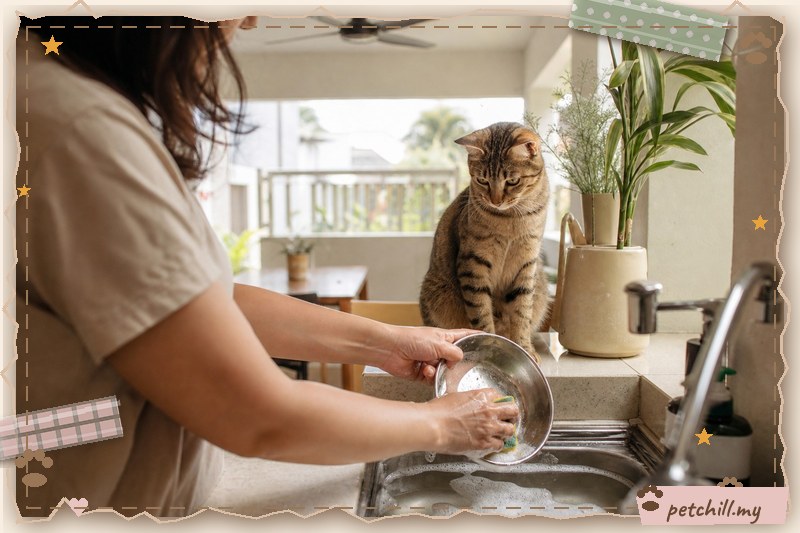
Use a bin with a lid for litter waste and empty it daily. Store cat food in sealed containers. Wash food bowls daily, especially after wet food. Leftover wet food spoils quickly in warm weather and creates a sour smell.
Diet, water and digestion
What goes in affects what comes out. Diet influences stool volume, stool odour and gas.
Feed a consistent, digestible diet
Choose a complete cat food suitable for your cat's life stage. Highly digestible diets tend to produce less waste. Avoid sudden changes; transition over seven to ten days by mixing increasing amounts of the new food. Sudden changes can cause diarrhoea, which increases odour and cleaning work.
Encourage water intake
Cats that drink more usually produce more dilute urine, which can reduce litter box smell. Provide fresh water daily, use wide bowls, and consider a water fountain if your cat likes running water. Wet food also adds moisture. If your cat suddenly drinks much more or less, see a vet.
Watch for food intolerance
If your cat has frequent gas, loose stool or very strong stool odour, discuss diet with your vet. Do not self-diagnose allergies. A vet can rule out parasites and other causes before recommending a diet trial.
Grooming and coat care
A healthy cat grooms itself, but some cats need help.
Brush regularly
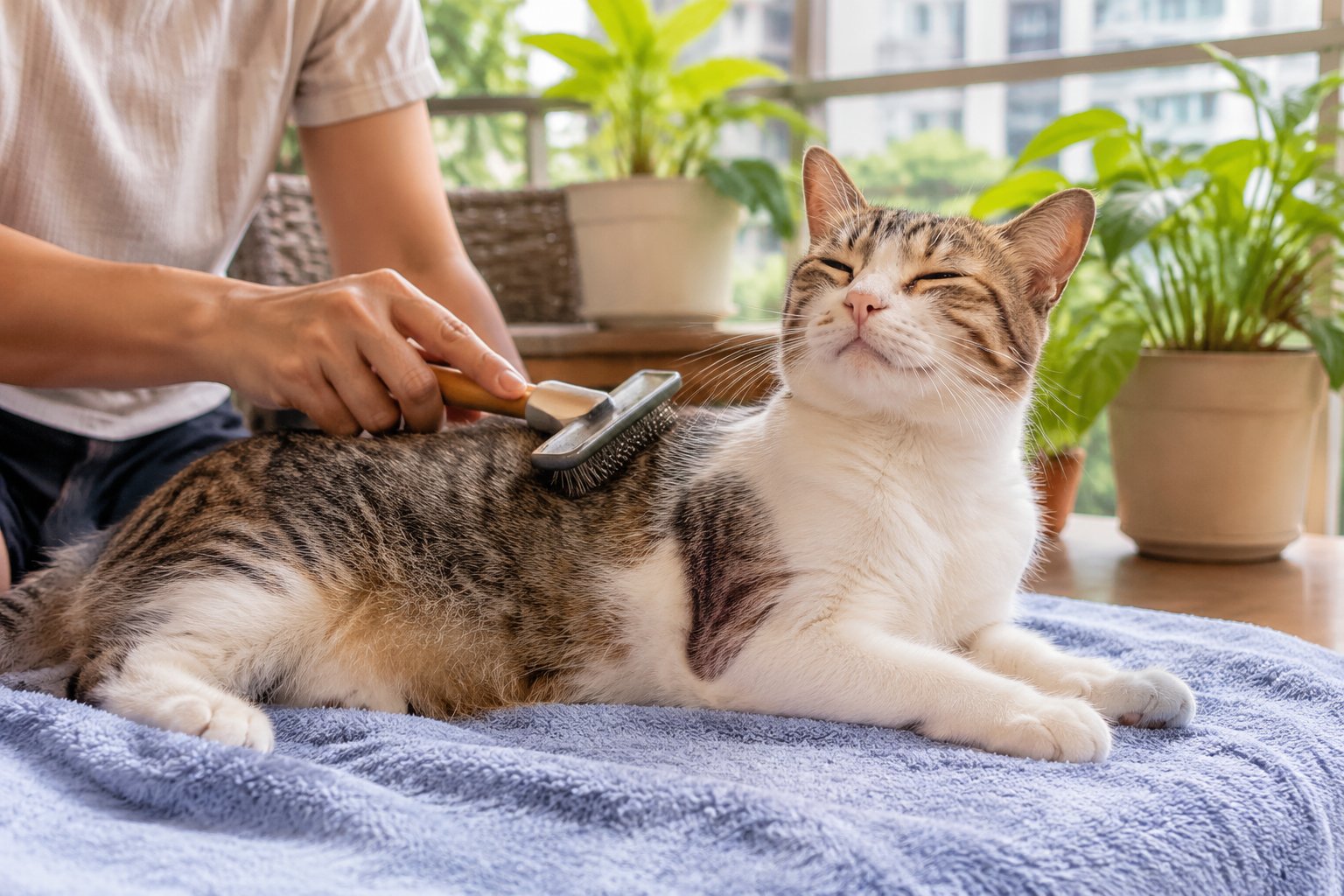
Brushing removes loose fur and reduces hairballs. It also gives you a chance to check for skin problems, wounds or parasites. Long-haired cats need daily brushing. Short-haired cats benefit from brushing a few times a week.
Bathe only when needed
Most cats do not need frequent baths. Bathe only if your cat is soiled, has a skin condition, or your vet advises it. Use a cat-safe shampoo and dry the coat thoroughly, especially in humid weather. A damp coat can develop a musty smell.
Check the mouth and ears
Bad breath is a common source of cat odour. Dental disease is common in older cats. Check the mouth gently and ask your vet about dental checks. Ears should be clean and not smell strongly. If you notice discharge or a bad smell, see a vet.
Neutering and marking behaviour
Unneutered cats are more likely to spray urine, which has a strong, persistent smell. Neutering reduces marking behaviour in many cats, though it may not eliminate it completely if the habit is established. If your cat sprays indoors, clean with enzyme cleaner and address stress or territorial issues. Consult your vet about neutering and behaviour.
Multi-cat homes and small apartments
More cats mean more waste and more competition. In a Kuala Lumpur apartment, space is limited, so plan carefully.
Spread resources
Place litter boxes, food bowls and water bowls in separate areas. Avoid putting all boxes in one bathroom. Use vertical space such as cat trees and shelves to reduce tension. Provide multiple resting spots.
Manage smell in small spaces
In a small apartment, scoop twice daily without fail. Use a covered bin with a lid and empty it daily. Run an exhaust fan or open a window for short periods. Wash bedding weekly. If a balcony is available, do not leave litter in direct sun; heat increases smell.
Watch for stress
Stress can cause inappropriate urination and marking. Common triggers include new pets, moving house, renovations and changes in routine. If your cat starts urinating outside the box, see a vet first to rule out medical causes, then address stress with separate resources and gradual introductions.
When to see a vet
Most odour is manageable with hygiene, but some smells signal illness. See a vet if you notice:
- Bad breath that is new or very strong
- Drooling, dropping food, or difficulty eating
- Straining to urinate, frequent small urinations, or blood in urine
- Sudden changes in stool smell, diarrhoea, or vomiting
- Weight loss despite a good appetite
- Strong smell from the ears or skin
- Sudden spraying or urination outside the box
- A cat that stops grooming and develops a greasy or smelly coat
Urinary blockages are emergencies, especially in male cats. If your cat is straining and producing little or no urine, seek veterinary care immediately.
A simple weekly checklist
- Scoop litter twice daily
- Top up litter and stir
- Empty litter waste bin daily
- Wash food and water bowls daily
- Deep clean litter boxes weekly
- Wash bedding weekly or fortnightly
- Vacuum soft furnishings weekly
- Check mouth, ears and coat weekly
- Replace scratched litter boxes
- Review diet and water intake
Comparison: common odour-control approaches
| Approach | Effort | Cost | Effectiveness | Notes |
|---|---|---|---|---|
| Scooping twice daily | Low | Low | High | Best single habit |
| Clumping litter | Low | Moderate | High | Easier urine removal |
| Hooded box | Low | Moderate | Variable | Can trap smell |
| Enzyme cleaner | Moderate | Moderate | High for accidents | Essential for urine spots |
| Air purifier | Low | High | Moderate | Helps but does not fix source |
| Frequent bathing | High | Moderate | Low | Not usually needed |
| Diet change | Moderate | Variable | Moderate | Transition gradually |
Final thoughts
Cat odour control is mostly about routine. Scoop often, use the right litter, clean thoroughly, ventilate your home, and feed a consistent diet. If the smell changes suddenly or your cat seems unwell, do not just clean harder. See a vet to rule out dental, urinary or digestive problems. A fresh home and a healthy cat usually go together.
This article is general information only and is not a substitute for veterinary advice. If you are concerned about your cat's health or behaviour, consult a licensed veterinarian in Malaysia.
Related reading
- Cat Odour Control for Cats: A Step-by-Step Guide for Malaysian Homes
- Cat Sitter for Cat Owners in Malaysia: A Practical Guide
- Cat Sunscreen for Cats: Step-by-Step Guide for Malaysian Pet Parents
- Ear Cleaning Cat Tips Malaysia: Safe At-Home Routine for Malaysian Owners
- Monsoon Season Tips for Cat Owners in Malaysia: A Practical Wet-Weather Care Guide
- Multi-Cat Household Tips for Cat Owners: A Practical Guide for Malaysian Homes
- Best Cat Carrier for Cats in Malaysia: A Practical Buying Guide
- Best Cat Tree for Cats in Malaysia: A Practical Buying Guide
- Cat Fur Matting: A Step-by-Step Guide for Malaysian Cat Owners
- Cat Sitter Tips for Cat Owners in Malaysia: A Complete Guide



