
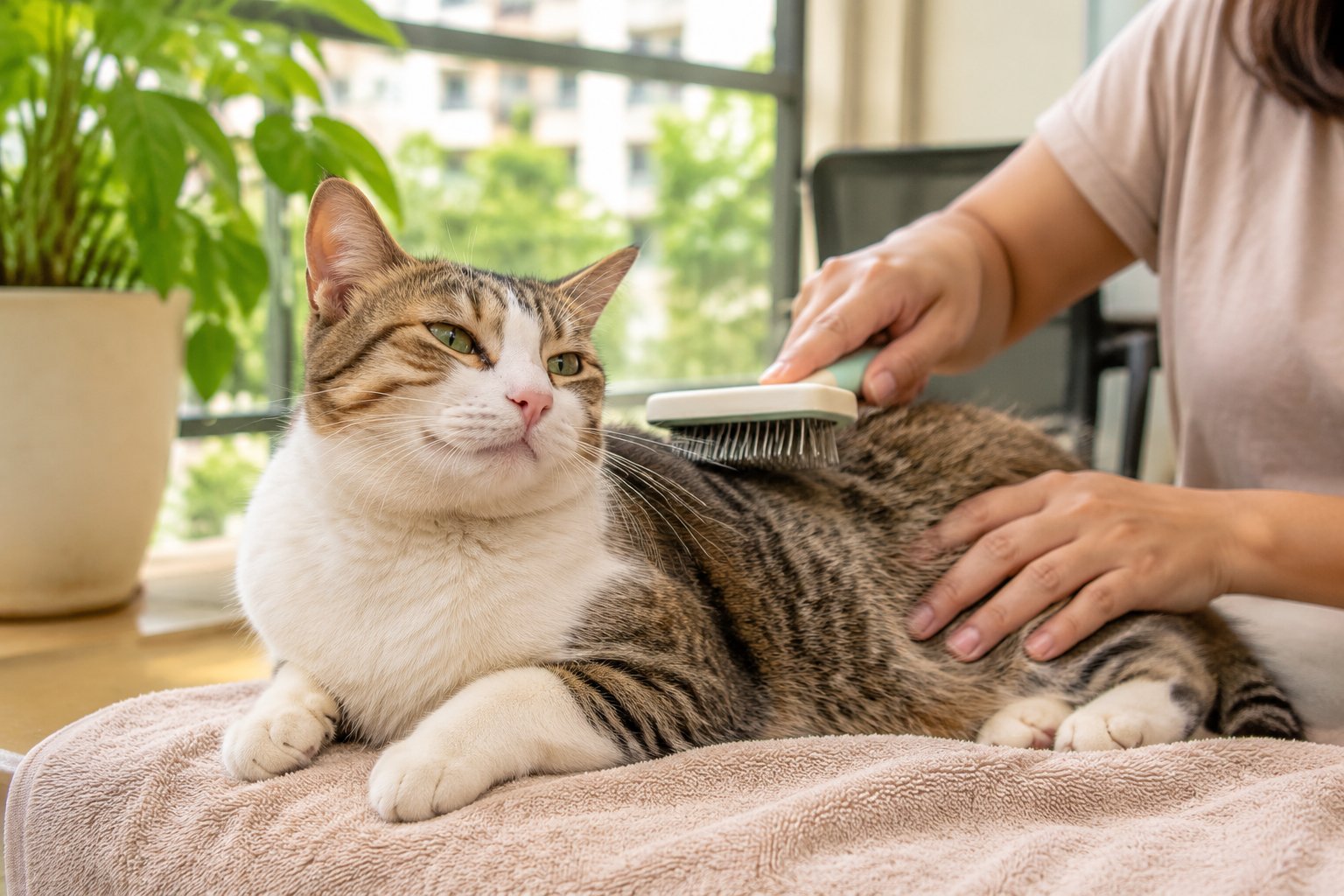
Start with the right expectation
Senior cats usually need more grooming help, not less. Ageing changes flexibility, eyesight, skin oil production, nail growth and body weight, so a cat that once kept a perfect coat may gradually develop mats, dandruff, overgrown claws and a dull smell. The goal is not a show coat. It is comfort, hygiene and early detection of problems.
A good routine is short, predictable and gentle. Think of grooming as a weekly health check with a brush in your hand. You are looking for lumps, wounds, fleas, ear discharge, gum redness, weight change and signs of pain. In Malaysia's warm, humid climate, that check matters even more because skin folds, armpits and the area under the tail can stay damp.
Why senior cats groom less effectively
Grooming is physical work. Cats twist, lick, nibble and reach behind themselves. Arthritis in the spine, hips, knees or elbows makes that uncomfortable. Dental pain, reduced eyesight, obesity, muscle loss and neurological changes also reduce grooming. Some cats develop cognitive changes and simply forget parts of the routine.
When self-grooming drops, the consequences build up: loose hair is swallowed, mats form, skin under mats becomes inflamed, nails curl into pads, and the coat becomes greasy. A senior cat may also stop grooming because it feels unwell. Sudden neglect of the coat is a health clue, not a behaviour problem.
Build a low-stress grooming routine
Set the scene
Choose a quiet time when your cat is relaxed, often after a meal. Use a non-slip mat on a stable table or your lap. Keep the room comfortable, not cold. Have treats within reach. Work in daylight so you can see the skin and nails clearly.
Keep sessions short
Aim for five to ten minutes. For a cat that dislikes handling, do one body area per day: Monday the back, Tuesday the hindquarters, Wednesday the legs, and so on. Stop before your cat struggles. A calm two-minute session repeated daily beats a long battle once a week.
Use the right tools
| Tool | Best for | Senior-cat note |
|---|---|---|
| Soft slicker brush | Short and medium coats | Use light pressure; older skin is thinner |
| Metal comb | Checking for mats after brushing | Run through the coat to find hidden tangles |
| Rubber curry brush | Short coats and loose hair | Gentle and good for cats that dislike pins |
| Wide-tooth comb | Long coats and feathering | Start at the ends, not the roots |
| Cat nail clipper | Nails | Sharp blades; avoid human clippers |
| Damp microfibre cloth | Face, ears and quick clean-ups | No shampoo needed for daily tidying |
| Cat-safe shampoo | Baths when needed | Never use human shampoo or dish soap |
Brush in the direction of the coat
Start at the head and neck, then work along the back, sides, belly and hindquarters. Use gentle strokes. For long-haired cats, part the coat and brush in layers. Pay attention to the armpits, behind the ears, the base of the tail and the hind legs, where mats commonly form. If you find a mat, do not pull it. Work at it with your fingers and a wide-tooth comb, or ask a professional groomer or vet nurse to remove it.
Coat care for short-haired and long-haired seniors
Short-haired cats generally need brushing two to three times weekly, increasing to daily in shedding season or if you notice loose tufts. Long-haired cats need daily brushing, and some need twice daily during heavy shedding. Senior long-haired cats that cannot reach their rear end often need daily help in that area.
Do not shave a cat just because it is hot. A cat's coat helps regulate temperature and protects the skin. Shaving is reasonable when matting is tight against the skin, when a cat cannot be kept clean, or when a vet advises it for a medical reason. If you shave, use a professional groomer or vet clinic, because clipper burns and nicks are common on thin senior skin.
Bathing: less often, done well
Most cats do not need frequent baths. Bathe a senior cat only when it is soiled, has a skin condition your vet is treating, or has become greasy. Use lukewarm water, a shallow basin, a non-slip mat and a cat-safe shampoo. Wet the body first, avoiding the face and ears, lather gently, rinse thoroughly, and dry with a towel. Keep the room warm and draught-free.
In Malaysia's humidity, a cat that stays damp can develop skin irritation, especially in skin folds. Dry thoroughly, including between the toes and under the tail. Never leave a wet senior cat in an air-conditioned room without drying it first.
Nails, ears, eyes and mouth
Nails
Senior nails often grow thicker and faster, and arthritic cats wear them down less. Trim every two to four weeks. Take only the clear tip and avoid the pink quick. If you cannot see the quick, trim tiny amounts or ask a vet nurse. Overgrown nails can curl into the paw pad and cause pain and infection.
Ears
Check ears weekly. A little pale wax is normal. Dark debris, redness, discharge, head shaking or a bad smell needs a vet check. Clean only the outer ear with a vet-approved cleaner on a cotton pad. Never push cotton buds into the ear canal.
Eyes
Wipe away normal sleep with a damp cloth. New discharge, squinting, redness, cloudiness or a change in pupil size should be checked by a vet. Senior cats can develop eye conditions that are easier to manage when caught early.
Mouth
Lift the lip weekly and look at the gums and teeth. Bad breath, red gums, drooling, dropping food or chewing on one side suggests dental pain. Dental disease is common in older cats and can affect eating and grooming. Do not start brushing teeth on a cat with sore gums; ask a vet first.
Heat, humidity and skin folds
Malaysia's climate is warm and humid year-round, with a rainy season in many states. That combination favours skin fold irritation, fungal overgrowth and parasite activity. Keep your senior cat's bedding clean and dry, wash food and water bowls daily, and dry the coat after walks on a harness or after any bath.
Flat-faced breeds and overweight cats have more skin folds around the face, neck and tail base. Check these areas weekly for redness, moisture and smell. A soft cloth dampened with water is enough for routine cleaning. Avoid perfumed wipes.
Parasite control is part of grooming
While brushing, part the coat and look for fleas, flea dirt, ticks and signs of scratching. Senior cats may be less able to scratch effectively, so flea burdens can build quietly. Use only parasite products recommended for your cat's age and weight, and ask a vet before combining products. Never use dog flea products on cats.
Grooming as an early warning system
A weekly grooming session is one of the best health-monitoring tools you have. Record what you notice. A simple notebook or phone note can track weight, coat condition, nail growth and appetite. Changes over weeks are easier to spot than changes over days.
| What you notice | Possible reason | What to do |
|---|---|---|
| New mats on the back or rear | Arthritis or reduced flexibility | Increase gentle brushing; vet check for pain |
| Greasy coat near the tail | Skin infection, obesity or grooming difficulty | Vet check; clean and dry the area |
| Bad breath or drooling | Dental disease | Book a dental check |
| Thick, curling nails | Reduced wear and age changes | Trim more often or ask for help |
| Bald patches or scabs | Parasites, allergy or skin infection | Vet check before treating |
| Weight loss despite eating | Dental pain, thyroid or kidney disease | Vet check with blood tests |
Handling cats that dislike grooming
Use food, a soft voice and short sessions. Try a lick mat with a small amount of wet food while you brush. If your cat bites or panics, stop and try a different tool or a smaller area tomorrow. For cats that are very difficult to handle, ask a vet clinic or professional groomer for help. Sedation is sometimes used for medical grooming, but only under veterinary supervision.
When to see a vet
See a vet if your senior cat develops sudden matting, stops grooming, has hair loss, wounds, fleas, a greasy or smelly coat, new lumps, weight loss, bad breath, drooling, difficulty eating, or pain when touched. Also seek advice if your cat becomes lame, struggles to squat, cries during handling, or has not passed stool normally. These signs can point to arthritis, dental disease, skin infection, parasites or an underlying illness.
A simple weekly checklist
- Brush the whole body, including the belly and hindquarters.
- Check for mats, wounds, lumps and parasites.
- Look at ears, eyes, gums and teeth.
- Check nails and trim if needed.
- Clean bedding and bowls.
- Note weight, appetite and behaviour changes.
- Book a vet visit if anything is new or worsening.
Bottom line
Grooming a senior cat is mostly about gentle consistency and close observation. Short, frequent sessions protect the coat, reduce matting, keep nails comfortable and help you catch health problems early. In Malaysia's heat and humidity, drying the coat and checking skin folds matter. When in doubt, ask a veterinarian rather than reaching for a new shampoo or shaver.
This article is general information, not veterinary advice. Always consult a licensed veterinarian about your cat's health, and follow their guidance for grooming, parasite control and dental care.
Related reading
- Daily Care Guide Malaysia: A Practical Routine for Dogs and Cats
- Cat Sunscreen & Sun Safety Tips for Malaysian Cats: What Actually Works
- Ear Cleaning for Cats Step by Step: A Safe, Vet-Approved Guide for Malaysian Owners
- Haze Season Tips for Cat Owners in Malaysia: A Practical Indoor Air Guide
- How to Cat Massage a Cat: A Gentle, Step-by-Step Guide for Malaysian Owners
- How to Groom Senior Cats: A Gentle Daily-Care Guide for Malaysian Owners
- How to Paw Care a Cat: A Complete Guide for Malaysian Owners
- Monsoon Care for Cats Step by Step: A Practical Wet-Season Guide for Malaysian Homes
- Best Cat Tree for Cats in Malaysia: A Practical Buying Guide
- Cat Fur Matting: A Step-by-Step Guide for Malaysian Cat Owners
- Cat Odour Control: Practical Cat Tips for Malaysian Homes



