
Answer first
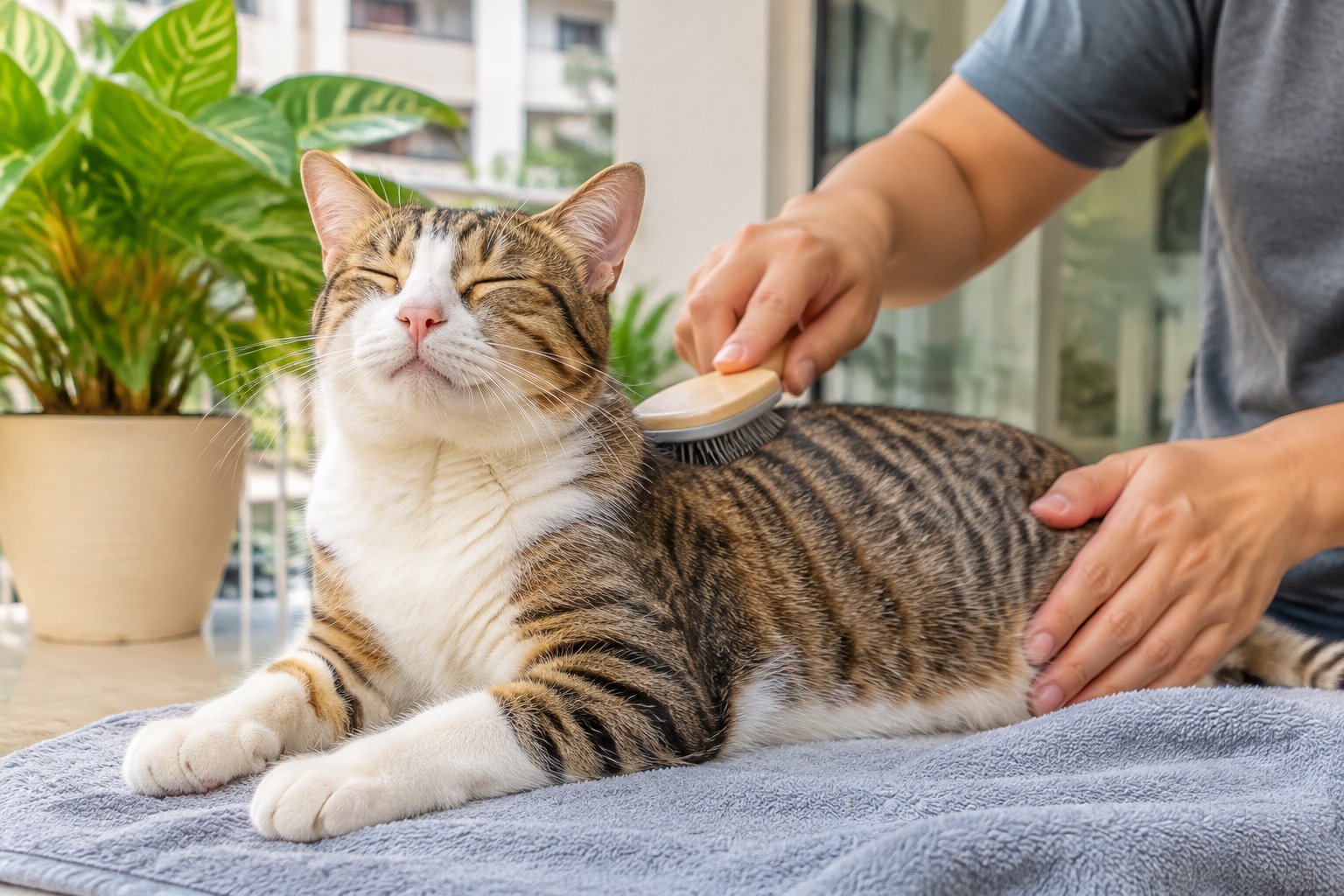
Harness training a cat in Malaysia is very doable if you treat it as a slow, reward-based skill rather than a quick outing. Choose a well-fitted H-style harness, let your cat wear it indoors for short sessions with treats, then attach a leash and practise in a quiet room before stepping outside. Keep sessions under 10 minutes, avoid hot pavement and heavy rain, and never force the harness on. Most cats need two to six weeks of short daily practice.
Why harness training is worth the effort
Indoor cats benefit from safe outdoor access. A harness lets your cat sniff new scents, watch birds and feel grass under its paws without the risks of free-roaming: traffic, fights, parasites and getting lost. For owners, a harness is a practical middle ground between a fully indoor life and an outdoor cat.
Harness training also builds trust. The process is a series of small, positive experiences: sniff the harness, wear it for a second, wear it for a minute, walk a step. Each success is rewarded. Over time, your cat learns that the harness predicts treats and interesting smells, not restraint.
Malaysian homes often have limited safe outdoor space. A harness walk around a condo corridor, a quiet garden or a park gives your cat mental stimulation without opening the door to unsupervised roaming. It is especially useful for cats living in apartments where windows are screened and balconies are off-limits.
Choose the right harness for your cat
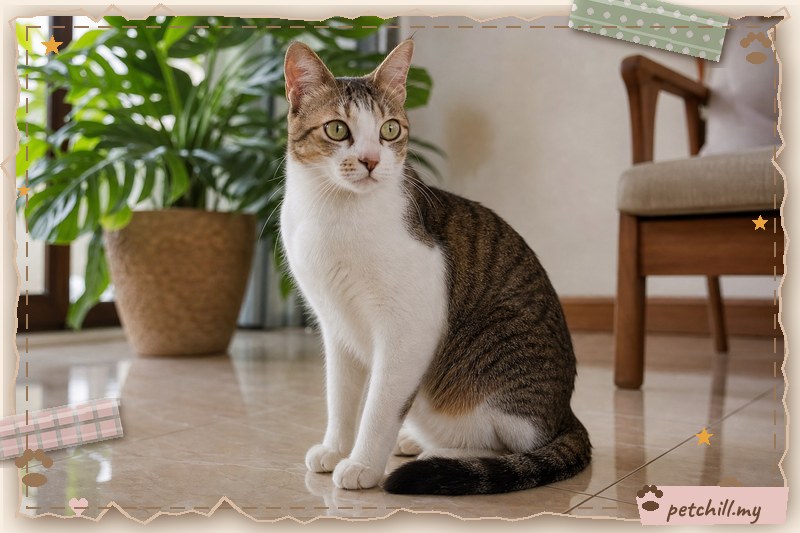
Not all harnesses suit cats. Cats have flexible spines and narrow chests, and they can slip out of loose straps. Look for a harness designed for cats, not small dogs.
| Harness type | How it fits | Pros | Cons | Best for |
|---|---|---|---|---|
| H-style (figure-eight) | Two loops: neck and chest, joined by a strap | Secure, adjustable, hard to slip | Can take time to put on | Most cats, beginners |
| Vest-style | Fabric panel across chest and back | Comfortable, spreads pressure | Can be warm in tropical heat | Short-haired cats, calm walkers |
| Step-in | Cat steps into two leg holes | Quick to put on | Fit can be tricky on narrow cats | Cooperative cats |
| Retractable-leash harness sets | Often thin straps | Convenient | Retractable leashes can be unsafe | Not recommended for cats |
Key features to look for:
- Adjustable straps at the neck and chest.
- A secure buckle or clip, not just hook-and-loop tape.
- A metal D-ring for the leash.
- Lightweight, breathable material.
- Reflective stitching if you walk at dusk.
Avoid harnesses that are too loose. A cat can back out of a loose harness in seconds. A good fit allows two fingers under each strap but no more. Check the fit after every adjustment and recheck before each walk.
Fit the harness correctly
A poor fit causes escapes, chafing and stress. Follow this checklist:
- Measure your cat's neck and chest with a soft tape measure. Chest circumference is measured just behind the front legs.
- Adjust the harness before putting it on your cat.
- Put the harness on and check that the neck loop sits below the throat, not over it.
- Check the chest strap sits behind the front legs, not across the armpits.
- Slide two fingers under each strap. If you can fit more, tighten it.
- Watch your cat walk. The harness should not twist or rub.
- Do a gentle pull test indoors with the leash attached. If the harness slips, adjust or try another size.
If your cat is between sizes, choose the smaller size if it still allows two fingers under the straps. A snug fit is safer than a loose one.
Step-by-step harness training plan
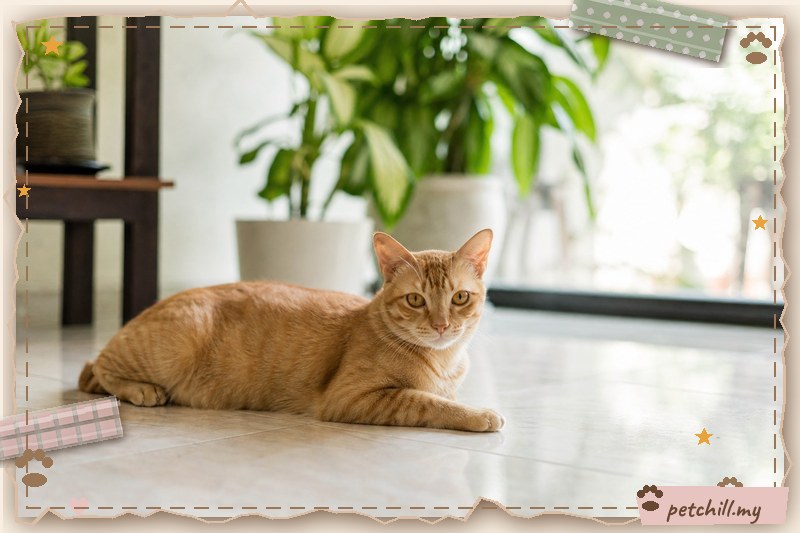
Training works best in short, frequent sessions. Aim for five to ten minutes once or twice a day. Stop before your cat gets frustrated.
Step 1: Let the harness become familiar
Leave the harness near your cat's bed or feeding area for a few days. Reward your cat for sniffing it. Do not put it on yet. The goal is for the harness to become a normal object, not a threat.
Step 2: Reward wearing it loosely
Place the harness over your cat's back without fastening it. Give a treat. Remove it. Repeat a few times. Then fasten the neck strap only, reward, and remove. Progress to fastening both straps for a few seconds. Use soft treats your cat loves.
Step 3: Extend wearing time indoors
Once your cat accepts the fastened harness, let it wear the harness for one minute, then two, then five. Distract with play or a food puzzle. If your cat freezes, flops or hides, go back to the previous step and shorten the session.
Step 4: Attach a lightweight leash
Clip on a light leash and let your cat drag it indoors under supervision. Never leave a leashed cat unattended. Reward calm walking. If your cat chews the leash, redirect to a toy.
Step 5: Practise in a quiet room
Hold the leash loosely and follow your cat. Do not pull. Let your cat explore. Practise calling your cat gently and rewarding it for coming toward you. This builds a habit of checking in.
Step 6: First outdoor session
Choose a quiet, familiar spot: a corridor, a small garden or a quiet park edge. Go at a cool time of day. Keep the first outing to five minutes. Let your cat sniff and observe. If your cat is tense, go back inside and try again another day.
Step 7: Build duration and variety
Gradually extend walks to 10–15 minutes. Add new routes slowly. Watch your cat's body language: relaxed tail, curious sniffing and forward movement are good signs. Flattened ears, crouching, tail tucked or frantic pulling mean it is time to go home.
Training principles that make the difference
- Reward, don't force. Treats, praise and play are more effective than pushing or pulling.
- Keep sessions short. Cats lose patience quickly. Five good minutes beat twenty stressful ones.
- End on a win. Finish while your cat is still comfortable, not after it has panicked.
- Be consistent. Daily short sessions work better than occasional long ones.
- Never punish. Hissing, swatting or struggling is communication, not defiance. Punishment makes harness training harder.
- Use high-value treats. Small pieces of cooked chicken or a favourite commercial treat can help.
Malaysian weather and environment: practical safety
Malaysia's tropical climate brings heat, humidity and sudden thunderstorms. These affect harness walks.
- Walk at cool times. Early morning or after sunset is best. Avoid midday heat.
- Check pavement temperature. Place the back of your hand on the ground for five seconds. If it is too hot for you, it is too hot for paws.
- Watch for humidity stress. Cats can overheat. Signs include heavy panting, drooling, weakness and confusion. Move to shade or air-conditioning and offer water.
- Avoid rain and thunderstorms. Cats dislike wet fur, and thunder can cause panic. Skip walks during heavy rain.
- Watch for mosquitoes. Mosquitoes can transmit heartworm. Ask your vet about prevention, especially if your cat goes outside regularly.
- Check for ticks and fleas. Inspect your cat after walks, especially around the neck, ears and paws.
- Be careful near drains and roads. Urban areas have traffic, stray dogs and open drains. Keep your cat close and avoid busy roads.
In Kuala Lumpur, a condo corridor or a quiet rooftop garden can be a good first outdoor space. In a Johor terrace house, a small enclosed garden or a quiet lane works well. In Penang, the rainy season means you should have an indoor training plan for wet days.
Common mistakes to avoid
- Starting outdoors too soon. Your cat needs indoor practice first.
- Using a loose harness. A loose harness invites escape.
- Pulling the leash. Cats resist being dragged. Follow, don't pull.
- Long sessions. Keep it short and positive.
- Ignoring stress signals. A tense cat will not learn.
- Walking in the heat of the day. Choose cooler hours.
- Using a retractable leash. These can tangle and cause injury.
- Leaving a harnessed cat unattended. Always supervise.
When to see a vet
Harness training is generally safe, but some situations need veterinary advice.
- Your cat shows breathing difficulty, heavy panting or collapse during or after a walk.
- Your cat limps or has sore skin under the harness.
- Your cat has a wound, tick bite or signs of infection after an outdoor walk.
- Your cat is very stressed, hides for hours or stops eating after a session.
- Your cat has a pre-existing heart, joint or respiratory condition and you are unsure about exercise.
- Your kitten has not completed its vaccination course.
If you are unsure whether your cat is healthy enough for outdoor walks, book a wellness check. Your vet can advise on vaccination, parasite prevention and exercise limits.
Quick comparison: indoor vs harnessed outdoor time
| Aspect | Indoor only | Harnessed outdoor time |
|---|---|---|
| Safety from traffic | High | Depends on supervision |
| Mental stimulation | Can be limited | High, with new smells |
| Parasite risk | Low | Higher; use prevention |
| Heat risk | Low | Manageable with timing |
| Owner effort | Low | Moderate |
| Best for | Shy or ill cats | Curious, healthy cats |
Final checklist before your first walk
- Harness fits with two fingers under each strap.
- Leash is lightweight and securely clipped.
- Cat is vaccinated and parasite prevention is up to date.
- You have treats and water.
- Weather is cool and dry.
- Route is quiet and familiar.
- Session is planned for five minutes.
- You know the signs of stress and heat exhaustion.
Harness training is a skill, and like any skill it takes patience. With short sessions, good treats and a well-fitted harness, many Malaysian cats learn to enjoy safe outdoor time. Go at your cat's pace, and consult your vet if anything seems off.
This article is general information, not veterinary advice. Always consult a licensed veterinarian in Malaysia for your cat's health and individual needs.
Related reading
- Daily Care Guide Malaysia: A Practical Routine for Dogs and Cats
- How to Harness Train a Cat: A Step-by-Step Guide for Malaysian Owners
- How to Use Catnip for Cats: A Practical Malaysian Guide
- Pet Daily Care Guide Malaysia: Brushing, Nails, Ears, Eyes, Teeth and Weight (2026)
- Best Catnip for Cats in Malaysia: A Practical Buyer's Guide
- Best Food Bowl for Cats in Malaysia: A Practical Buying Guide
- Best Puzzle Feeder for Cats in Malaysia: A Practical Buying Guide
- Best Window Perch for Cats in Malaysia: A Practical Buying Guide
- Cat Exercise: Practical Cat Tips for Malaysian Homes
- Cat Exercise for Cats Step by Step: A Practical Daily Plan for Malaysian Homes
- Cat Grass for Indoor Cats: A Practical Malaysian Guide



