
Quick answer
During Malaysia's monsoon, keep cats dry and warm, wash and fully dry bedding often, control indoor humidity, stay on parasite prevention, secure windows and balconies, prepare for power cuts, and add indoor enrichment. Watch for skin, respiratory and stress signs, and see a vet early if symptoms appear.
Why the monsoon matters for cats
Malaysia's wet season is not one uniform event. The northeast monsoon typically brings heavy rain to the east coast and northern states late in the year, while the southwest monsoon and inter-monsoon thunderstorms affect other regions at different times. What matters for cat owners is the pattern: weeks of high humidity, sudden downpours, damp floors, mould growth, more standing water and more time spent indoors.
Cats are good at hiding discomfort. A cat that is slightly chilled, itchy or stressed may simply sleep more or groom more. By the time an owner notices, a small problem can become a skin infection, a respiratory issue or a behaviour problem. The goal of monsoon care is prevention: keep the environment dry, keep the cat comfortable, and catch changes early.
This guide is written for Malaysian homes, from Kuala Lumpur apartments to Johor terrace houses and Penang shophouses. It covers indoor humidity, bedding, grooming, parasites, safety, power cuts, enrichment, travel and when to call a vet.
Room-by-room damp control
Bedding and sleeping spots
Damp bedding is one of the most common monsoon problems. Fabric that feels slightly cool and clammy can grow mould and cause skin irritation. Use two sets of washable bedding so one can dry while the other is in use. Wash weekly in hot water with a pet-safe detergent, and dry completely. If the sun is not out, a tumble dryer or a well-ventilated room with a fan is better than air-drying in a closed room.
Avoid thick foam beds that hold water. Thin, quick-drying mats or covers you can remove and wash are easier. Check under the bed and behind furniture, where condensation and mould often start. If a bed smells musty, wash it again; do not just spray it.
Floors, walls and cupboards
Wipe condensation from windows and walls daily. Fix leaking roofs, pipes and window seals as soon as possible. Keep cat trees and scratching posts away from damp walls. In cupboards, use moisture absorbers and check stored dry food for clumping or a sour smell. Never feed cat food that has been stored in a damp place.
Litter trays
High humidity makes litter clump less well and smell more. Scoop at least twice daily, top up with fresh litter, and wash the tray weekly with mild soap and water, then dry it fully. Keep a spare tray so one can dry. Avoid covered trays in damp weather unless you clean them very often, because they trap moisture and odour.
Airflow and humidity
Air-conditioning and dehumidifiers help, but do not seal a cat in a cold, closed room. Ventilate when rain pauses. Use exhaust fans in bathrooms and kitchens. Aim for a comfortable indoor humidity for people; if your windows are streaming and clothes never dry, the room is too damp for a cat to sleep in comfortably.
Grooming and skin care in wet weather
Long-haired cats and cats with dense undercoats are most at risk of damp-fur problems. After outdoor time, towel-dry the cat, especially the belly, paws and armpits. If the cat is very wet, dry with a towel and keep it in a warm room; avoid chilling. Do not bathe a cat unnecessarily in cold weather unless your vet advises it, and if you do bathe, dry thoroughly.
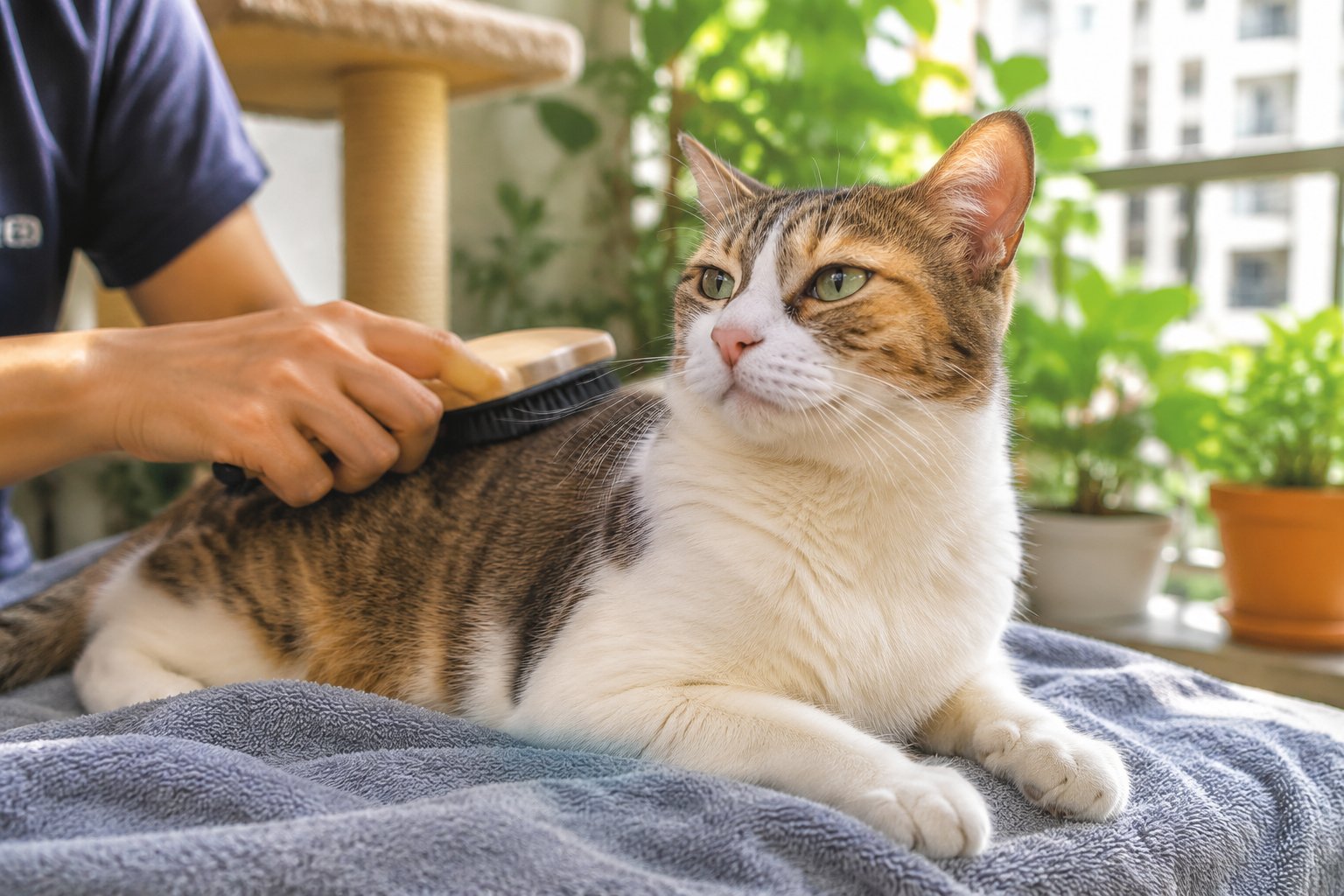
Brush regularly to remove loose fur and prevent matting. Matted fur traps moisture and can hide wounds or parasites. Check ears, paws and skin folds. If you see redness, scabs, bald patches, fleas or a bad smell, book a vet check.
Parasites: fleas, ticks, mosquitoes and worms
Warm, damp weather favours fleas and ticks, and standing water breeds mosquitoes. Mosquitoes can transmit heartworm to cats, and fleas can carry tapeworm. Keep your cat on a year-round parasite prevention plan recommended by your vet. Do not skip doses because the cat stays indoors; parasites can arrive on shoes, clothing or other pets.
Remove standing water from pots, trays, gutters and unused containers around the home. Check your cat's fur after any outdoor time. Wash bedding and vacuum regularly. If you see fleas, treat the cat and the environment according to your vet's advice, and repeat as directed.
Safety around rain, storms and floods
Windows and balconies
Cats are curious and slippery surfaces are dangerous. Secure windows with sturdy screens and check that balcony railings have no gaps. During storms, keep cats away from open windows and glass doors. A frightened cat may bolt, so close interior doors before opening the front door.
Rain, puddles and drains
Do not let cats drink from puddles, drains or rainwater containers. Floodwater can carry bacteria, chemicals and sharp debris. If your cat gets wet outdoors, rinse with clean water if it was floodwater, dry thoroughly, and watch for skin irritation or illness.
Electrical safety
Keep cables and extension leads away from damp floors. Do not use damaged plugs. If water enters the home, switch off electricity at the mains if it is safe to do so, and keep cats out of wet areas.
Preparing for power cuts
Monsoon storms can interrupt power. Prepare a cat emergency kit in a waterproof box:
- Dry cat food in sealed containers and bottled water
- Spare litter and a spare tray
- Torch, batteries and a power bank
- Any regular medicines, with a copy of the prescription
- A carrier, towel and a familiar blanket
- Paper towels and waste bags
- A list of emergency contacts, including your vet
Keep cats away from candles, oil lamps and generators. If the weather is hot and humid, use a battery fan or a cool pack wrapped in a towel. Never leave a cat in a closed car or a sealed room without ventilation.
Indoor enrichment for rainy weeks
Cats that normally go outside may become bored and stressed when kept in. Boredom can show as over-grooming, spraying, scratching furniture or night-time yowling. Build a routine:
- Two short play sessions daily with a wand toy or laser pointer, ending with a treat or meal
- A window perch with a safe view, if the window is secure
- Cardboard boxes, paper bags with handles removed, and puzzle feeders
- Scratching posts in several rooms
- Rotate toys so they feel new
- Short training sessions for simple cues
A tired cat is usually a calmer cat. If your cat is used to outdoor access, transition gradually and provide a litter tray indoors before the rainy season starts.
Travel, boarding and vet visits in the rain
Use a sturdy carrier with a towel inside. Keep the carrier dry and place it on the floor of the car, not on a seat where it can slide. Bring a towel to dry the cat after the trip. If you board your cat, visit the facility first and ask about ventilation, cleaning and parasite policy. During heavy rain, allow extra travel time and avoid flooded roads. For routine care, call ahead to confirm clinic hours.
Comparison table: monsoon risks and actions
| Risk | Where it shows up | Practical action |
|---|---|---|
| Damp bedding and mould | Beds, cupboards, carpets | Wash weekly, dry fully, use moisture absorbers |
| Skin irritation | Armpits, belly, skin folds | Towel-dry after wetting, brush, vet if red or scabby |
| Fleas and ticks | Fur, bedding, floors | Year-round prevention, vacuum, wash bedding |
| Mosquitoes and heartworm | Standing water, outdoor areas | Remove standing water, vet-recommended prevention |
| Chilling | Wet fur, cold floors | Dry thoroughly, warm room, avoid draughts |
| Stress and boredom | Indoor cats, changed routine | Daily play, enrichment, safe window perch |
| Power cuts | Food, medicine, heat | Emergency kit, battery fan, no candles near cats |
| Floodwater exposure | Paws, fur, drinking | Rinse, dry, vet check if unwell |
When to see a vet
Contact a veterinarian if your cat has persistent scratching, hair loss, red or scabby skin, a bad smell, sneezing, coughing, breathing difficulty, diarrhoea, vomiting, not eating, drinking more than usual, lethargy, or any wound. See a vet promptly if your cat was exposed to floodwater, has been in a fight, or seems painful when touched. In Malaysia, your local veterinarian can advise on parasite prevention and whether a check-up is needed. Do not use human medicines on cats without veterinary advice.
Frequently asked questions
How do I stop my cat's bedding smelling damp during the monsoon? Wash bedding weekly in hot water, dry it completely in a dryer or direct sun, and rotate two sets. Use moisture absorbers near storage, avoid foam that traps water, and air rooms daily. Never put bedding away slightly damp.
Is it safe to let my cat outside in heavy rain? Generally no. Heavy rain causes stress, chilling and slippery escapes. Keep cats indoors during storms, secure windows and balconies, and provide litter trays, scratching posts and play so indoor time stays enriching.
Do fleas and ticks get worse in the rainy season? Yes, damp warm conditions favour fleas and ticks, and mosquitoes breed in standing water. Keep monthly parasite prevention going year-round, check fur after outdoor time, and remove standing water around the home.
How can I reduce humidity for my cat indoors? Use air-conditioning or a dehumidifier, ventilate when rain pauses, wipe condensation, fix leaks, and keep wardrobes and cupboards dry. Aim for comfortable human humidity and never trap a cat in a closed damp room.
What should I prepare for a monsoon power cut? Store cat food, bottled water, litter, torches, batteries and any medicines together. Keep cats away from candles and generators, and have a carrier ready. If it is safe, a battery fan or cool pack helps in heat.
When should I take my cat to the vet during monsoon? See a vet for persistent scratching, hair loss, wounds, coughing, sneezing, diarrhoea, not eating, lethargy, or any flood exposure. Early checks are cheaper and safer than waiting for symptoms to worsen.
Vet disclaimer
This article is general information for cat owners in Malaysia and is not a substitute for veterinary examination, diagnosis or treatment. Always consult a licensed veterinarian about your cat's health, parasite prevention and any symptoms. If you are worried, seek veterinary care promptly.
Related reading
- Daily Care Guide Malaysia: A Practical Routine for Dogs and Cats
- Best Cat Tree for Cats in Malaysia: A Practical Buying Guide
- Haze Season for Cat Owners in Malaysia: A Practical Indoor Air Guide
- Haze Season Tips for Cat Owners in Malaysia: A Practical Indoor Air Guide
- How to Monsoon-Care a Cat in Malaysia: A Practical Daily-Care Guide
- Monsoon Care for Cats Step by Step: A Practical Wet-Season Guide for Malaysian Homes
- Monsoon Season Tips for Cat Owners in Malaysia: A Practical Wet-Weather Care Guide
- Best Cat Grass for Cats in Malaysia: A Practical Buying & Growing Guide
- Best Interactive Toys for Cats in Malaysia: A Practical Buying Guide
- Cat Odour Control: Practical Cat Tips for Malaysian Homes
- Cat Sitter for Cat Owners in Malaysia: A Practical Guide



