
Start with a simple answer
Monsoon care for cats comes down to five habits: keep the coat and paws dry, keep food and water clean and fresh, keep parasite prevention current, keep the home calm and warm, and check the cat's body weekly for early problems. Malaysia's wet season can last weeks, so a repeatable routine beats one-off effort.
This guide walks through that routine step by step, from the front door to the food bowl to the vet visit. It is written for Malaysian homes, including apartments, terrace houses and homes with outdoor areas.
Why the wet season is different for cats
Malaysia's northeast monsoon typically brings heavier rain to the east coast and northern states between November and March, while afternoon thunderstorms can hit almost anywhere year-round. Even where rain is brief, humidity stays high.
For cats, the practical effects are:
- Damp coats and skin. Fur that stays wet for hours softens the skin surface and can worsen skin fold irritation, especially in flat-faced breeds and overweight cats.
- Paw problems. Wet floors, muddy yards and rough surfaces increase the chance of small cuts and irritation between the toes.
- Ear moisture. Floppy-eared cats and cats that shake their heads after rain can trap moisture in the ear canal.
- Food and water spoilage. Warm, humid air speeds up spoilage of wet food and can make dry food stale or clumpy.
- Stress. Thunder, wind and changes in routine can make cats hide, over-groom or eat less.
- Parasites. Warm damp conditions and standing water support fleas, ticks and mosquitoes.
None of this means your cat will get sick. It means the wet season rewards a little planning.
Step 1: Set up a dry zone at the entrance
Make the first metre inside your door a drying station.
- Place an absorbent mat inside and outside the door.
- Keep a dedicated towel within reach.
- Add a small basket for a slicker brush and a comb.
- If your cat goes outside, keep a shallow tray of clean water for rinsing muddy paws.
For a Kuala Lumpur apartment, this might be a mat and towel beside the front door. For a Johor terrace house with a yard, add a covered drying spot near the back door so your cat is not standing in the rain while you find a towel.
Checklist: towel, mat, brush, paw rinse tray, sealed bag for wet wipes or cloths.
Step 2: Dry the coat properly
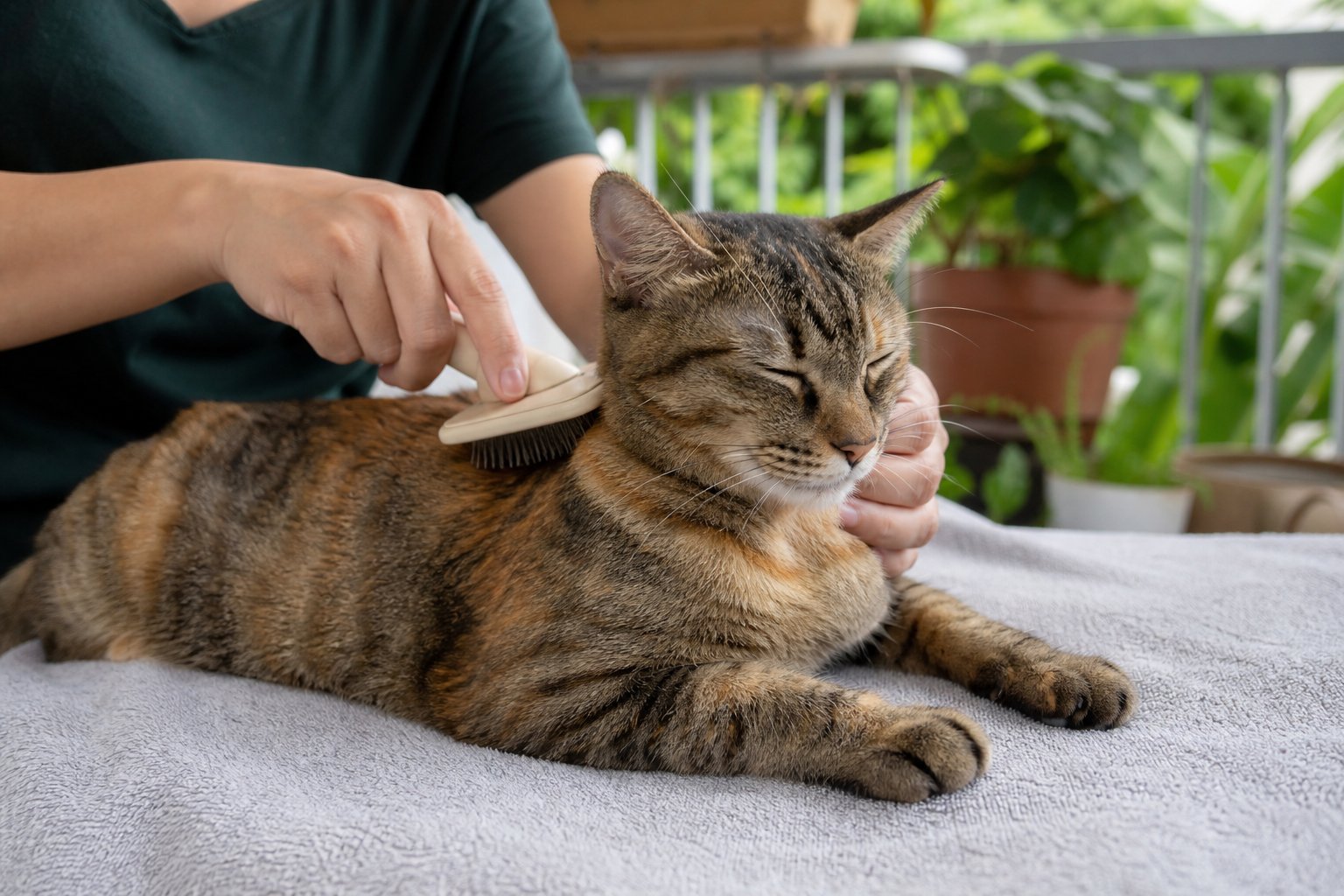
Towel-drying is enough for most short-haired cats. Work from head to tail, then check the belly, armpits, groin and between the back legs, where moisture hides.
For long-haired cats, part the fur and dry in layers. A low-heat hairdryer on the cool setting can help, but keep it moving and never point it at the face. Stop if your cat struggles.
Do not rub hard. Patting and pressing removes water without tangling the coat.
Signs you need to dry more: the coat feels cool and clammy, the skin under the fur is damp, or your cat keeps licking one spot.
Step 3: Check and clean the paws
Paws take the most punishment in wet weather.
- Rinse muddy paws with clean water.
- Pat dry, including between the toes and around the pads.
- Look for small cuts, redness, swelling or a bad smell.
- Trim long fur between the toes if it stays wet, but avoid cutting the pads.
- Keep litter trays dry; clumping litter that stays damp can stick to paws.
If your cat licks its paws constantly, limps or has a swollen toe, stop home care and arrange a vet visit.
Step 4: Manage ears and skin folds
Check ears once a week. A normal ear is pale pink and mostly clean. A little light-brown wax is common. Discharge, redness, a bad smell or head shaking are reasons to see a vet.
Do not push cotton buds deep into the ear canal. Wipe only the visible outer part with a soft cloth or a pet-safe ear wipe.
For flat-faced cats, wipe skin folds gently and dry them fully. Moisture trapped in folds can cause redness and irritation.
Step 5: Keep food and water fresh
Warm, humid air is hard on food.
- Wet food: serve small portions and remove leftovers within about 30 minutes. Do not leave an open can in the fridge for days.
- Dry food: store it in an airtight container in a cool, dry place. Keep the original bag inside the container for batch information.
- Bowls: wash food and water bowls daily with hot water and soap, then dry fully.
- Water: refresh at least twice a day. Some cats drink more when water is away from food, so offer a second bowl in another room.
- Automatic feeders: check seals and clean the hopper regularly; humidity can make kibble clump.
If your cat suddenly refuses food, check whether the food smells stale or has been left out. Offer a fresh portion before assuming illness.
Step 6: Control moisture in the home
You do not need a laboratory-clean house, but you do need dry bedding.
- Wash cat beds weekly and dry them fully.
- Air rooms when rain pauses; use fans or air-conditioning to reduce humidity.
- Wipe condensation from windowsills and floors where cats rest.
- Check cupboards and store rooms for damp; cats often choose the coolest, dampest corner.
- Keep litter trays away from leaking walls or floors.
In a Penang rainy season, when rain can persist for days, a simple dehumidifier or air-conditioner on dry mode can make bedding and litter easier to keep dry.
Step 7: Keep parasite prevention current
Warm, damp weather does not automatically mean a parasite problem, but it does mean you should not skip prevention.
- Follow your vet's schedule for flea, tick and worm prevention.
- Check the coat weekly for fleas, ticks and specks of flea dirt.
- Remove standing water from pots, trays and drains around the home to reduce mosquito breeding.
- Keep screens and doors closed during peak mosquito hours where possible.
Product choice and dosing depend on your cat's age, weight and health. Ask a Malaysian vet or retailer for options suitable for your cat; local prices and availability vary.
Step 8: Reduce storm stress
Cats notice weather changes. Some become clingy; others hide.
- Create at least two hiding spots with a soft blanket.
- Keep meals, play and grooming at consistent times.
- Play with your cat before expected storms if your area has a predictable pattern.
- Use a calm, low voice and avoid forcing your cat out of hiding.
- If your cat is very distressed, ask your vet about calming options; do not use human medication.
Step 9: Prepare for power cuts and flooding
A short outage is inconvenient; a long one affects food, water and temperature.
Basic kit:
- Two to three days of your cat's usual food
- Bottled water and a bowl
- Torch and spare batteries
- Towels and a carrier
- Any regular medication
- Litter and a spare tray
- Copies of vaccination records
If flooding is possible, move your cat's carrier, food and medication to a higher floor early. Keep your cat indoors and identify a safe room away from windows.
Step 10: Groom and check weekly
Set a weekly 10-minute check:
| Area | What to look for | Action |
|---|---|---|
| Coat | Damp patches, mats, dandruff, fleas | Brush, dry, check prevention |
| Skin | Redness, scabs, hair loss, folds | Clean gently; vet if spreading |
| Ears | Discharge, smell, redness | Wipe outer ear; vet if abnormal |
| Paws | Cuts, swelling, licking | Rinse, dry; vet if limping |
| Eyes | Discharge, squinting | Wipe with clean cloth; vet if persistent |
| Appetite | Eating less, refusing food | Fresh food; vet if over 24 hours |
| Litter | Diarrhoea, straining, blood | Vet if repeated |
| Behaviour | Hiding, over-grooming, aggression | Reduce stress; vet if ongoing |
Indoor and outdoor cats: what changes
| Situation | Main risk | Practical step |
|---|---|---|
| Apartment, indoor only | Humidity, stale food, storm stress | Dry bedding, small meals, hiding spots |
| Terrace house with yard | Muddy paws, standing water, parasites | Paw rinse, drain water, weekly coat check |
| Cat with outdoor access | Wet coat, cuts, ticks | Dry zone at door, tick check, limit outdoor time in heavy rain |
| Senior or overweight cat | Skin folds, reduced grooming | Daily fold check, gentle drying, vet review |
| Long-haired cat | Mats, trapped moisture | Daily brushing, layered drying |
Common mistakes to avoid
- Leaving wet food out for hours because the cat is grazing.
- Using a hot hairdryer close to the skin.
- Bathing more often than needed without drying fully.
- Skipping parasite prevention because the cat stays indoors.
- Ignoring a small paw wound until it swells.
- Forcing a frightened cat out of its hiding place during thunder.
When to see a vet
Contact a veterinarian if you notice:
- Limping, paw swelling, discharge or a bad smell from a paw
- Red, smelly or painful ears, or repeated head shaking
- Skin lesions that spread, bleed or do not improve
- Repeated vomiting or diarrhoea
- Refusing food for more than 24 hours
- Laboured breathing, open-mouth breathing or weakness
- Straining to urinate, especially in male cats
- A cat that hides constantly or stops grooming
If you are unsure, call the clinic and describe what you see. Early advice is cheaper and safer than waiting.
A simple weekly monsoon routine
- Daily: fresh water, timed meals, remove wet food leftovers, quick paw check after outdoor access.
- Weekly: full body check, wash bedding, clean bowls and feeder parts, check parasite prevention dates.
- Monthly: review food stocks, check carrier and emergency kit, replace worn towels.
Vet disclaimer
This article is general information for Malaysian cat owners and is not a substitute for veterinary examination, diagnosis or treatment. Health decisions should be made with a licensed veterinarian who has examined your cat.
Related reading
- Daily Care Guide Malaysia: A Practical Routine for Dogs and Cats
- Ear Cleaning for Cats Step by Step: A Safe, Vet-Approved Guide for Malaysian Owners
- Grooming Senior Cats: Practical Cat Tips for Malaysia
- How to Cat Massage a Cat: A Gentle, Step-by-Step Guide for Malaysian Owners
- How to Clean a Cat's Ears Safely: A Step-by-Step Guide for Malaysian Owners
- How to Monsoon-Care a Cat in Malaysia: A Practical Daily-Care Guide
- How to Paw Care a Cat: A Complete Guide for Malaysian Owners
- How to Use a Cat Tree for Cats: A Practical Guide for Malaysian Homes
- Monsoon Season for Cat Owners in Malaysia: A Practical Wet-Weather Care Guide
- Monsoon Season Tips for Cat Owners in Malaysia: A Practical Wet-Weather Care Guide
- Moving House with a Cat in Malaysia: A Practical Guide for Cat Owners
- Multi-Cat Household Tips for Cat Owners: A Practical Guide for Malaysian Homes



