
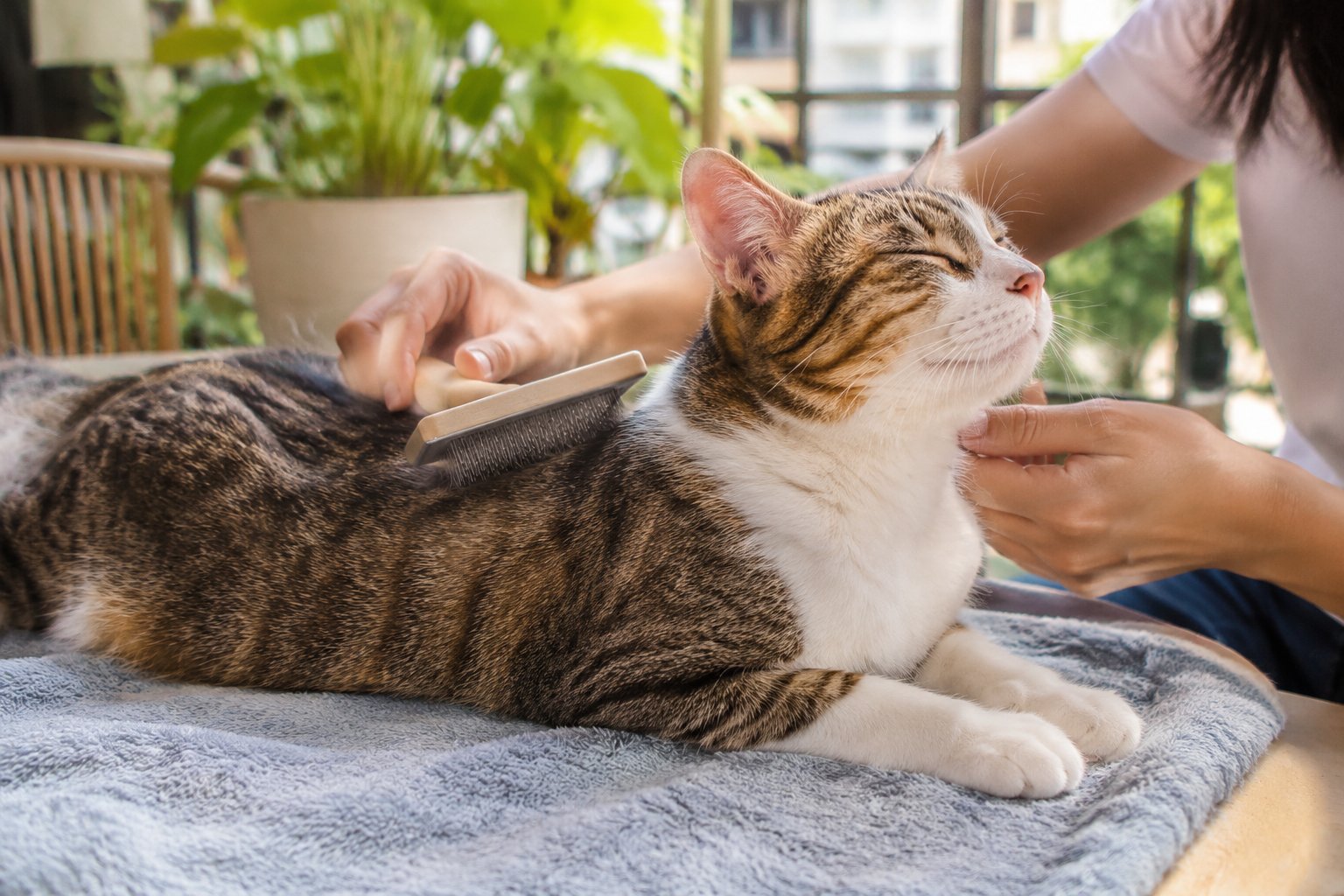
Why indoor cats need interactive play
An indoor cat lives in a small, predictable world. Outdoors, a cat spends much of its day hunting, patrolling and investigating. Indoors, food arrives in a bowl and nothing moves unless you make it move. Interactive toys for indoor cats are the practical fix: they turn feeding and playtime into something that asks the cat to think, stalk, pounce and solve a problem.
The goal is not to keep your cat busy every minute. It is to give short, structured bursts of activity that mimic the hunt: search, chase, catch, eat, groom, sleep. A cat that gets that cycle daily is usually calmer, less likely to attack ankles, and less likely to sit by the door yowling.
This guide covers the main types of interactive toys, how to choose them for a Malaysian home, how to rotate them, safe DIY options, and the warning signs that mean a vet visit rather than a new toy.
What counts as an interactive toy?
An interactive toy asks the cat to do something to get a result. That result might be movement, sound, a treat or your attention. Passive toys — a soft mouse lying on the floor, a ball that rolls once — are fine, but they do not create the same mental workout.
Broadly, interactive toys fall into four groups:
- Wand and string toys: you move the prey, the cat chases and catches. This is the closest thing to a real hunt.
- Puzzle feeders and treat balls: the cat works for food by nudging, pawing, rolling or lifting flaps.
- Electronic and motion toys: battery-powered mice, flopping fish, rolling balls and laser pointers that move on their own or with your help.
- DIY foraging games: cardboard boxes, paper bags, muffin tins, toilet-roll tubes and hidden treats.
Most homes do best with a mix. Wand play builds a bond and burns energy. Puzzle feeders slow eating and occupy the cat when you are busy. Electronic toys are useful when you are out, but they rarely replace you.
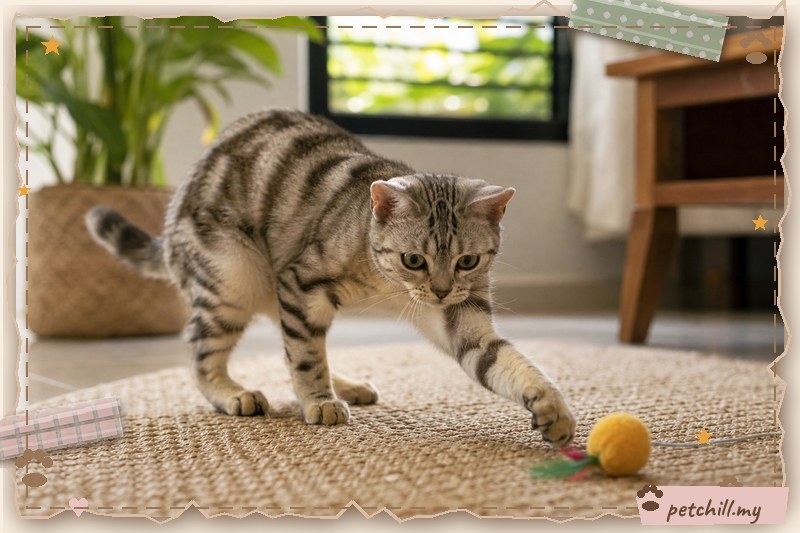
Choosing toys for a Malaysian indoor home
Malaysian homes vary widely: a Kuala Lumpur apartment with limited floor space, a Johor terrace house with a small garden, or a Penang flat where the rainy season keeps everyone indoors for days. The toy should fit the space and the climate.
| Home situation | Good toy choices | What to watch |
|---|---|---|
| Small apartment, limited floor | Wand toys with short flicks, tabletop puzzle feeders, treat balls rolled along a corridor | Avoid heavy rolling toys that bang into neighbours below; keep play to soft surfaces |
| Terrace house with tiled floors | Rolling balls, electronic mice, floor-level puzzle feeders | Tiles are slippery; cats can slide. Use a rug or playmat for pouncing |
| Humid, rainy-season days | Indoor foraging boxes, snuffle mats, hide-and-seek with treats | Damp cardboard grows mould; replace wet boxes and dry toys fully |
| Multi-cat household | Separate puzzle feeders, one wand per cat, vertical climbing spots | Feed puzzles apart to prevent guarding and stress |
| Senior or less mobile cat | Food puzzles at floor level, gentle wand drags, short sessions | Avoid jumps and fast chase; watch for stiffness after play |
Humidity matters. Fabric toys, snuffle mats and cardboard can hold moisture in a Malaysian home. Rotate them, air them in shade, and replace anything that smells musty. Wash fabric toys regularly and dry them completely before storing.
Wand toys: the backbone of daily play
A wand toy is a stick with a line and a lure. You control the prey. Done well, it is the most effective interactive toy you can own.
How to use a wand properly:
- Start slow. Drag the lure along the floor like a mouse, or flick it just above the cat's head like a fly.
- Let the cat stalk. Pause. A toy that never stops moving is exhausting and unrealistic.
- Let the cat catch it regularly. A hunt with no catch is frustrating.
- End with a real reward — a small treat or a meal — so the sequence feels complete.
- Put the wand away afterwards. Leaving it out teaches the cat to chew the string.
Safety first. Wand strings and ribbons are swallow hazards. Supervise every session, store the toy in a closed drawer, and replace frayed cords. Never let a cat chew the line. If your cat is a string-eater, choose a wand with a short, thick cord or a lure attached directly to the stick.
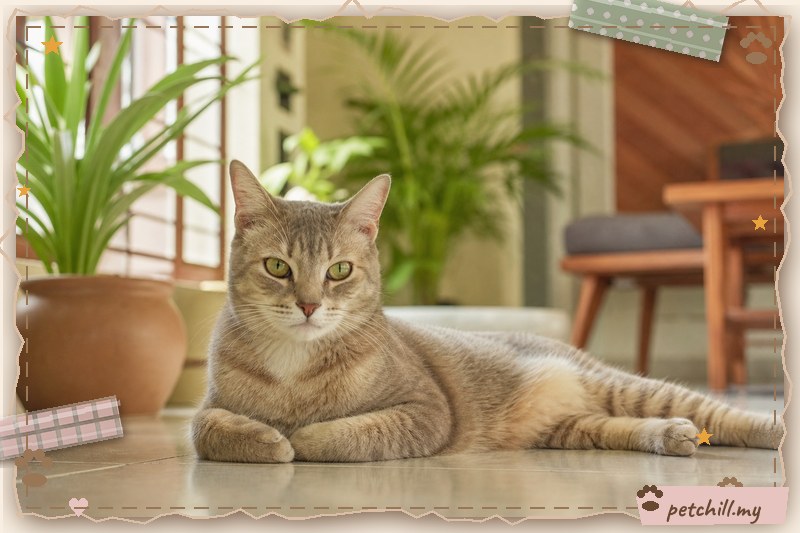
Puzzle feeders and treat balls
Puzzle feeders are the quiet workhorses of indoor enrichment. They slow eating, add activity and give the cat a job. They are especially useful for cats that eat too fast, vocalise before meals, or need to lose weight.
Start easy. A simple treat ball that rolls and drops kibble is a good first step. Then move to a maze bowl or a flip-lid puzzle. Increase difficulty only when the cat solves the current level quickly.
Practical tips:
- Use part of the daily food ration in the puzzle, not extra food on top.
- Start with the puzzle on a flat, non-slip surface.
- Show the cat once by rattling the toy and dropping a treat nearby.
- Do not help too much. Let the cat work; frustration that lasts a few seconds is part of learning.
- Wash puzzle feeders regularly — dried food and saliva build up in grooves.
Treat balls are excellent for cats left alone during the day. They roll, drop food and keep the cat moving. Choose a size your cat cannot swallow and check the opening is not loose enough to dump all the food at once.
Electronic and motion toys
Battery toys — rolling mice, flopping fish, feather spinners, laser pointers — add novelty. They are not a substitute for you, but they can bridge gaps when you are busy or away.
What they are good for:
- Short bursts of activity when you are on a call or cooking.
- Encouraging a shy cat to move.
- Adding variety to a rotation.
What to watch:
- Laser pointers: cats can become frustrated because the prey is never caught. Always finish by landing the dot on a real toy or treat.
- Batteries: secure battery compartments. A chewed battery is an emergency.
- Noise: some motion toys are loud. A nervous cat may avoid them.
- Novelty fade: most cats ignore a motion toy after a few days. Rotate it out and bring it back later.
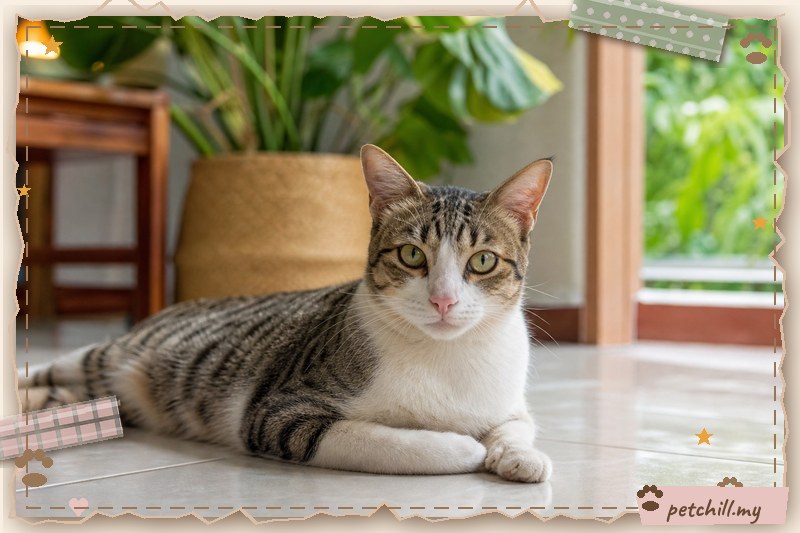
DIY interactive toys that cost little
You do not need to buy much. Common household items make excellent foraging toys, provided they are safe.
Safe DIY ideas:
- Muffin-tin puzzle: place treats in some cups and cover them with ping-pong balls or crumpled paper. The cat paws the covers off.
- Toilet-roll treat tube: fold one end, drop treats inside, fold the other end loosely. The cat bats and nuzzles it open.
- Cardboard box maze: cut holes in a box and hide treats inside. Cats love the hunt and the hiding place.
- Paper bag hide: open a plain paper bag on its side with a treat inside. Remove handles and any staples first.
- Snuffle mat: a shallow tray with strips of fleece tied through a grid. Hide kibble among the strips.
DIY safety rules:
- No staples, tape, plastic wrap or small parts that can be swallowed.
- No loose string, yarn or ribbon.
- Replace cardboard once it is chewed, damp or mouldy.
- Supervise new DIY toys until you know your cat uses them safely.
Building a daily play routine
A routine beats random play. Cats are crepuscular — most active around dawn and dusk — so those are good times to play.
A simple daily plan:
| Time | Activity | Duration |
|---|---|---|
| Morning | Wand play, ending with breakfast or a treat | 10–15 minutes |
| Midday | Puzzle feeder or treat ball with part of the ration | Passive, 10–20 minutes |
| Evening | Wand play or electronic toy, ending with dinner | 10–15 minutes |
| Before bed | Short calm play or a food puzzle | 5–10 minutes |
This is a template, not a rule. A kitten may need several short sessions. A senior cat may prefer two gentle ones. The key is consistency and a clear end to each hunt.
Rotation schedule. Keep only a few toys out at a time. Store the rest out of reach. Swap every three to five days. When a toy returns after a week, it feels new. Rotate puzzle feeders too, and change where you hide treats.
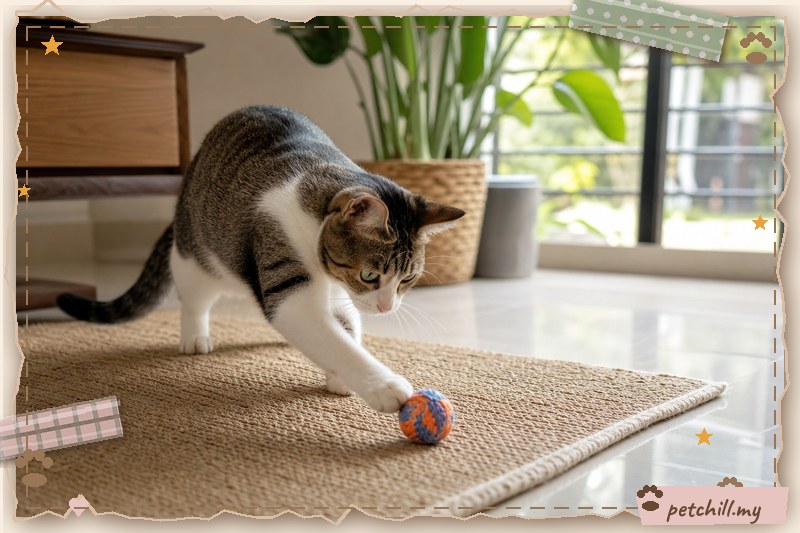
Reading your cat's body language during play
Play should look like hunting, not fighting. Watch for:
- Good signs: ears forward, pupils widening then narrowing, crouching, stalking, pouncing, tail low or gently swishing.
- Stop signs: flattened ears, hissing, growling, tail thrashing, fur standing up, pupils fully dilated with a stiff body.
If your cat grabs your hand or ankle, stop the session and redirect to a toy. Never use your hands as prey. If play escalates into aggression, end it calmly and give the cat space.
Common mistakes
- Playing until the cat gives up. End while the cat is still interested.
- Never letting the cat catch the toy. No catch, no payoff, more frustration.
- Leaving string toys out. A swallowed thread can be life-threatening.
- Using food on top of meals. Puzzle feeders should replace part of the ration, not add to it.
- Ignoring the environment. Cats also need vertical space, scratching posts and hiding spots. Toys work best alongside a cat-friendly home.
When to see a vet
Interactive play is a health tool as well as fun. Changes in play can be an early sign of illness.
See a vet if your cat:
- Suddenly stops playing or loses interest in food and toys.
- Becomes aggressive during play when it was previously calm.
- Pants heavily, coughs or tires quickly during short play.
- Limps, cries out or avoids jumping.
- Swallows string, ribbon, tinsel or a toy part.
- Vomits repeatedly, stops eating or seems in pain after chewing a toy.
- Shows sudden behaviour changes, especially in older cats.
String ingestion is an emergency. Do not pull a visible thread from the mouth or rear; it can cut the intestine. Go to a vet immediately.
Quick checklist before you buy
- Is the toy the right size for my cat's mouth?
- Are there small parts, bells or beads that can detach?
- Is there loose string or ribbon?
- Can I supervise this toy, or is it safe to leave out?
- Does it add activity, thinking or both?
- Can I clean it easily in a humid climate?
- Does it fit my home's space and flooring?
Bottom line
Interactive toys for indoor cats work best as a routine, not a shopping spree. A wand toy, one or two puzzle feeders, a treat ball and a box of DIY materials will cover most cats. Play daily, let the cat catch the prey, rotate toys, and keep string and small parts away. If your cat's play habits change suddenly, treat it as a health question and ask a veterinarian.
This article is general information, not veterinary advice. For health, diet or behaviour concerns, consult a licensed veterinarian in Malaysia.
Related reading
- Best Catnip for Cats in Malaysia: A Practical Buyer's Guide
- Cat Grass for Indoor Cats: A Practical Malaysian Guide
- Catnip for Indoor Cats: A Complete Malaysian Guide
- Daily Care Guide Malaysia: A Practical Routine for Dogs and Cats
- How to Exercise a Cat: A Practical Daily Play Plan for Malaysian Homes
- How to Use Catnip for Cats: A Practical Malaysian Guide
- How to Use a Scratching Post for Cats: A Complete Malaysian Guide
- Puzzle Feeder for Indoor Cats: A Complete Malaysian Guide



