
The short answer
Most Malaysian cats do not need sunscreen. Cats evolved to seek shade and regulate their own exposure, and healthy cats with full coats are well protected. The exceptions matter, though: hairless breeds, pale or white cats, cats with thin fur on the ears and nose, and cats that spend hours on sunny balconies or in direct window sun can burn. For those cats, the safest plan is shade, indoor time and protective clothing first, and only a vet-approved pet sunscreen if your vet recommends one. Human sunscreen is not a casual option because cats lick their fur and swallow what is on their skin.
Malaysia's sun is strong all year, not just in a short summer. UV levels stay high even on hazy days, and afternoon sun on a west-facing balcony can be intense. That makes sun safety a daily-care habit rather than a seasonal chore.
Why cats can get sunburn
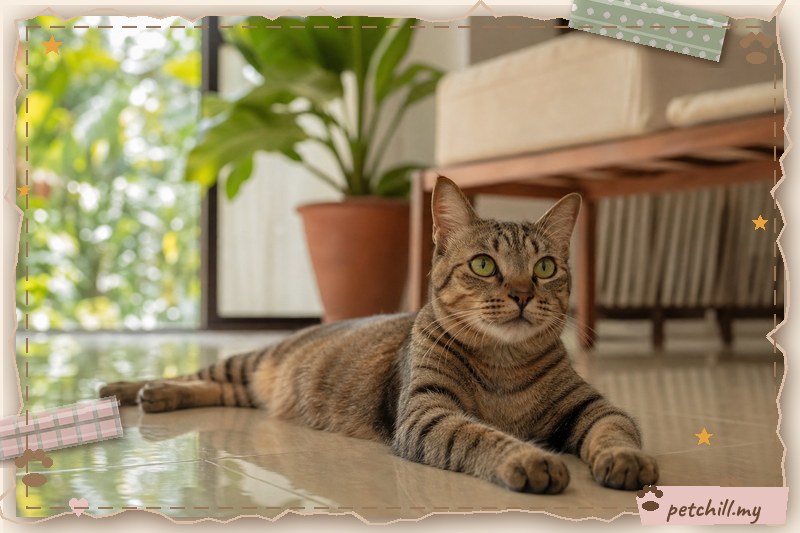
Cat fur blocks a lot of UV, but it is not a full shield. The areas most exposed are the ear tips, the bridge of the nose, the eyelids and the thin fur around the lips. White cats lack the melanin that gives darker cats some natural protection, so their skin is more vulnerable to UV damage. Hairless breeds such as the Sphynx have almost no coat barrier and rely entirely on behaviour and their owner's management.
Sunburn in cats is not always obvious immediately. The skin may look pink or red, feel warm, and later become dry or crusty. Repeated exposure over months and years is the bigger concern because chronic UV damage can progress to actinic dermatitis and, in some cases, squamous cell carcinoma, a type of skin cancer that often appears on ear tips and the nose. This is why prevention matters more than treating a single mild burn.
Cats are also good at hiding discomfort. A cat that keeps shaking its head, scratching its ears or avoiding a favourite sunny spot may be telling you something. Watch for changes in routine, not just visible redness.
Which cats need extra protection
Not every cat needs the same plan. Use this table as a starting point, then adjust with your vet.
| Cat profile | Risk level | Practical focus |
|---|---|---|
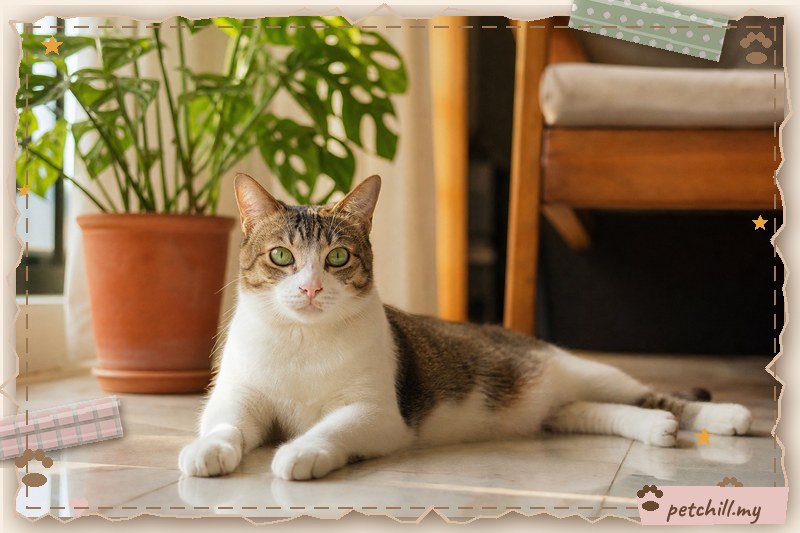
| White or pale cat with full coat | Moderate to high on ears, nose and eyelids | Shade, window film, limit peak sun, check ears weekly |
| Hairless breed (Sphynx, Peterbald) | High | Indoor time, protective clothing, vet-approved sunscreen if advised |
| Thin-furred or recently shaved cat | Moderate | Avoid close shaving, provide shade, monitor skin |
| Senior cat with thinning coat | Moderate | Comfortable shaded resting spots, regular skin checks |
| Dark, full-coated cat | Low | General shade and hydration, routine checks |
| Cat with skin disease or allergies | Variable | Treat the underlying issue with your vet first |
If your cat falls into a higher-risk group, build sun protection into your daily routine rather than waiting for a problem. A two-minute ear check once a week is a simple habit that catches trouble early.
The problem with human sunscreen
Human sunscreens are designed for human skin and human habits. Cats groom constantly, so anything you put on their fur or skin is likely to be ingested. Many human products contain zinc oxide, which is common in mineral sunscreens and can cause gastrointestinal upset in cats. Others contain salicylates, fragrances, essential oils or chemical UV filters that are not appropriate for feline skin. Even products marketed as "natural" can contain essential oils that are risky for cats.
There is also a practical problem: cats dislike the texture and smell of most creams, and they will lick it off quickly. That means the protection is unreliable and the ingestion risk is real. Do not use human sunscreen, baby sunscreen or sunscreen sprays on your cat unless your veterinarian has specifically approved a product for your cat's situation.
If your vet does recommend a pet sunscreen, ask exactly where to apply it, how much, how often, and whether your cat needs a cone or supervision to stop licking while it dries. Never apply sunscreen to the eyelids or lips unless your vet gives clear instructions, and never use a spray near the face because inhalation is a risk.
Shade and indoor management: the first line of defence
For most Malaysian homes, shade is the most effective and least stressful protection. Cats are crepuscular by nature and often prefer to rest during the hottest part of the day, so you can work with their instincts.
- Create at least two shaded resting spots, ideally in different rooms, so your cat can move away from sun as it shifts across the day.
- Use curtains, blinds or UV-blocking window film on windows where your cat likes to sunbathe. Film is especially useful in apartments where the balcony or window is the main sun source.
- If you have a balcony, provide a solid-roofed shelter or a covered catio rather than relying on a mesh net alone, because mesh does not block much UV.
- Rotate beds and perches so there is always a cooler, shaded option.
- Keep fresh water in several places to support hydration.
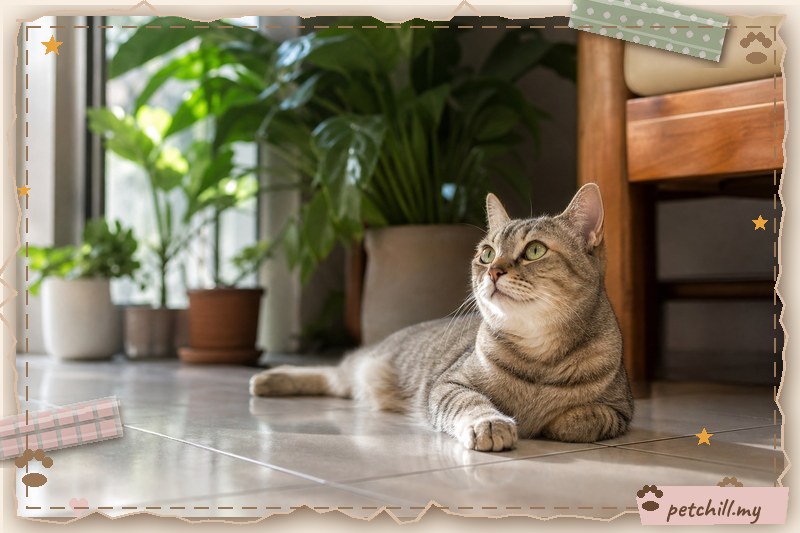
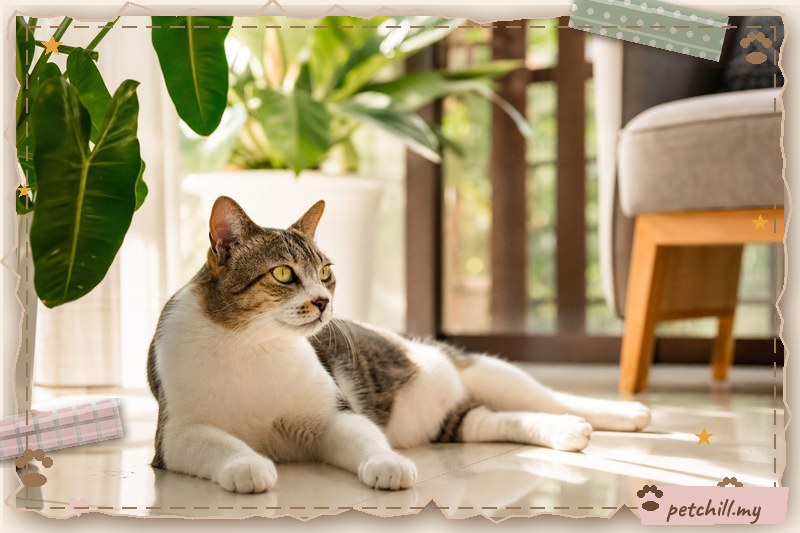
In a Kuala Lumpur apartment, afternoon sun can hit a glass balcony door for hours. A pale cat that sleeps against that glass is getting direct exposure even though it is technically indoors. Window film plus a shaded perch solves most of that problem without any product on the cat.
In a Johor terrace house, the car porch or back garden may be the cat's favourite spot. Provide a covered area with a solid roof and a raised bed, and bring the cat in during the strongest midday sun. If your cat is an indoor-only cat, a secure catio with a shaded section gives outdoor enrichment without uncontrolled exposure.
Protective clothing and physical barriers
Pet-safe protective clothing can help hairless cats and cats with thin ear fur. Look for lightweight, breathable fabric that covers the back and shoulders without restricting movement. For ear tips, some owners use soft fabric caps or lightweight ear covers, but only if the cat tolerates them. Never leave a cat in clothing that restricts grooming, walking, drinking or toileting, and check for rubbing or overheating.
Physical barriers are often better than clothing. A shaded catio, a covered run, or simply closing a door to a sun-baked room reduces exposure without anything on the cat's body. For cats that insist on following the sun across the floor, a few well-placed cushions in shaded corners can redirect the habit.
If you use a cone or recovery suit for a skin issue, ask your vet whether it also affects sun protection and grooming. A cat in a cone may not be able to scratch or groom normally, so monitor the skin more closely.
Daily and weekly checks you can do at home
Sun damage is easier to manage when you catch it early. Build these checks into your routine:
- Ear check: Look at the ear tips and edges for redness, crusting, small sores or hair loss. Compare both ears.
- Nose and eyelids: Check the bridge of the nose and the thin skin around the eyes for pinkness, scabs or swelling.
- Coat and skin: Part the fur on the back and flanks to look for dry, flaky or inflamed skin.
- Behaviour: Note if your cat avoids sunny spots, shakes its head, scratches more, or hides.
- Appetite and water: Changes can signal pain or illness, not just sun exposure.
Take a photo of any suspicious spot every week so you can see whether it is healing or changing. This is especially useful for white cats and hairless breeds.
Grooming, coat and sun exposure
A full coat is natural protection, so avoid close shaving unless your vet recommends it for a medical reason. A "lion cut" may look cooler, but it removes the barrier that protects the skin from UV. If your cat needs a clip for hygiene or skin treatment, ask your vet how to manage sun exposure afterwards.
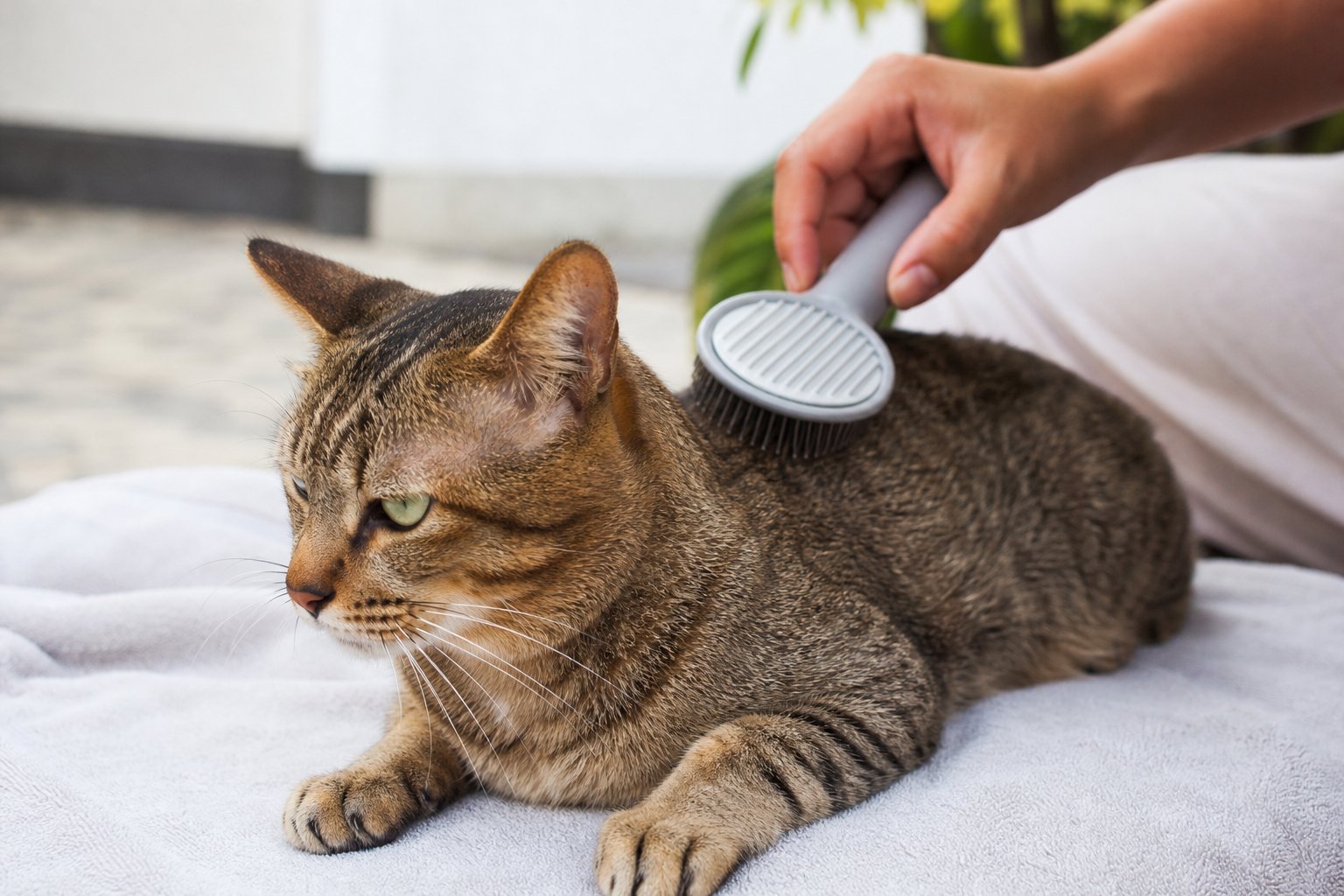
Brushing helps remove loose fur and lets you check the skin underneath. It also reduces matting, which can trap moisture and irritate skin. For hairless breeds, regular bathing with a vet-recommended cleanser removes oil and lets you inspect the skin, but over-bathing can dry the skin, so follow your vet's advice.
Water, heat and the Malaysian climate
Sun protection is part of heat management. Cats can overheat, especially flat-faced breeds, senior cats, overweight cats and hairless cats. Provide shade, fresh water and good ventilation. Avoid exercising or playing vigorously in the hottest part of the day. If your cat is panting, lethargic, drooling or has a rapid heartbeat, move it to a cool area and contact a vet promptly.
The rainy season does not cancel UV exposure. Overcast days still carry UV, and cats may seek warmth and light after rain. Keep shaded options available all year.
When to see a vet
See a veterinarian if you notice any of the following:
- Red, crusty or bleeding ear tips or nose
- A sore that does not heal within a week or two
- Swelling, lumps or thickened skin
- Hair loss with redness or scaling
- Your cat scratching, head-shaking or rubbing its face more than usual
- Sun avoidance, hiding, reduced appetite or lethargy
- Any skin change in a white cat, hairless cat or senior cat
Do not apply human creams, oils or home remedies to a suspicious spot before your vet sees it. Some products can mask the appearance of the skin and make diagnosis harder. Your vet may examine the skin, take a sample or refer you for further testing if cancer is a concern.
A practical sun-safety plan for Malaysian cat owners
Start with the environment, then consider the cat. Shade, window film, covered outdoor areas and indoor time during peak sun do most of the work. For high-risk cats, add protective clothing if tolerated and ask your vet about pet-safe sunscreen for specific areas. Check ears, nose and eyelids weekly, and photograph changes. Keep water available and watch for heat stress. If anything looks sore, bleeding or slow to heal, book a vet visit rather than experimenting with products.
Sun safety is not about wrapping your cat in cotton wool. It is about understanding which cats are vulnerable, removing the most intense exposure, and knowing the early signs that need professional attention. In Malaysia's climate, those small daily habits make a real difference over a cat's lifetime.
This article is general information for Malaysian cat owners and is not a substitute for veterinary advice. Always consult a licensed veterinarian about your cat's skin, sunscreen use and sun protection plan.
Related reading
- Daily Care Guide Malaysia: A Practical Routine for Dogs and Cats
- Cat Sunscreen for Cats: Step-by-Step Guide for Malaysian Pet Parents
- Grooming Senior Cats: Practical Cat Tips for Malaysia
- Haze Season Tips for Cat Owners in Malaysia: A Practical Indoor Air Guide
- Best Cat Tree for Cats in Malaysia: A Practical Buying Guide
- Cat Odour Control: Practical Cat Tips for Malaysian Homes
- Cat Sitter for Cat Owners in Malaysia: A Practical Guide
- Ear Cleaning Cat Tips Malaysia: Safe At-Home Routine for Malaysian Owners
- Ear Cleaning for Cats Step by Step: A Safe, Vet-Approved Guide for Malaysian Owners
- Haze and Cat Breathing in Malaysia: How to Protect Your Cat During Smoky Air
- Haze Season for Cat Owners in Malaysia: A Practical Indoor Air Guide



