
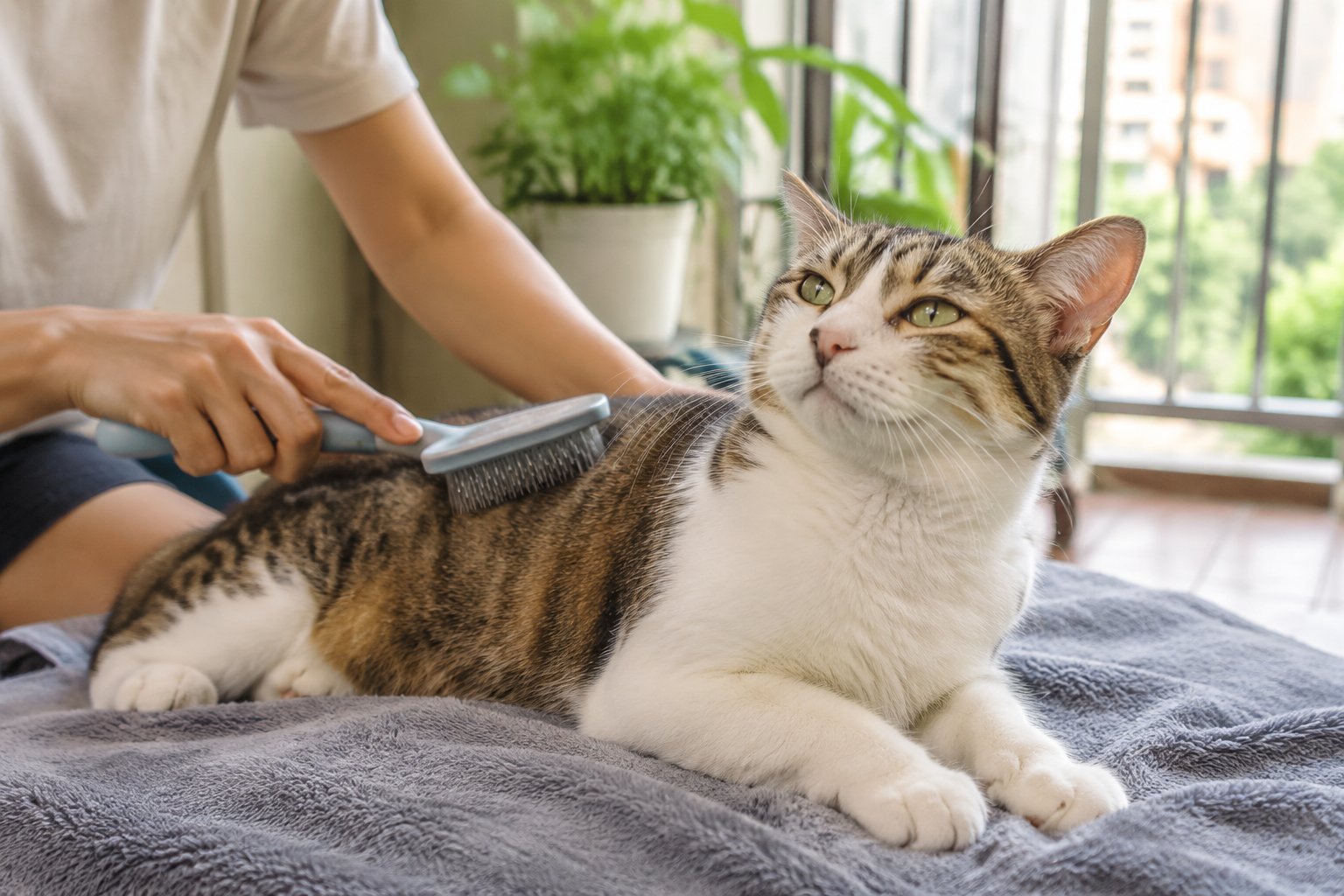
Start with your cat's hunting style, not the toy aisle
Interactive toys work best when they copy what your cat already does: stalk, chase, pounce, and catch. Before you buy anything, watch your cat for a few minutes. Does it hide and wait? Does it bat at moving things? Does it prefer chasing high or low? The answers narrow your choices fast.
In Malaysian homes, most cats live indoors or in apartments, so play is often the main outlet for natural behaviour. A toy that does not match your cat's style will sit in a basket. A simple toy that matches it will get used daily.
This guide covers toy types, safety checks, and a practical play routine for Malaysian households. It does not replace advice from your vet.
The main types of interactive toys
Wand toys
Wand toys are the closest thing to a hunting session you can offer. You move the prey; your cat stalks and pounces. They are cheap, easy to store, and work in small spaces because the action happens in the air and on the floor.
Look for a wand with a secure clip and a replaceable lure. Feathers, ribbons, and soft fabric strips are common. Avoid wands with tiny bells that can be bitten off.
Puzzle feeders
Puzzle feeders make your cat work for food. They slow eating and add mental effort. They suit cats that eat quickly or seem bored between meals. Start easy: a shallow tray with kibble scattered in it. Then move to sliding puzzles or maze bowls.
Puzzle feeders are not toys you leave out all day with a full meal. Use them for part of the daily ration so your cat stays motivated.
Motion and electronic toys
Battery-powered toys that move, wiggle, or hide can entertain a cat when you are busy. They are useful for short bursts, but many cats lose interest once they learn the pattern. Choose toys with adjustable speed and an auto-off feature. Check battery compartments are screwed shut.
Chase-and-catch toys
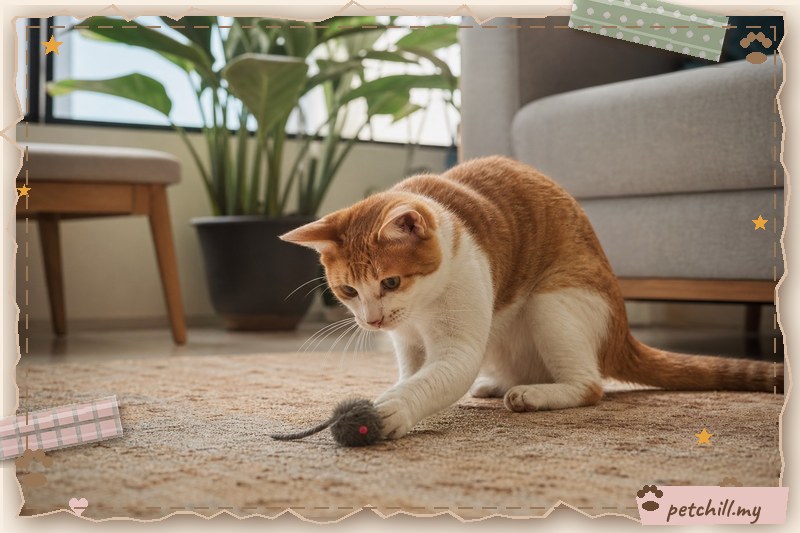
Balls, mice, and crinkle toys satisfy the catch part of the hunt. Cats often bat them under furniture, so keep a few lightweight ones on hand. A ball track or a toy with a rolling ball inside a frame can keep a cat busy without your involvement.
DIY and household toys
You do not need to buy everything. A cardboard box with holes cut in it, a paper bag with the handles removed, or a crumpled paper ball can be as engaging as a store-bought toy. The key is novelty and supervision.
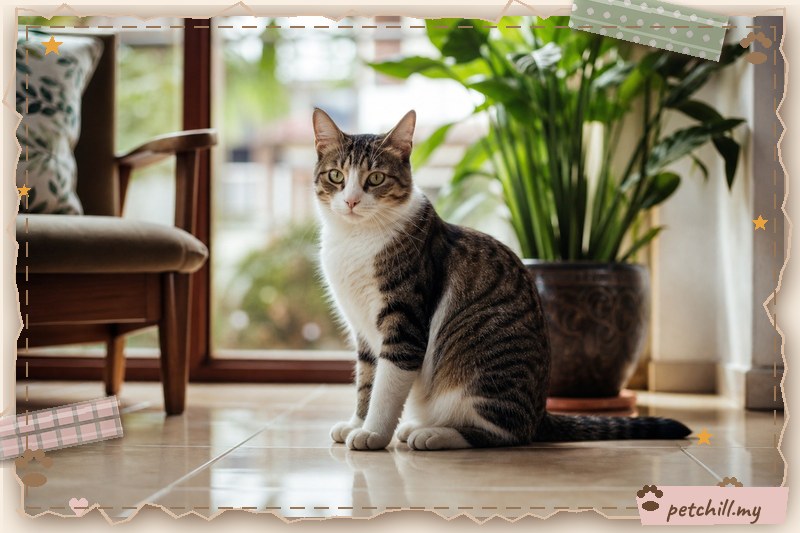
Comparison table: which toy suits which cat
| Toy type | Best for | Space needed | Supervision | Cost level (local prices vary) |
|---|---|---|---|---|
| Wand toy | Most cats; bonding; shy cats | Small | Yes, during play | Low |
| Puzzle feeder | Fast eaters; bored cats | Small | No, if no small parts | Low to medium |
| Motion/electronic toy | Cats home alone for short periods | Small to medium | Initial sessions | Medium |
| Ball track | Cats that bat and chase | Small | No | Low to medium |
| Crinkle/plush mice | Catch play; solo batting | Small | Yes, if small parts | Low |
| DIY box/paper | Curious cats; kittens | Small | Yes | Very low |
Prices vary by retailer and brand, so ask a Malaysian pet shop or your vet for current options rather than relying on online listings.
Safety checks before your cat plays
Interactive toys fail when small parts come loose. Run this check before every new toy and after each play session:
- Pull on eyes, bells, feathers, and ribbons. If they move easily, remove them.
- Check seams on fabric toys for holes and loose stuffing.
- Make sure battery compartments are screwed shut and cannot be opened by a cat.
- Avoid toys with long strings that can wrap around a leg or neck.
- Remove toys with sharp plastic edges or exposed wire.
- Wash fabric toys regularly and dry them fully.
String, ribbon, and tinsel are common causes of intestinal blockages in cats. Put wand toys away after play. Do not leave string toys down where a cat can chew them.
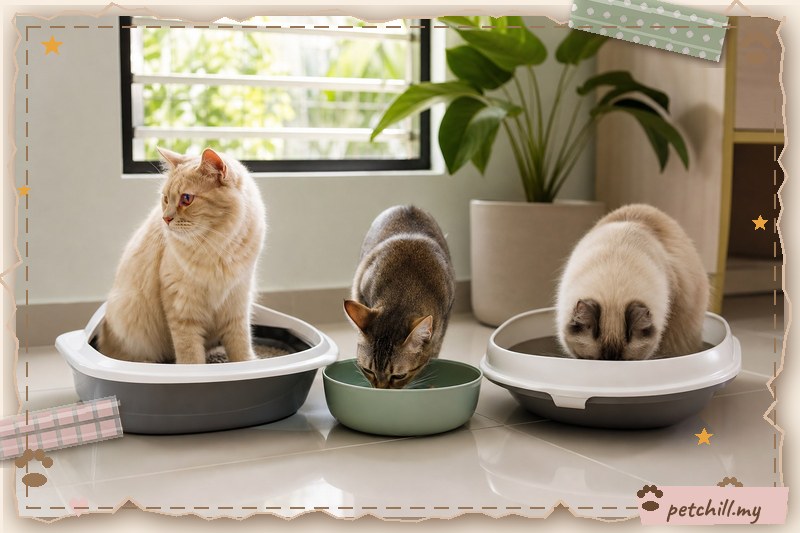
A daily play routine that works in Malaysian homes
Cats do best with short, frequent play sessions. Two or three sessions of five to ten minutes are more effective than one long session. A simple routine:
- Morning: a five-minute wand session before breakfast. End with a catch, then feed.
- Midday: leave a puzzle feeder with part of the daily ration.
- Evening: a ten-minute wand or chase session, then a small meal or treat.
- Before bed: a short calm play session with a plush toy or ball.
This pattern mimics hunt-catch-eat-groom-sleep. Many cats settle better after a play session that ends with food.
In a Kuala Lumpur apartment, use vertical space: a wand toy moved over a cat tree or sofa back gives your cat a chance to jump and stretch. In a Johor terrace house, a hallway or a closed room can be a safe play zone away from open doors.
Matching toys to your cat's age and health
Kittens need frequent, gentle play. Choose soft toys and short wands. Avoid small parts they can swallow. Senior cats may prefer slow, low-impact play: a wand dragged along the floor, or a puzzle feeder with easy access. Cats with arthritis may avoid jumping, so keep toys at floor level.
Cats with dental pain may drop toys or avoid chewing. If your cat suddenly stops playing with toys it used to love, consider a vet check.
What to look for when buying in Malaysia
Buy from a retailer you can return to if a toy falls apart. Check labels for age suitability and washing instructions. For electronic toys, ask about warranty and battery type. If you buy online, read reviews about durability, not just cuteness.
Ask your vet or vet nurse for toy recommendations if your cat has a health condition. They can suggest safe options for cats with allergies, arthritis, or a history of swallowing foreign objects.
Local prices vary widely by brand and shop, so compare in person and ask about current stock. Do not assume an imported toy is better; many simple toys work well.
Common mistakes to avoid
- Leaving string toys out: a serious choking and blockage risk.
- Buying too many toys at once: cats get overwhelmed; rotate instead.
- Using laser pointers only: always finish with a catchable toy.
- Forcing play: if your cat walks away, stop and try later.
- Ignoring toy damage: a torn toy is a swallowing hazard.
When to see a vet
See a vet if your cat swallows a toy part, drools, vomits, gags, or has a change in appetite after play. These can be signs of a foreign body. Also see a vet if your cat becomes suddenly aggressive during play, hides more, or stops playing altogether. Pain, dental disease, and stress can all reduce play drive. If you are unsure, call your vet clinic for advice.
Related reading
- Daily Care Guide Malaysia: A Practical Routine for Dogs and Cats
- Best Cat Grass for Cats in Malaysia: A Practical Buying & Growing Guide
- Harness Training for Cats Step by Step: A Safe, Calm Guide for Malaysian Homes
- How to Exercise a Cat: A Practical Daily Play Plan for Malaysian Homes
- Pet Daily Care Guide Malaysia: Brushing, Nails, Ears, Eyes, Teeth and Weight (2026)
- Best Cat Tree for Cats in Malaysia: A Practical Buying Guide
- Best Catnip for Cats in Malaysia: A Practical Buyer's Guide
- Cat Fur Matting: A Step-by-Step Guide for Malaysian Cat Owners
- Cat Grass for Indoor Cats: A Practical Malaysian Guide



