What is cat grass, and why do cats eat it?
Cat grass is not a single plant. It is a catch-all term for young cereal grasses grown specifically for pets to chew. The most common are wheatgrass, oat grass, barley grass and sometimes rye grass. These are different from lawn grass and from ornamental plants. They are grown from seed in clean trays, usually indoors, and harvested young when the blades are tender.
Cats are obligate carnivores, so grass is not a nutritional necessity. Yet many cats nibble grass when they encounter it. Common explanations include fibre for digestion, help moving hair through the gut, or simple curiosity and texture-seeking behaviour. Some cats vomit after eating grass, which may be a protective reflex, but not all cats do. The behaviour is generally harmless when the grass is clean and offered in moderation.
For Malaysian cat owners, cat grass is best treated as an enrichment item and a light fibre supplement. It is not a substitute for a balanced commercial diet, dental care, or veterinary treatment. The commercial intent behind this guide is to help you choose the right type, buy safely, and grow it successfully in Malaysia's heat and humidity.
Which cat grass is best for Malaysian homes?
The "best" grass depends on your cat, your space and how much effort you want to put in. The table below compares the main options you will see in Malaysian nurseries, pet shops and online marketplaces.
| Grass type | Growth speed | Light needs | Taste and texture | Best for | Watch-outs |
|---|---|---|---|---|---|
| Wheatgrass | Fast, often ready in 7–10 days | Bright indirect light | Sweet, tender, popular with most cats | Beginners, apartment growing | Can mould quickly in humid weather; use shallow trays |
| Oat grass | Moderate, 10–14 days | Bright light, tolerates some shade | Softer, slightly sweet | Cats that reject wheatgrass | Slower to establish; needs good airflow |
| Barley grass | Fast, similar to wheat | Bright light | Mild, slightly nutty | Rotation with wheatgrass | Seeds can be harder to find locally |
| Rye grass | Fast | Bright light | Coarser blades | Cats that like to chew | Less commonly sold as pet grass |
| Cat grass kits (mixed) | Varies | As labelled | Varies | Gifting, first-time buyers | Check seed source and whether treated |
In practice, wheatgrass and oat grass are the most reliable choices for Malaysian homes. Wheatgrass grows quickly and is widely available as seed or kits. Oat grass is a good alternative for cats that turn their nose up at wheatgrass. Barley grass is worth rotating in if you can find untreated seed. Avoid buying generic "grass seed" that is intended for lawns, because it may be coated with fungicides or fertilisers.
If you are buying a kit, look for a label that says the seed is untreated and intended for sprouting or pet grass. Kits sold for human wheatgrass juice are usually suitable, but check the packaging. For seeds, buy from a reputable nursery or a seller who can confirm the seed is not treated. Local prices vary, so ask your local nursery or pet retailer rather than relying on online listings alone.
How to choose cat grass when buying in Malaysia
Malaysian shoppers have three main routes: ready-grown trays, grow-your-own kits, and loose seed. Each has trade-offs.
Ready-grown trays are convenient but perishable. Inspect the tray for mould, yellowing blades, and pests. Ask how long it has been on the shelf. A fresh tray should smell clean and look upright. Ready-grown trays are best used within a week or two.
Grow-your-own kits usually include a tray, growing medium and seed. They are beginner-friendly but can be expensive per harvest. Check that the growing medium is not a compressed foam that holds too much water in Malaysia's humidity.
Loose seed is the most economical option if you plan to grow regularly. Buy small quantities first to test germination. Store seed in an airtight container in a cool, dry place. In Malaysia, humidity can reduce germination rates, so avoid storing seed in a hot kitchen cupboard for months.
A simple checklist before you buy:
- Seed labelled untreated or pet-safe.
- Clear instructions for indoor growing.
- Shallow tray with drainage holes.
- Potting mix, not garden soil.
- No pesticide or fertiliser claims on the packaging.
- A seller who can answer basic questions about the seed source.
If you are unsure, ask a Malaysian vet or a knowledgeable nursery staff member. Do not rely on social media listings alone.
Growing cat grass indoors: a step-by-step plan
Growing cat grass in Malaysia is straightforward if you manage moisture and airflow. The heat and humidity that make plants grow fast also encourage mould, so the method matters.
- Choose a shallow tray with drainage holes. A depth of 3–5 cm is enough. Deep pots waste soil and stay wet longer.
- Use fresh potting mix, not soil from the garden. Garden soil can carry insects, parasites and weed seeds.
- Sow seeds densely but not in a solid mat. A light covering of soil is enough; wheatgrass and barley can be pressed into the surface.
- Water gently with a spray bottle until damp, not soaked. Keep the tray in a bright spot with good airflow.
- Place near a bright window or under a simple grow light. In Malaysian apartments, a balcony with indirect light works well if rain cannot reach the tray.
- Harvest when blades are 8–12 cm tall, usually within one to two weeks depending on the grass. Cut with clean scissors or let the cat nibble.
- Discard the tray when it starts to yellow or smell musty. Do not keep reusing wet, mouldy medium.
A common mistake is overwatering. In a Kuala Lumpur apartment with air-conditioning, trays can dry out quickly; on a humid balcony, they can stay wet for days. Check the medium daily and adjust. If you see white fuzz or a sour smell, throw the tray out and start again.
Another practical tip is to grow two trays in rotation. Start one tray, then start a second a week later. That way you always have fresh grass while the next batch establishes. This is especially useful if your cat nibbles daily.
Cat grass in Malaysian homes: apartments, terraces and rainy seasons
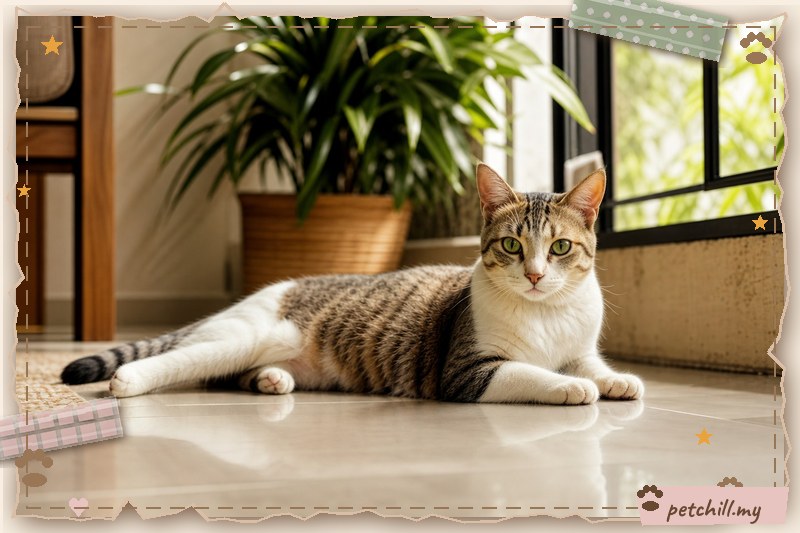
Malaysian homes vary widely, and cat grass should fit your space. In a Kuala Lumpur apartment, a bright kitchen windowsill or a shaded balcony is usually enough. Keep trays off the floor if you have ants or roaches, and use a saucer to catch drips. In a Johor terrace house, a covered car porch or a shaded patio can work, but avoid spots where rain splashes in, because constant wetting encourages mould.
During the Penang rainy season, outdoor trays may stay soaked for days. Bring trays indoors or under cover, and reduce watering. If you cannot control moisture, switch to smaller trays that dry faster. In hot, dry spells, trays may need checking twice a day.
Cats themselves also affect placement. Some cats knock trays over, dig in the soil, or eat the grass down to the roots. Use a heavier tray, or place it where your cat can reach the grass but not tip the container. If your cat digs, a light layer of larger stones on the surface can help, but make sure they are too big to swallow.
If you have multiple cats, provide more than one tray or separate trays in different spots. This reduces competition and keeps one cat from overgrazing a single tray.
How much cat grass is safe, and how often?
Cat grass is a treat, not a meal. A small handful or a few minutes of nibbling a day is enough for most cats. Introduce it slowly. Offer a few blades first, then increase over several days if your cat tolerates it.
Signs of too much grass include vomiting, loose stool, bloating, or reduced appetite. If these occur, stop offering grass and monitor your cat. Persistent vomiting or diarrhoea warrants a vet visit.
Some cats ignore cat grass entirely. That is normal. Do not force it. If your cat is an indoor cat, grass can add enrichment, but it is not essential. Other enrichment options include puzzle feeders, safe chew toys, and supervised time in a secure outdoor enclosure.
If your cat is on a prescription diet for kidney disease, urinary issues, allergies or gastrointestinal disease, ask your vet before adding any grass. Grass is high in fibre and can affect digestion and medication absorption in some cases.
Cat grass versus other greens: what to avoid
Not all greenery is safe. Cat grass is specifically cereal grass grown for pets. Other plants can be toxic to cats, including many common houseplants and garden plants. Do not assume that because a plant is green and chewable, it is safe.
Avoid giving your cat:
- Lawn clippings or grass from parks and roadsides.
- Grass treated with pesticides, herbicides or fertiliser.
- Ornamental plants, lilies, and many indoor houseplants.
- Onions, garlic, chives and other allium family plants.
- Any plant you cannot identify with confidence.
If your cat has eaten an unknown plant, contact your vet immediately. Do not wait for symptoms. Bring a photo or a sample of the plant if it is safe to do so.
Cat grass is not the same as catnip. Catnip is a different plant that affects many cats behaviourally. Cat grass is chewed for texture and fibre; catnip is sniffed, rolled in, or eaten for its behavioural effect. Some cats respond to one but not the other.
When to see a vet
Most cats that nibble clean cat grass in moderation do not need veterinary attention. However, see a vet if you notice any of the following:
- Repeated vomiting or vomiting that lasts more than a day.
- Diarrhoea, especially with blood or mucus.
- Loss of appetite, lethargy, or hiding.
- Straining to defecate or urinating outside the litter box.
- Signs of abdominal pain or a swollen belly.
- Your cat has eaten outdoor grass, an unknown plant, or grass that may have been treated with chemicals.
- Your cat has a known health condition and you are unsure whether grass is appropriate.
In Malaysia, general veterinary practices and animal hospitals are available in most states. If you are unsure which clinic to contact, ask your regular vet or a local pet community for a recommendation. Do not rely on online forums for diagnosis.
Practical buying checklist for Malaysian cat owners
Before you buy cat grass, run through this checklist:
- Is the seed labelled untreated and pet-safe?
- Is the growing medium clean potting mix?
- Does the tray have drainage?
- Can you provide bright, indirect light?
- Can you check moisture daily?
- Do you have a plan for mould or pests?
- Have you asked your vet if your cat has health issues?
- Are you prepared to discard a tray at the first sign of mould?
If you can answer yes to these, cat grass is a low-risk enrichment option. If not, start with a small ready-grown tray and see how your cat responds before investing in larger kits or bulk seed.
Final thoughts
The best cat grass for cats in Malaysia is the one you can grow cleanly, safely and consistently. Wheatgrass and oat grass are reliable choices for most homes, with barley grass as a rotation option. Buy untreated seed, use fresh potting mix, manage moisture carefully in Malaysia's humidity, and offer grass in small amounts. Treat cat grass as enrichment and a light fibre source, not a cure-all. When in doubt, ask a Malaysian vet, especially if your cat has a health condition.
This article provides general information only and is not a substitute for veterinary advice. Always consult a licensed veterinarian about your cat's health, diet and any changes you plan to make.
Related reading
- Daily Care Guide Malaysia: A Practical Routine for Dogs and Cats
- Best Interactive Toys for Cats in Malaysia: A Practical Buying Guide
- How to Use Cat Grass for Cats: A Practical Malaysian Guide
- Pet Daily Care Guide Malaysia: Brushing, Nails, Ears, Eyes, Teeth and Weight (2026)
- Best Cat Tree for Cats in Malaysia: A Practical Buying Guide
- Cat Fur Matting: A Step-by-Step Guide for Malaysian Cat Owners
- Cat Grass for Indoor Cats: A Practical Malaysian Guide
- Cat Massage: A Practical Guide for Malaysian Cat Owners
- Harness Training for Cats Step by Step: A Safe, Calm Guide for Malaysian Homes
- Haze Season for Cat Owners in Malaysia: A Practical Indoor Air Guide
- Haze Season Tips for Cat Owners in Malaysia: A Practical Indoor Air Guide
- How to Exercise a Cat: A Practical Daily Play Plan for Malaysian Homes