
Quick answer
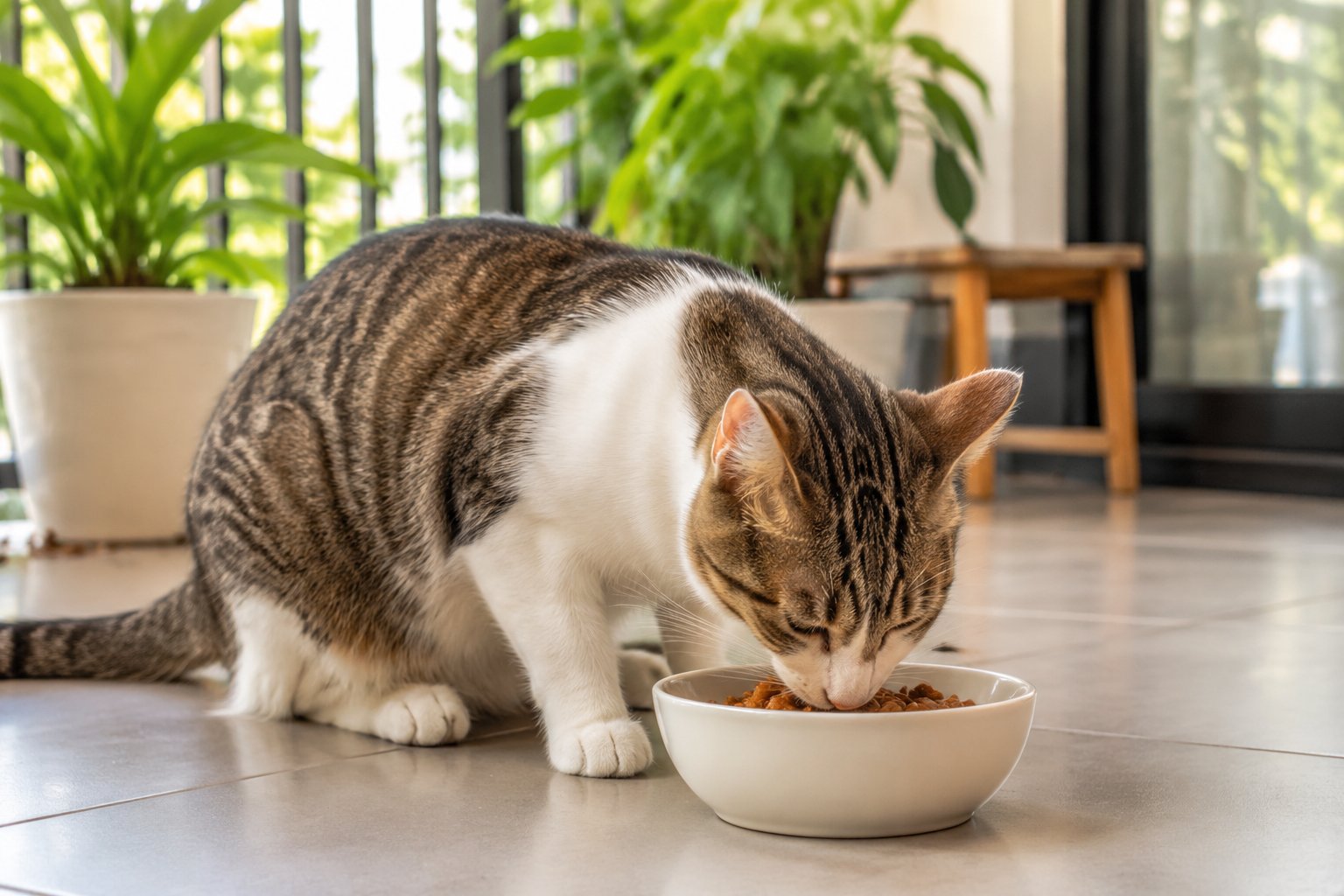
Choose a food transition by matching the pace to your cat: a slow 7 to 10 day mix for most healthy adults, longer for sensitive stomachs or seniors, and a vet-guided plan for medical diets. Mix old and new in increasing ratios, keep water available, and pause if vomiting or diarrhoea appears.
Why the transition plan matters more than the food label
Cat owners often spend hours comparing protein percentages and ingredient lists, then undo the good work by pouring a new food into the bowl on the same evening. A cat's digestive system and gut bacteria adapt to a familiar diet. Change too fast and you get loose stools, vomiting, gas, or a cat that simply refuses to eat.
The transition plan is not a fixed rule. It is a decision you make based on four things:
- Why you are switching — a routine upgrade, a budget change, a vet-prescribed diet, or a response to a health problem.
- Your cat's age and condition — kittens, adults, seniors, and cats with kidney, urinary, dental or digestive issues all differ.
- The type of food — dry to dry is usually easiest; wet to dry, dry to wet, and raw to cooked need more care.
- Your cat's eating style — a greedy eater will accept almost anything; a cautious grazer needs patience.
If you get these four right, the transition itself becomes simple. If you ignore them, even a high-quality food can cause a week of messy litter trays.

Step 1: Decide why you are switching
The reason shapes the pace. Use this as a starting point, then adjust with your vet.
| Reason for switching | Typical pace | Key caution |
|---|---|---|
| Routine change to a new brand or flavour | 7–10 days | Keep the old food until the new one is accepted |
| Budget-driven change | 7–14 days | Compare guaranteed analysis, not just price |
| Kitten to adult food | 7–10 days around the recommended age | Confirm timing with your vet |
| Senior or sensitive-stomach food | 2–4 weeks | Smaller steps, watch stool quality |
| Vet-prescribed medical diet | Follow your vet's schedule exactly | Do not mix with other foods unless told to |
| Wet to dry or dry to wet | 10–14 days | Monitor water intake closely |
| Post-illness or post-surgery diet | Vet-guided, sometimes fast | Never improvise after illness |
A routine brand change is the easiest case. A medical diet is the hardest, because the whole point is often to control a specific nutrient — and mixing in the old food dilutes that control. If your vet says switch immediately, do that. If your vet says transition over two weeks, do that instead.
Step 2: Match the pace to your cat
Healthy adult cats
Most healthy adult cats handle a 7 to 10 day transition. A common pattern is 25% new food for two to three days, 50% for two to three days, 75% for two to three days, then 100%. Some cats sail through in five days; others need two weeks. Both are normal.
Kittens
Kittens have small stomachs and fast metabolisms, but their digestion is still developing. Move gradually, especially when switching from kitten formula to adult food. Ask your vet when to make the change, since it depends on the cat's size and growth rather than a single birthday.
Senior cats
Older cats are more likely to have reduced kidney function, dental pain or a slower gut. A two to four week transition is often kinder. A vet check before a major diet change is worthwhile, because a new food cannot fix an underlying problem — and some senior conditions need a specific diet rather than a general "senior" formula.
Cats with sensitive stomachs
If your cat has a history of soft stool, vomiting or food intolerance, treat the transition as a slow experiment. Change one variable at a time: same brand, new flavour first; then a new brand later. Keep a simple log of what you fed and what the litter tray looked like.
Fussy eaters
A cautious cat may reject a bowl that is 25% new food. In that case, start at 10% and hold for several days. You can also offer the new food as a small separate portion alongside the familiar food, so the cat chooses without being forced.
Step 3: Use a mixing method that suits the food type
Dry to dry
This is the simplest switch. Weigh or scoop both foods and mix them in the bowl. Because kibble sizes differ, some cats pick out the old pieces. If that happens, mix thoroughly and slightly moisten the new kibble with a little warm water to soften the texture difference.
Wet to wet
Mix the two wet foods in the same bowl and stir well. Cats are texture-sensitive, so a pate-to-chunks change can be harder than a chicken-to-fish change. If your cat refuses, try mashing both to a similar consistency for the first few days.
Dry to wet
Offer wet food as a small separate portion at a regular meal time, then gradually increase it while reducing dry. Do not leave wet food out for hours in a warm climate; discard what is not eaten within a reasonable time. Watch water intake — a cat moving to wet food usually drinks less, which is normal, but a cat moving the other way needs more attention.
Wet to dry
This is often the hardest direction. Dry food is less aromatic and has a different texture. Mix a little dry into the wet, or offer a few dry kibbles as a snack between meals. Never remove all wet food at once from a cat that rarely drinks, because reduced moisture intake can matter for urinary health. Ask your vet for advice if your cat has a history of urinary problems.
Raw or home-cooked to commercial food
Treat this as a veterinary conversation, not a DIY project. Home-made diets can be nutritionally unbalanced, and the switch needs to be planned so the cat does not lose weight or refuse food. Your vet can guide the pace and check that the final diet is complete.
Step 4: Set up the feeding environment
A transition fails as often because of stress as because of digestion. Practical steps:
- Feed in a quiet, familiar spot. A new food in a new location is two changes at once.
- Keep meal times consistent. Sudden schedule changes add stress.
- Use separate bowls in multi-cat homes. One cat may steal the other's food, which ruins the ratios.
- Warm wet food slightly to boost aroma, but never serve it hot.
- Keep fresh water available in more than one place.
- Do not free-feed during a transition if you can avoid it, because you cannot track how much is eaten.
In a Kuala Lumpur apartment, space is often tight, so a quiet corner away from the litter tray and the front door is usually enough. In a Johor terrace house with several cats, separate feeding stations in different rooms prevent one cat from finishing another's portion.

Step 5: Watch for warning signs
Mild changes are expected. Serious ones are not. Use this checklist during the transition:
- Stool: slightly softer for a day or two is common; watery diarrhoea, blood or mucus is not.
- Vomiting: an occasional hairball is one thing; repeated vomiting after meals is another.
- Appetite: a cat that skips one meal may be suspicious; a cat that refuses food for more than 24 hours needs advice.
- Energy: lethargy, hiding or weakness mean stop and call your vet.
- Skin and coat: itching, scratching or ear problems can suggest a reaction.
- Water intake: a sudden increase in drinking deserves a vet check.
- Weight: weigh your cat if you can, especially during a long transition.
If something looks wrong, the safest move is to go back to the previous ratio for a few days, then try again more slowly. Do not push through diarrhoea to "get it over with".
Step 6: Compare foods before you commit
A transition is only worth the effort if the new food is actually a better fit. Compare these points rather than marketing claims:
| What to compare | Why it matters |
|---|---|
| Life stage statement | Kitten, adult and senior foods differ in nutrient levels |
| Guaranteed analysis | Protein, fat, fibre and moisture give a basic picture |
| Calorie content | Helps you avoid overfeeding when portions change |
| Wet vs dry moisture | Affects water intake and urinary health |
| Ingredient split | Useful, but less important than the complete nutrient profile |
| Palatability and texture | A food your cat refuses is not a good food |
| Availability | A food you can buy consistently avoids repeated switches |
| Cost per day, not per bag | Bag size and calories per cup change the real cost |
Local prices vary widely depending on brand, pack size and where you shop, so ask your Malaysian vet or retailer for a like-for-like comparison rather than relying on a single shelf price.

Step 7: Plan for the practical realities
Multi-cat households
If one cat needs a new food, feed separately or use a microchip feeder if you have one. Mixing bowls in a shared home makes it impossible to know who ate what.
Busy schedules
If you work long hours, prepare transition portions in advance. Pre-mix small containers of the correct ratio for each day so you are not guessing at 11pm.
Travel and boarding
Bring enough of both old and new food if you travel with your cat, and tell the boarding staff exactly where the transition is. A sudden switch by a well-meaning sitter can undo weeks of progress.
Rainy season and storage
In Penang's rainy season, humidity rises. Keep dry food sealed in an airtight container, and do not buy huge bags that will sit open for months. Stale or mouldy kibble is a common reason cats refuse food — and it is easy to blame the transition instead.
When to see a vet
Contact a veterinarian if your cat:
- refuses all food for more than 24 hours;
- has diarrhoea lasting more than two days, or any diarrhoea with blood;
- vomits repeatedly or cannot keep water down;
- becomes lethargic, hides, or seems in pain;
- loses weight during or after the transition;
- drinks much more than usual;
- has a known kidney, urinary, thyroid or digestive condition and you are planning a diet change;
- is a kitten, pregnant or nursing, where nutrition needs are higher and less forgiving.
A vet can also confirm whether the food you have chosen is appropriate, especially for medical diets that should not be mixed with other foods.
A simple transition schedule you can adapt
| Day | Old food | New food | What to watch |
|---|---|---|---|
| 1–3 | 75% | 25% | Stool, appetite |
| 4–6 | 50% | 50% | Stool, vomiting, energy |
| 7–9 | 25% | 75% | Weight, water intake |
| 10+ | 0% | 100% | Coat, stool, overall condition |
Stretch each stage if your cat is sensitive, senior or fussy. Shorten only if your vet has advised a faster switch.
Bottom line
Choosing a food transition for cats is really about choosing a pace and a method that fit your cat, not about finding a perfect food. Decide why you are switching, match the speed to your cat's age and digestion, mix gradually, and watch the litter tray and the food bowl. If something goes wrong, slow down rather than push through — and involve your vet early for medical diets, seniors and any cat that stops eating.
This article is general information for Malaysian cat owners and is not a substitute for veterinary advice. Always consult a licensed veterinarian about your cat's diet, especially if your cat has a health condition.
Related reading
- Cat Food Guide Malaysia 2026: How to Choose Dry, Wet & Prescription Food
- Best Food Transition for Cats in Malaysia: A Step-by-Step Guide
- Food Transition Feeding Guide for Cats: How to Switch Diets Safely
- Food Transition for Cats in Malaysia: A Safe, Step-by-Step Guide
- Best Cat Milk for Cats in Malaysia: What to Buy and What to Avoid
- Best Dry Cat Food for Cats in Malaysia: A Practical Buying Guide
- Best Grain-Free Cat Food for Cats in Malaysia: What to Look For
- Best Hairball Control Food for Cats in Malaysia: A Practical Buying Guide
- Best High-Protein Cat Food in Malaysia: How to Choose (2025 Guide)
- Best Raw Cat Food for Cats in Malaysia: A Practical Buying Guide
- Best Wet Cat Food in Malaysia: A Practical Buying Guide
- Cat Food Recommendation Malaysia: 8 Scenarios, Label Checks and Daily-Cost Thinking

