
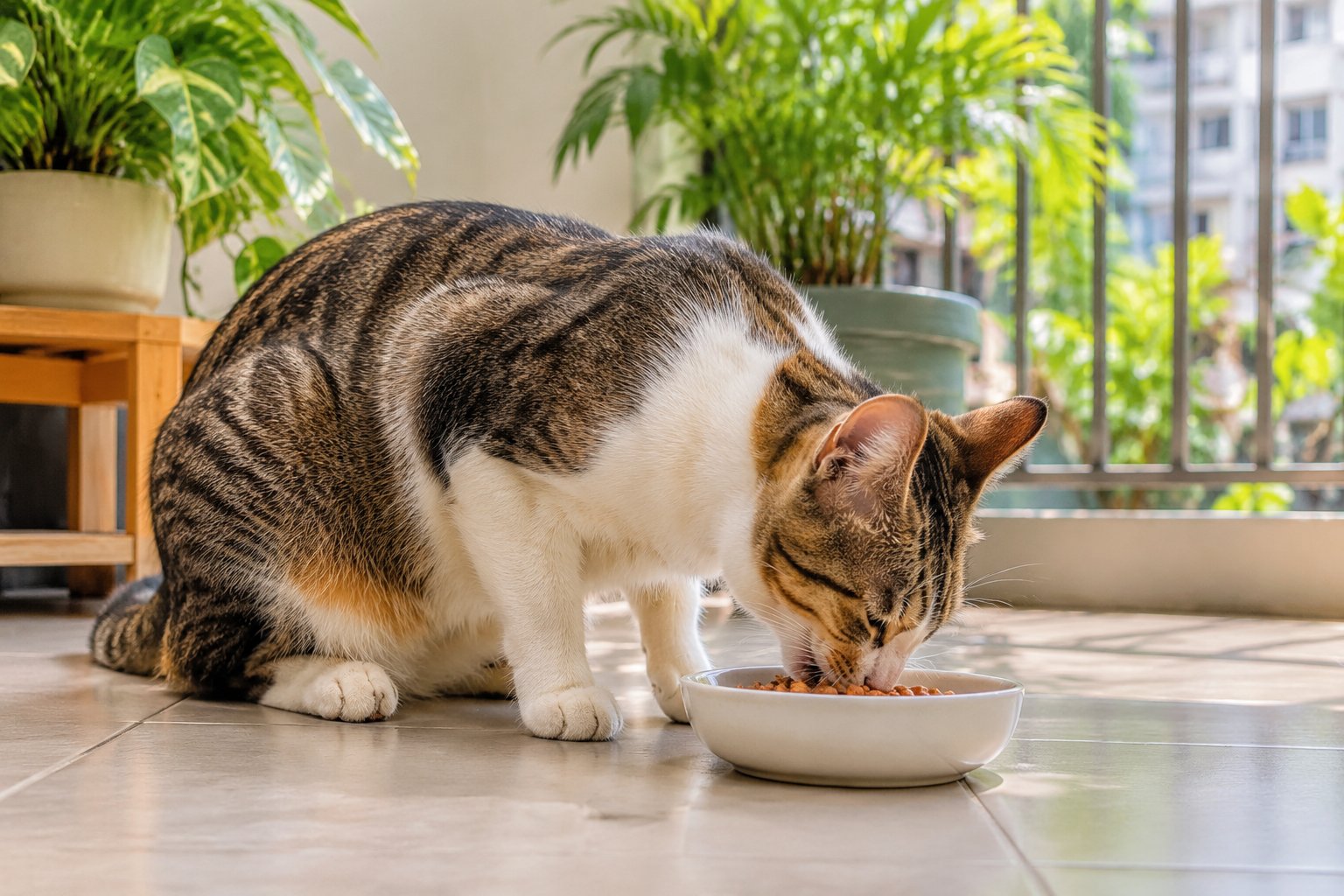
What does 'grain-free' actually mean on a cat food label?
Grain-free cat food means the recipe contains no grains such as rice, corn, wheat, barley, oats or sorghum. Instead, manufacturers use other carbohydrate sources — peas, lentils, chickpeas, potatoes, sweet potatoes, tapioca or pumpkin — or they may reduce carbohydrates overall and increase protein and fat.
It is important to understand what grain-free does not mean. It does not automatically mean low-carbohydrate, high-protein, hypoallergenic or healthier. A grain-free food can still contain a lot of starch from potatoes or peas. It can also contain the same animal proteins that cause allergies in some cats. The label claim is about ingredients, not about nutritional quality.
In Malaysia, grain-free foods are widely marketed as premium options. They are sold in pet shops, veterinary clinics and online. Because local prices vary and product ranges change, always read the label and ask your vet or retailer for the current nutrient profile rather than relying on marketing claims.
Why do some cat owners choose grain-free food?
Owners usually choose grain-free food for one of four reasons:
- Suspected grain allergy or sensitivity. Some cats may react to certain grains, although true grain allergy is less common than allergy to animal proteins such as chicken or beef.
- Belief that grain-free is more natural. Cats are obligate carnivores, so owners often assume a diet closer to whole prey is better.
- Weight or digestion concerns. Some owners find a particular grain-free formula suits their cat's stool quality or weight management.
- Marketing and palatability. Grain-free products are often positioned as premium, and some cats simply prefer the taste.
None of these reasons automatically make grain-free the right choice. The decision should be based on your cat's health, body condition, life stage and veterinary advice.
Do cats need grain-free food? A veterinary perspective
Cats are obligate carnivores. They require nutrients such as taurine, arachidonic acid, vitamin A and certain B vitamins from animal sources. They do not have a strict dietary requirement for carbohydrates. However, this does not mean carbohydrates are toxic. Many cats thrive on commercial foods that contain a modest amount of grain or other carbohydrate sources.
The key question is not 'grain or no grain' but 'is the food complete and balanced for my cat's life stage?' A food that meets recognised nutritional standards and suits your cat's individual needs is a better choice than a grain-free food that is incomplete or unsuitable.
Grain-free food can be a reasonable option for a cat with a confirmed adverse reaction to a specific grain. It can also be useful when a vet recommends a limited-ingredient or novel-protein diet. But for most healthy cats, grain-free is a preference, not a necessity.
Grain-free vs grain-inclusive: a practical comparison
| Feature | Grain-free cat food | Grain-inclusive cat food |
|---|---|---|
| Main carbohydrate sources | Peas, lentils, potatoes, tapioca, pumpkin | Rice, corn, wheat, barley, oats |
| Protein source | Often animal protein, sometimes plant protein boost | Often animal protein, sometimes plant protein boost |
| Allergen risk | Still possible (e.g. chicken, fish, peas) | Still possible (e.g. chicken, fish, wheat) |
| Fibre profile | Varies; legumes add fibre | Varies; grains add fibre |
| Palatability | Often high; varies by cat | Often high; varies by cat |
| Cost in Malaysia | Generally premium; prices vary | Wide range; prices vary |
| Best for | Cats with confirmed grain sensitivity; owner preference | Most healthy cats; budget-friendly options |
This table is a general guide. Always check the actual nutrient profile and guaranteed analysis on the product you are considering.
How to read a grain-free cat food label in Malaysia
Labels can be confusing. Use this checklist when comparing products:
- Look for a nutritional adequacy statement. It should say the food is complete and balanced for a specific life stage (e.g. growth, adult maintenance, all life stages) and mention a recognised nutrient profile or feeding trial.
- Check the guaranteed analysis. Look at protein, fat, fibre, moisture and ash. For dry food, protein is often listed as a minimum percentage. Higher protein is not always better, but it matters for muscle maintenance.
- Identify the carbohydrate sources. If your cat has a sensitive stomach, note whether the food uses peas, potatoes or tapioca. Some cats do better on one than another.
- Look for the animal protein source. Named meats (e.g. chicken, turkey, fish) are clearer than generic terms like 'meat meal'.
- Check for taurine. Taurine is essential for cats. A complete food should include sufficient taurine.
- Be cautious with 'holistic' or 'natural' claims. These are marketing terms, not nutritional guarantees.
- Check the manufacturer's contact and batch information. A reputable manufacturer should provide clear information and respond to queries.
If you are unsure, ask your vet or a qualified pet nutritionist to review the label with you.
Which cats may benefit from grain-free food?
Grain-free food may be worth discussing with your vet for:
- Cats with a confirmed grain allergy or adverse food reaction. This should be diagnosed with a veterinary elimination diet trial, not guessed.
- Cats on a limited-ingredient diet. Some grain-free formulas use novel proteins and carbohydrate sources that can help during a diet trial.
- Cats with certain digestive issues. Some owners report better stool quality on a particular grain-free formula, but this is individual.
- Cats that refuse grain-inclusive foods. Palatability matters, especially in picky cats or cats with reduced appetite.
It is equally important to recognise when grain-free may not be the best choice:
- Cats with no confirmed sensitivity. There is no automatic benefit.
- Cats with heart disease or a breed predisposition to heart disease. Discuss diet with your vet, especially given ongoing concerns about grain-free diets and dilated cardiomyopathy in dogs.
- Cats with urinary or kidney disease. These cats often need specific nutrient profiles, not simply grain-free.
- Cats with diabetes. Carbohydrate type and amount matter; veterinary guidance is essential.
- Kittens and pregnant or nursing cats. They need a complete and balanced growth diet; grain-free is not a substitute for appropriate life-stage nutrition.
Grain-free and heart health: what Malaysian cat owners should know
In recent years, there have been investigations into grain-free diets and dilated cardiomyopathy (DCM) in dogs. The concern is that some grain-free formulas, particularly those high in legumes, may be associated with taurine deficiency or other factors affecting heart health. For cats, the evidence is less clear, but the topic is still worth discussing with your vet.
If your cat has a heart condition, a breed predisposition (such as Maine Coon or Ragdoll), or unexplained lethargy, breathing difficulty or fainting, seek veterinary advice promptly. Do not change your cat's diet based on online claims alone.
How to transition your cat to grain-free food safely
A sudden change can cause digestive upset. Use a gradual transition over 7–10 days:
| Day | Old food | New food |
|---|---|---|
| 1–2 | 75% | 25% |
| 3–4 | 50% | 50% |
| 5–6 | 25% | 75% |
| 7–10 | 0% | 100% |
Watch for vomiting, diarrhoea, constipation, gas or refusal to eat. If problems persist, slow the transition or consult your vet. Some cats with sensitive stomachs need 2–3 weeks.
Practical feeding tips for Malaysian homes
Malaysia's hot and humid climate affects food storage and feeding routines. Here are practical tips:
- Store dry food in an airtight container in a cool, dry place. Humidity can make kibble stale or mouldy.
- Avoid leaving wet food out for long. In warm weather, bacteria multiply quickly. Discard uneaten wet food after about 30 minutes.
- Provide fresh water daily. Cats on dry food need good hydration. Consider a water fountain or multiple water bowls.
- Monitor body condition. Weigh your cat monthly and adjust portions. Grain-free does not mean calorie-free.
- Keep a feeding diary. Note the food, amount and any changes in stool, skin or behaviour. This helps your vet if problems arise.
For example, a cat living in a Kuala Lumpur apartment may have limited space for food storage, so buy smaller bags and keep them sealed. In a Johor terrace house, cats may have access to outdoor areas, so secure food from ants and moisture. During the Penang rainy season, humidity can be high, so check dry food for clumping or off smells.
Common myths about grain-free cat food
- Myth: Grain-free is always low-carb. Many grain-free foods contain potatoes, peas or tapioca, which are still carbohydrates.
- Myth: Grain-free prevents allergies. Cats can be allergic to animal proteins, not just grains. A grain-free food with chicken can still trigger a reaction in a chicken-allergic cat.
- Myth: Grain-free is more natural. Commercial foods, whether grain-free or not, are processed. 'Natural' is a marketing term.
- Myth: All cats need grain-free. Most healthy cats do well on a complete and balanced diet with or without grains.
- Myth: Grain-free cures urinary problems. Urinary health depends on water intake, pH and specific nutrients, not simply the absence of grain.
When to see a vet
Seek veterinary advice if your cat shows any of the following:
- Persistent vomiting, diarrhoea or constipation after a diet change
- Refusal to eat for more than 24 hours
- Weight loss or poor body condition
- Itching, hair loss or skin infections
- Increased thirst or urination
- Difficulty breathing, lethargy or fainting
- Any suspected allergic reaction
A vet can help diagnose food allergies properly, assess your cat's nutritional needs and recommend an appropriate diet. Do not rely on online quizzes or marketing claims for diagnosis.
Vet disclaimer
This article is for general information only and is not a substitute for veterinary advice. Every cat is different. Always consult a licensed veterinarian in Malaysia before changing your cat's diet, especially if your cat has a health condition, is pregnant or nursing, or is a growing kitten.
Related reading
- Cat Food Guide Malaysia 2026: How to Choose Dry, Wet & Prescription Food
- Best Halal Cat Food in Malaysia: A Practical Buying Guide
- Cat Food in Malaysia: How to Read the Label, Compare Protein and Budget Monthly
- Grain-Free Cat Food Feeding Guide for Cats: What Malaysian Owners Need to Know
- Halal Cat Food Feeding Guide for Cats: What Malaysian Owners Need to Know
- Homemade Cat Food Feeding Guide for Cats: A Practical Malaysian Owner's Handbook
- Homemade Cat Food for Cats in Malaysia: A Practical, Vet-Informed Guide
- Raw Cat Food Feeding Guide for Cats: A Practical Malaysian Owner's Handbook
- ACANA Cat Food in Malaysia: Is This Canadian High-Protein Kibble Right for Your Cat?
- Best High-Protein Cat Food in Malaysia: How to Choose (2025 Guide)

