
Quick answer
Most healthy adult cats do well on a complete diet with at least 26% protein on a dry-matter basis, and many benefit from 35–45%. Choose a food labelled complete and balanced for your cat's life stage, transition over 7–10 days, and adjust portions to keep your cat lean. Cats with kidney or other disease need a vet's plan.
Why protein matters for cats
Cats are obligate carnivores. That means their bodies are built to use animal protein efficiently, and they have a higher requirement for certain amino acids than dogs or people. Protein supplies the building blocks for muscle, skin, coat, hormones, enzymes and immune cells. It also helps cats feel full, which matters for weight control.
When a cat does not get enough good-quality protein, the body starts breaking down its own muscle. You may notice weight loss, a dull coat, or weakness. On the other hand, simply pouring on more protein does not make a food better. The protein must be digestible, and the whole diet must be complete and balanced.
In Malaysia, many owners feed a mix of wet and dry food. That can work well, but it makes portion control and label reading more important. The goal is not "the highest protein number on the shelf". The goal is a suitable protein level from good sources, in a diet that meets all of your cat's needs.
How much protein does a cat actually need?
Veterinary nutrition guidelines generally set a minimum protein level for complete adult cat food at around 26% on a dry-matter basis. For growth and reproduction, the minimum is higher, around 30% dry matter. These are minimums, not targets. Many quality foods sit well above them.
A useful way to think about it is grams of protein per kilogram of body weight. Healthy adult cats need roughly 5–6 grams of protein per kilogram per day. A 4 kg cat therefore needs about 20–24 grams of protein daily. Growing kittens need more per kilogram because they are building tissue.
That number helps you compare foods. If a wet food contains 10% protein as fed and your cat eats 200 g per day, that is about 20 g of protein. If a dry food contains 35% protein as fed and your cat eats 50 g per day, that is about 17.5 g. Both can be reasonable depending on the cat and the rest of the diet.
Dry matter vs as-fed numbers
The percentage on the label is "as fed", meaning it includes water. Wet food is mostly water, so its protein percentage looks low. To compare fairly, convert to dry matter:
Dry matter protein % = (protein % as fed ÷ dry matter %) × 100
Dry matter % = 100 − moisture %.
Example: a wet food with 10% protein and 78% moisture has 22% dry matter. Its dry-matter protein is (10 ÷ 22) × 100 = about 45%. That is a high-protein food, even though the can says 10%.
High-protein wet food vs dry food
Both formats can be high in protein. The right choice depends on your cat, your budget, and your routine.
| Feature | High-protein wet food | High-protein dry food |
|---|---|---|
| Water content | High (often 75–85%) | Low (often 6–10%) |
| Protein density | Lower as fed, can be high on dry matter | Higher as fed |
| Cost per calorie | Usually higher | Usually lower |
| Convenience | Needs refrigeration once opened | Easy to leave out briefly |
| Dental effect | Minimal | Some dry foods may help with plaque, but not a substitute for brushing |
| Best for | Cats that need water, urinary support, weight control | Multi-cat homes, budget-conscious feeding, puzzle feeders |
Many Malaysian cats live indoors in apartments, where water intake can be low. Wet food is a practical way to add water. If you feed dry only, make sure fresh water is always available and consider a water fountain. Some cats prefer running water.
A mixed feeding plan can work well: for example, one or two wet meals a day plus a measured portion of dry food. The key is to count total calories, not just protein.
How to read a cat food label
Labels can be confusing. Here is a simple checklist:
- Look for a "complete and balanced" statement. It should say the food meets a recognised nutrient profile for a specific life stage, such as adult maintenance or growth.
- Check the first ingredient. A named animal protein such as chicken, fish, or beef is a good sign. "Meat by-products" can still be nutritious, but named sources are easier to assess.
- Compare dry-matter protein, not just the big number on the front.
- Check the guaranteed analysis for protein, fat, fibre, moisture, and ash. Ash can give a rough idea of mineral content.
- Look for a calorie statement (kcal per kg or per can). This lets you calculate portions.
- Be sceptical of claims like "holistic" or "premium" without a nutritional adequacy statement.
In Malaysia, imported and local brands are both available. Ask the retailer for the manufacturer's nutritional adequacy statement if it is not on the label. A reputable brand should provide it.
How much to feed: a practical portion guide
Start with the feeding guide on the pack, then adjust based on your cat's body condition. The guide is a starting point, not a rule. Every cat has a different metabolism.
A simple body condition check:
- You should be able to feel the ribs easily with light pressure.
- There should be a visible waist behind the ribs when viewed from above.
- The belly should tuck up slightly from the side.
If your cat is gaining weight, reduce portions by about 10% and recheck in two weeks. If your cat is losing weight unintentionally, see a vet.
For a 4 kg indoor adult cat, a typical maintenance calorie need might be around 200–250 kcal per day, but this varies widely. If a wet food has 80 kcal per 100 g, that is roughly 250–310 g per day. If a dry food has 400 kcal per 100 g, that is roughly 50–60 g per day. Always confirm with the actual calorie statement on your product.
Kittens and pregnant cats
Kittens need more protein and calories per kilogram than adults. Feed a growth-formula food and follow the pack guide, splitting the daily amount into several meals. Pregnant and nursing queens need even more. Do not put a kitten on an adult high-protein food unless a vet advises it, because the calcium and phosphorus balance may not be right.
Senior cats
Older cats often need highly digestible protein to maintain muscle. Muscle loss, called sarcopenia, is common in senior cats. A high-protein diet can help, but senior cats also have a higher risk of kidney disease. Bloodwork and a vet check are the best way to decide. Do not assume that low protein is right for every senior cat.
How to switch to high-protein food safely
A sudden change can cause vomiting or diarrhoea. Transition over 7–10 days:
- Days 1–3: 25% new food, 75% old food.
- Days 4–6: 50% new, 50% old.
- Days 7–9: 75% new, 25% old.
- Day 10: 100% new.
If your cat has a sensitive stomach, extend each stage to 3–4 days. Feed at the same times each day. If your cat refuses to eat for more than 24 hours, contact a vet. Cats can become ill quickly if they stop eating.
Common mistakes with high-protein feeding
- Assuming higher protein is always better. Balance matters.
- Forgetting about calories. High-protein food can still cause weight gain if overfed.
- Feeding only meat or fish. A homemade meat-only diet is not complete and can cause serious nutrient deficiencies.
- Ignoring water. Dry food alone may not provide enough water, especially in warm climates.
- Changing foods too fast.
- Using dog food. Dog food does not meet a cat's needs for taurine and other nutrients.
High-protein feeding in Malaysian homes
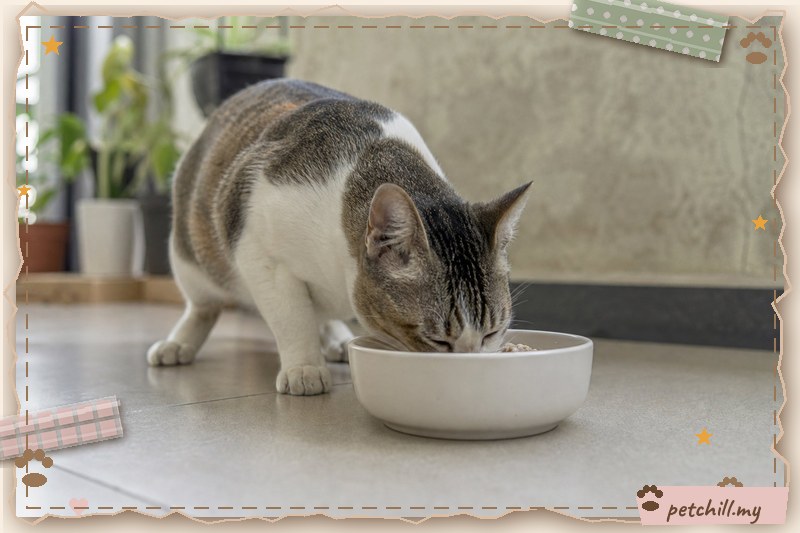
Malaysian homes vary widely. A Kuala Lumpur apartment cat may get most of its exercise indoors, so portion control is key. A Johor terrace house cat may have more space to move around, but free-feeding dry food can still lead to obesity. In Penang's rainy season, wet food can spoil quickly in warm, humid conditions, so put out only what your cat will eat in one sitting and refrigerate leftovers promptly.
If you live in a multi-cat household, feed cats separately or use microchip feeders if one cat needs a different diet. This is especially important if one cat has kidney disease and needs lower protein.
When to see a vet
Contact a veterinarian if you notice any of the following:
- Your cat stops eating for more than 24 hours.
- Vomiting or diarrhoea that lasts more than a day or is severe.
- Unexplained weight loss or weight gain.
- Increased thirst and urination, which can be a sign of kidney disease or diabetes.
- Weakness, lethargy, or a dull coat.
- Straining to urinate, especially in male cats. This is an emergency.
- You are unsure whether a diet is complete and balanced.
A vet can assess your cat's body condition, run bloodwork, and help you choose a suitable protein level. This is especially important for cats with kidney disease, heart disease, or food allergies.
Vet disclaimer
This article is for general information only and is not a substitute for veterinary advice. Every cat is different. Always consult a licensed veterinarian before changing your cat's diet, especially if your cat has a health condition, is pregnant, or is a growing kitten.
Frequently asked questions
How much protein does a cat need per day? Healthy adult cats need roughly 5–6 g of protein per kg of body weight daily, and growing kittens need more. On a dry-matter basis, a complete adult food should have at least 26% protein. Many cats thrive on 35–45% dry-matter protein, but the food must also be complete and balanced.
Is high-protein cat food bad for kidneys? For healthy cats, moderate-to-high protein diets are not shown to cause kidney disease. However, cats with existing kidney disease may need protein restriction and phosphate control. Never change a kidney cat's diet without veterinary advice.
Can I feed my cat only wet high-protein food? Yes, many cats do well on a complete wet diet. Wet food provides water, which supports urinary health. Choose a product labelled complete and balanced, and feed the amount that keeps your cat at a healthy weight. Dry food can be used as a supplement or treat.
How do I switch my cat to high-protein food? Transition gradually over 7–10 days: start with 25% new food mixed with 75% old, then increase every 2–3 days. Watch for vomiting, diarrhoea, or refusal to eat. If your cat is sensitive, extend the transition to 14 days.
Do senior cats need high-protein food? Senior cats often benefit from highly digestible protein to maintain muscle, but they may also have kidney or other health issues. A vet check and bloodwork can guide the right protein level. Do not assume all seniors need low protein.
What is the best high-protein cat food in Malaysia? There is no single best brand. Look for a complete and balanced statement, a named animal protein first, and a nutritional adequacy statement for your cat's life stage. Local availability and your cat's health needs matter more than marketing claims.
Related reading
- Cat Food Guide Malaysia 2026: How to Choose Dry, Wet & Prescription Food
- Best Dry Cat Food for Cats in Malaysia: A Practical Buying Guide
- Best Food Transition for Cats in Malaysia: A Step-by-Step Guide
- Best High-Protein Cat Food in Malaysia: How to Choose (2025 Guide)
- Best Raw Cat Food for Cats in Malaysia: A Practical Buying Guide
- Best Wet Cat Food in Malaysia: A Practical Buying Guide
- Food for Picky Cats in Malaysia: A Practical Feeding Guide
- Food Transition for Cats in Malaysia: A Safe, Step-by-Step Guide
- High-Protein Cat Food in Malaysia: A Practical Guide for Cat Owners
- How to Choose Dry Cat Food for Cats: A Malaysian Guide
- How to Choose High-Protein Cat Food for Cats: A Malaysian Owner's Guide