
The short answer
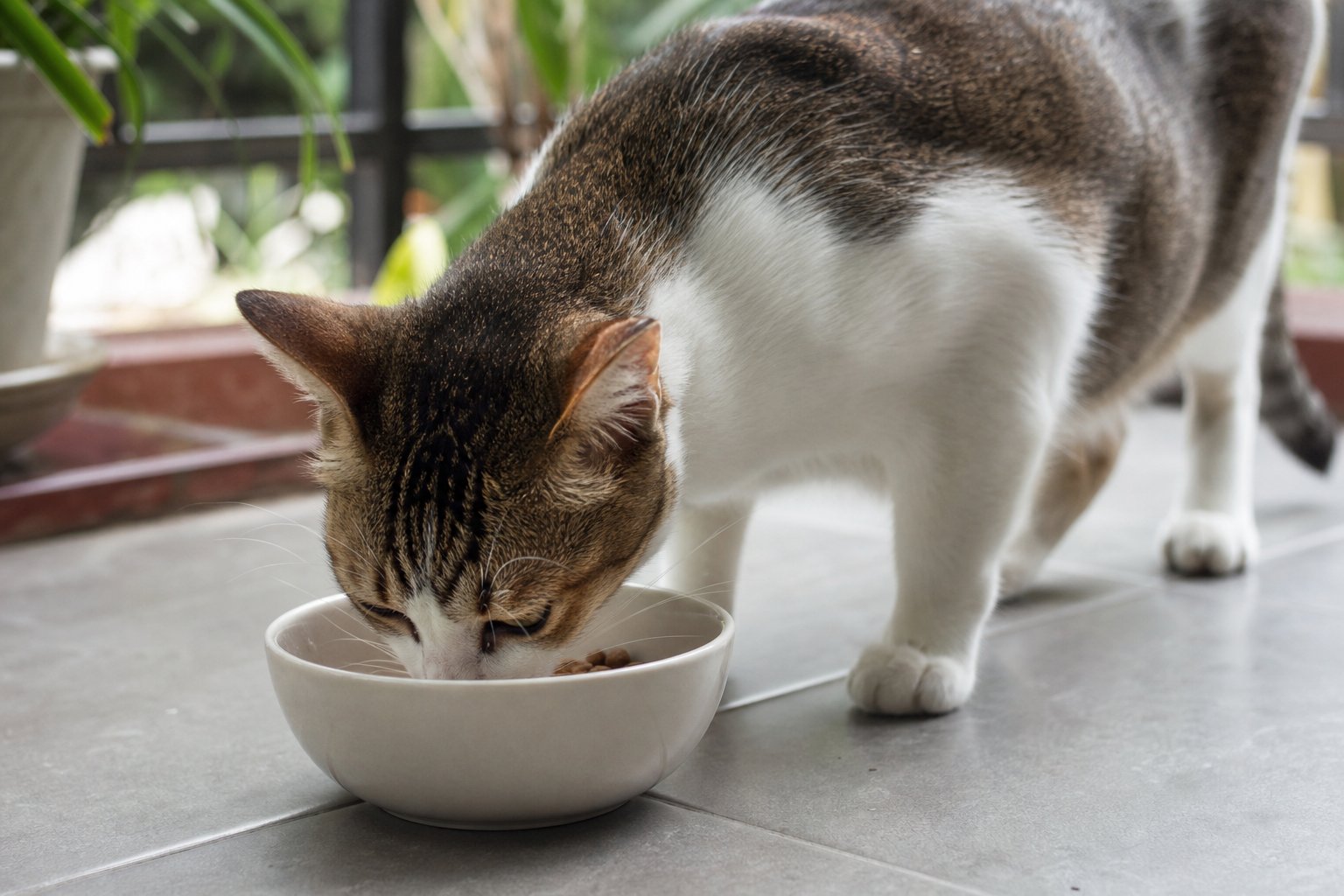
Choosing kitten food in Malaysia is simpler than the shelf makes it look. The best kitten food is one that carries a complete and balanced statement for growth (or all life stages), lists a named animal protein near the top, suits your kitten's digestion and your budget, and is fed in measured portions on a schedule. Wet or dry both work; many owners mix them. The label and the portion matter more than the brand story.
This guide explains how to compare options, what nutrients growing kittens need, how to read Malaysian labels, how to transition foods, and when to call a vet.
Why kitten food is different from adult cat food
Kittens grow fast. In their first months they gain weight quickly and their bodies are building bone, muscle and organs. That means their food needs to be more nutrient-dense than adult maintenance food.
Key differences:
- Energy: kittens need more calories per kilogram of body weight than adult cats.
- Protein: growth demands amino acids for tissue building; animal protein should be the main source.
- Calcium and phosphorus: the ratio and amounts must be balanced for bone development.
- Fat and essential fatty acids: needed for energy and healthy skin and coat.
- Small stomachs: kittens eat small amounts often, so food must be easy to digest and calorie-dense.
Adult maintenance food is not designed for this. Feeding it long term can leave gaps, even if the kitten seems fine at first.
What "complete and balanced" actually means
A pet food label should state that the food meets a recognised nutrient standard. The two you will see most often are:
- AAFCO (Association of American Feed Control Officials) nutrient profiles.
- FEDIAF (European Pet Food Industry Federation) nutritional guidelines.
Look for wording such as "complete and balanced for growth" or "for all life stages". A product that only says "complementary" or gives no adequacy statement is not a sole diet.
In Malaysia, imported and locally made foods both appear on shelves. The label statement is your main guide. If a product's packaging is unclear, ask the retailer or your vet before relying on it as the only food.
Wet food vs dry food for kittens
| Feature | Wet food | Dry food |
|---|---|---|
| Water content | High; supports hydration | Low; cats must drink more |
| Calories per gram | Lower; larger portions | Higher; smaller portions |
| Convenience | Needs refrigeration once opened | Easy to leave out briefly |
| Texture | Soft; good for small mouths | Crunchy; some cats prefer it |
| Cost per meal | Usually higher | Usually lower |
| Dental effect | Minimal | Some abrasive effect, not a substitute for brushing |
| Best use | Hydration, fussy eaters, mixed feeding | Convenience, budget, free-feeding control |
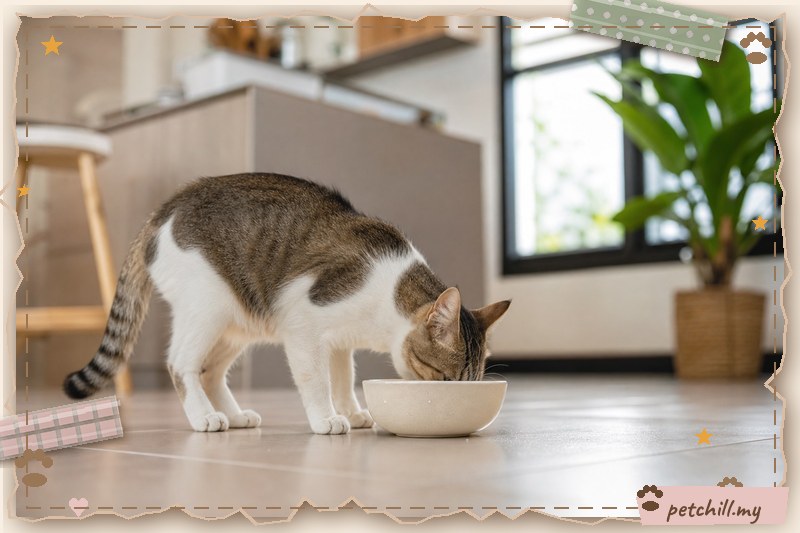
Neither format is automatically better. What matters is that the product is complete and balanced for growth and that you control portions. Many Malaysian owners feed a mix: wet food for moisture and variety, dry food for convenience.
How to read a kitten food label
Use this checklist when comparing products:
- Nutritional adequacy statement — complete and balanced for growth or all life stages.
- First ingredients — look for a named animal protein (chicken, fish, turkey, egg) rather than vague terms.
- Guaranteed analysis — crude protein, fat, fibre and moisture. Compare on a dry-matter basis if you want a fair comparison between wet and [dry.
- Feeding](/articles/dry-cat-food-feeding-guide-for-cats "mylink") guide — a clear table by kitten weight and age.
- Life stage — kitten, growth or all life stages.
- Date and storage — check expiry and store dry food sealed and cool.
A simple comparison method: convert both foods to dry matter. For example, a wet food with 10% protein and 78% moisture has about 45% protein on a dry-matter basis; a dry food with 32% protein and 10% moisture has about 36%. This helps you compare like with like.
Protein, fat and calories: what growing kittens need
Exact figures vary by product and by your kitten's age and activity. As a general guide:
- Protein: growth formulas are typically higher in protein than adult maintenance foods. Animal-source protein should dominate.
- Fat: a concentrated energy source; too little limits growth, too much can lead to loose stools or excess weight gain.
- Calcium and phosphorus: must be present in balanced amounts; do not add supplements unless a vet advises.
- Taurine: an essential amino acid for cats; complete foods include it.
- Water: always available, especially with dry food.
Do not add human vitamins, calcium powders or raw supplements to a complete kitten food without veterinary advice. Over-supplementing can unbalance the diet.
Feeding schedule and portion control
Kittens have small stomachs and high energy needs. A practical schedule:
- Up to about 3–4 months: around four small meals a day.
- 3–6 months: three meals a day.
- 6–12 months: two to three meals a day, moving toward adult feeding.
Use the packet guide as a starting point, then check body condition. You should be able to feel the ribs easily without seeing them sharply, and see a waist from above. Adjust portions gradually.
Avoid free-feeding dry food all day if your kitten tends to overeat; measured meals make it easier to spot appetite changes, which are an early sign of illness.
Transitioning to a new kitten food
Sudden food changes are a common cause of loose stools in kittens. Transition over 7–10 days:
- Days 1–2: about 75% old food, 25% new.
- Days 3–4: 50/50.
- Days 5–7: 25% old, 75% new.
- Days 8–10: all new food.
If diarrhoea or vomiting appears, slow down and return to the previous ratio for a few days. If symptoms persist, see a vet.
Common mistakes Malaysian kitten owners make
- Feeding adult food because it is cheaper. Short-term savings can cost more in health problems.
- Mixing too many brands at once. Keep changes gradual and one at a time.
- Free-feeding without measuring. Portion creep is common in multi-cat homes.
- Ignoring water intake. Cats on dry food need fresh water available; wet food helps.
- Adding milk. Many cats are lactose intolerant; plain water is better.
- Assuming "natural" means complete. Check the adequacy statement.
Local contexts: apartments, terraces and rainy seasons
- Kuala Lumpur apartment: storage space is limited, so buy smaller bags of dry food and reseal them; wet food can be portioned and refrigerated. Keep food away from humid bathrooms.
- Johor terrace house: outdoor access raises the chance of your kitten scavenging or being fed by neighbours. Keep meals indoors on a schedule and store dry food in sealed containers.
- Penang rainy season: humidity can make dry food stale faster. Store it cool and dry, check for clumping or off smells, and wash bowls regularly.
When to see a vet
Contact a veterinarian if your kitten:
- refuses food for more than 24 hours;
- has repeated vomiting or diarrhoea;
- looks bloated or has a painful abdomen;
- is losing weight or not gaining as expected;
- seems lethargic, weak or dehydrated;
- has a poor coat or persistent scratching;
- is a very young orphan or underweight kitten.
Kittens can deteriorate quickly. Early advice is better than waiting.
Vet disclaimer
This article is general information, not veterinary advice. Every kitten is different. For diet, portion and health decisions, consult a licensed veterinarian in Malaysia who can examine your kitten.
Related reading
- Cat Food Guide Malaysia 2026: How to Choose Dry, Wet & Prescription Food
- Best Dry Cat Food for Cats in Malaysia: A Practical Buying Guide
- Best Halal Cat Food in Malaysia: A Practical Buying Guide
- Kitten Food for Cats in Malaysia: A Complete Feeding Guide
- Kitten Food Malaysia 2026: Feeding Chart, 14-Day Transition SOP and Food Format Comparison
- How to Choose Kitten Food for Cats: A Practical Malaysian Guide
- Kitten Food Feeding Guide for Cats in Malaysia: How Much, How Often, and What to Feed
- ACANA Cat Food in Malaysia: Is This Canadian High-Protein Kibble Right for Your Cat?
- Best Senior Cat Food in Malaysia: A Practical Buying Guide
- Cat Calorie Calculator Malaysia: RER and MER Formulas, Plus Grams of Dry and Wet Food
- Cat Food in Malaysia: How to Read the Label, Compare Protein and Budget Monthly

