
Start with the right question
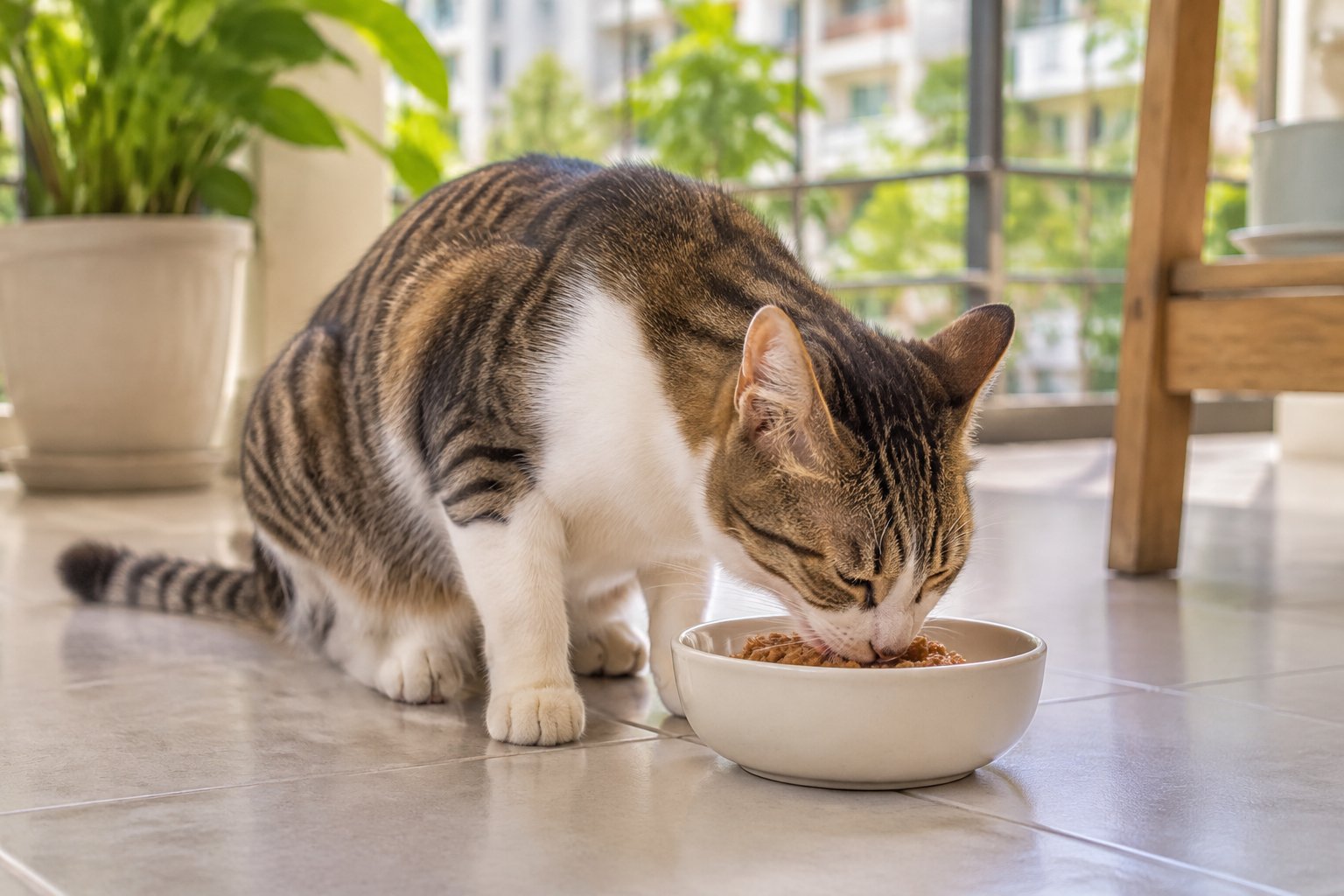
A cat that turns its nose up at dinner is not automatically spoiled. Feline food refusal sits on a spectrum: at one end is a healthy cat with strong preferences, at the other is a cat in pain or feeling unwell. The practical job for an owner is to work out which end you are dealing with, then choose a feeding plan that fits your home, your budget and your cat's temperament.
This guide covers why cats become fussy, how to judge a food's palatability and completeness, how to transition safely, and the warning signs that mean a vet visit rather than another flavour.
Why cats become picky
Cats are not small dogs. They are obligate carnivores with a narrow natural diet, a strong sense of smell, and a tendency to form food habits early. Several factors commonly drive fussiness:
- Texture and moisture. Many cats prefer pate or shredded wet food over dry kibble, especially if they were fed wet food as kittens.
- Aroma and temperature. Food straight from the fridge smells flat. Gently warmed food releases more aroma.
- Bowl and location. Whisker fatigue from deep bowls, a bowl next to a noisy appliance, or a feeding spot near a litter tray can all reduce intake.
- Stress in a multi-cat home. A more confident cat guarding the food area will make a timid cat eat less.
- Illness. Dental disease, kidney disease, gastrointestinal upset, arthritis and upper respiratory infections all reduce appetite. A blocked nose means a cat cannot smell food, and a cat that cannot smell food often will not eat it.
- Over-offering. A cat that learns a refusal produces a better option will repeat the behaviour. This is the classic trap in homes where several foods are opened in one sitting.
Malaysian homes add their own variables. In a Kuala Lumpur apartment, a feeding station near a balcony door can be hot and humid, and wet food left out spoils quickly. In a Johor terrace house with several cats and an open kitchen, competition at the bowl is common. Neither situation is a medical problem, but both change how you should feed.
Rule out health problems first
Before you redesign the menu, confirm your cat is well. A sudden change in appetite in a previously enthusiastic eater deserves attention, particularly in older cats. Ask yourself:
- Has your cat lost weight or body condition?
- Is there vomiting, diarrhoea, constipation or bad breath?
- Is your cat drooling, chewing on one side, or dropping food?
- Has thirst or urination changed?
- Is your cat hiding, sleeping more, or less interested in play?
Any of these shifts the conversation from preference to health. Dental pain is a frequent and easily missed cause of fussiness: a cat with sore gums may approach the bowl, take a small amount, then walk away. Kidney disease and hyperthyroidism are also common in older cats and can change appetite in either direction.
What makes a food appealing and complete
Palatability and nutrition are separate questions. A food can be irresistible and still be a poor daily diet, or nutritionally excellent and ignored. You want both: a complete diet your cat will reliably eat.
Look for a label that states the food is complete for your cat's life stage, not merely complementary. Check that it names an animal protein source early in the ingredient list, and that it provides a full nutrient profile rather than relying on supplements alone. For cats with sensitivities, a limited-ingredient or hydrolysed diet from a vet is a different category and should be chosen with professional advice.
| Feature | Why it matters for a picky cat | What to check on the label |
|---|---|---|
| Complete and balanced | Prevents nutrient gaps if your cat eats only this | Life-stage statement, nutritional adequacy claim |
| Named animal protein | Usually more palatable and digestible | Chicken, fish, beef or similar named early |
| Moisture content | Wet food is often more appealing and supports hydration | Percentage moisture; higher in cans and pouches |
| Aroma | Drives interest before the first bite | Freshly opened, gently warmed food |
| Texture | Some cats refuse pate but accept shreds, or vice versa | Try a small tin before buying a case |
| Portion size | Small, fresh servings are more tempting | Match tin size to daily intake |
Local prices vary widely by brand, pack size and retailer, so compare cost per day rather than cost per tin. Ask a Malaysian vet or pet retailer for guidance on what is stocked locally and suitable for your cat's age and health status.
Build a feeding routine that reduces fussiness
Structure does more for fussy cats than any single product. A predictable routine lowers anxiety and makes food refusal less rewarding.
- Fix meal times. Two to four small meals a day suits most adult cats. Kittens and some seniors need more frequent, smaller portions.
- Set a time limit. Put food down for 20–30 minutes, then remove it. This is safe for healthy adult cats and prevents grazing on spoiled food.
- Feed in a quiet, separate spot. In multi-cat homes, feed cats in separate rooms or use visual barriers so a timid cat is not rushed.
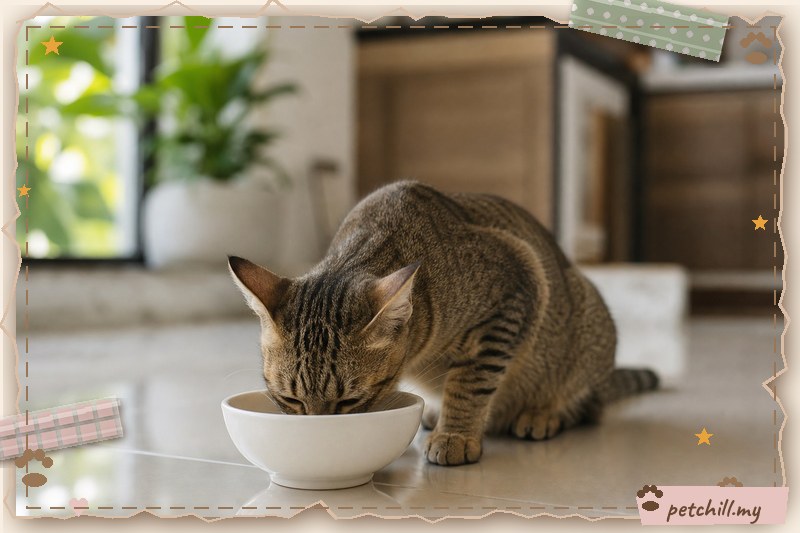
- Use shallow, wide bowls. This reduces whisker contact and makes food easier to reach.
- Keep water separate. Many cats prefer drinking away from their food; a fountain or a second bowl helps.
- Limit treats. Treats should be a small fraction of daily calories, not a substitute for meals.
- Keep a simple log. Note what was offered, how much was eaten, and any vomiting or litter box changes. This is invaluable if you later see a vet.
A useful rule: change one variable at a time. If you switch food, bowl and feeding time on the same day, you will not know what worked.
How to transition to a new food
Sudden switches cause digestive upset and can put a cautious cat off the new food entirely. Transition gradually over about seven to ten days:
- Days 1–2: about 75% old food, 25% new.
- Days 3–4: 50/50.
- Days 5–7: 25% old, 75% new.
- Days 8–10: all new food, if stools remain normal.
If your cat picks out the old food, mix thoroughly rather than layering. For very fussy cats, warm the mixture slightly and offer it when your cat is hungry but not frantic. If diarrhoea or vomiting appears, slow the transition and speak to your vet if it persists.
Palatability tricks that are safe
These are supportive measures, not substitutes for a complete diet:
- Warm water or a splash of warm low-salt broth stirred into wet food to lift aroma.
- Gently warming the food to body temperature; never serve hot food or microwave in the pouch.
- Crushing a small amount of a favourite complete kibble over wet food as a temporary bridge.
- Rotating two or three accepted complete foods to prevent monotony without constant abrupt changes.
- Offering a small fresh portion rather than a large one that sits and dries out.
Avoid free-feeding a buffet of different foods. It teaches a cat that refusing one option brings a better one, and it makes it hard to monitor how much is actually eaten.
When to see a vet
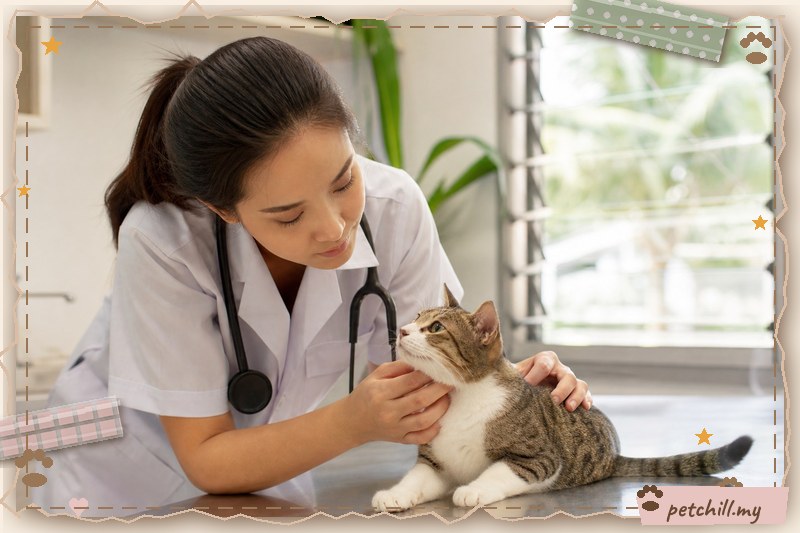
Contact a veterinarian promptly if any of the following apply:
- Your cat has eaten nothing for 24 hours, or has eaten very little for two days.
- There is weight loss, vomiting, diarrhoea, constipation or repeated lip smacking.
- Your cat is drooling, pawing at the mouth, or chewing on one side.
- Breathing is noisy, or there is nasal discharge or sneezing.
- Your cat is hiding, lethargic, or drinking and urinating more than usual.
- A kitten, pregnant cat or senior cat refuses food — these groups deteriorate faster.
Never withhold food to "make a cat hungry enough." Cats are not built for prolonged fasting, and a cat that stops eating can develop serious liver complications within days.
Common myths about picky cats
- "A picky cat will eat when it's hungry." Sometimes true, but not for a sick cat. Prolonged refusal is a medical risk, not a discipline issue.
- "Wet food causes dental problems." Dental disease is common in cats regardless of diet; regular dental checks matter more than the wet-versus-dry debate.
- "Changing food often is bad." Abrupt constant switching is unhelpful, but a controlled rotation between complete foods is fine for most cats.
- "Human food is a good topper." Some plain cooked meats are fine in small amounts, but many human foods are unsafe, and toppers should not unbalance the diet.
A simple weekly plan for a fussy cat
| Day | Morning | Evening | Notes |
|---|---|---|---|
| 1 | Accepted wet food, warmed | Same food, small portion | Log intake |
| 2 | Accepted wet food | Introduce 25% new food | Watch stools |
| 3 | 50/50 mix | 50/50 mix | Keep bowl shallow |
| 4 | 50/50 mix | 75% new food | Separate feeding if multi-cat |
| 5 | 75% new food | 75% new food | Check weight weekly |
| 6 | New food | New food | Add warm water if dry |
| 7 | New food | New food | Review log, adjust |
This is a template, not a prescription. Adjust portions to your cat's weight, age and activity, and ask your vet if your cat has a diagnosed condition.
Final thoughts
Picky eating is usually solvable with patience, structure and a palatable complete diet. Rule out pain and illness first, then simplify: fewer options, fixed times, quiet feeding spots and a gradual transition. If your cat's appetite changes suddenly or refusal lasts more than a day, treat it as a health signal rather than a personality quirk.
This article is general information for Malaysian cat owners and is not a substitute for veterinary advice. Always consult a licensed veterinarian about your cat's diet and health.
Related reading
- Cat Food Guide Malaysia 2026: How to Choose Dry, Wet & Prescription Food
- Best Food for Picky Cats in Malaysia: A Practical Feeding Guide
- Best Food Transition for Cats in Malaysia: A Step-by-Step Guide
- Best Hypoallergenic Cat Food in Malaysia: A Practical Guide for Itchy, Scratching Cats
- Best Urinary Care Cat Food in Malaysia: How to Choose (2025 Guide)
- Best Weight Control Cat Food in Malaysia: A Practical Buying Guide
- Best Wet Cat Food in Malaysia: A Practical Buying Guide
- Food for Picky Cats: A Feeding Guide for Malaysian Cat Owners
- High-Protein Cat Food Feeding Guide for Cats: How Much, Which Type, and What to Watch
- High-Protein Cat Food in Malaysia: A Practical Guide for Cat Owners
- How to Choose Food for Picky Cats: A Malaysian Guide
- How to Choose Urinary Care Cat Food for Cats: A Malaysian Owner's Guide