
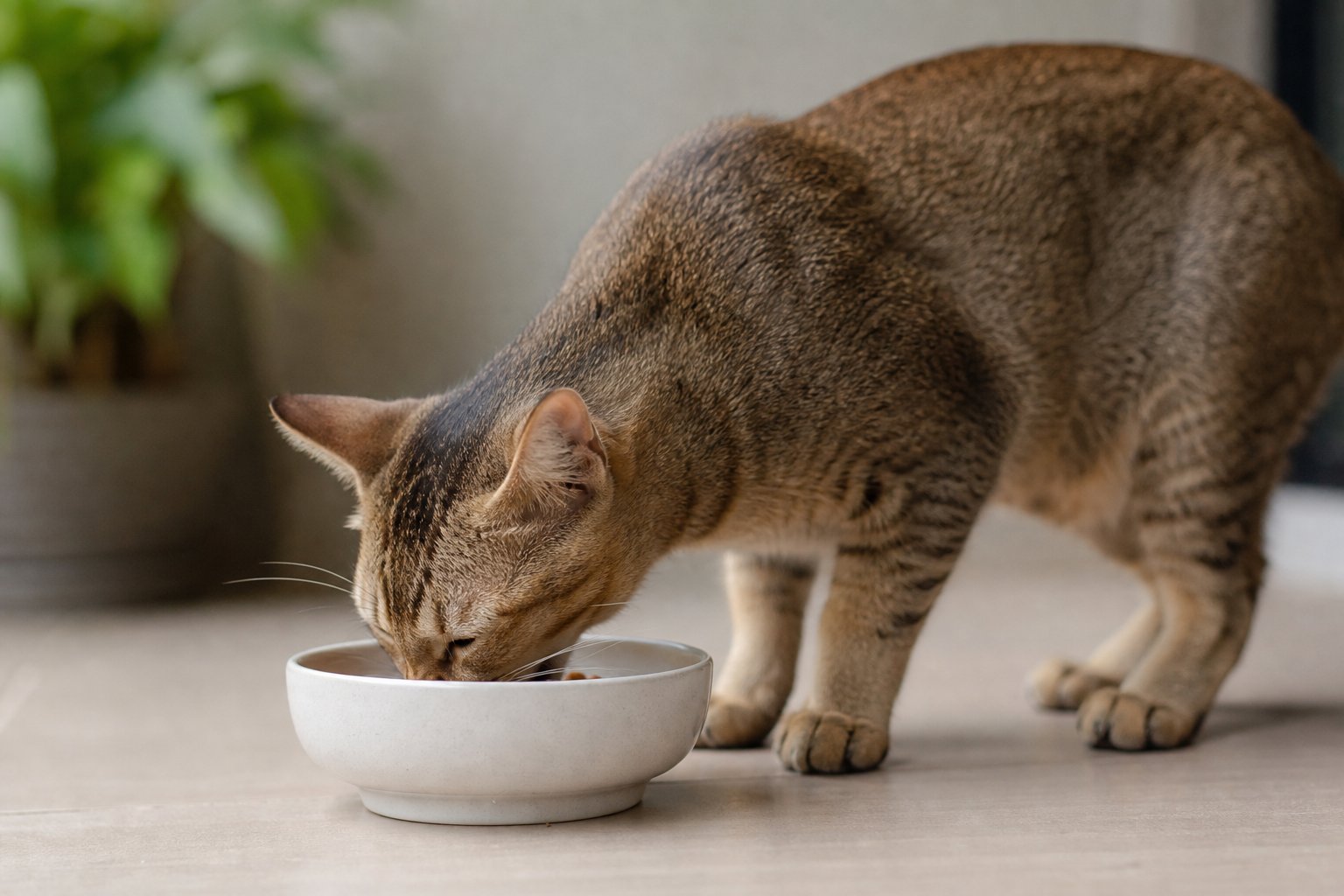
The short answer
Kittens need a food labelled for growth or for all life stages, not adult maintenance food. Look for a named animal protein first, added DHA, and a proper calcium-to-phosphorus balance. Feed small meals often, keep water fresh, and weigh your kitten monthly so you can adjust portions. In Malaysia's heat, wet food and careful storage matter more than most owners expect.
Why kitten food is different from adult food
A kitten is not a small cat. In the first year, a kitten's body weight may increase many times over, bones mineralise, the brain and eyes develop, and the immune system matures. That growth demands more energy per kilogram of body weight, more protein, more fat, and tightly controlled minerals.
Adult maintenance food is formulated to hold a grown cat's weight steady. It typically has less energy, less protein, and lower calcium and phosphorus than a growing kitten needs. Feeding adult food to a kitten for months can lead to stunted growth, poor coat, and weak bones. The reverse is also true: adult cats fed kitten food long term tend to gain too much weight.
Key nutritional points to look for on a kitten food label:
- Animal protein as the first ingredient — chicken, turkey, fish, beef or egg. Kittens are obligate carnivores and use animal protein efficiently.
- DHA — an omega-3 fatty acid that supports brain and retinal development. Many kitten foods add fish oil or algae DHA.
- Balanced calcium and phosphorus — in the right ratio for bone growth. Do not add calcium supplements unless a vet prescribes them; excess calcium can harm growing bones.
- Taurine — an essential amino acid for cats. It should be listed or guaranteed in the analysis.
- Adequate fat — fat is the main energy source for growing kittens and carries fat-soluble vitamins.
- A statement of nutritional adequacy — for example, "complete food for growing kittens" or "all life stages".
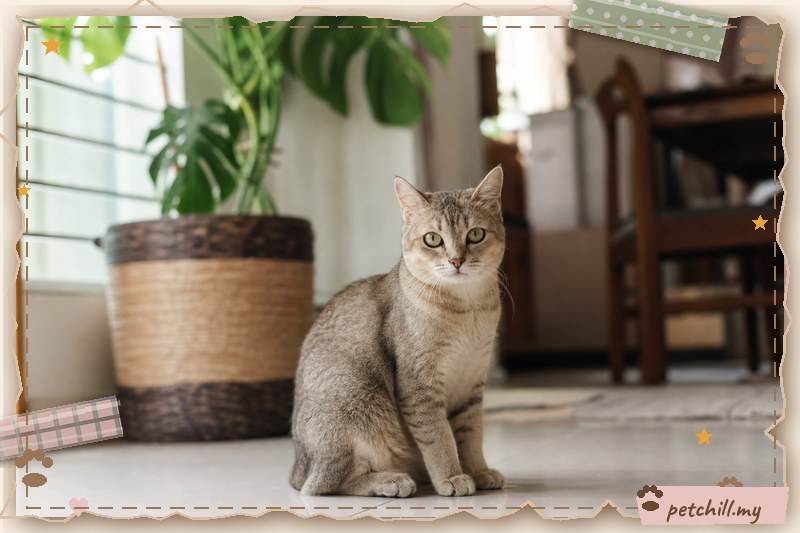
How much and how often to feed
Kittens have small stomachs but high energy needs, so they eat little and often. A practical schedule:
| Age | Meals per day | Notes |
|---|---|---|
| 3–4 weeks | 4–6 small feeds | Moistened kitten food plus mother's milk |
| 6–8 weeks | 4 meals | Fully weaned onto kitten food |
| 2–6 months | 4 meals | Free-feeding dry food is an option if weight is healthy |
| 6–9 months | 3 meals | Start reducing free-feeding if weight climbs |
| 9–12 months | 2 meals | Transition to adult food near 12 months |
Packet feeding guides are a starting point, not a rule. Every kitten's metabolism differs. Weigh your kitten weekly or fortnightly on a kitchen scale and check body condition: you should feel ribs easily but not see them sharply, and there should be a slight waist behind the ribs when viewed from above.
As a rough energy guide, growing kittens may need around two to three times the calories per kilogram of body weight compared with an adult cat. Very young kittens need the higher end. Your vet can calculate a target if your kitten is small, large, or gaining too fast or too slowly.
Wet food, dry food, or both?
Malaysia's warm, humid climate changes the practical answer. Wet food left out spoils quickly, and dry food absorbs moisture and can go stale or mouldy if stored badly. Both formats can be complete and balanced, so the choice is about convenience, hydration and your kitten's preferences.
| Factor | Wet kitten food | Dry kitten food |
|---|---|---|
| Water content | High, supports hydration | Low, needs fresh water alongside |
| Convenience | Must be served and cleared quickly | Easy to portion and store |
| Dental effect | Minimal | Some chewing, but not a substitute for brushing |
| Cost per calorie | Usually higher | Usually lower |
| Heat and humidity | Spoils fast once opened | Needs airtight storage away from heat |
| Picky eaters | Often more appealing | Some kittens prefer crunch |
Many Malaysian owners feed a mix: wet food at set meals and a measured amount of dry food for texture or between meals. If you do this, count total calories so you do not double-feed. A common mistake is leaving a full bowl of dry food down all day while also serving wet meals, which quickly leads to an overweight kitten.
Reading labels like an editor
Pet food labels can be confusing. Here is a simple checklist:
- Find the life-stage statement. It should say growth, kitten, or all life stages. If it says maintenance or adult, put it back.
- Check the first few ingredients. Named meats and fish are better than vague terms like "meat and animal derivatives".
- Look at the guaranteed analysis. Protein and fat should be appropriate for growth. Very low protein is a red flag.
- Check for DHA and taurine. These are especially important for kittens.
- Look for a complete and balanced claim. Treats and toppers are not complete foods.
- Check the batch and expiry date. In a hot climate, buy from shops with good turnover and cool storage.
International brands are widely available in Malaysia, but availability and pricing vary by shop and by state. Local prices change often, so compare in-store or online and ask your vet or retailer for current options rather than relying on old figures.
Transitioning to a new food
Kittens have sensitive digestion. Sudden food changes commonly cause loose stools or vomiting. Transition over seven to ten days:
- Days 1–3: 25 percent new food, 75 percent old
- Days 4–6: 50/50
- Days 7–9: 75 percent new, 25 percent old
- Day 10: fully new
If stools become loose, slow down and hold at the previous ratio for a few extra days. If diarrhoea lasts more than a day or two, or the kitten is lethargic or off food, see a vet.
Water, heat and hygiene in a Malaysian home
Hydration matters all year. Kittens lose water quickly in warm weather, and dehydration can worsen quickly in small bodies.
- Place several water bowls around the home, away from food and litter.
- Refresh water at least twice daily; in hot weather, more often.
- Wide, shallow ceramic or stainless steel bowls are easier to keep clean than deep plastic ones.
- Wet food adds water. If your kitten eats mostly dry food, watch for dark, concentrated urine or straining.
- Never leave wet food out for hours. Serve it, give the kitten 20–30 minutes, then remove what is left.
- Store dry food in an airtight container in a cool, dry cupboard, not next to the stove or in direct sun. Keep the original bag for batch and expiry information.
Common feeding mistakes
- Free-feeding dry food plus wet meals. This is the fastest route to an overweight kitten. Measure dry food with a scoop or scale.
- Giving cow's milk. It causes diarrhoea in most cats. Use water instead.
- Too many treats. Treats should be a small fraction of daily calories, and kitten treats should be complete or specifically formulated.
- Adding supplements without advice. Extra calcium or vitamins can unbalance a complete food.
- Switching foods every week. Frequent changes upset digestion and make it hard to spot a problem.
- Ignoring weight. A kitten that stops gaining weight or loses weight needs a vet check.
When to see a vet
Contact a veterinarian promptly if your kitten:
- Refuses food for more than 12–24 hours
- Has diarrhoea lasting more than a day, or diarrhoea with blood
- Vomits repeatedly or cannot keep water down
- Appears lethargic, weak, or hides more than usual
- Has a bloated or painful abdomen
- Shows straining to urinate, or no urine in the litter box
- Is not gaining weight, or is losing weight
- Has pale gums, laboured breathing, or a fever
- Has a poor coat, pot belly, or signs of parasites
Kittens deteriorate faster than adult cats. When in doubt, call your vet rather than waiting. Deworming, vaccination and a first health check are also part of a good start, and your vet can tailor a feeding plan to your kitten's size and health.
A practical daily plan
Here is a simple routine you can adapt:
- Morning: wet kitten food, measured portion; fresh water.
- Midday: small dry portion or second wet meal for young kittens.
- Late afternoon: wet or dry meal.
- Evening: final meal; remove leftovers; refresh water.
- Weekly: weigh the kitten, check body condition, clean bowls.
- Monthly: review growth against the vet's chart and adjust portions.
Bottom line
Choose a complete kitten food with animal protein first, DHA and taurine, and a clear growth claim. Feed small meals often, measure portions, keep water fresh, and store food carefully in Malaysia's heat. Weigh your kitten regularly and ask your vet whenever growth, appetite or digestion looks off.
This article is general information only and is not a substitute for veterinary advice. Always consult a licensed veterinarian about your kitten's diet and health.
Related reading
- Cat Food Guide Malaysia 2026: How to Choose Dry, Wet & Prescription Food
- Best Kitten Food for Cats in Malaysia: A Complete Buying Guide
- Cat Food Recommendation Malaysia: 8 Scenarios, Label Checks and Daily-Cost Thinking
- How to Choose Kitten Food for Cats: A Practical Malaysian Guide
- Kitten Food Feeding Guide for Cats in Malaysia: How Much, How Often, and What to Feed
- Kitten Food Malaysia 2026: Feeding Chart, 14-Day Transition SOP and Food Format Comparison
- ACANA Cat Food in Malaysia: Is This Canadian High-Protein Kibble Right for Your Cat?
- Best Dry Cat Food for Cats in Malaysia: A Practical Buying Guide
- Best Food Transition for Cats in Malaysia: A Step-by-Step Guide
- Best Halal Cat Food in Malaysia: A Practical Buying Guide
- Cat Care in Malaysia: A Complete Guide for New and Experienced Owners

