
The short answer
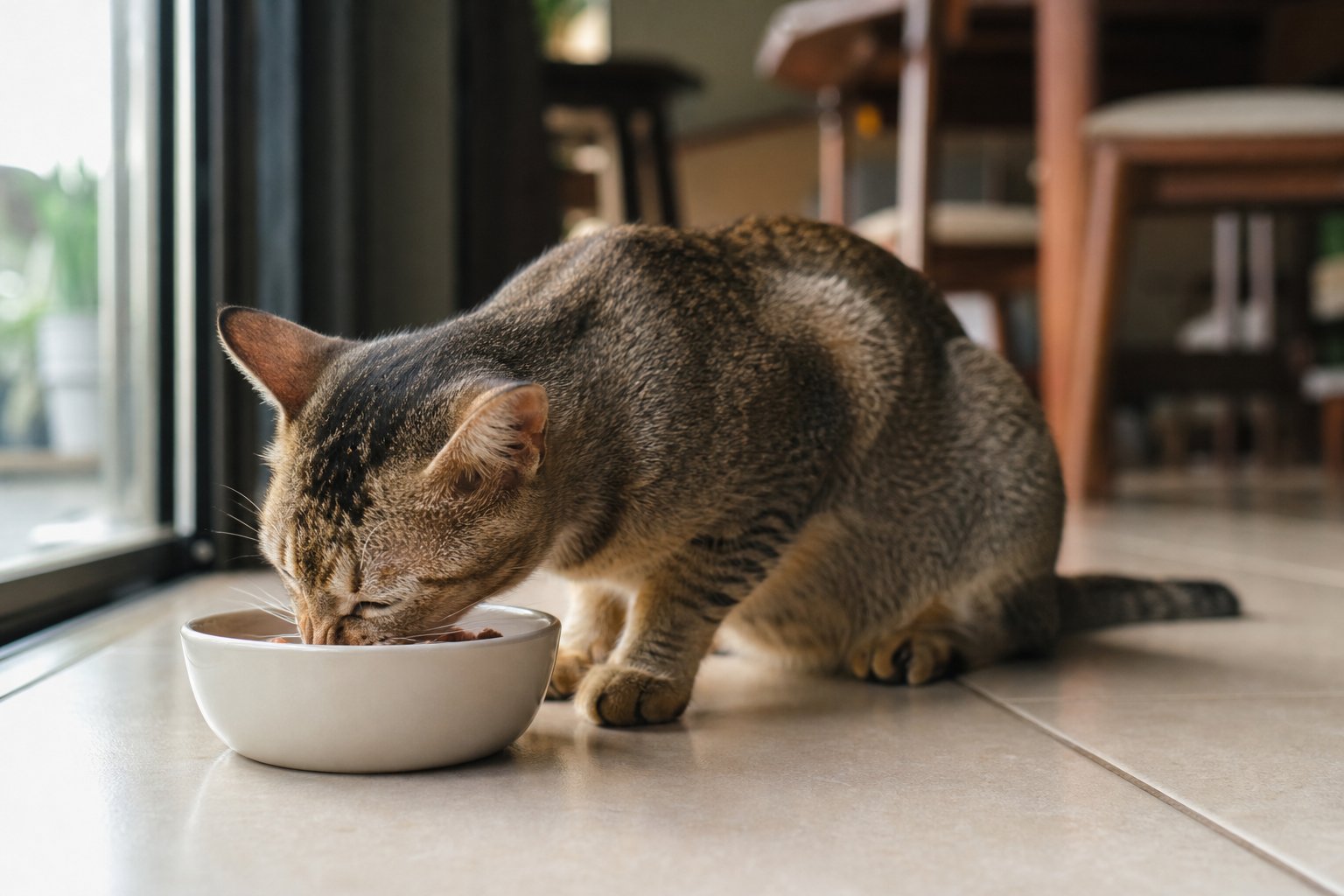
Wet cat food is not automatically better or worse than dry food. It is a tool. It helps with water intake, is often more appealing to picky cats, and makes portion control easier for cats that need to lose weight. It also costs more, spoils faster in a hot climate, and is easy to overfeed if you top up bowls without measuring. For most Malaysian cats, a complete wet food used as part of a planned diet, or mixed with a measured amount of dry food, works well.
What "complete" wet food actually means
The single most useful thing on a cat food label is the nutritional adequacy statement. Look for wording that the food is complete and balanced for a life stage, based on a recognised nutrient standard such as AAFCO or FEDIAF. A can that only says "complementary", "topper" or "treat" is not a full diet. It can be useful, but it should not make up most of what your cat eats.
A complete food has been formulated to meet minimum and maximum levels for protein, fat, vitamins and minerals, including taurine, calcium, phosphorus and vitamin A. Cats are obligate carnivores, so they need animal-source nutrients that plant foods do not supply in the right form. That is why a homemade diet of chicken and rice, however well intentioned, is not a balanced cat diet unless it is formulated with supplements by someone qualified.
When you compare cans, check three things in this order:
- The adequacy statement — complete and balanced, and for which life stage.
- The guaranteed analysis — protein, fat, fibre, moisture, and ash where shown.
- The ingredient list — named animal sources first, and no long list of unlabelled "meat by-products" if that matters to you.
Life-stage wording matters. "Growth", "reproduction" and "all life stages" foods are richer and suit kittens and pregnant or nursing queens. "Maintenance" or "adult" foods suit healthy adult cats. Senior cats often do well on adult maintenance food unless a vet has diagnosed a specific problem.
Wet versus dry: a fair comparison
| Feature | Wet food | Dry food |
|---|---|---|
| Water content | Roughly 70–80% | Roughly 6–10% |
| Cost per calorie | Higher | Lower |
| Storage after opening | Refrigerate, use in 1–2 days | Stays fresh in a sealed container |
| Portion control | Easy, single-serve cans and pouches | Needs weighing |
| Palatability | Usually high | Varies |
| Dental effect | Little chewing | Some chewing, but not a substitute for brushing |
| Convenience when travelling | Lower | Higher |
| Suitability in hot weather | Needs prompt refrigeration | More forgiving |
Neither column wins outright. A cat that drinks well and maintains a healthy weight can do fine on dry food. A cat that barely drinks, is prone to urinary crystals, or needs to shed weight often benefits from more wet food in the mix.
How much to feed
Start with the feeding guide on the can. It is a starting point, not a rule, because guides are based on average needs and your cat is not average. Weigh your cat, or ask your vet to weigh and body-condition score it, then adjust over two to three weeks.
A useful rule of thumb is that wet food is mostly water, so you feed more of it by weight than dry food to deliver the same calories. If a cat needs about 40 grams of a typical dry food per day, the equivalent in a typical wet food is often closer to 60 to 80 grams, but this varies widely between brands. Always compare calorie content per 100 grams where the label provides it.
A simple feeding plan for a healthy adult cat:
- Two wet meals a day at fixed times, measured on a small kitchen scale for the first week so you learn what a portion looks like.
- Optional dry food left out in a measured amount, or fed as a third meal, if your cat grazes.
- Fresh water in at least two bowls away from the food bowl.
- Weekly weigh-in on the same scale, at the same time of day.
Kittens need more food per kilogram of body weight and should be fed to appetite with a growth-appropriate complete food. Pregnant and nursing queens need significantly more. Senior cats often need smaller, more frequent meals because digestion and appetite change with age.
Reading labels without being fooled
Marketing words like "natural", "premium" and "gourmet" have no fixed legal meaning in most markets. Ignore them and read the numbers.
- Protein on a dry-matter basis. Wet food looks low in protein on the label only because of the water. To compare fairly, convert to dry matter: divide the nutrient percentage by the dry-matter fraction. A food with 10% protein and 78% moisture is about 45% protein on a dry-matter basis.
- Named meats. "Chicken", "tuna" and "beef" are clearer than "animal derivatives".
- Added sugars and thickeners. Some gravies contain sugars or starches. They are not toxic, but they add calories.
- Fish frequency. Fish-based foods are palatable, but many vets suggest keeping fish to part of the diet rather than the whole diet, because of concerns about mercury accumulation and because some cats become very fixed on fish flavours.
- Preservatives and colours. Not automatically a problem, but a shorter, clearer list is easier to assess.
If two cans look identical but one is much cheaper, compare the dry-matter protein and fat and the adequacy statement before assuming you are getting the same thing.
Wet food and water intake
Cats evolved from desert-dwelling ancestors and are good at concentrating urine. Many cats drink less than owners expect, especially on dry diets. Wet food is one of the simplest ways to raise total water intake without syringing water or buying a fountain.
This matters most for cats with a history of urinary crystals or stones, cats with early kidney disease, and older cats that are losing muscle. It does not mean every cat must eat wet food. A cat on dry food that drinks well, has normal bloodwork and a healthy urine concentration is not automatically at risk.
Practical hydration checklist for a Malaysian home:
- Feed at least one wet meal a day if your cat is a poor drinker.
- Add a spoon of warm water to wet food to make a loose stew — many cats prefer it.
- Place water bowls in several rooms, away from litter trays.
- Change water daily; in warm weather, bowls can grow biofilm quickly.
- Watch for concentrated, strong-smelling urine or straining in the litter box.
Storage and food safety in a hot climate
Wet food is a moist, protein-rich food, which makes it a good medium for bacteria once opened. In a warm kitchen, the clock runs faster than many owners realise.
- Unopened cans and pouches keep in a cool, dry cupboard. Check the date and reject any can that is bulging, rusted or dented on the seam.
- Opened food should be covered and refrigerated straight away. Use within one to two days unless the label says otherwise.
- At room temperature, discard what the cat has not eaten after about 30 minutes. Do not leave a bowl down all day.
- Do not refreeze thawed wet food.
- Wash bowls after every meal with hot water and soap. Plastic bowls that are scratched are harder to clean; stainless steel or ceramic is easier.
- Power cuts are a real consideration in some areas. If the fridge has been off for hours, treat opened wet food as spoiled and throw it out.
A useful habit is to portion a large can into small lidded containers on the day you open it, so you are not repeatedly warming and cooling the whole can.
Common feeding mistakes
Free-feeding wet food all day. This is the most common cause of obesity in wet-fed cats. Measure and remove what is not eaten.
Assuming "wet" means "low calorie". Some pâtés are energy-dense. Check the label.
Switching foods abruptly. Sudden diet changes cause loose stools and vomiting. Transition over seven to ten days, mixing increasing amounts of the new food with the old.
Feeding only tuna in spring water meant for people. Human tuna is not a complete cat food. It lacks the calcium and vitamins a cat needs and is too high in sodium if fed regularly.
Topping up the bowl instead of replacing it. Old food at the bottom of the bowl spoils and puts cats off eating.
Ignoring body condition. A cat can be a healthy weight on wet food or overweight on it. Judge by ribs and waistline, not by how much the cat enjoys the meal.
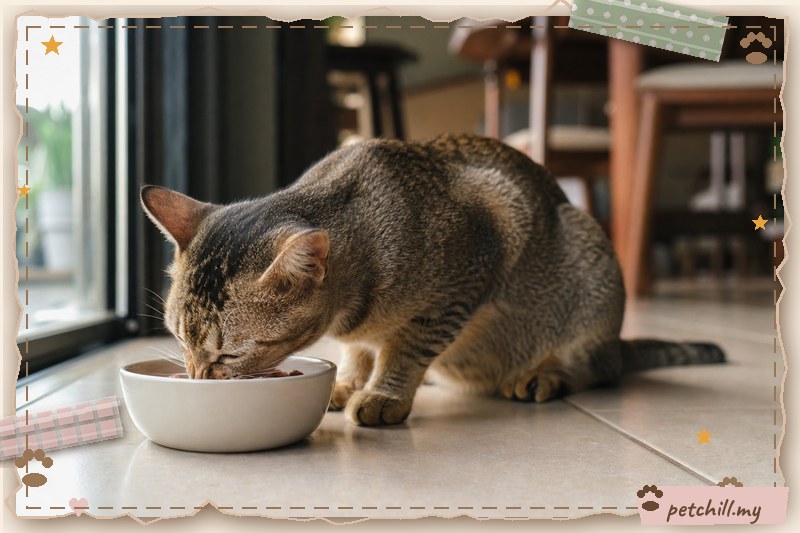
Feeding wet food in real Malaysian homes
In a Kuala Lumpur apartment, space and smell matter. Wet food in an air-conditioned flat is easier to manage, but a bowl left near a balcony door in the afternoon heat will spoil quickly. Feed in the cooler part of the day, remove leftovers promptly, and keep a small lidded bin for empty pouches so the kitchen does not smell.
In a Johor terrace house with a free-roaming cat or a cat that shares space with other pets, portion control is harder. Feed each cat in a separate room or use microchip feeders if one cat steals food. In a Penang rainy season, humidity rises and dry food left out softens and spoils faster, which is one practical reason some owners lean more on wet food in measured meals rather than leaving a bowl down.
When to see a vet
Contact a veterinarian if your cat:
- stops eating for more than 24 hours, or shows no interest in wet food it normally loves;
- vomits repeatedly or has diarrhoea lasting more than a day;
- strains to urinate, produces only small amounts of urine, or cries in the litter box — this can be a urinary blockage and is an emergency, especially in male cats;
- drinks much more than usual, loses weight despite a good appetite, or develops a dull coat;
- is a kitten, pregnant, nursing, or has a diagnosed condition such as kidney disease, diabetes or pancreatitis, where diet should be planned with your vet;
- develops mouth pain, drooling or bad breath that affects eating.
A vet can also help you choose between maintenance, renal, urinary and weight-management diets. These therapeutic foods should not be picked off a shelf without advice, because they are formulated for specific problems and can be wrong for a healthy cat.
A simple buying checklist
Before you commit to a new wet food, confirm:
- The label states complete and balanced for your cat's life stage.
- The first ingredients are named animal sources.
- You know the calorie content per 100 grams or per can.
- The can size matches what your cat eats in one to two days.
- Your cat has tried a small amount and had no digestive upset.
- You have a plan for storing leftovers.
Prices vary widely between brands and retailers in Malaysia, so compare cost per calorie rather than cost per can, and ask your vet or a trusted pet retailer for guidance on what suits your cat.
Bottom line
Wet cat food is a valuable part of many cats' diets, mainly for water intake, palatability and portion control. Choose a complete food, measure it, store it cold and throw out what has been sitting out. If your cat has a health problem, plan the diet with a vet rather than guessing from the label.
This article is general information only and is not a substitute for veterinary advice. Always consult a licensed veterinarian about your cat's diet and health.
Related reading
- Cat Food Guide Malaysia 2026: How to Choose Dry, Wet & Prescription Food
- Best Senior Cat Food in Malaysia: A Practical Buying Guide
- How to Choose Wet Cat Food for Cats in Malaysia: A Practical Guide
- Wet Cat Food Feeding Guide for Cats: How Much, How Often and How to Switch
- Wet vs Dry Cat Food in Malaysia: Water, Cost and How to Choose
- Best Halal Cat Food in Malaysia: A Practical Buying Guide
- Cat Staple Canned Food in Malaysia: How to Spot a Complete & Balanced Can
- Dry Cat Food Feeding Guide for Cats: How Much, How Often and How to Do It Right
- Dry Cat Food for Cats in Malaysia: A Practical Feeding Guide
- Food Transition Feeding Guide for Cats: How to Switch Diets Safely
- How to Choose Hairball Control Food for Cats: A Practical Guide for Malaysian Owners
- How to Choose Senior Cat Food for Cats in Malaysia

