
Quick answer
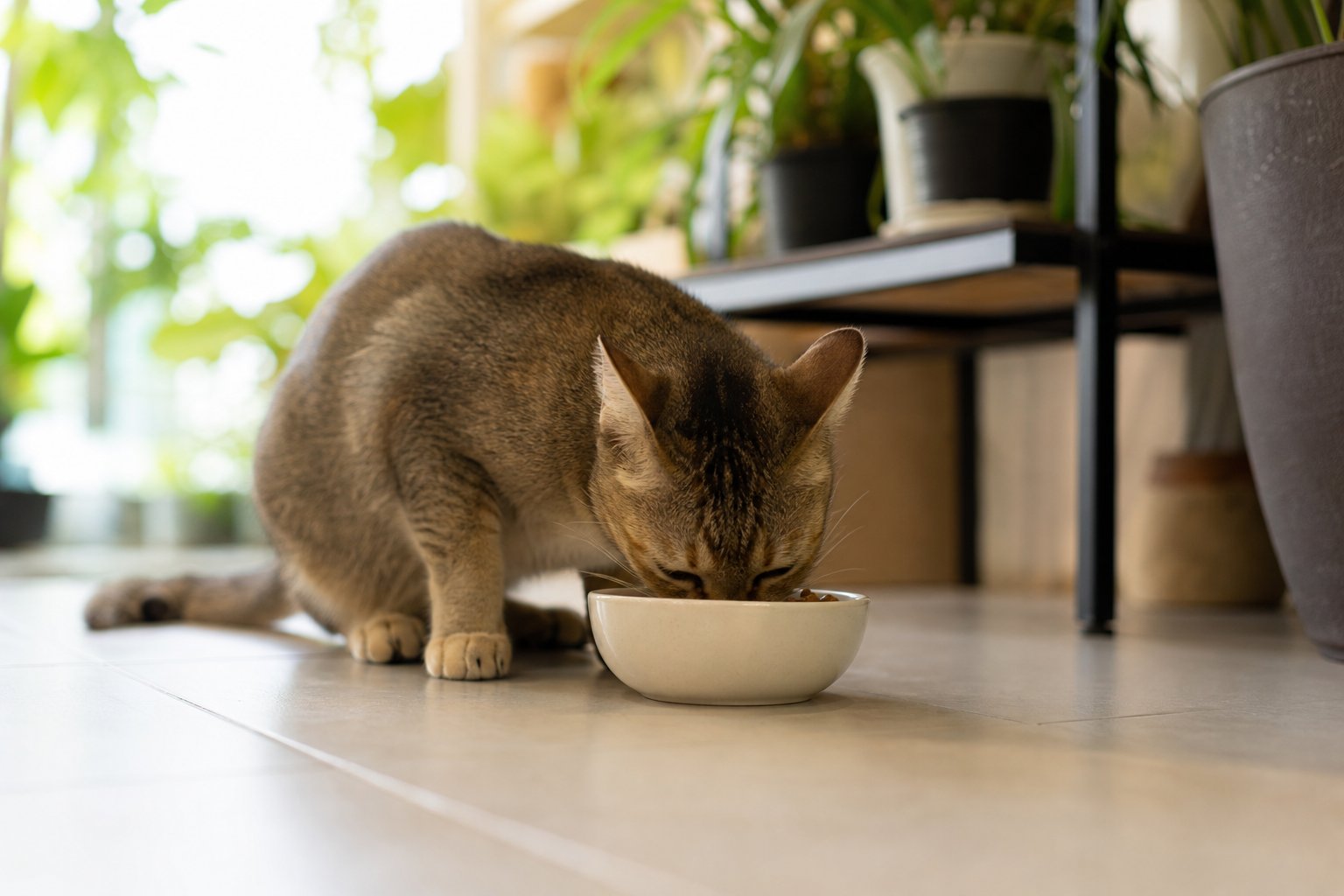
Feed wet food by body weight and life stage, usually split into two or more meals a day. Most adult cats need roughly one 80–85 g pouch or can per 3–4 kg body weight daily, adjusted to the food's calorie label and your cat's condition. Always provide fresh water and refrigerate leftovers.
Why wet food deserves a place in the bowl
Wet cat food is not just a treat. For many cats it is a practical way to increase water intake, which matters because cats evolved to get much of their moisture from prey. A cat that eats only dry food may drink more from the bowl, but not all cats drink enough. Wet food also carries aroma, and aroma drives appetite in cats. That makes it useful for fussy eaters, older cats with reduced smell, and cats recovering from illness.
Wet food is not automatically better than dry food. A complete dry diet can support excellent health, and dry food is convenient and less messy. The right choice depends on the individual cat: its age, weight, dental health, kidney function, digestion and preferences. Many Malaysian households feed a mix, using wet food for hydration and palatability and dry food for convenience.
The key word on any label is "complete." A complete wet food supplies all the nutrients a cat needs in the right proportions. A complementary wet food, often sold as a topper or treat, does not. If wet food makes up most of the diet, it must be complete and balanced for your cat's life stage.
How much wet food to feed: a practical starting point
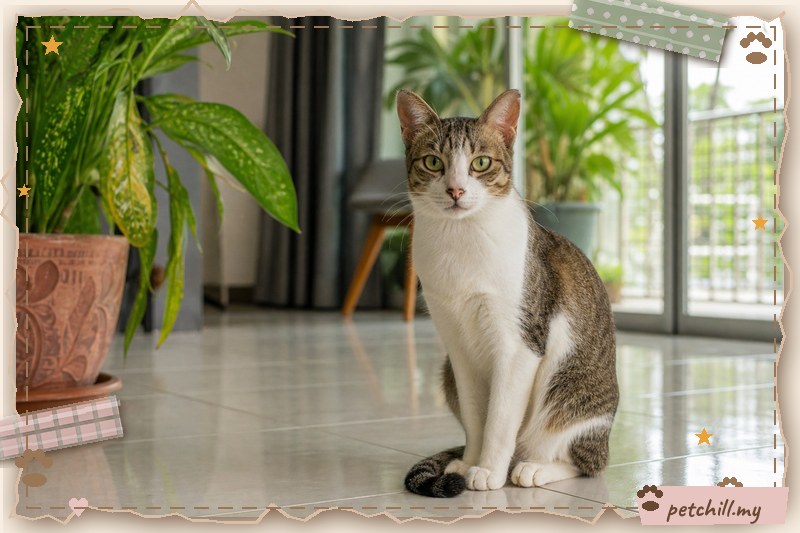
Portion sizes vary widely between brands because calorie density differs. Always read the label first. The feeding guide on the pack is a starting point, not a fixed rule. Your cat's age, activity, neuter status and body condition all change its needs.
As a rough guide for adult maintenance, many complete wet foods suggest about one 80–85 g pouch or small can per 3–4 kg of body weight per day. A 4–5 kg indoor cat might eat roughly 1.5 to 2 pouches daily, split across meals. A large, active cat may need more; a small, sedentary cat may need less. Kittens, pregnant and nursing cats need more energy and should be fed a growth or all-life-stages formula according to the label and veterinary advice.
Use body condition rather than the scale alone. You should be able to feel the ribs easily without seeing them, and see a waist from above. If the ribs disappear under a layer of fat, reduce portions slightly. If the ribs and spine are prominent, increase. Weigh your cat monthly if possible, and adjust in small steps.
| Cat profile | Typical wet food starting point | Meal pattern | What to watch |
|---|---|---|---|
| Small adult, 3 kg, indoor | About 1 pouch (80–85 g) daily | 2 meals | Weight creep, begging |
| Average adult, 4–5 kg, indoor | About 1.5–2 pouches daily | 2–3 meals | Body condition score |
| Large adult, 6 kg+, active | About 2–3 pouches daily | 2–3 meals | Muscle vs fat |
| Kitten, growing | Follow growth label; often 2–3× adult portion per kg | 3–4 meals | Growth curve, stool quality |
| Senior cat, 10+ years | Start with adult guide, adjust for muscle loss | 2–3 smaller meals | Appetite, weight loss |
These figures are starting points only. Calorie needs differ, and the label on your chosen product is the most reliable guide. If your cat is overweight, pregnant, nursing, or has kidney, heart or digestive disease, ask your vet for a target portion rather than guessing.
How often to feed
Adult cats do well on two meals a day, and many prefer three or four smaller meals. Frequent small meals suit cats that vomit after eating quickly, cats with sensitive digestion, and older cats with smaller stomach capacity. Kittens should eat three to four times daily because their stomachs are small and their energy needs are high.
Routine matters. Cats are creatures of habit, and sudden changes in meal timing can cause stress and begging. Try to feed at similar times each day. If you work long hours, a timed feeder can help, but wet food should not sit out for hours in a warm climate. For working households, two wet meals plus a measured portion of dry food can be a practical compromise.
Do not free-feed wet food all day. Unlike dry kibble, wet food spoils quickly once opened and exposed to air. Leaving it down for hours invites bacterial growth and flies, especially in Malaysian kitchens without air-conditioning.
Wet food and hydration
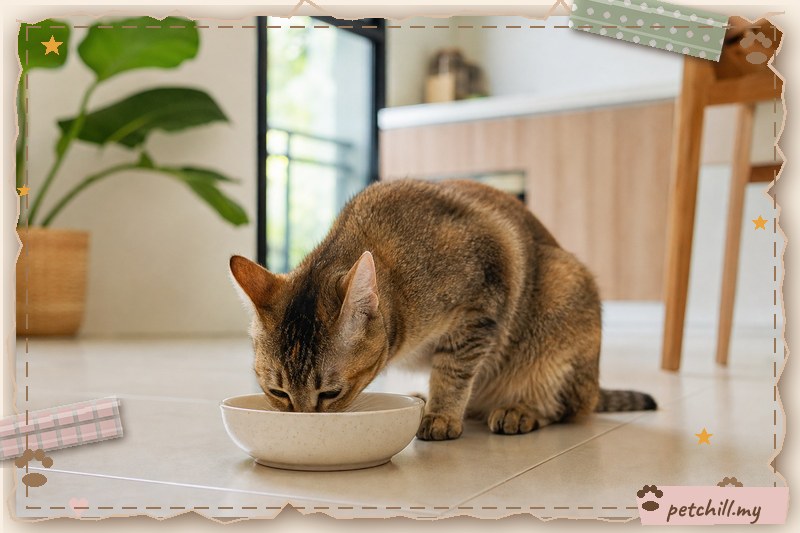
Water is the quiet nutrient. Cats with low water intake are more prone to urinary crystals and may be at higher risk of kidney problems over time, although the relationship is complex. Wet food typically contains 70–80% moisture, so it contributes meaningfully to daily water intake.
Even on wet food, always provide fresh water in clean bowls. Some cats prefer wide ceramic or stainless steel bowls, and some drink more from a running tap or pet fountain. Place water away from the food bowl and litter tray. In hot Malaysian weather, change water at least once daily and more often if it warms up.
If your cat has a history of urinary blockages, kidney disease or diabetes, hydration is a medical issue. Ask your vet whether a wet diet is appropriate and which type.
How to switch from dry to wet food
Some cats take to wet food immediately. Others are suspicious, especially cats that have eaten only dry food for years. A gradual transition over 7–10 days is kinder on the gut and reduces the chance of refusal.
- Start with a small spoon of wet food mixed into the usual dry ration.
- Increase the wet proportion every two to three days if stools remain normal.
- Warm the wet food slightly to release aroma; cats rely heavily on smell.
- Offer wet food at times when your cat is hungry, not after a large dry meal.
- If your cat refuses, try a different texture or flavour, or a pâté versus shreds.
- Never withhold food to force a switch. Cats can develop serious liver problems if they stop eating for more than a day or two.
If your cat has a medical condition, plan the switch with your vet. Some prescription diets come only in dry form, and some cats need a specific texture or protein level.
Storing and serving wet food safely in Malaysia's climate
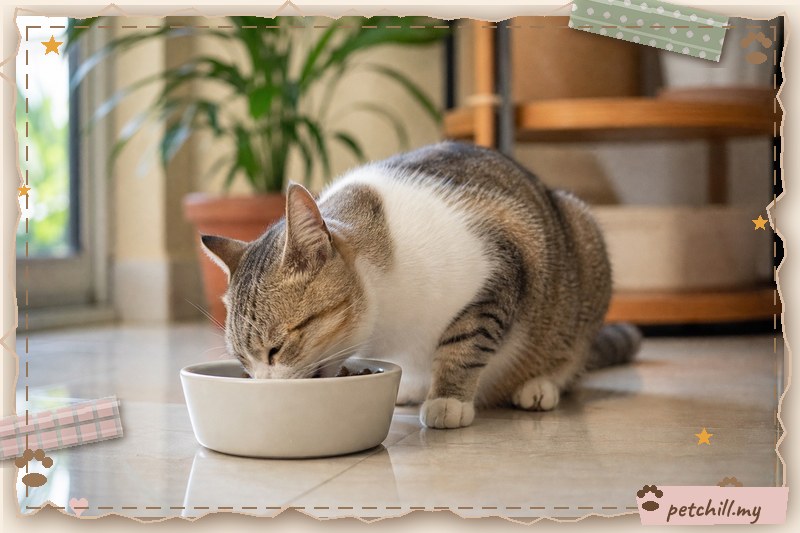
Heat and humidity are hard on opened wet food. Follow these habits:
- Refrigerate opened portions immediately in a covered container.
- Use within the time stated on the label, often 24–48 hours.
- Do not leave uneaten wet food down for more than about 30–60 minutes.
- Serve at room temperature or slightly warm; cold food smells less and may be refused.
- Do not microwave in the pouch or can. Transfer to a bowl and stir to avoid hot spots.
- Wash bowls after every meal with hot soapy water.
- Keep flies away; covered feeders or a clean feeding area help.
- If the food smells sour, looks discoloured or has changed texture, throw it out.
In a Kuala Lumpur apartment, a covered feeding station near an air-conditioned room can slow spoilage, but refrigeration is still essential. In a Johor terrace house, flies and ants are common concerns, so rinse bowls promptly and store food sealed.
Wet food for kittens, seniors and cats with health issues
Kittens need growth-formula wet food, fed three to four times daily. Wet food is often easier for small mouths and helps with hydration during weaning. Choose a complete kitten product and follow the label.
Senior cats often benefit from wet food because it is easier to chew, smells stronger and adds water. Muscle loss is common in older cats, so monitor weight and body condition. Some seniors need softer textures or higher-protein diets, but kidney disease may call for restricted protein and phosphorus. These decisions should be made with your vet.
Cats with dental disease may prefer wet food, but wet food does not clean teeth. If your cat has sore gums, soft food can help it eat while you arrange dental care. Cats with diabetes need consistent meals and careful carbohydrate control; ask your vet before changing diet.
Common mistakes to avoid
- Feeding only complementary wet food as the main diet, which can cause nutrient deficiencies.
- Guessing portions without checking the calorie label.
- Leaving wet food out for hours in warm weather.
- Switching foods abruptly and causing diarrhoea.
- Using wet food as a treat on top of a full dry ration, leading to weight gain.
- Assuming all wet foods are equal; protein, fat and mineral levels vary.
When to see a vet
Contact a veterinarian if your cat stops eating for more than 24 hours, vomits repeatedly, has diarrhoea lasting more than a day, strains to urinate, or shows blood in urine or stool. Seek urgent care if a male cat is straining to urinate with little or no output, as this can be a life-threatening blockage. Also see a vet if your cat is losing weight despite eating, drinking excessively, or has bad breath and drooling that suggest dental disease. Sudden refusal of a favourite wet food can be an early sign of illness, not just fussiness.
Vet disclaimer
This guide is general information for Malaysian cat owners and does not replace veterinary advice. Feeding needs vary with age, weight, health status and lifestyle. Always consult a licensed veterinarian for a diet plan tailored to your cat, especially if it has a medical condition, is pregnant or nursing, or is a growing kitten.
Related reading
- Cat Food Guide Malaysia 2026: How to Choose Dry, Wet & Prescription Food
- Cat Staple Canned Food in Malaysia: How to Spot a Complete & Balanced Can
- Dry Cat Food Feeding Guide for Cats: How Much, How Often and How to Do It Right
- Wet Cat Food for Cats in Malaysia: A Practical Feeding Guide
- Wet vs Dry Cat Food in Malaysia: Water, Cost and How to Choose
- Best Hairball Control Food for Cats in Malaysia: A Practical Buying Guide
- Best Halal Cat Food in Malaysia: A Practical Buying Guide
- Best High-Protein Cat Food in Malaysia: How to Choose (2025 Guide)
- Best Senior Cat Food in Malaysia: A Practical Buying Guide
- Cat Food in Malaysia: How to Read the Label, Compare Protein and Budget Monthly
- Dry Cat Food for Cats in Malaysia: A Practical Feeding Guide
- Halal Cat Food Feeding Guide for Cats: What Malaysian Owners Need to Know

