
The short answer
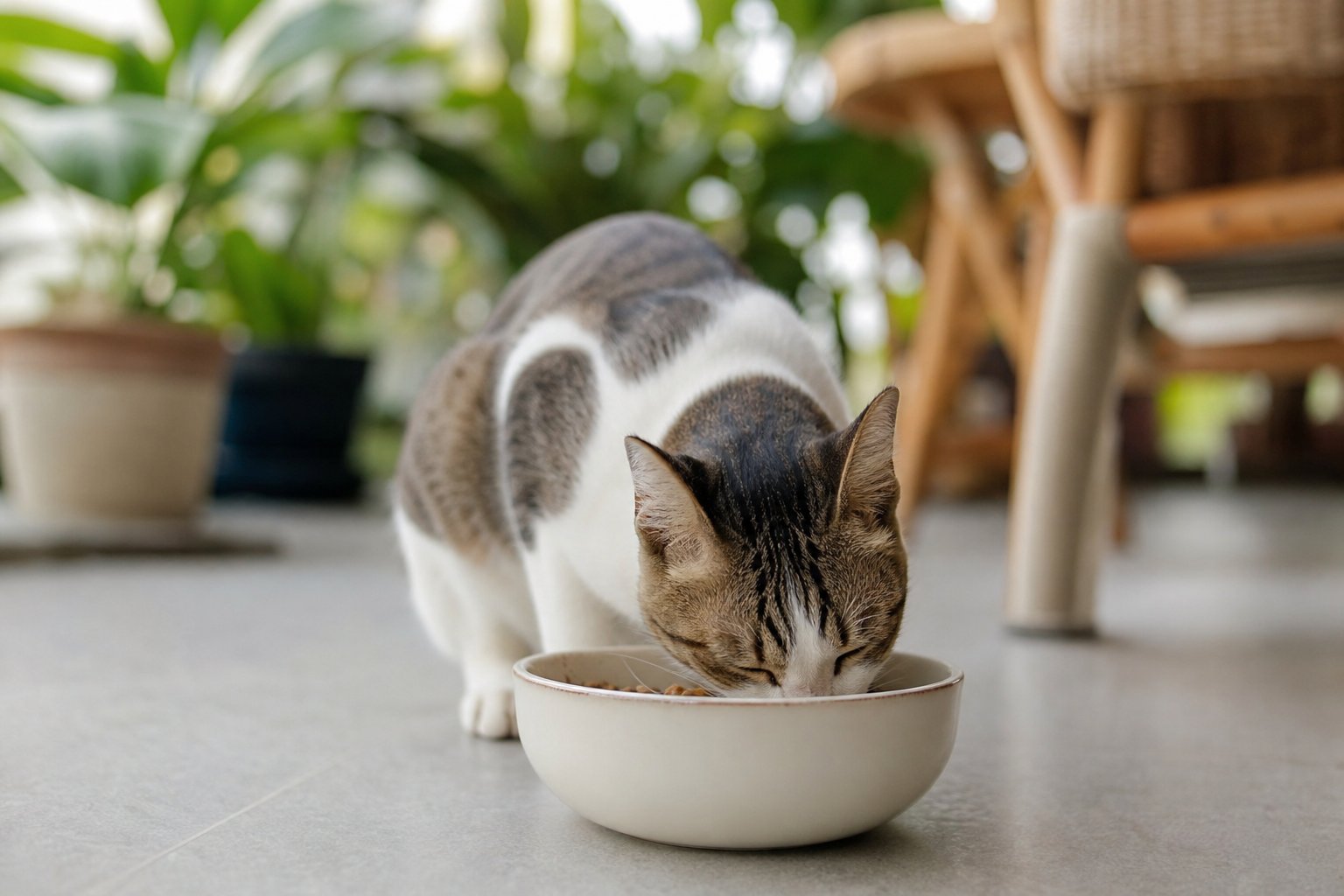
Hairball control food works on one main principle: extra insoluble fibre helps swallowed hair move through the gut and leave in the stool instead of clumping in the stomach. So when you choose one, look for a complete adult diet with a named animal protein first, a clearly stated fibre source such as cellulose or beet pulp, and a guaranteed analysis you can compare. Then support it with grooming, water and play.
Hairballs are common in Malaysian homes because many cats live indoors, groom constantly and shed year-round in a warm, humid climate. Food is one part of the plan, not the whole plan.
What a hairball actually is
A hairball, more accurately called a trichobezoar, is a mat of hair that collects in the stomach. Cats spend a large part of the day grooming, and the rough surface of the tongue pushes loose hair down the throat. Most of that hair passes through the digestive tract unnoticed. Sometimes it accumulates, irritates the stomach lining and is vomited up as a tubular clump.
Long-haired breeds and heavy shedders produce more. So do cats that over-groom because of stress, fleas or skin irritation. That is why hairball food is only one lever: if your cat is grooming excessively, the underlying reason needs attention too.
How hairball control diets are formulated
The usual approach is a moderate increase in crude fibre, often from insoluble sources. Insoluble fibre adds bulk and speeds transit, so hair is carried out rather than retained. Some formulas also include soluble fibre, which ferments in the gut and supports the microbiome.
What these diets generally do not do:
- They do not dissolve hair already in the stomach.
- They do not stop shedding.
- They do not replace brushing.
- They are not a treatment for a blockage.
Think of them as maintenance nutrition for a cat prone to hairballs, not a medicine.
Read the label like an editor
When you compare bags or cans, work through this checklist in order.
- Life stage statement. It should say complete food for adult maintenance. Kitten and all-life-stages formulas are built for growth and are usually not the right fit for hairball management.
- First ingredient. A named animal protein such as chicken, fish or turkey should lead. "Meat and animal derivatives" tells you little.
- Fibre source. Look for cellulose, beet pulp, psyllium, rice bran or similar. A formula that claims hairball control but shows only a modest fibre number deserves a closer look.
- Guaranteed analysis. Compare crude fibre, crude protein, fat and moisture across products. Higher fibre is the point, but very high fibre can reduce calorie density and palatability.
- Calorie content. Check the kcal per kilogram or per can. Hairball formulas vary widely, and an indoor cat eating a dense diet can gain weight quickly.
- Taurine and complete nutrition. Any diet you feed long term must be complete, with taurine, balanced minerals and vitamins declared.
- Palatability clues. Fat level, texture and smell matter. A food your cat refuses helps nobody.
- Batch and expiry clarity. Buy from retailers with clear stock rotation, especially in a humid climate where fats can turn rancid.
Fibre types compared
| Fibre approach | Typical source | What it does | Watch-outs |
|---|---|---|---|
| Insoluble fibre boost | Cellulose, rice bran, pea fibre | Adds bulk, speeds transit, helps hair pass in stool | Too much can loosen stool or reduce nutrient absorption |
| Soluble fibre | Beet pulp, psyllium, inulin | Ferments, supports gut bacteria, softens stool | Can cause gas if increased too fast |
| Mixed fibre blend | Combination of the above | Balances transit and gut support | Harder to judge which component suits your cat |
| High-moisture wet diet | Water content, no added fibre focus | Supports hydration and digestion | Does not deliver the fibre dose of a hairball formula |
| Hairball paste or gel | Petroleum or oil-based lubricants | Lubricates the gut short term | Calorie-dense, not for every cat, ask a vet first |
There is no single best row. A cat that already has soft stool may do better on a moderate fibre increase, while a constipated cat needs a vet-led plan rather than a shopping decision.
Water matters as much as fibre
Fibre without water can backfire. Insoluble fibre needs moisture to move smoothly, and cats are famously poor drinkers. In a hot, humid Malaysian home, mild dehydration is easy to miss.
Practical steps:
- Feed at least one wet meal daily if your cat accepts it.
- Offer multiple water bowls in different rooms, refreshed daily.
- Try a circulating fountain if your cat prefers running water.
- Add a spoon of water to dry food and let it soak briefly before serving.
- Place bowls away from the litter tray and food-storage areas.
If your cat has a history of urinary problems, hydration deserves extra attention and a conversation with your vet.
Grooming does half the work
No food removes hair before it is swallowed. Brushing is the most direct intervention.
- Short-haired cats: brush two to three times a week.
- Long-haired cats: daily, with a slicker brush and a metal comb to reach the undercoat.
- During heavy shedding, increase frequency and check behind the ears and under the belly where mats form.
- Use grooming as a calm routine, with treats, so it does not become a wrestling match.
- Check for fleas and skin irritation, since itchy skin drives over-grooming.
In a Kuala Lumpur apartment with air-conditioning running most of the day, shedding patterns can shift and hair may collect on floors and furniture. A quick daily brush near the balcony door keeps both the cat and the home cleaner.
Transitioning without upsetting the gut
Sudden diet changes cause loose stool and refusal. Use a gradual swap.
| Day | Old food | New food |
|---|---|---|
| 1-2 | 75% | 25% |
| 3-4 | 50% | 50% |
| 5-6 | 25% | 75% |
| 7-10 | 0% | 100% |
Feed at the same times each day, keep portions measured, and note stool quality. If diarrhoea lasts more than a couple of days, slow down and speak to your vet.
Matching the food to your cat
Age, weight and lifestyle change the calculation.
- Young adults in good body condition can move straight to a complete adult hairball formula.
- Senior cats need a vet check first, because weight loss, dental pain and kidney disease can all look like fussy eating.
- Indoor, less active cats need portion control; hairball formulas are not automatically lower in calories.
- Multi-cat homes make it hard to control intake. Feed separately or use microchip feeders if one cat needs a specific diet.
- Cats with existing conditions such as diabetes, kidney disease or food allergies should not switch to a high-fibre diet without veterinary advice.
A Johor terrace house with several cats sharing a bowl is a classic scenario: one cat needs hairball support, the others do not. Separate feeding stations solve more problems than any label claim.
What about treats, pastes and supplements?
Hairball pastes and gels are widely sold and often contain lubricating oils. They can help short term but add calories and are not appropriate for every cat. Treats marketed for hairballs usually deliver very little fibre. If you want to add a fibre supplement, ask your vet for a dose based on your cat's weight and health history rather than guessing from the packet.
Common mistakes
- Feeding a hairball formula and skipping brushing entirely.
- Free-feeding dry food so the cat grazes all day and gains weight.
- Switching brands abruptly and blaming the new food for diarrhoea.
- Assuming every vomit is a hairball; vomiting can signal many other problems.
- Using a kitten formula for an adult cat because the cat likes the taste.
- Stacking multiple hairball products at once, making it impossible to tell what helps.
When to see a vet
See a vet promptly if you notice any of the following:
- Repeated retching or unproductive vomiting.
- Vomiting more than once or twice a week.
- Hairballs in a cat that is also losing weight or eating less.
- Constipation, straining in the litter tray, or no stool for more than a day or two.
- A swollen, firm or painful abdomen.
- Lethargy, hiding, or a sudden change in behaviour.
- Hairballs in a kitten or a cat that has never had them before.
A true intestinal blockage is serious and can worsen quickly. Do not wait to see whether a hairball passes if your cat is unwell.
A simple weekly routine
- Brush daily for long-haired cats, every other day for short-haired cats.
- Serve measured meals, with at least one wet meal where possible.
- Refresh water bowls and clean them properly.
- Scoop the litter tray daily and note stool size and frequency.
- Weigh your cat monthly on a kitchen scale, or use a vet clinic scale.
- Review the food label every few months and adjust portions to body condition.
Bottom line
Choosing a hairball control food comes down to a complete adult diet, a named protein first, a clear fibre source and a calorie count that suits your cat. Pair it with grooming, hydration and sensible portions, transition slowly, and let your vet handle anything that looks like more than a hairball.
This article is general information for Malaysian cat owners and is not a substitute for veterinary advice. Always consult a licensed veterinarian about your cat's diet and health.
Related reading
- Cat Food Guide Malaysia 2026: How to Choose Dry, Wet & Prescription Food
- Best Dry Cat Food for Cats in Malaysia: A Practical Buying Guide
- Best Food Transition for Cats in Malaysia: A Step-by-Step Guide
- Best High-Protein Cat Food in Malaysia: How to Choose (2025 Guide)
- Best Raw Cat Food for Cats in Malaysia: A Practical Buying Guide
- Best Senior Cat Food in Malaysia: A Practical Buying Guide
- Best Urinary Care Cat Food in Malaysia: How to Choose (2025 Guide)
- Best Wet Cat Food in Malaysia: A Practical Buying Guide
- Cat Food Recommendation Malaysia: 8 Scenarios, Label Checks and Daily-Cost Thinking

