
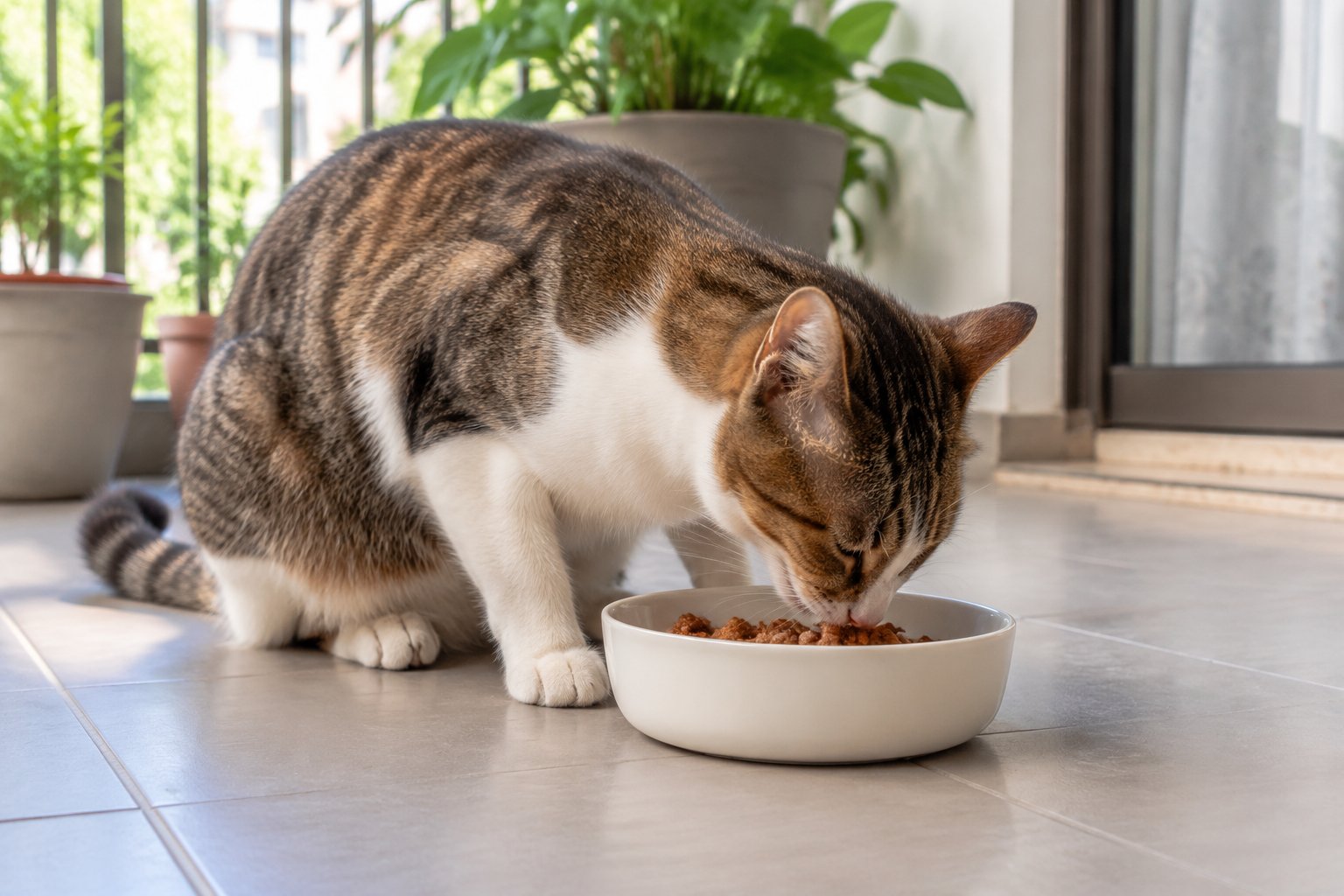
Start with a real diagnosis, not a guess
Weight control cat food only works when it is part of a plan built on facts: your cat's current weight, a realistic target weight, and a daily calorie allowance. Many owners in Malaysia buy a "light" or "weight management" bag because the cat looks round, then feed it by eye and wonder why nothing changes.
Before you buy anything, get your cat weighed on a proper scale, ideally at a clinic. Ask your vet to record a body condition score. That score, plus the weight, tells you whether your cat is genuinely overweight, mildly heavy, or simply a large-framed cat. It also gives you a baseline to compare against in four weeks.
This matters because cats are individuals. A small-framed cat at 5 kg may be obese, while a big-framed cat at 5 kg may be fine. Without a baseline, you cannot tell whether the diet is working.
How to tell if your cat is carrying too much weight
You can do a useful check at home in under a minute. Use your hands and eyes together.
- Ribs: run your palms along both sides of the chest. You should feel ribs under a thin layer of fat, like the back of your hand. If you have to press firmly, there is excess fat.
- Waist: look from above. There should be a visible narrowing behind the ribs. A straight or bulging line suggests excess weight.
- Belly tuck: look from the side at eye level. The belly should tuck up slightly toward the hind legs. A hanging belly that swings when the cat walks is a warning sign.
- Activity: note how often your cat jumps onto furniture, climbs, or plays. Reduced jumping and shorter play sessions often accompany weight gain.
- Grooming: overweight cats struggle to reach their lower back and tail base, which can lead to matting and skin problems.
If two or more of these point the same way, book a weigh-in. Do not start a restrictive diet on a hunch, especially for a cat that has other health issues.

What weight control cat food actually does
A weight control diet is not simply "less food". It is formulated so that calories are reduced while protein, vitamins and minerals remain adequate. The main levers formulators use are:
- Lower calorie density — fewer calories per gram, so a normal-looking bowl delivers less energy.
- Higher fibre — fibre adds bulk and helps the cat feel fuller, and can support digestion.
- Higher protein relative to calories — helps preserve muscle during weight loss.
- Added nutrients — such as L-carnitine in some formulas, though the evidence for dramatic effects is modest and it is not a substitute for portion control.
A key point for Malaysian owners: "light" and "weight management" are marketing terms, not regulated guarantees. Two bags with similar wording can differ a lot in calories per 100 g. Always compare the calorie statement, usually printed as ME (metabolizable energy) in kcal per kg or kcal per 100 g.
Reading the label like an editor
When you compare products on a shelf or an online listing, work through this checklist.
| What to check | Why it matters | What to look for |
|---|---|---|
| Calorie statement (kcal/kg or kcal/100 g) | Lets you calculate a daily portion accurately | A clear ME figure, not just "low calorie" wording |
| Complete and balanced claim | Prevents nutrient gaps when portions shrink | A statement that the diet meets a recognised nutrient profile for adult cats |
| First ingredient | Gives a rough sense of the main protein source | A named animal protein such as chicken, fish or turkey |
| Protein level | Helps protect muscle during weight loss | Generally a higher protein level relative to calories |
| Fibre level | Supports fullness and digestion | Moderate fibre; very high fibre can cause loose stools in some cats |
| Feeding guide | A starting point, not a prescription | A guide based on current or target weight, which you then adjust |
| Life stage | Prevents feeding a growth diet to an adult | "Adult maintenance" or "weight management" for adult cats |
Two practical notes. First, feeding guides on bags are usually generous and are based on active cats; indoor cats often need less. Second, if your cat has kidney disease, diabetes, urinary problems or a history of bladder stones, do not choose a diet on your own. Some weight control diets are not appropriate for those conditions, and your vet needs to pick.
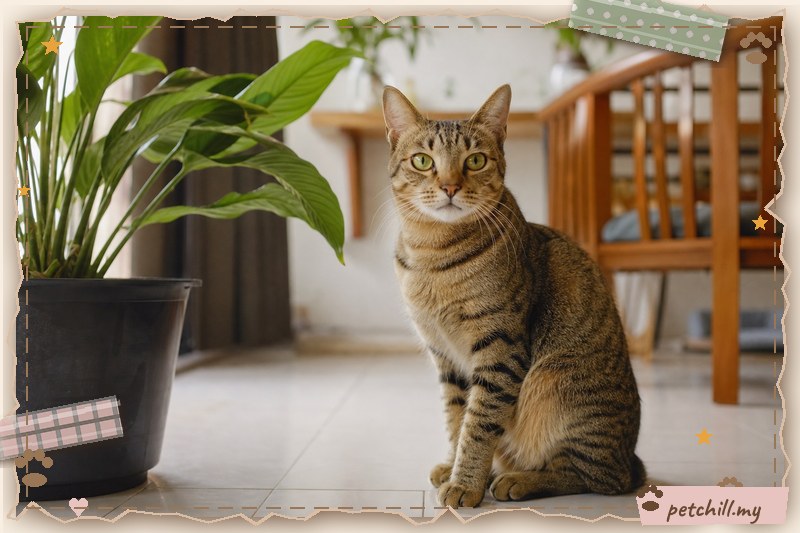
How much to feed: the maths that actually works
You need three numbers: your cat's current weight, a target weight, and the calorie content of the food.
Step 1 — Estimate resting energy. A common starting formula for weight loss in cats is roughly 0.8 × (ideal body weight in kg)^0.75 × 70 kcal. This is a starting estimate, not a law of nature.
Step 2 — Convert to grams. Divide the daily calorie target by the food's kcal per gram. For example, if a dry food provides 3.5 kcal per gram and your target is 200 kcal per day, that is about 57 g per day.
Step 3 — Weigh, don't scoop. Kitchen scales are cheap and far more accurate than cups, especially with kibble. Scoop size varies with how the bag settles.
Step 4 — Split the daily ration. Two or three small meals are usually better than one large bowl, and they reduce begging. If you use puzzle feeders or a snuffle mat, you can spread part of the ration out to slow eating.
Step 5 — Recheck every two weeks. If your cat is losing roughly 0.5 to 1 percent of body weight per week, keep going. If weight is static for three weeks, reduce calories slightly, by around 10 percent, rather than cutting drastically. If loss is faster than about 1.5 percent per week, increase slightly and speak to your vet.
A worked example you can adapt
Suppose your cat weighs 6 kg and your vet suggests a target of 5 kg. Using the estimate above, the starting calorie target is around 0.8 × 5^0.75 × 70, which comes out near 190 to 200 kcal per day. If your chosen dry food is 3.5 kcal per gram, that is roughly 55 to 57 g daily, split into two meals of about 28 g.
Now suppose you also give a few treats. Treats should generally stay under about 10 percent of daily calories. If a treat is 2 kcal each, five treats is 10 kcal, which is fine, but a handful of larger treats can quietly add 40 or 50 kcal and stall progress. Count them.
These numbers are a starting point. Your vet may adjust them based on your cat's age, activity, muscle condition and other health issues.
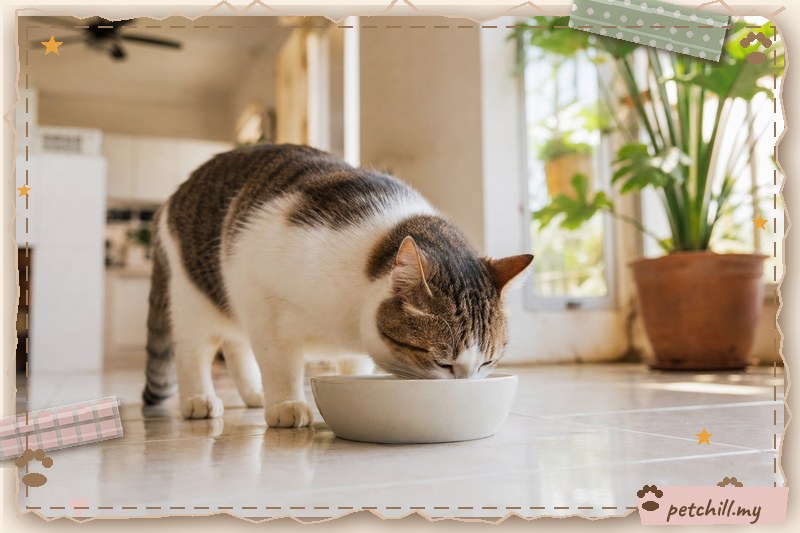
Wet food, dry food and mixing
There is no single best format. What matters is total calories and completeness.
- Dry weight control diets are convenient, easy to measure and can be left out briefly. They are useful in homes where the cat is alone during working hours.
- Wet weight control diets add water, which can help with satiety and hydration. In a hot, humid climate, extra water intake is a genuine plus for many cats.
- Mixed feeding can work well: a measured portion of dry plus a measured portion of wet, with the calories added together. The risk is double-counting or forgetting the wet food when calculating.
If you mix, write the daily plan on a card and stick it on the fridge. In shared homes, this prevents a well-meaning family member from topping up the bowl.
Transitioning safely
Cats are notoriously suspicious of new food, and a sudden switch can cause vomiting or diarrhoea. Use a gradual plan.
- Days 1 to 3: about 25 percent new food, 75 percent old.
- Days 4 to 6: about 50/50.
- Days 7 to 9: about 75 percent new, 25 percent old.
- Day 10 onward: all new food, if stools are normal and your cat is eating willingly.
If your cat picks out the old food and leaves the new, try warming wet food slightly, or mix thoroughly rather than layering. If your cat refuses to eat for more than 24 hours, contact your vet. Cats that stop eating can develop hepatic lipidosis, a serious liver problem, and this risk is higher in overweight cats.
Enrichment and exercise: the other half of the plan
Food alone rarely solves the problem. Increasing activity helps preserve muscle and supports mood.
- Short, frequent play: two or three sessions of five to ten minutes with a wand toy are more realistic than one long session.
- Food puzzles: scatter feeders and puzzle bowls slow eating and add mental work.
- Vertical space: cat trees and shelves encourage climbing, which is useful in apartments with limited floor space.
- Laser toys with a finish: always end with a physical toy or treat so the cat gets a sense of completion.
- Window time: bird-watching is low-calorie enrichment and reduces boredom-driven begging.
Common mistakes that stall progress
- Free-feeding dry food. An open bowl makes calorie control impossible. Measure every meal.
- Ignoring treats and human food. A few bites of chicken or fish add up quickly.
- Feeding the bag's suggested amount without adjusting. Guides are starting points.
- Multiple feeders in a multi-cat home. One cat may be eating the other's ration. Feed separately or use microchip feeders.
- Weighing monthly instead of fortnightly. Slow drift goes unnoticed.
- Cutting food drastically. This risks nutrient gaps and muscle loss.
- Assuming a "light" label means free-feeding is fine. It does not.
When to see a vet
Contact a veterinarian promptly if your cat:
- stops eating for more than 24 hours, or eats very little for two days;
- loses weight rapidly, or loses weight despite eating normally;
- vomits repeatedly, has diarrhoea lasting more than a day, or seems lethargic;
- shows increased thirst and urination, which can signal diabetes or thyroid disease;
- has a pre-existing condition such as kidney disease, diabetes, urinary stones or heart disease;
- is pregnant, nursing, or under one year old, as weight control diets are not appropriate;
- develops weakness, jaundice, or a dull coat during a diet.
Also see your vet before starting any weight loss plan if your cat has never been formally assessed. A quick check can rule out medical causes and set a safe target.
A simple four-week tracking sheet
| Week | Weight (kg) | Food (g/day) | Treats (kcal/day) | Body condition note | Action |
|---|---|---|---|---|---|
| 0 | 6.0 | 57 | 10 | Ribs hard to feel, no waist | Start plan |
| 2 | 5.85 | 57 | 10 | Slight waist visible | Continue |
| 4 | 5.7 | 57 | 10 | Ribs easier to feel | Continue |
| 6 | 5.7 | 52 | 10 | No change | Reduce 10 percent |
Keep the sheet somewhere visible. In shared households, it also settles arguments about who fed the cat.
Local contexts worth planning for
In a Kuala Lumpur apartment, space is limited and cats often get less climbing opportunity. A tall cat tree near a window and a puzzle feeder can replace some of the activity a garden would provide. Air-conditioning also means cats may be less thirsty, so wet food can help with water intake.
In a Johor terrace house, cats may have more room to roam indoors, but multi-cat households are common and free-feeding is tempting. Separate feeding stations, or microchip feeders, prevent one cat from finishing another's portion. During the rainy season, indoor play becomes more important when outdoor time is limited.
Bottom line
Weight control cat food is a tool, not a solution on its own. Confirm your cat is overweight with a vet, choose a complete diet with a clear calorie statement, weigh portions on a kitchen scale, count treats, transition slowly, and track weight every two weeks. Adjust in small steps. If your cat stops eating or loses weight too fast, call your vet rather than pushing on.
This article is general information for Malaysian cat owners and is not a substitute for veterinary advice. Always consult a licensed veterinarian about your cat's diet, weight and health.
Related reading
- Cat Food Guide Malaysia 2026: How to Choose Dry, Wet & Prescription Food
- Best Hypoallergenic Cat Food in Malaysia: A Practical Guide for Itchy, Scratching Cats
- Food for Picky Cats: A Feeding Guide for Malaysian Cat Owners
- Food for Picky Cats in Malaysia: A Practical Feeding Guide
- How to Choose Food for Picky Cats: A Malaysian Guide
- Hypoallergenic Cat Food in Malaysia: A Practical Guide for Itchy, Scratchy Cats
- Urinary Care Cat Food for Cats in Malaysia: A Practical Guide
- Best Dry Cat Food for Cats in Malaysia: A Practical Buying Guide
- Best Food for Picky Cats in Malaysia: A Practical Feeding Guide

