
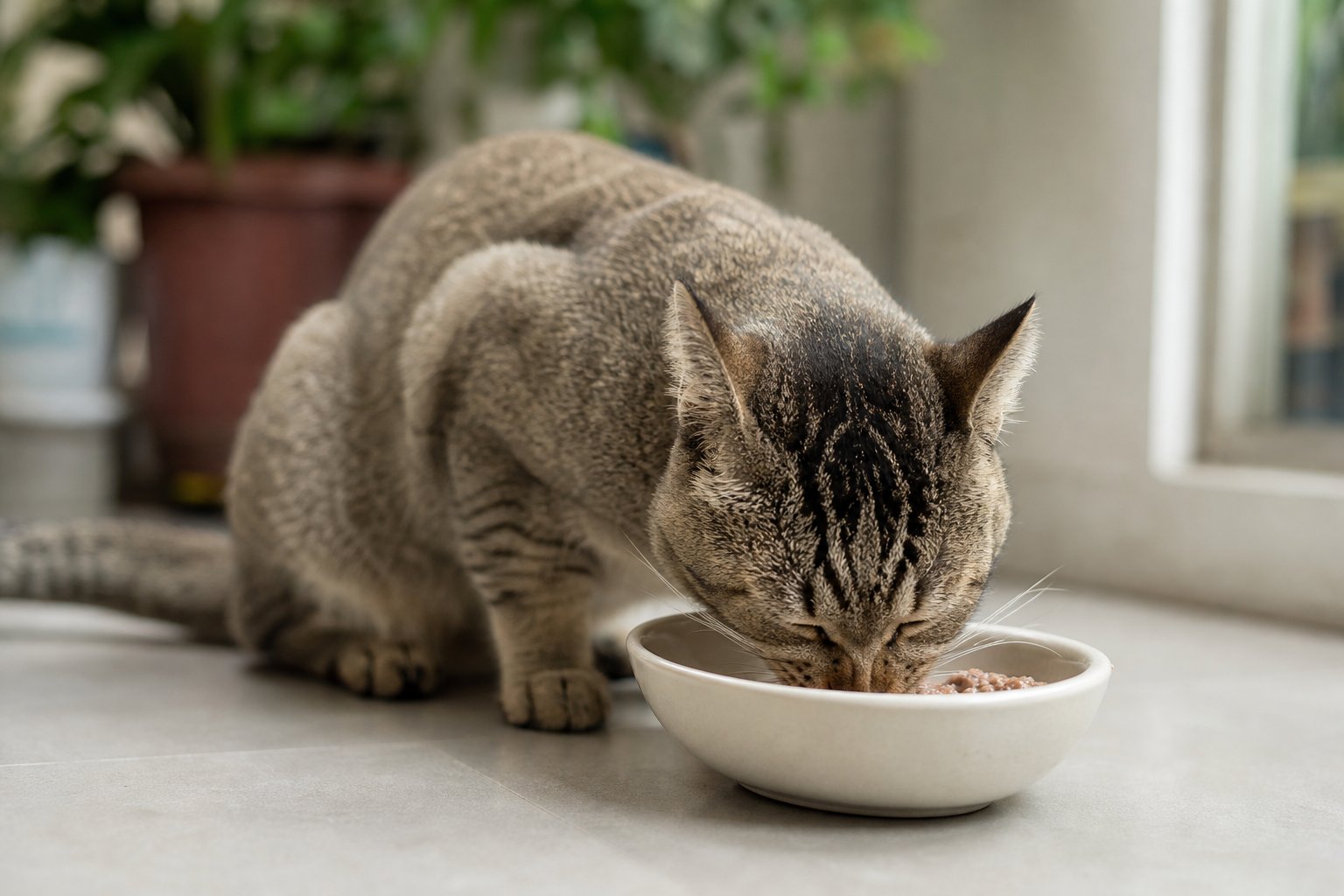
Quick answer
Orijen is a Canadian high-protein kibble with roughly 40% crude protein and named fresh meats in the first five ingredients. It suits healthy, active adult cats whose owners want a meat-first grain-free formula. It is not appropriate for cats with kidney disease, and sensitive stomachs need a slow 10–14 day transition. Local prices vary, so confirm with a Malaysian retailer.
What is Orijen and who makes it?
Orijen is produced by Champion Petfoods, a Canadian company founded in 1985 and based in Alberta. It is a sister brand to ACANA. The brand's core claim is "biologically appropriate" food — recipes designed to mirror what a cat would eat as a hunter.
A few background points matter when you are judging the price:
- The company runs its own kitchens rather than outsourcing production.
- It controls its own ingredient sourcing and testing.
- It has been recommended by Whole Dog Journal, a US publication, multiple times.
Those choices cost money, which is part of why Orijen sits in the premium tier. Whether that premium is worth it depends on your cat's health and your budget, not on the brand story alone.
Ingredient breakdown: what is actually in the bag?
Protein sources: named fresh meat first
On the flagship Original Cat formula, the first five ingredients are named fresh meats and organs, not meat meal or grains. A typical order looks like this:
- Fresh chicken
- Fresh turkey
- Fresh chicken liver
- Fresh herring
- Fresh chicken heart
Putting organs near the top reflects the WholePrey idea: liver supplies vitamin A, heart supplies taurine, and muscle meat alone is not the whole picture. Taurine is an essential amino acid for cats; a lack of it affects the heart and eyes. When you read any cat food label, check whether named organs appear, not just named muscle meat.
Guaranteed analysis (Original Cat)
| Nutrient | Amount |
|---|---|
| Crude protein | 40% |
| Crude fat | 20% |
| Crude fibre | 3% |
| Moisture | 10% |
| Ash | 8% |
40% crude protein is at the top of the dry-food market. 20% fat makes the food energy-dense, which means the actual scoop you feed can be smaller than with a standard kibble. More food is not better; feed to total calories and body condition.
What replaces grains?
Orijen does not use corn, wheat or soy. It uses lentils, chickpeas and similar low-glycaemic ingredients for structure and fibre. Be clear on one point: grain-free does not mean carbohydrate-free. The source and proportion of carbs are different, but carbs are still present.
Orijen vs a typical supermarket kibble
| Feature | Orijen Original Cat | Typical grocery-store kibble |
|---|---|---|
| Crude protein | About 40% | Often 26–32% |
| First ingredients | Named fresh meats and organs | Often grains or meat meal |
| Grain-free | Yes | Usually no |
| Fat level | About 20% | Often 10–15% |
| Kibble size | Larger | Usually smaller |
| Price tier | Premium | Budget to mid |
| Best for | Healthy active adults | Budget feeding, some seniors |
This table is a general comparison, not a ranking. A budget kibble can be the right choice for a cat that cannot tolerate rich food, and a premium kibble is wasted on a cat that refuses it.
Price and monthly cost in Malaysia
Orijen is sold in several pack sizes, commonly around 1.8 kg and 5.4 kg, though stock varies. Malaysian prices differ by retailer, import batch and promotion, so we do not quote figures here. Ask your local pet shop or a trusted online seller for current pricing, and compare cost per kilogram rather than cost per bag.
To estimate your monthly spend:
- Check the feeding table on the pack for your cat's weight.
- Weigh the daily portion on a kitchen scale for one week.
- Multiply by 30 to get monthly grams.
- Divide by the pack size to see how many bags you need.
- Multiply by the current local price.
A 4 kg adult cat on a dense food like this typically eats less by volume than on a lower-calorie kibble, so the sticker price is not the whole story. Still, Orijen is a premium purchase, and long-term cost should be part of the decision.
Pros and cons at a glance
Pros
- About 40% crude protein, among the highest in dry food.
- Named fresh meats and organs at the top of the list, not meat meal filler.
- Grain-free with no artificial additives.
- Generally very palatable; many cats accept it quickly.
- Stable brand reputation and quality control.
Cons
- Premium price; budget for it monthly, not just once.
- High protein is unsuitable for cats with kidney disease.
- Kibble is on the larger side, which can be hard for kittens or seniors with dental problems.
- Soft stools are common during a fast transition because of the meat and fat density.
What to check when you open the bag
- Kibble size: Orijen pieces are larger than average. Kittens and older cats with bad teeth may need them soaked or may do better on another formula.
- Surface oil: Premium kibbles are often sprayed with oil. A slight sheen is normal. A rancid smell is not.
- Smell: A high fresh-meat recipe should smell meaty. No smell at all, or a sharp chemical smell, is a warning sign.
- First-meal reaction: Whether your cat eats on the first offering matters, but give it 3–5 days before judging.
Store the bag sealed in a cool, dry place away from direct sun. In Malaysia's heat and humidity, oil oxidises faster, so a large bag that takes months to finish is a risk. If your cat eats slowly, buy the smaller pack.
How to transition without soft stools
A slow switch is the single most useful thing you can do.
- Days 1–3: 25% Orijen, 75% old food.
- Days 4–6: 50/50.
- Days 7–10: 75% Orijen, 25% old food.
- Days 11–14: all Orijen, if stools are firm.
Watch the litter tray at each step. If stools loosen, hold at the current ratio for a few extra days instead of pushing forward. If you see watery diarrhoea, vomiting or a cat that stops eating for more than 24 hours, stop the new food and contact your vet.
Other practical points:
- Start below the bag's recommendation and adjust upward after two weeks based on body condition.
- Ensure water intake. Dry-food cats often drink too little. Add a little warm water to the kibble or include a wet food meal.
- Weigh monthly. High protein and fat still cause weight gain if you overfeed.
- Watch each cat separately in multi-cat homes. One cat may adapt well while another gets loose stools.
Who should consider Orijen — and who should not
Consider it if:
- Your cat is a healthy adult with no kidney or urinary diagnosis.
- Your cat is active and burns a lot of energy.
- Your cat does not tolerate grains well.
- You are willing to pay a premium and store the food properly.
Skip it or ask your vet first if:
- Your cat has kidney disease or a urinary condition. These cats usually need a prescribed renal or urinary diet with controlled protein and phosphorus.
- Your budget is tight. The sister brand ACANA is often a more affordable middle ground.
- Your cat is a senior with dental problems. Large kibble may be difficult; soaking or wet food can help.
- Your cat has a history of pancreatitis or fat intolerance. The 20% fat level may be too rich.
When to see a vet
Contact a veterinarian if you notice any of the following:
- Diarrhoea or vomiting that lasts more than 24–48 hours.
- Soft stools that continue beyond two weeks after a slow transition.
- Your cat stops eating or loses weight.
- Increased thirst and urination, which can be an early sign of kidney or urinary problems.
- Blood in the stool or litter box.
- Any cat already diagnosed with kidney disease being fed a high-protein food.
Bring the food packaging or a photo of the ingredient list and guaranteed analysis to the appointment. Your vet can assess whether the diet fits your cat's bloodwork and body condition.
Practical checklist for Malaysian homes
- Storage: Use an airtight container and keep it out of direct sun. In humid months, consider splitting a large bag into smaller portions.
- Portion control: Use a measuring scoop or scale, not a free-pour estimate.
- Water: Set out multiple water bowls and consider adding wet food.
- Multi-cat homes: Feed separately if one cat steals food.
- Purchase: Buy from a retailer that stores stock properly and check the expiry date and seal.
Bottom line
Orijen is a well-regarded premium kibble with a meat-first, grain-free recipe and about 40% protein. It can work well for healthy, active adult cats whose owners are prepared for the cost and the slow transition. It is not a universal food: cats with kidney disease should not eat it, sensitive stomachs need patience, and seniors with dental issues may struggle with the kibble size. Judge it against your own cat's health, not the brand's reputation.
This article is general information only and is not veterinary advice. Always consult a licensed veterinarian about your cat's diet, especially if your cat has a diagnosed health condition.
Related reading
- Cat Food Guide Malaysia 2026: How to Choose Dry, Wet & Prescription Food
- Cat Food in Malaysia: How to Read the Label, Compare Protein and Budget Monthly
- Freeze-Dried vs Air-Dried Cat Food in Malaysia: Which Suits Your Cat and Budget?
- Grain-Free Cat Food in Malaysia: What the Label Really Says (2026)
- Carrageenan and Gums in Malaysian Cat Food: What the 6 Common Thickeners Actually Do
- Cat Calorie Calculator Malaysia: RER & MER Formulas, Wet/Dry Food Grams
- Cat Calorie Calculator Malaysia: RER and MER Formulas, Plus Grams of Dry and Wet Food
- Cat Food Recommendation Malaysia: 8 Scenarios, Label Checks and Daily-Cost Thinking
- Cat Food Transition in Malaysia: The 10% Rule, a 10-Day Plan and Loose Stool Fixes
- Cat Gastroenteritis in Malaysia: Vomiting, Diarrhoea and Probiotics That Actually Have Evidence