
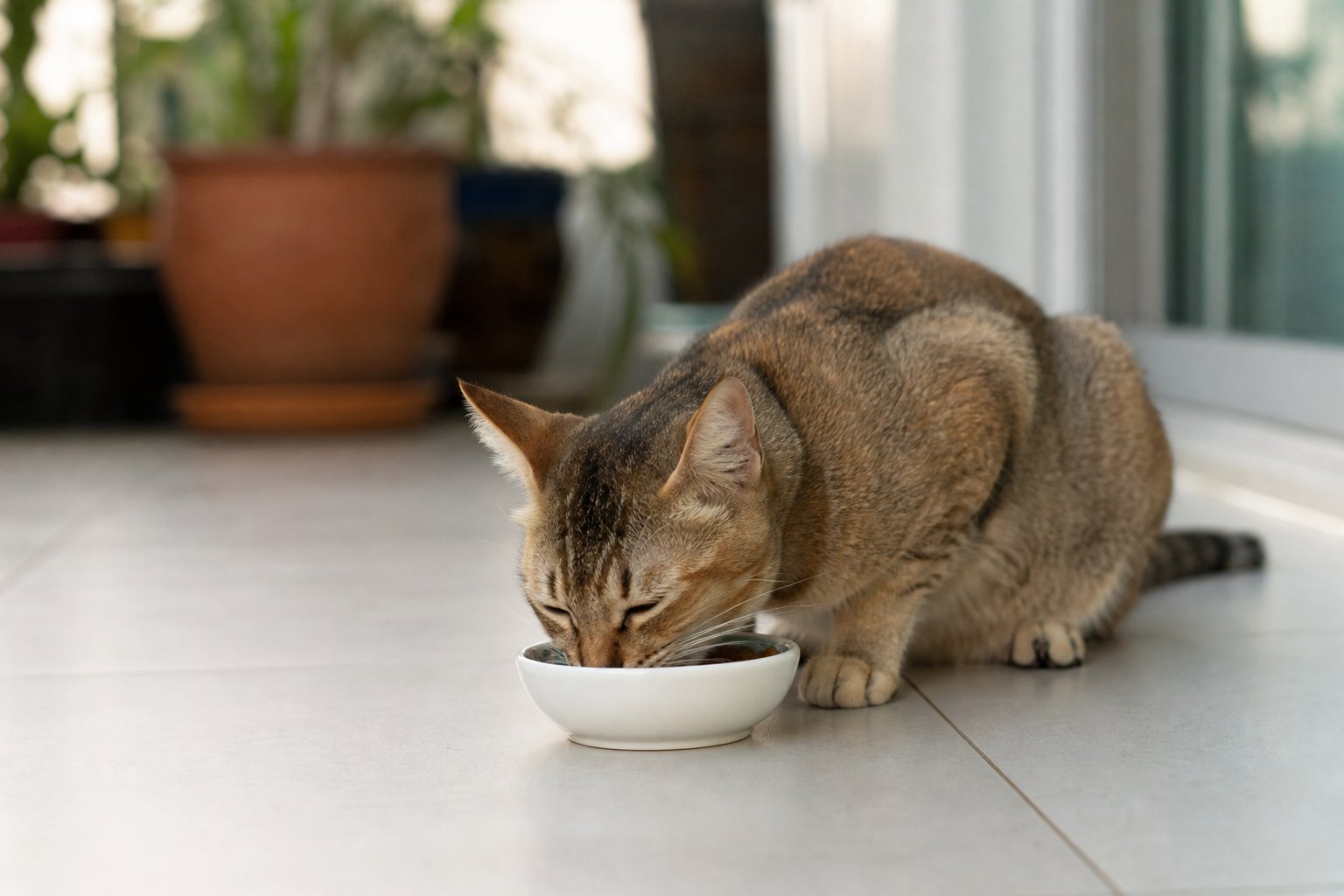
Quick answer: ACANA is a Canadian high-protein, low-carb cat food from Champion Petfoods, the same maker as ORIJEN. Animal ingredients make up roughly 60–75% of its recipes, so it suits healthy adult cats whose owners want a natural step up from supermarket food. Cats with kidney disease or any condition needing controlled protein should stay on a veterinary prescription diet. Prices vary in Malaysia — ask your vet or pet retailer.
What ACANA is, and who makes it
ACANA and ORIJEN come from one company: Champion Petfoods, a Canadian manufacturer that has been producing pet food since 1977 and makes its own recipes in its own plants rather than outsourcing the work. That shared origin matters, because both brands run on the same idea — feed cats and dogs the way nature intended, with plenty of animal material, minimal processing and very little grain-based filler.
The difference between the two is positioning, not principle. ORIJEN is the flagship: the highest possible share of animal ingredients, aimed at owners who want the most meat-dense food they can find. ACANA takes the identical sourcing standard and dials the animal proportion down slightly, which brings the cost down with it. The result is a food that follows the same recipe logic at a price more households can sustain month after month.
The core traits you are buying with ACANA are consistent across the range:
- High animal content — typically 60–75% animal ingredients, well above ordinary supermarket kibble
- Named fresh meats — chicken, fish and other specified ingredients rather than vague meat derivatives
- Low carbohydrate — grains are not used as the main bulking agent
- A single maker — one company controlling formulation and production
For a Malaysian owner, the practical takeaway is simple: ACANA is the brand's everyday high-protein option. It is not a prescription food, not a veterinary diet, and not automatically the right choice for every cat — but for a healthy adult cat, it is a well-established way to move away from grain-heavy economy food without jumping to the top of the price ladder.
ACANA vs ORIJEN: the sister-brand comparison
This is the question owners ask most often, and the answer sits almost entirely in two numbers: how much of the recipe is animal material, and how much protein that produces.
| Aspect | ACANA | ORIJEN |
|---|---|---|
| Animal ingredients | Roughly 60–75% | Around 85% and above |
| Crude protein (typical) | Around 35% | 40% and above |
| Country of manufacture | Canada | Canada |
| Relative price | More affordable | Premium |
| Positioning | Entry point to high-protein natural food | Ultra-high-meat flagship |
Read the table as a trade-off rather than a ranking. ORIJEN carries more meat and more protein, and you pay for it. ACANA keeps the same nutritional thinking — meat first, grains not used as filler — at a proportion that costs less to produce. Neither is objectively better; the right pick depends on your budget, your cat's age and activity, and how well the food is actually tolerated.
A sensible approach for most households: start with ACANA, feed it correctly for several weeks, and judge the result on stool quality, coat condition, muscle tone and weight. If your cat does brilliantly and budget allows, ORIJEN remains an upgrade path. If your cat has higher energy needs or you simply want the maximum meat content, ORIJEN is the step up. What you should not do is assume that a higher price automatically means a better fit for a particular cat.
Why "high protein, low carb" suits a cat's biology
Cats are obligate carnivores — they are built to eat animals, not plants, and several nutrients they need simply are not available in usable amounts from plant sources. Taurine, arachidonic acid, preformed vitamin A and niacin all come from animal tissue, which is why a meat-rich recipe is the natural baseline for feline nutrition.
Kibble creates a practical problem: dry food has to hold its shape, and holding shape usually means starch. Every manufacturer solves that differently. The supermarket approach is to use grain as the bulk of the ball, which pushes carbohydrate up and dilutes animal material. ACANA's approach is to lean on animal ingredients instead, so the finished food stays closer to a cat's natural dietary pattern.
What that delivers in practice:
- Steady muscle maintenance — adequate protein supports lean body mass, especially in active young adults
- Fewer empty carbohydrates — less starch per bowl, closer to a carnivore's natural intake
- Traceable ingredients — specified meats make it easier to judge what your cat is actually eating
The honest caveat: higher protein is not automatically superior for every cat at every stage of life. A young, active, healthy cat generally thrives on it. A sedentary senior, a cat with undiagnosed kidney changes, or a cat recovering from illness may not. Nutrition is contextual, and context comes from your vet, not from a marketing claim.
There is also a transition effect worth knowing about. A cat that has lived on high-grain food for years and switches too quickly to a rich, meat-heavy recipe often develops soft stool in the first week. That is usually a speed problem, not a food problem — which is exactly why the switching schedule below matters as much as the food itself.
Which cats suit ACANA, and which should not have it
Good candidates:
- Healthy, active adult cats — the primary audience, needing reliable protein to hold condition
- Owners upgrading from economy food — a clear step up in animal content without a flagship price
- Cats that tolerate rich food well — a stable gut handles the protein shift without drama
- Multi-cat households watching budget — high-protein feeding that stays affordable across several bowls
Proceed only with veterinary advice:
- Cats with kidney disease or reduced kidney function — high protein and phosphorus load can worsen the problem; prescription diets are designed for exactly this
- Cats with urinary tract history — mineral balance is carefully controlled in therapeutic foods and should not be overridden
- Cats needing precise therapeutic nutrition — diabetes, liver disease, gastrointestinal disorders and similar conditions
- Very senior cats — kidney decline is common with age, so a check-up before switching is money well spent
- Cats with delicate stomachs — they may need a slower transition than the standard schedule, or a different recipe altogether
One point worth repeating because it is the most common mistake: a healthy cat and a sick cat need opposite decisions. High-protein food is a reasonable choice for the first and a poor one for the second. Never diagnose by internet and never switch a diagnosed cat's food without the vet who manages that condition signing off first.
How to read an ACANA label in 60 seconds
You do not need a nutrition degree to judge a bag. Work through this checklist at the shelf or before you order online:
- First three ingredients — they should be named meats such as chicken or fish, not "meat meal", by-products or a grain listed first
- Crude protein figure — ACANA cat recipes sit around the 35% mark; always confirm on the actual packaging, as recipes differ between flavours
- Carbohydrate sources — look for what is doing the bulking; heavy corn, wheat or soy at the top of the list tells you where the money went
- Taurine and added vitamins — a complete main meal must supply these; a treat or complementary food is not a full diet
- Life stage — confirm whether the bag is for growth, all life stages, or adult maintenance. Kittens need growth-appropriate energy and mineral balance; not every formula qualifies
- Pack integrity and date — check the seal, the batch code and the expiry, and never buy a bag that is damp, torn or already open
Also read the back of the pack rather than trusting the front artwork. Front-of-pack claims are designed to sell; the analysis panel is designed to inform. When the two seem to disagree, the numbers on the back win.
Switching to ACANA over 7–10 days
Rushing this step is the single biggest cause of soft stool after a food change. Use this schedule and hold at any stage if stools deteriorate:
| Days | Old food | ACANA |
|---|---|---|
| 1–3 | 75% | 25% |
| 4–6 | 50% | 50% |
| 7–9 | 25% | 75% |
| Day 10 onwards | 0% | 100% |
During the transition, track four things daily — ideally in a note on your phone:
- Stool quality — firm and well-formed is the goal; banana-shaped is ideal
- Appetite — a cat that leaves food behind is giving you information
- Vomiting — an isolated hairball is different from repeated regurgitation after meals
- Water intake and litter box output — changes here can signal a problem faster than anything else
If stools soften, pause at the current ratio for another three days before moving up. If diarrhoea continues beyond a week, or the cat refuses the new food entirely, the formula may simply not suit that individual — try a different recipe in the range, or ask your vet.
A practical example: a Kuala Lumpur apartment cat fed on supermarket kibble for four years moves to ACANA. The owner starts on a Sunday, mixes by scoop rather than by eye, and photographs the litter tray each morning. Stools stay firm through the first stage, so the schedule holds. The second week is uneventful and the cat finishes every meal — the change is complete without a single day of mess. That is what a planned transition looks like when nobody gets impatient.
Buying and storing ACANA through Malaysian humidity
Tropical humidity is genuinely hard on dry food. Once a bag is opened, moisture and warm air start degrading both texture and nutrients, and the risk rises sharply during a wet stretch — a Penang rainy season means weeks of damp air finding its way into every cupboard.
Follow these habits:
- Buy the size you can finish — a smaller bag emptied within four to six weeks is better value than a large bag going stale halfway through
- Transfer immediately on opening — tip the whole bag into an airtight container rather than leaving it in the foil liner
- Keep the scoop dry — a damp hand or wet spoon introduces moisture with every serving
- Store away from heat and sun — not beside the stove, not in direct window light, not on a balcony
- Store off the floor — cupboards and shelves stay drier than the ground, especially during wet weather
- Date the container — write the opening date on the lid so nobody has to guess
- Buy through a proper retailer — check the seal and expiry on arrival; counterfeit or badly stored stock is the risk you cannot see from a photo
Clean the container monthly: empty it, wipe with a dry cloth, let it air completely before refilling. Old powder residue at the bottom goes rancid faster than fresh food and contaminates what you put on top of it.
When to see a vet
Contact your vet promptly if any of the following appears:
- Diarrhoea or very soft stool lasting more than five days after the switch
- Repeated vomiting — two or more episodes, or any vomiting lasting more than 24 hours
- Appetite loss for more than 24–48 hours, especially in a cat that normally eats eagerly
- Weight loss, lethargy or a dull coat that develops over days rather than hours
- Straining in the litter box, crying while urinating, or blood in urine — treat as urgent; urinary blockage can become life-threatening quickly
- Any cat with known kidney, urinary or metabolic disease — discuss the switch before you buy, not after
- Kittens, pregnant or nursing cats, and frail seniors — their nutritional requirements differ, and diet decisions should be made with professional input
Do not wait for a home remedy to work when a cat stops eating entirely or stops passing urine. Those two situations are emergencies, and no diet change should be attempted until the underlying problem is sorted out.
What you can do today
- Check your cat's health status first — kidney or urinary history means a vet conversation before any high-protein food
- Decide on a realistic budget and compare cost per kilogram, not just sticker price
- Take your label checklist to the shelf and verify the first three ingredients yourself
- Block out 7–10 days for the switch and start the mixing schedule on a day you will be home
- Buy a pack size you can finish in four to six weeks, and prepare an airtight container before it arrives
- Start a short daily log of stool quality, appetite and water intake so you have real evidence to share with your vet
This article is for general information only and does not replace professional advice. Nutrition decisions for kittens, seniors and cats with any medical condition should be made with a registered veterinarian.
Related reading
- Cat Food Guide Malaysia 2026: How to Choose Dry, Wet & Prescription Food
- Orijen Cat Food Review Malaysia 2026: High-Protein Kibble, Ingredient Breakdown & Feeding Guide
- Cat Food in Malaysia: How to Read the Label, Compare Protein and Budget Monthly
- Cat Gastroenteritis in Malaysia: Vomiting, Diarrhoea and Probiotics That Actually Have Evidence
- Grain-Free Cat Food in Malaysia: What the Label Really Says (2026)
- Carrageenan and Gums in Malaysian Cat Food: What the 6 Common Thickeners Actually Do
- Cat Calorie Calculator Malaysia: RER & MER Formulas, Wet/Dry Food Grams
- Cat Calorie Calculator Malaysia: RER and MER Formulas, Plus Grams of Dry and Wet Food
- Cat Food Recommendation Malaysia: 8 Scenarios, Label Checks and Daily-Cost Thinking
- Cat Food Transition in Malaysia: The 10% Rule, a 10-Day Plan and Loose Stool Fixes
- Cat Picky Eater Malaysia: Why Your Cat Refuses Food and What Actually Works