
The short answer
The best dry cat food for your cat in Malaysia is not a single brand. It is a complete-and-balanced formula that matches your cat's life stage, body condition and health needs, lists a named animal protein near the top, and fits your budget and storage situation. Start with the label, not the marketing.
Why dry food is popular in Malaysian homes
Dry food is convenient, shelf-stable and easy to portion. In apartments and terrace houses, it is simple to leave a measured bowl while you are at work, and it costs less per meal than most wet foods. The trade-off is moisture: dry food typically contains around 6-10% water, while cats evolved to get much of their water from prey. That does not make dry food bad, but it means water intake and urinary health deserve attention.
Malaysia's warm, humid climate adds a practical factor. Dry food absorbs moisture quickly once opened, so storage and pack size matter as much as the recipe.
How to read a dry cat food label
Labels are your best defence against clever marketing. Work through these checks in order.
- Nutritional adequacy statement. Look for wording that the food is complete and balanced for a specific life stage, such as growth, adult maintenance, or all life stages. This is the single most important line on the pack.
- Life-stage match. Kitten food supports growth; adult food maintains condition; senior formulas may adjust protein, phosphorus and calories. A food for all life stages is convenient in multi-cat homes but may not suit a cat with special needs.
- Named animal protein first. Chicken, fish, beef or egg should appear early in the ingredient list. "Meat and animal derivatives" is legal but vague; named sources are easier to evaluate.
- Guaranteed analysis. Check crude protein, fat, fibre, moisture and ash. Compare on a dry-matter basis if you are comparing wet and dry foods.
- Calorie content. Kilocalories per kilogram or per cup tells you how much energy you are serving. This is essential for weight control.
- Feeding guidelines and expiry date. A clear weight-based guide and a readable expiry date are signs of a well-run product.
Label red flags
- No life-stage or adequacy statement.
- Vague protein sources with no named animal.
- Health claims such as "prevents urinary stones" without a vet-backed explanation.
- Torn packaging, faded dates or food that smells rancid.
Compare the main dry food formats
| Format | Typical features | Best suited to | Watch-outs |
|---|---|---|---|
| Kitten dry food | Higher protein, fat and calories; smaller kibble | Kittens up to about 12 months | Easy to overfeed; measure portions |
| Adult maintenance | Balanced protein, fat and minerals | Healthy adult cats | Check calories for indoor cats |
| Indoor/sterilised formulas | Often lower calorie, higher fibre | Neutered, less active cats | Still needs portion control |
| Senior formulas | Adjusted protein, phosphorus and calories | Older cats after a vet check | Not all senior cats need the same diet |
| Hairball formulas | Higher fibre, sometimes added oils | Cats with frequent hairballs | Grooming and hydration matter too |
| Prescription or therapeutic diets | Formulated for a diagnosed condition | Cats under veterinary care | Use only on vet advice |
No format is universally best. A healthy young adult may do well on a standard maintenance food, while a neutered indoor cat may benefit from a lower-calorie formula and measured meals.
Match the food to your cat, not the advert
Kittens
Kittens need energy-dense food and frequent small meals. Choose a complete kitten formula and follow the pack's age-based guide. Avoid adult light foods unless your vet advises otherwise.
Adult cats
Healthy adults need a complete maintenance food, fresh water and portion control. If your cat is neutered and indoor-only, watch calories closely; sterilised cats often need fewer calories than the pack suggests.
Senior cats
Older cats may lose muscle, develop dental problems or show early kidney changes. A senior formula can help, but a vet check should come first. Some seniors do better on a standard adult food with added moisture than on a senior diet that does not match their condition.
Cats with health issues
Urinary, kidney, dental, skin and digestive conditions often need specific diets. Therapeutic foods are formulated for diagnosed problems and should be used under veterinary supervision, not self-prescribed from a shelf.
Ingredients: what matters and what is noise
Protein quality matters most. Cats are obligate carnivores, so animal protein should lead the formula. Fat provides energy and skin support; fibre supports digestion and hairball control; ash reflects mineral content. Carbohydrates are not essential but are common in dry food for texture and energy.
Marketing terms such as "holistic", "premium" and "natural" are not regulated nutrition claims. Focus on the adequacy statement, guaranteed analysis and your cat's response.
Grain-free, limited-ingredient and hypoallergenic
Grain-free foods are useful for the rare cat with a confirmed grain allergy, but true food allergies are uncommon and often involve animal proteins such as chicken or beef. Limited-ingredient diets can help during an elimination trial, which should be planned with a vet. Do not switch to a hypoallergenic diet on label claims alone.
Wet versus dry: a practical comparison
| Factor | Dry food | Wet food |
|---|---|---|
| Moisture | Low, around 6-10% | High, often 70-80% |
| Cost per meal | Usually lower | Usually higher |
| Storage | Shelf-stable until opened | Refrigerate after opening |
| Dental effect | Some kibble may help slightly | Minimal |
| Hydration support | Limited | Strong |
| Convenience | High | Moderate |
Many Malaysian owners feed a mix: a measured base of dry food plus wet food or added water. This can improve hydration while keeping costs manageable. Ask your vet whether a mixed plan suits your cat, especially if it has urinary or kidney concerns.
Portion control and body condition
Obesity is a common nutrition problem in cats, and free-feeding dry food is a frequent cause. Weigh your cat's food with a kitchen scale or use a consistent measuring cup. Check body condition monthly: you should feel the ribs easily without seeing them, and see a waist from above.
A simple routine:
- Weigh the daily ration once, then split it into meals.
- Reduce portions gradually if your cat gains weight; do not crash-diet a cat without vet advice.
- Recheck the feeding guide after any food change, because calorie density varies widely between brands.
- Keep treats to a small share of daily calories.
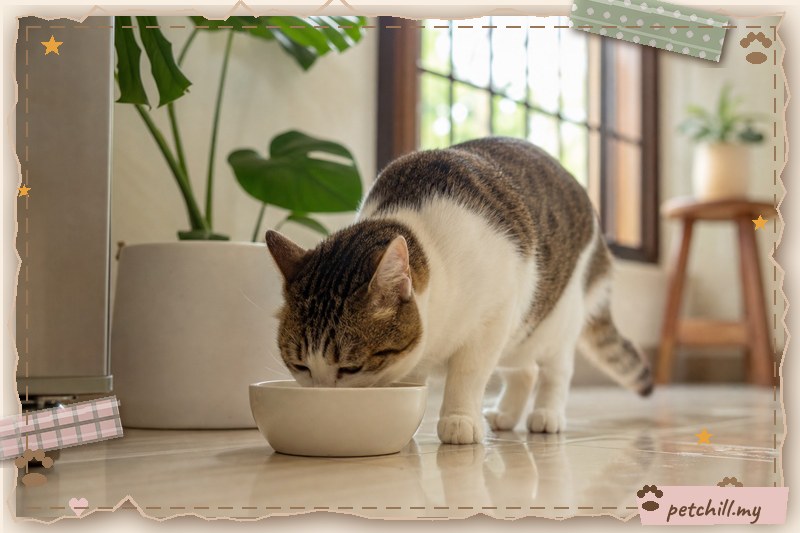
Storing dry food in Malaysia's climate
Heat and humidity shorten shelf life after opening. Practical steps:
- Keep food in its original bag inside an airtight container; the bag carries batch and expiry information.
- Store in a cool, dry cupboard, away from direct sunlight and the stove.
- Buy pack sizes you can finish within a few weeks of opening.
- Seal the bag tightly after each meal and keep the scoop dry.
- Discard food that smells stale, clumps unusually or shows mould.
- Wash bowls daily; oily residue attracts pests and bacteria.
In a Kuala Lumpur apartment, cupboard space is often limited, so a smaller pack stored high and dry is usually better than a large sack kept near a humid bathroom wall. In a Johor terrace house, ants and moisture are common concerns, so airtight containers and wiped bowls help.
Common myths about dry cat food
- "Dry food cleans teeth." Some kibble may help slightly, but dental disease needs brushing and veterinary care.
- "Cats can't get enough water from dry food." Cats can drink, but many do not drink enough; moisture-rich food helps.
- "Grain-free is always better." Only for confirmed allergies; otherwise judge the whole formula.
- "Senior cats must eat senior food." Health status matters more than age alone.
- "Expensive always means better." Price reflects marketing and sourcing as well as nutrition; the label and your cat's condition matter more.
When to see a vet
Contact a veterinarian if your cat shows any of these signs:
- Sudden refusal to eat for more than a day, or a drop in appetite with weight loss.
- Vomiting or diarrhoea that persists or repeats.
- Straining to urinate, frequent small urinations, or blood in urine; urinary blockage in male cats is an emergency.
- Excessive thirst or urination.
- Weight gain or loss despite a stable diet.
- Bad breath, drooling or difficulty chewing.
- Itching, hair loss or skin problems after a food change.
Bring the food label or a photo of it to the appointment. Your vet can assess body condition, dental health and hydration, and advise whether a different diet or a therapeutic formula is appropriate.
A simple buying checklist
- Complete-and-balanced statement for the right life stage.
- Named animal protein near the top of the ingredients.
- Guaranteed analysis and calorie content visible.
- Feeding guide by weight.
- Pack size you can finish within a few weeks.
- Intact packaging and clear expiry date.
- Suitable for your cat's body condition and health status.
- Budget that you can sustain long term.
Bottom line
The best dry cat food for cats in Malaysia is the one that fits your individual cat: correct life stage, sound label, sensible portions, good storage and regular vet checks. Compare formulas using the table above, introduce changes gradually over about a week, and let your cat's body condition and energy guide your choice.
This article is general information, not veterinary advice. Always consult a licensed veterinarian in Malaysia for your cat's specific health and dietary needs.
Related reading
- Cat Food Guide Malaysia 2026: How to Choose Dry, Wet & Prescription Food
- Best Food Transition for Cats in Malaysia: A Step-by-Step Guide
- Best Kitten Food for Cats in Malaysia: A Complete Buying Guide
- Best Raw Cat Food for Cats in Malaysia: A Practical Buying Guide
- Best Wet Cat Food in Malaysia: A Practical Buying Guide
- Cat Food Recommendation Malaysia: 8 Scenarios, Label Checks and Daily-Cost Thinking
- Food Transition for Cats in Malaysia: A Safe, Step-by-Step Guide
- High-Protein Cat Food Feeding Guide for Cats: How Much, Which Type, and What to Watch
- High-Protein Cat Food in Malaysia: A Practical Guide for Cat Owners
- How to Choose Dry Cat Food for Cats: A Malaysian Guide

