
Quick answer
The best clumping cat litter for most Malaysian cats is a low-dust bentonite clay or tofu litter that clumps firmly, controls odour, and matches your cat's texture preference. Start with a small bag, test it for a week, and only buy in bulk once your cat accepts it.
Why clumping litter is popular in Malaysian homes
Clumping litter forms solid balls when wet, making it easy to scoop waste and keep the box clean between full changes. In Malaysia's warm, humid climate, odour can build quickly, so a litter that clumps tightly and neutralises ammonia is a practical choice. Clumping litter also uses less material over time because you remove only the soiled clumps rather than changing the whole box daily.
However, not all clumping litters perform the same in humidity. Some clay litters become sticky or dusty when exposed to moist air, while plant-based litters may absorb moisture from the atmosphere and clump less firmly. Understanding the types helps you choose.
Types of clumping cat litter compared
Here is a comparison of common clumping litter types available in Malaysia. Prices vary by brand and retailer, so ask your local pet shop or vet for current pricing.
| Litter type | Clumping strength | Odour control | Dust | Tracking | Cat acceptance | Notes for Malaysian homes |
|---|---|---|---|---|---|---|
| Bentonite clay (fine) | Strong | Good to excellent | Moderate to high | Moderate | High | Best for odour control; choose low-dust brands for apartments |
| Bentonite clay (coarse) | Strong | Good | Low | Low | Moderate | Less tracking but may be less comfortable for picky cats |
| Tofu (soy) | Moderate to strong | Good | Low | Low to moderate | High | Lightweight, flushable claims vary; bin it, don't flush |
| Pine (clumping) | Moderate | Moderate | Low | Low | Variable | Natural scent; some cats dislike strong pine smell |
| Crystal (silica gel) | Weak (non-clumping) | Excellent | Low | Low | Variable | Not truly clumping; good for odour but not for scooping clumps |
| Paper (non-clumping) | None | Fair | Low | Low | Variable | Not clumping; useful for kittens or post-surgery |
Note: Crystal and paper litters are not clumping, so they are included for comparison only. If you need clumping, focus on clay, tofu, or pine.
Bentonite clay clumping litter
Bentonite is a natural clay that expands when wet, forming firm clumps. It is the most common clumping litter worldwide. Fine-grain clay is soft on paws and cats generally accept it well. The downside is dust and weight. In a Kuala Lumpur apartment with limited ventilation, dust can settle on surfaces and irritate human and feline airways. Look for low-dust formulas and pour slowly from a low height.
Tofu clumping litter
Tofu litter is made from soy pulp or plant fibre. It clumps reasonably well, is lightweight, and produces little dust. Many Malaysian cat owners like it for its lower environmental impact and easy cleanup. However, some tofu litters clump less firmly than clay, so you may need to scoop more carefully. Also, ignore flushable claims; Malaysian plumbing and septic systems are not designed for litter, so bag and bin it.
Pine clumping litter
Pine litter is made from compressed sawdust. Clumping versions bind when wet. It has a natural woody scent that some people enjoy, but cats with sensitive noses may avoid it. Pine litter can be dusty when poured, so introduce it gradually.
Crystal litter
Crystal litter is made of silica gel beads that absorb moisture and odour. It is not clumping, so it is not a direct alternative if you want clumps. It is useful for odour control in small spaces, but some cats dislike the texture.
How to choose the best clumping litter for your cat
Use this step-by-step method to narrow down options.
- Assess your cat's preference. Cats often prefer fine, unscented litter that feels like sand. If your cat has been using a particular litter, transition slowly.
- Consider your home environment. In a high-rise apartment with poor ventilation, low-dust and low-tracking litters are important. In a terrace house with more space, you have more flexibility.
- Evaluate odour control needs. Multi-cat households need stronger odour control. Clay litters generally excel here.
- Check clumping strength. A good clump should hold together when scooped and not crumble. Weak clumps lead to soiled litter left behind and faster odour build-up.
- Factor in cost and availability. Prices vary; buy small bags first. Consider subscription or bulk buying only after your cat accepts the litter.
- Test for dust and tracking. Pour litter in a well-ventilated area and observe. Place a mat outside the box to catch tracked particles.
- Read labels for additives. Scented litters may deter some cats. Avoid litters with strong perfumes if your cat is sensitive.
A note on scented vs unscented litter
Scented litters are marketed for odour control, but many cats prefer unscented. If odour is a problem, address it through frequent scooping and box hygiene rather than masking it with fragrance. If you must use scented litter, monitor your cat for signs of aversion, such as sniffing and leaving the box without using it.
Setting up the litter box for success
Even the best litter fails if the box setup is wrong. Follow these guidelines:
- Size: The box should be about 1.5 times your cat's length. Most commercial boxes are too small.
- Depth: Fill with 5–7 cm of litter. Too little makes digging difficult; too much can cause tracking.
- Location: Place the box in a quiet, well-ventilated area away from food and water. In a small apartment, avoid high-traffic zones.
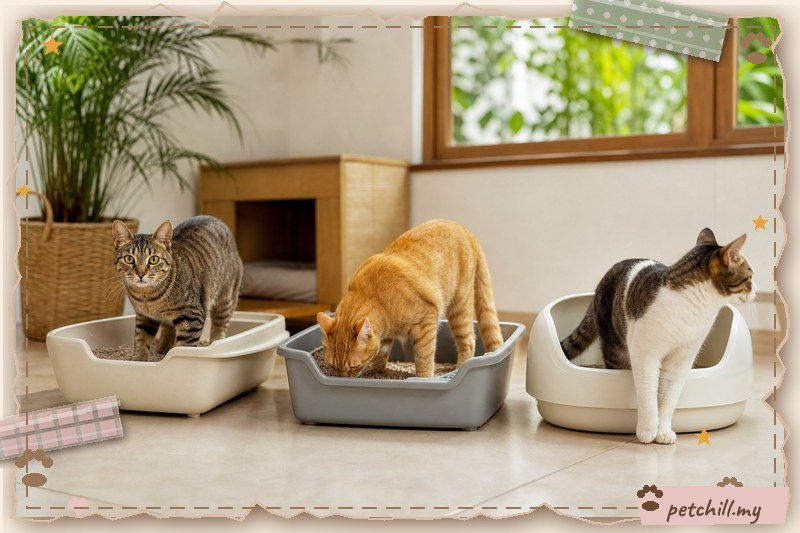
- Number of boxes: Have one box per cat plus one extra. In a multi-cat home, this reduces competition.
- Cleaning: Scoop at least once daily. Wash the box with mild soap and water every 2–4 weeks. Avoid harsh chemicals that can deter cats.
- Liner: Some cats dislike liners. If you use one, ensure it is secure and not torn.
Managing odour in Malaysian humidity
Humidity can make litter clumps softer and odour more noticeable. To manage:
- Keep the litter box in an air-conditioned room or use a dehumidifier if possible.
- Scoop twice daily during rainy seasons.
- Add a thin layer of baking soda under the litter (not mixed in) to absorb odour; ensure your cat does not eat it.
- Use a covered box only if your cat accepts it; otherwise, good ventilation is better.
- Replace litter fully more often in humid months.
Transitioning your cat to a new clumping litter
Cats are creatures of habit. A sudden change can cause stress and litter box avoidance. Transition over 7–10 days:
- Day 1–3: Mix 25% new litter with 75% old.
- Day 4–6: Mix 50/50.
- Day 7–9: Mix 75% new with 25% old.
- Day 10: Use 100% new litter.
If your cat refuses the box, slow down and go back a step. Never punish your cat for accidents; instead, revisit the litter and box setup.
Common mistakes to avoid
- Buying in bulk before testing. Your cat may reject the litter, leaving you with a large bag.
- Overfilling the box. Too much litter increases tracking and waste.
- Using scented litter to mask poor hygiene. Scoop daily instead.
- Placing the box next to noisy appliances. Cats prefer quiet spots.
- Ignoring sudden changes in litter box habits. A cat that stops using the box may have a medical issue; see a vet.
When to see a vet
Consult a veterinarian if your cat shows any of these signs:
- Straining to urinate, crying while urinating, or passing small amounts of urine frequently.
- Blood in the urine.
- Avoiding the litter box suddenly, especially if previously reliable.
- Eating litter.
- Diarrhoea or constipation lasting more than 24 hours.
- Sneezing or coughing that worsens when near the litter box (possible dust sensitivity).
These can indicate urinary blockages, infections, or respiratory irritation, which need prompt veterinary attention.
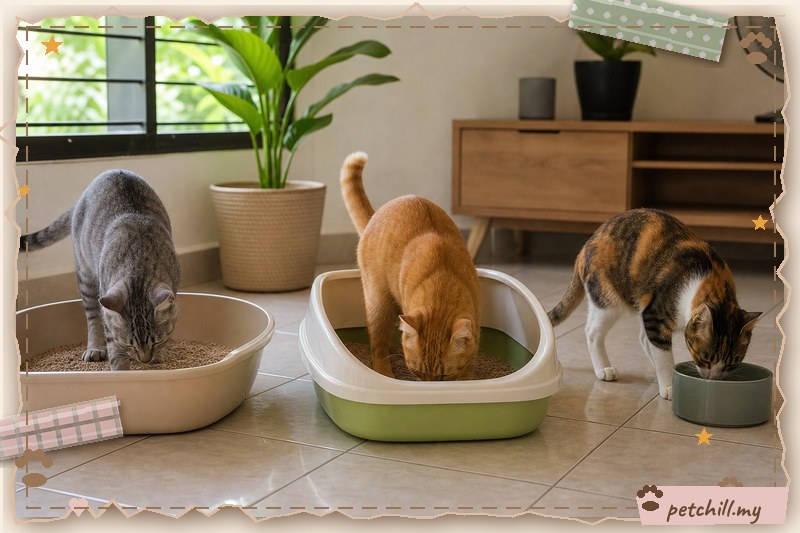
Local considerations for Malaysian cat owners
In Malaysia, clumping litter is widely available online and in pet shops. Popular international brands are sold, but availability varies. Always check the label for ingredients and clumping claims. For apartments in Kuala Lumpur, low-dust and low-tracking litters are especially valuable. In Johor terrace houses, you may have more space for a larger box and less concern about tracking. During the Penang rainy season, humidity can affect clump strength, so store litter in a dry place and consider a dehumidifier.
Frequently asked questions
What is the best clumping cat litter in Malaysia? There is no single best litter; it depends on your cat and home. For most Malaysian households, a low-dust clumping bentonite clay or tofu litter offers a good balance of odour control, clumping strength, and availability. Test small packs first.
Is clumping litter safe for kittens? Clumping litter is generally not recommended for kittens under 8 weeks or those that eat litter, as clumps can cause blockages if ingested. Use a non-clumping litter until your kitten reliably uses the box without eating it, and ask your vet.
How often should I scoop clumping litter? Scoop solid waste at least once daily, preferably twice. Remove clumps daily and top up litter. Do a full change and wash the box every 2–4 weeks, or sooner if odour persists.
Why does my cat refuse to use clumping litter? Cats may reject litter due to texture (too coarse or dusty), scent, depth (too shallow or deep), or a dirty box. Try a finer, unscented litter, adjust depth to 5–7 cm, and ensure the box is in a quiet spot.
Does clumping litter cause health problems in cats? There is no strong evidence that clumping litter causes illness in healthy adult cats. However, ingestion can cause gastrointestinal upset or blockage, especially in kittens. If your cat eats litter, consult your vet.
Can I flush clumping cat litter down the toilet? No. Clumping litter, especially clay, expands and can clog pipes and harm septic systems. Even litters labelled flushable may not be safe in Malaysian plumbing. Bag and bin all litter.
Disclaimer
This article provides general information only and is not a substitute for veterinary advice. Always consult a licensed veterinarian for health concerns about your cat. Product availability and prices vary; check with local retailers.
Local sources
- Department of Veterinary Services Malaysia: https://www.dvs.gov.my/
- SPCA Selangor: https://www.spca.org.my/
- Malaysian Veterinary Council: https://mvc.gov.my/

