
The short answer
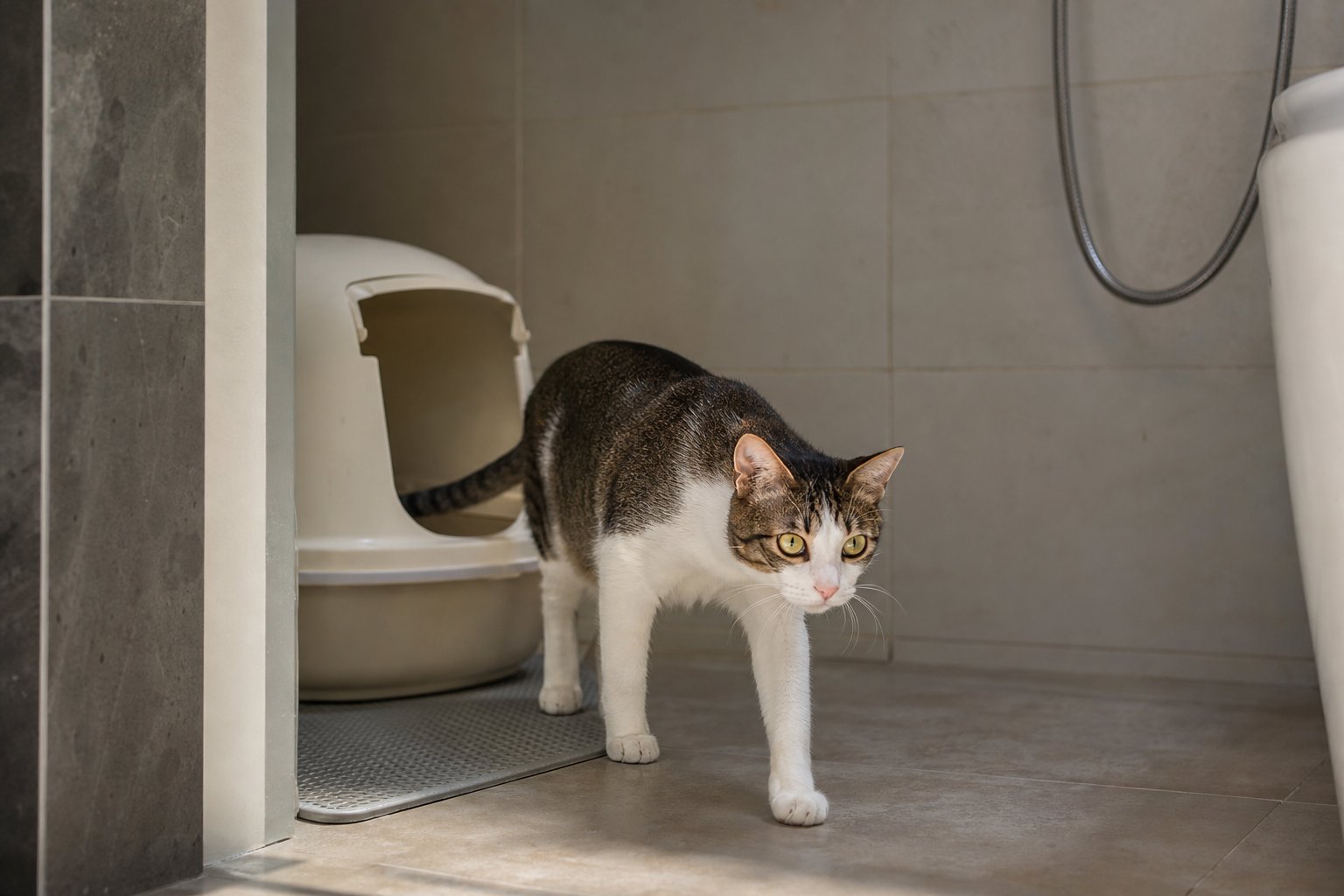
A litter mat works best when it sits directly in front of the litter box, is big enough that your cat cannot avoid stepping on it, lies flat, and is cleaned often. You rarely need to train a cat to use one. The mat simply sits on the path the cat already takes when leaving the box.
Most litter-tracking problems come from three things: a mat that is too small, a mat placed a step away from the box, or a mat left dirty for weeks. Fix those and the mat does most of the work on its own.
What a litter mat actually does
A litter mat is a textured surface designed to catch loose litter from your cat's paws as it leaves the box. The texture matters more than the look. Good mats use one of a few mechanisms:
- Loop or mesh surfaces that let litter granules fall through into a lower layer or tray.
- Deep grooves or ridges that knock litter off paws as the cat walks.
- Soft, brush-like fibres that wipe between the toes.
- Two-layer designs where litter drops through a top mesh and collects on a solid base you can tip out.
No mat catches everything. Expect a mat to reduce tracking noticeably, not eliminate it. Cats that kick litter hard, jump out of the box, or have long fur between their toes will still scatter some litter.
Step-by-step: setting up a litter mat
1. Measure your litter box and your cat
A mat should be at least as wide as the litter box and long enough for your cat to take two or three steps on it after exiting. For a large cat or a big box, that often means a mat noticeably bigger than you first expect. A small mat placed in front of a large box is one of the most common reasons people say mats "don't work".
2. Choose the right mat type for your cat
| Mat type | Best for | Watch out for |
|---|---|---|
| Mesh with collection tray | Heavy tracking, multi-cat homes | Tray can fill up; needs emptying often |
| Grooved rubber or silicone | Cats that kick litter out of the box | Grooves trap damp litter; rinse and dry well |
| Soft brush-fibre | Senior cats, cats with sensitive paws | Holds odour if not washed regularly |
| Woven fabric | Light tracking, tidy cats | Less effective with fine clumping litter |
| Raised-edge mat | Covered boxes, doorway exits | Edge can be a trip hazard if it curls |
If your cat is elderly, arthritic or has sensitive paws, choose a softer, flatter mat. A deep, stiff ridge can be uncomfortable to walk on and may make a cat avoid the exit area entirely.
3. Place it flush against the box
Push the mat right up to the litter box opening. Any gap between the box and the mat is a spot where litter lands on the floor. For a covered box, the mat goes just outside the entrance. For an open box, place it along the side your cat usually exits, and if your cat jumps out over a particular side, put the mat there too.
4. Flatten it completely
Cats dislike walking on a mat that curls at the corners. Unroll a new mat and weigh the corners down with books for a day or two, or warm it gently according to the manufacturer's instructions. Some mats come with corner grips or a slightly tacky underside; use them.
5. Keep the surrounding area simple
A mat works best when it is the obvious path out. Avoid placing food bowls, water bowls or bedding right beside the litter box, and do not stack boxes or clutter around the exit. If the cat has to squeeze past objects, it may leap over the mat instead of walking on it.
Do you need to train your cat to use the mat?
Usually no. The mat is passive equipment, not a behaviour to teach. Most cats walk across it automatically because it is on their route out of the box.
If your cat deliberately avoids the mat, check these in order:
- Curling edges – flatten or replace the mat.
- Texture – some cats refuse rough or spiky surfaces; try a softer mat.
- Smell – a mat washed with strongly scented soap or disinfectant can put a cat off. Rinse thoroughly and use plain water or a mild unscented soap.
- Dampness – a wet mat is unpleasant underfoot. Dry it fully before replacing it.
- Placement – if the mat blocks a favourite route, move it slightly so the cat can still exit comfortably.
Give any change a few days. Cats are cautious about new surfaces, and a mat that is ignored on day one is often used normally by day four.
Cleaning routine that keeps the mat working
A mat packed with old litter stops trapping new litter. Build a simple routine:
- Daily: shake the mat into the bin or vacuum it. Tip out any collection tray.
- Weekly: rinse with plain water or mild unscented soap, scrub lightly, and dry completely, ideally in the sun.
- Monthly: check for worn texture, torn mesh or lingering odour. Replace the mat if it stays smelly after washing or no longer holds litter.
Avoid harsh disinfectants, bleach-heavy cleaners and strongly perfumed products on the mat. Cats are sensitive to smells, and a mat that reeks of cleaning product may be avoided. If you use a pet-safe disinfectant, follow the label and let the mat dry fully.
In humid conditions, mats can stay damp for a long time. Dry them in direct sun or a well-ventilated area rather than putting a damp mat straight back under the box.
Common mistakes and how to fix them
Mistake: the mat is too small. Fix: choose a mat wider than the box and long enough for several steps.
Mistake: the mat sits a hand's width from the box. Fix: push it flush against the box so there is no bare floor between them.
Mistake: the mat is only cleaned once a month. Fix: shake daily, wash weekly.
Mistake: using a mat instead of scooping. Fix: a mat does not replace daily scooping. Keep the box clean; a dirty box causes more problems than tracking.
Mistake: one tiny mat for a multi-cat home. Fix: use a mat at every box, or a longer runner-style mat if boxes sit side by side.
Mistake: choosing a mat by colour instead of function. Fix: match the mat to your litter type. Fine clumping litter tracks more and needs a mesh or two-layer mat; heavy pellet litter needs a grooved mat that knocks pieces loose.
Litter mat vs other tracking solutions
| Solution | How it helps | Limits |
|---|---|---|
| Litter mat at the box | Catches litter on the way out | Needs regular cleaning; size matters |
| High-sided litter box | Reduces litter kicked over the sides | Does not stop paw tracking |
| Covered litter box | Contains scatter and some tracking | Some cats dislike enclosed boxes |
| Low-tracking litter | Fewer granules stick to paws | No litter is completely track-free |
| Mat plus high-sided box | Best combination for heavy kickers | More equipment to clean |
For most homes, a mat plus a box with higher sides covers the two main sources of mess: litter kicked out and litter carried on paws.
Matching the mat to your home
Think about where the box sits and what the floor is like.
- Tiled floors are easy to sweep, but fine litter spreads across grout lines. A mesh mat with a collection tray helps.
- Carpeted rooms trap litter deep in the pile. Use a mat with a solid backing so litter does not pass through, and vacuum the surrounding carpet regularly.
- Balconies or utility areas may be humid or exposed to rain. Choose a mat that dries quickly and bring it in during heavy rain.
- Small apartments often mean the box sits in a bathroom or near a doorway. A mat that lies flat and does not slide is safer there, especially if people walk past it at night.
When to see a vet
Litter mat problems are usually about mess, not health. But see a vet if your cat shows any of these signs:
- Avoiding the litter box entirely, or urinating or defecating outside it
- Straining, crying or taking a long time in the box
- Blood in the urine, or frequent small urinations
- Sudden changes in litter box habits in an older cat
- Limping or reluctance to walk on certain surfaces, which can point to paw pain or arthritis
- Sneezing, coughing or itchy skin that appears after introducing a new mat or cleaning product
A cat that suddenly avoids the box is not being stubborn. It may be in pain or unwell, and a vet visit is the right next step.
A simple weekly checklist
- Shake or vacuum the mat daily
- Tip out any collection tray
- Wash the mat weekly and dry it fully
- Check the mat lies flat with no curled corners
- Confirm the mat is still flush against the box
- Scoop the box daily and change litter as needed
- Check for tears, worn texture or lingering smell
- Replace the mat when it stops trapping litter
Bottom line
Using a litter mat for cats is mostly about setup and upkeep. Put a large mat flush against the box, keep it flat, clean it often and match the texture to your cat and your litter. Do that and the mat will quietly cut down the litter trail through your home without any training at all.
This article is general information only and is not veterinary advice. If your cat shows signs of illness, pain or a sudden change in litter box habits, consult a licensed veterinarian.

