
The short answer
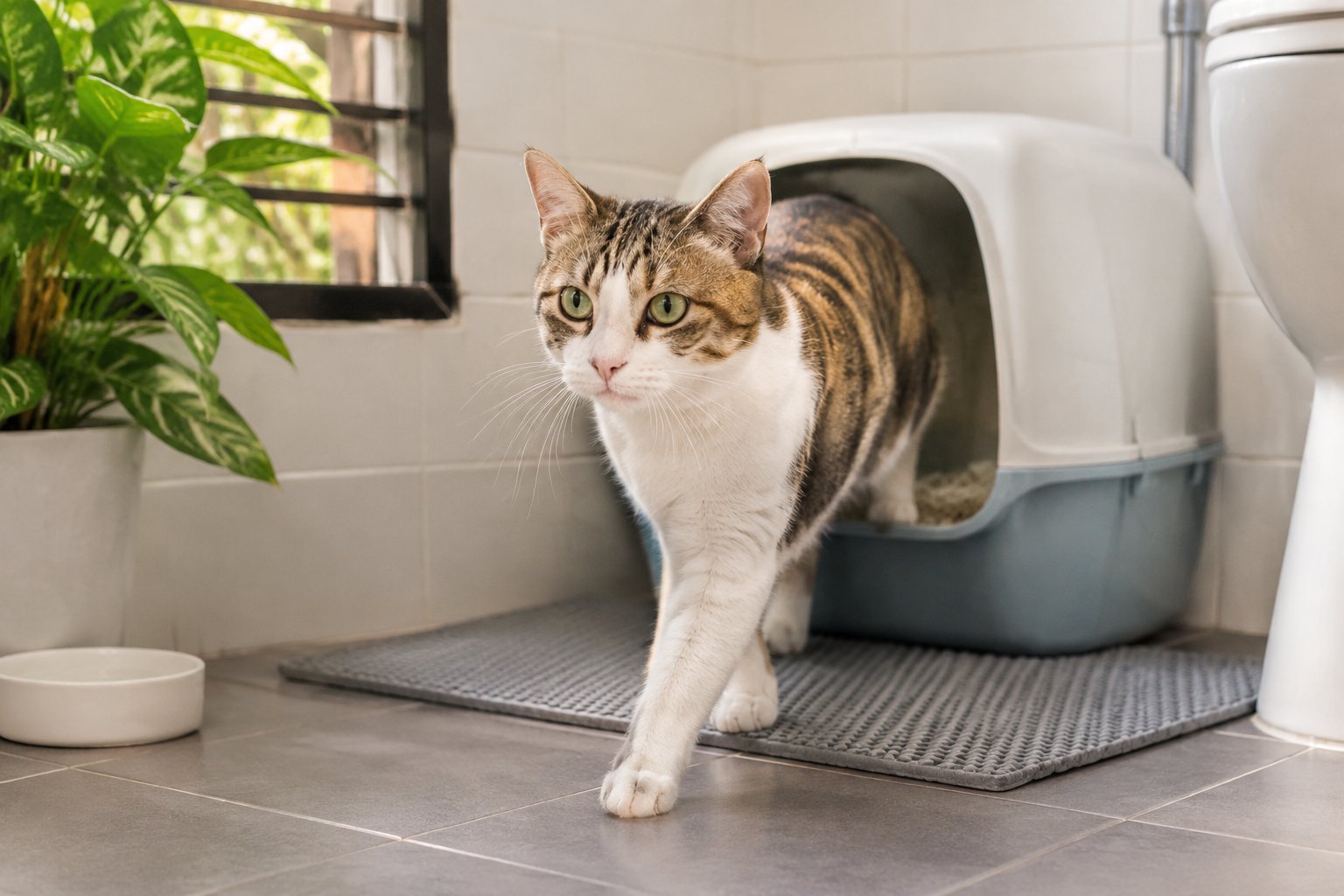
A litter mat only works if it is big enough, placed exactly where your cat exits the box, and made of a surface that actually traps granules instead of letting them roll off. Most tracking complaints come from a mat that is too small or the wrong type, not from the cat being messy.
This guide walks through the mat types sold in Malaysia, how to size and place one, how to clean it, and when the real fix is a bigger box or a different litter.
Why litter tracking happens in the first place
Cats do not deliberately scatter litter. Granules stick to paws, get caught between toe pads, and drop off as the cat walks away. Fine, light litters cling more; heavy pellet litters cling less but feel different underfoot. A cat that jumps out over a high-sided box can clear a mat entirely and land litter two feet away.
A mat interrupts that journey. It gives granules somewhere to fall before they reach your tiles, and it gives you one place to shake out instead of sweeping the whole room. But a mat is a supplement, not a substitute for a properly sized box and a sensible litter choice.
The main types of litter mat
1. Two-layer honeycomb or mesh mats
These have a perforated top layer and a solid lower tray. Litter falls through the holes and stays trapped until you lift the top layer or open the mat to empty it. They trap the most litter of any type and are the best pick for heavy trackers.
Trade-offs: they are bulkier, harder to rinse, and the trapped litter can rattle when the cat walks on them. Look for a mat where the two layers separate easily for emptying.
2. Textured rubber or silicone mats
A single layer with raised bumps, grooves or a lattice pattern. Litter gets caught in the texture and stays there until you shake or vacuum it. They are easy to rinse, dry fast, and sit flat on tile.
Trade-offs: they hold less litter than two-layer mats, and very sharp textures can be uncomfortable for sensitive paws or older cats.
3. Fabric or microfibre mats
Soft on paws and pleasant underfoot, these trap fine litter in the fibres. They work reasonably well for fine clumping litter but are the hardest to clean, because wet litter and urine soak in.
Trade-offs: they need frequent washing, can hold odour, and are a poor choice if your cat occasionally misses the box.
4. Waterproof-backed mats
Often a textured top bonded to a waterproof base. The backing stops urine from reaching tiles or wood, which matters in apartments with laminate flooring. Check that the backing is genuinely waterproof rather than just water-resistant.
5. Litter trapping trays and walk-off platforms
Some products are rigid trays with a grated surface, or low platforms with a lip. They behave like a mat but are sturdier and easier to empty. They suit large cats and heavy litter users.
Comparison table
| Mat type | Trapping ability | Ease of cleaning | Paw comfort | Best for |
|---|---|---|---|---|
| Two-layer honeycomb/mesh | High | Moderate (empty tray, rinse) | Moderate | Heavy trackers, fine litter |
| Textured rubber/silicone | Moderate | High (shake, rinse, dry) | Good | Budget buyers, easy-clean households |
| Fabric/microfibre | Moderate to high for fine litter | Low (machine wash, slow dry) | High | Fine clumping litter, calm cats |
| Waterproof-backed textured | Moderate | High | Good | Apartments with laminate or wood floors |
| Rigid trapping tray/platform | High | High | Moderate | Large cats, high-sided boxes |
How to size a litter mat correctly
A common mistake is buying a mat the same footprint as the box. The mat needs to cover the exit path, not just sit under the box.
Use this rule: the mat should be at least 1.5 times the length of the litter box, and wide enough that a cat landing after a jump still lands on it. If your box is 60 cm long, look for a mat around 90 cm long. For a cat that leaps out, extend the mat further or add a second mat at the landing spot.
Also consider the box height. A high-sided box reduces scatter over the sides but encourages jumping, which can defeat a small mat. A low-entry box with a large mat often tracks less overall.
A quick sizing checklist
- Measure the box length and multiply by 1.5.
- Watch your cat exit the box three or four times and note the landing spot.
- Make sure the mat covers that landing spot, not just the box footprint.
- Check the mat lies flat with no curled corners that trip the cat or let litter roll underneath.
- In a tight corner, use two smaller mats end to end rather than one undersized mat.
Placement: where the mat actually needs to go
Place the mat flush against the box at the exit your cat uses. Gaps let litter fall straight through to the floor. If the box sits in a corner, the mat should wrap around the open sides.
If your cat jumps out over a high side, put the mat where it lands, even if that is a short distance from the box. Some owners use a mat plus a small washable runner to cover the full path.
Avoid putting the mat on a slippery surface where it can slide. A mat that shifts under a landing cat is both a tracking problem and a minor safety issue. If needed, use a non-slip underlay or choose a mat with a grippy base.
Material and safety considerations
- Non-toxic materials: choose mats labelled as pet-safe and free of strong chemical smells. New mats can off-gas; air them out before use.
- No loose pieces: avoid mats with glued-on decorations or small parts a cat could chew and swallow.
- Soft edges for kittens and senior cats: low, rounded edges are easier on joints and small paws.
- Waterproof backing: important if your cat has accidents or if the box sits on wood or laminate.
- Washability: check whether the mat can be rinsed, wiped or machine washed, and how long it takes to dry.
- Odour control: materials that stay damp hold smell. Quick-drying mats are easier to keep fresh.
Cleaning and maintenance routine
A mat that is never cleaned becomes a litter reservoir and a smell source. A simple routine keeps it working:
- Daily: shake the mat into the bin, not into the box, and sweep or vacuum the surrounding floor.
- Weekly: rinse the mat with water, or wipe it with a mild pet-safe cleaner, and let it dry fully.
- Monthly: deep clean with mild soap and water, rinse thoroughly, and dry in the shade rather than direct sun, which can warp rubber.
- Replace mats that crack, curl, lose their texture, or develop a permanent smell.
Avoid harsh bleach or strong disinfectants on mats, especially those your cat walks on daily. Rinse any cleaner off completely and let the mat dry before putting it back.
When a mat is not enough
If you have a good mat in the right place and still find litter across the room, the mat is probably not the problem. Check these first:
- Box size: the box should be roughly 1.5 times the length of your cat, nose to tail base. Many commercial boxes are too small.
- Litter type: very light, fine litters track more. A slightly heavier clumping litter or a pellet litter may reduce tracking, though cats have preferences.
- Litter depth: too little litter means more exposed box floor and more scatter; too much means more to kick out.
- Box height and entry: a high-sided box with a low entry reduces kicking scatter without forcing jumps.
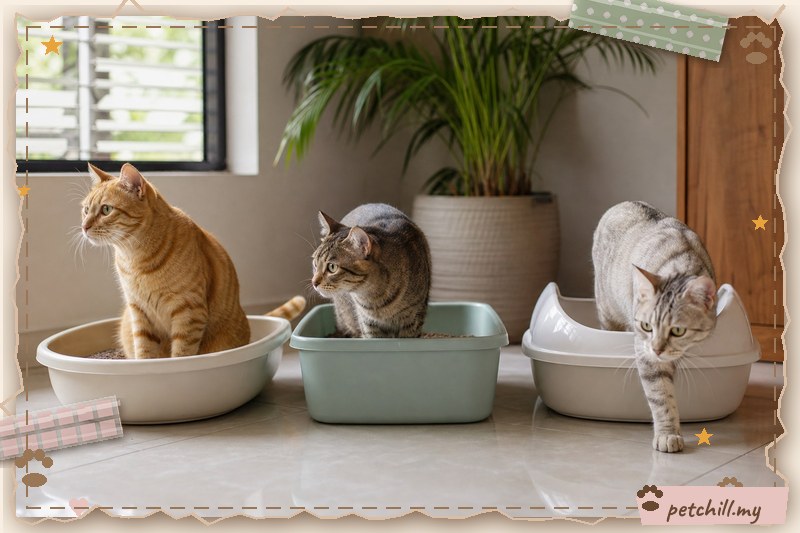
- Number of boxes: one box per cat plus one is the usual guideline, which also reduces rushing and mess.
- Cat behaviour: a cat that digs vigorously or exits at speed will always scatter some litter. A mat plus a large box manages it rather than eliminating it.
Matching the mat to your home
Kuala Lumpur apartment with tiled floors
In a compact apartment, the box often sits in a bathroom or utility area with limited floor space. A two-layer mat trimmed to fit the doorway, plus a small mat at the landing spot, usually works better than one oversized mat that blocks the door. Tiled floors are easy to sweep, so a textured rubber mat that rinses quickly is a practical choice.
Johor terrace house with a dedicated utility corner
With more floor space, a large rigid trapping tray or a long two-layer mat gives better coverage. If the box is in a covered outdoor area, choose a mat that drains and dries quickly, because humidity keeps damp mats smelly. A waterproof-backed mat also protects concrete or tiled surfaces from urine spills.
Penang rainy season
During the wet months, mats dry slowly indoors. Keep two mats and rotate them so one is always dry, and dry them in a well-ventilated area rather than a closed bathroom. Damp mats are a common cause of odour complaints.
What to check before you buy
- Measure your box and your cat's exit path before ordering.
- Confirm the mat's dimensions in centimetres, not just "large" or "jumbo".
- Check whether the mat is machine washable or rinse-only.
- Look for a non-slip base if your floor is smooth tile.
- Confirm the mat is low enough for kittens or senior cats to step over.
- Read reviews for curling edges, which are a common complaint with thin mats.
- Ask the retailer about the return policy in case the size is wrong.
Prices for litter mats vary widely depending on size, material and brand, and local prices differ between online marketplaces and pet shops. Ask a Malaysian retailer or your vet clinic for current options rather than relying on overseas pricing.
When to see a vet
Litter tracking is a housekeeping issue, not usually a medical one. But see a vet if your cat shows any of these signs:
- Sudden changes in litter box habits, such as avoiding the box or urinating outside it.
- Straining, crying or taking a long time to urinate.
- Blood in urine or frequent small urination.
- Excessive licking or chewing of paws, which can indicate irritation or allergy.
- Limping or reluctance to walk on certain surfaces, which may mean paw pain rather than a mat problem.
- Persistent diarrhoea or soft stool that soils paws and floors.
These signs can point to urinary, digestive or skin problems that no mat will fix. A vet can rule out medical causes before you change your setup.
A simple buying plan
- Measure the box and watch your cat exit.
- Choose a two-layer mat for heavy tracking, or a textured rubber mat for easy cleaning.
- Size it at least 1.5 times the box length and cover the landing spot.
- Place it flush against the box on a non-slip surface.
- Shake daily, rinse weekly, deep clean monthly.
- If tracking continues, upsize the box and review the litter type.
A mat is one part of a litter system. Get the box, litter and mat working together, and the daily sweeping drops sharply.
This article is general information for cat owners and is not a substitute for veterinary advice. If your cat shows signs of illness or pain, consult a licensed veterinarian.
Related reading
- Cat Litter Guide Malaysia 2026: Types, Costs and How to Choose
- Best Paper Cat Litter for Cats in Malaysia: A Practical Buying Guide
- How to Use a Litter Box for Cats: A Complete Guide for Malaysian Owners
- How to Use Scented Cat Litter for Cats: A Practical Guide for Malaysian Owners
- Paper Cat Litter Buying Guide for Malaysian Cat Owners
- Scented Cat Litter for Cats: Pros and Cons Every Malaysian Owner Should Know

