
The short answer
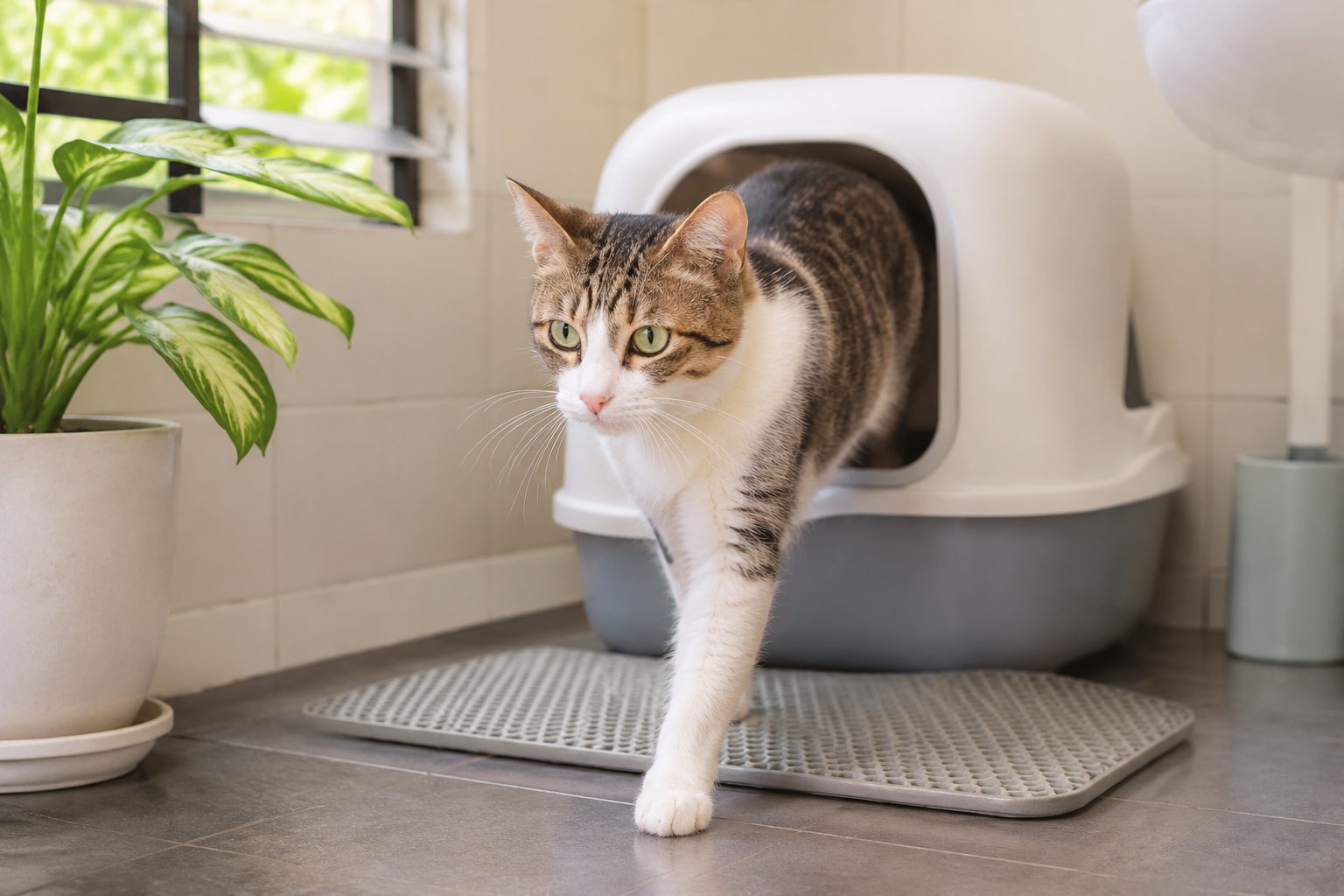
A covered litter box is a useful tool, not a default choice. Buy one only if your cat is healthy, confident and large enough for the box, and if you are willing to scoop at least once a day. The hood hides mess and reduces tracking, but it also traps odour and ammonia. In a Malaysian home where the box may sit in a warm utility area or a small apartment bathroom, ventilation and cleaning frequency matter more than the design.
This guide walks through size, entrance design, ventilation, litter compatibility, odour control, cleaning routines and the situations where a hooded box is the wrong pick. It is written for Malaysian cat owners shopping in local pet shops, online marketplaces and veterinary clinics.
Why cat owners choose covered boxes
Most people buy a hooded box for one of four reasons:
- Mess control. Cats kick litter backwards. A high-sided hooded box keeps granules off the floor.
- Odour containment. The lid slows how quickly smells spread through a room.
- Privacy for the cat. Some cats prefer a quiet, enclosed space.
- Aesthetics. A covered box looks tidier in a living room or bathroom.
These are real benefits, but they come with trade-offs. A covered box concentrates odour inside. If you skip a day of scooping, the cat may refuse to enter. The hood also reduces airflow, so urine and faeces dry more slowly and ammonia builds up.
Size: the most common buying mistake
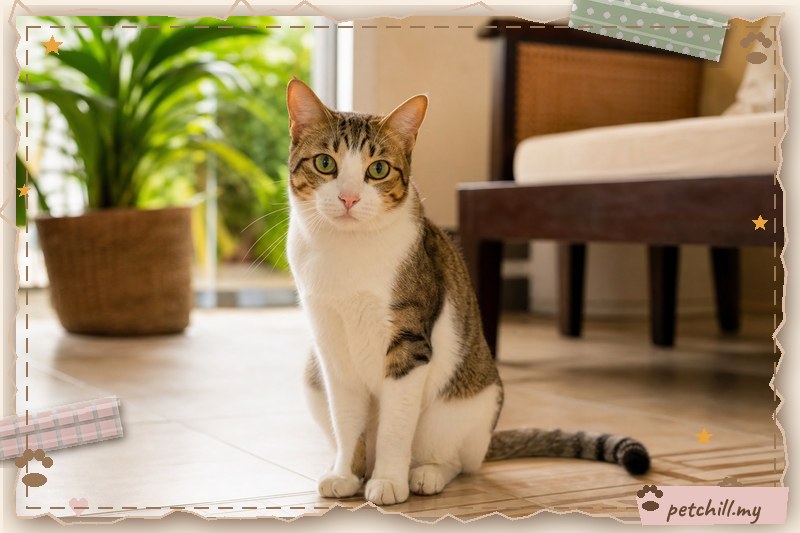
Most commercial covered boxes are too small for adult cats. A cat needs room to enter, turn around, dig and squat without touching the sides. As a rule, the interior floor should be about 1.5 times your cat's body length from nose to tail base. For a typical adult cat, that means at least 60 cm long and 40 cm wide. Large breeds need more.
Measure your cat while it stands. Then measure the box interior, not the exterior. Many hooded boxes look big outside because of the lid and base rim, but the usable floor is smaller.
| Cat size | Minimum interior length | Minimum interior width | Notes |
|---|---|---|---|
| Kitten under 4 months | 40 cm | 30 cm | Use a low entrance; a hood may be too tall |
| Average adult cat | 60 cm | 40 cm | Most hooded boxes on the market fall short here |
| Large adult cat | 70 cm | 45 cm | Look for high-sided storage-style boxes |
| Senior or arthritic cat | 60 cm | 40 cm | Prefer an open box or a very low entrance |
If a covered box is too small, the cat may urinate over the edge, stand outside with its head in the box, or avoid it altogether. A too-small box is a common cause of house soiling.
Entrance design and flaps
A wide, low entrance helps cats of all ages. Look for an opening at least 20 cm wide and 15 cm high. Kittens, seniors and cats with arthritis struggle with high thresholds.
Flaps are optional. Some cats push through them easily. Others dislike the movement or the noise. If your cat refuses a flap, remove it. A missing flap is better than a cat that avoids the box.
Also check the lid latch. A lid that pops off when the cat jumps on top is a nuisance. A lid that is hard to remove makes cleaning slow, so you may skip it.
Ventilation and filters
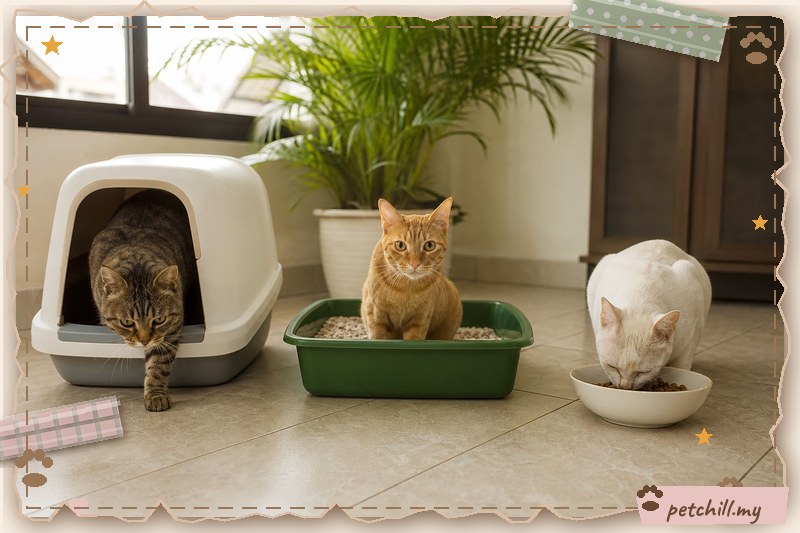
Hooded boxes trap air. Good models have vents or a carbon filter slot. Filters help a little, but they do not replace daily scooping. Replace filters as the manufacturer advises, usually monthly.
In a warm Malaysian home, heat speeds up odour production. Place the box away from direct sun and in a room with airflow. Do not seal the box in a closed cupboard. If the room smells when you open the lid, the box needs cleaning, not a stronger filter.
Litter compatibility
Covered boxes work best with clumping litter that forms firm clumps. Fine clumping litter is easy to scoop and produces less dust. Low-dust litter matters more in a covered box because dust stays inside.
Avoid:
- Strongly scented litter. The scent is concentrated inside the hood and can put cats off.
- Very lightweight litter. It tracks more and sticks to the hood.
- Non-clumping litter in a deep box. It is harder to scoop cleanly and smells sooner.
If you switch litter, do it gradually over a week. Cats are sensitive to sudden changes in texture and scent.
Odour control that actually works
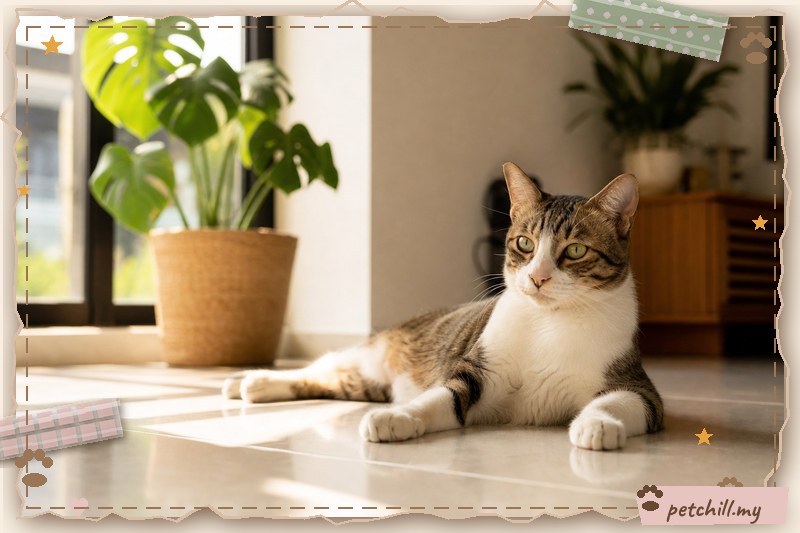
Odour control is mostly about routine, not products.
- Scoop solids at least once daily. Twice daily is better in a covered box.
- Stir the litter to distribute moisture and help clumps form.
- Top up litter to a depth of about 5 to 7 cm. Too little litter leads to urine sticking to the base.
- Replace clumping litter fully every two to four weeks, or sooner if it smells.
- Wash the box weekly with mild soap and warm water. Rinse well and dry in the sun.
- Keep the room ventilated. Open a window or use a fan, but do not blow air directly at the box.
Do not use ammonia-based cleaners. Urine contains ammonia, and the smell can encourage repeat marking. Avoid strong bleach fumes in enclosed spaces.
Cleaning routine for a covered box
A covered box takes more effort than an open one because you need to remove the lid and clean the inside of the hood.
Daily: scoop solids, stir litter, check the entrance for stuck litter.
Weekly: empty the box, wash the base and lid with mild soap, rinse, dry fully. Wipe the filter slot. Check the latch and hinges.
Monthly: replace the carbon filter if fitted. Inspect the box for cracks. Cracks trap bacteria and are hard to clean.
Every two to four weeks: full litter change.
If you have more than one cat, provide one box per cat plus one extra. A single covered box in a multi-cat home is a common source of stress and spraying.
Where to place a covered box in a Malaysian home
Placement affects how well a covered box works.
- Avoid food and water. Cats do not like eating near the toilet.
- Choose a quiet spot. A noisy washing machine or a busy corridor can scare a cat away.
- Keep it away from heat. Direct sun and hot utility rooms increase odour.
- Provide an escape route. Do not corner the cat in a tight space where it cannot see or move away.
In a Kuala Lumpur apartment, a bathroom or a balcony utility corner often works if it is ventilated and not damp. In a Johor terrace house, a shaded laundry area or a quiet room away from the kitchen is a good option. Avoid garages where fumes and heat build up.
Covered vs open: a comparison
| Feature | Covered box | Open box |
|---|---|---|
| Mess control | Better | Weaker |
| Odour containment | Better at first, worse if dirty | Spreads more, but ventilates |
| Cleaning effort | Higher | Lower |
| Suitability for seniors | Often poor | Better |
| Suitability for anxious cats | Mixed | Better |
| Space in small homes | Tidier | Takes more visual space |
| Cost | Usually higher | Usually lower |
Local prices vary by brand and size. Ask a Malaysian retailer or your vet clinic for current options rather than relying on online listings alone.
When a covered box is the wrong choice
Do not buy a covered box if:
- Your cat is a senior, arthritic or recovering from surgery.
- Your cat is anxious or easily startled.
- Your cat has a history of urinary blockages or cystitis.
- Your cat is a large breed that needs more floor space.
- You cannot commit to daily scooping.
- Your home has no ventilated spot for the box.
In these cases, a large open box with high sides gives most of the mess control without trapping odour.
When to see a vet
See a veterinarian if your cat:
- Stops using the litter box suddenly.
- Cries or strains while urinating.
- Produces only small amounts of urine, or none.
- Has blood in the urine.
- Licks the genital area excessively.
- Vomits, loses appetite or becomes lethargic.
Urinary blockages are emergencies, especially in male cats. Do not wait to see if the cat improves. A covered box does not cause these problems, but a dirty or stressful box can worsen house soiling and stress-related cystitis.
Buying checklist
Before you pay, check:
- Interior length at least 1.5 times your cat's body length.
- Entrance at least 20 cm wide and 15 cm high.
- Lid removes easily for cleaning.
- Vents or filter slot present.
- Base is sturdy and does not flex.
- No sharp edges or gaps where litter traps.
- Litter depth of 5 to 7 cm is possible.
- You have a ventilated, quiet spot for it.
- You can scoop daily.
Final word
A covered litter box can work well in a Malaysian home, especially in apartments where space and tidiness matter. The key is to buy one that is genuinely large enough, keep it clean, and watch your cat's behaviour. If your cat avoids the box, remove the lid and reassess. Your cat's comfort matters more than the design.
This article is general information only and is not a substitute for veterinary advice. Consult a licensed veterinarian in Malaysia for diagnosis and treatment of your cat.
Related reading
- Cat Litter Guide Malaysia 2026: Types, Costs and How to Choose
- Cat Litter Box Malaysia: Size, Placement and Cleaning Guide (2026)
- Covered Litter Box for Cats: Pros and Cons for Malaysian Homes
- How to Use a Covered Litter Box for Cats: A Complete Guide for Malaysian Homes
- Paper Cat Litter for Cats: Pros and Cons Every Malaysian Owner Should Know

