
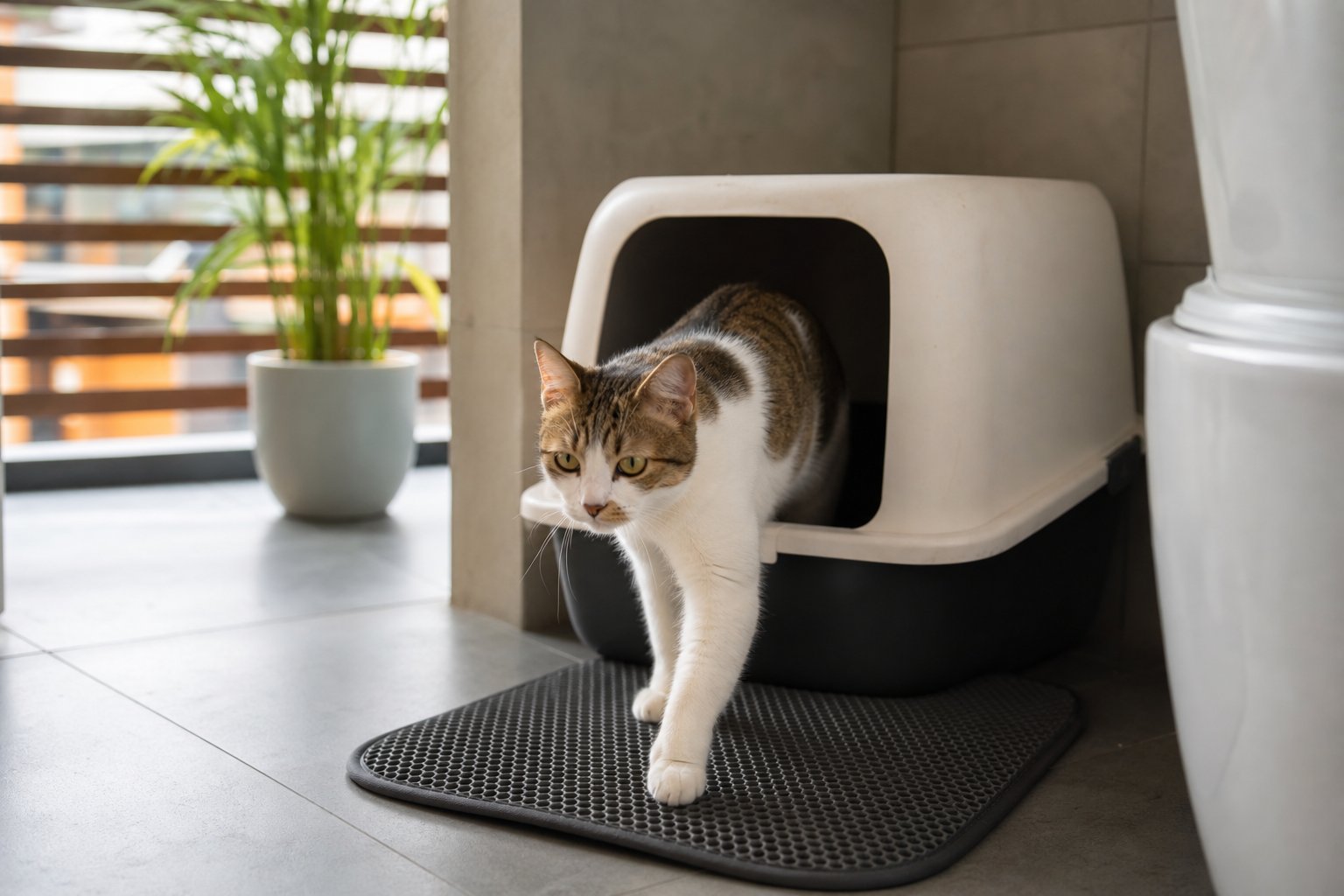
Pine litter works — but only with the right box. Breakdown-style pine pellets turn into fine sawdust instead of clumping, so they need a double-tier box with a urine pad underneath. It is one of the lowest-dust and most economical options available, yet it soaks up moisture fast, so storage matters as much as the product you buy.
What pine litter actually is
Pine litter — also sold as wood litter, wood pellet litter or compressed sawdust litter — is made from natural timber such as pine, cypress or cedar, pressed into short 3–6mm granules. The mechanism is completely different from clumping litter, and understanding it explains every other rule in this guide.
| Litter type | What happens when it meets urine | How you clean it | Box required |
|---|---|---|---|
| Breakdown pine litter | Pellets absorb liquid and disintegrate into sawdust | Sawdust falls to the lower layer; empty it and swap the pad | Double-tier box |
| Clumping mineral or tofu litter | Forms a solid clump | Scoop the clump out | Single-tier box |
| Percolation wood litter | Urine passes straight through the pellets | Liquid collects below on its own system | Matching double-tier box |
On composition: pine litter binds through the wood's own natural fibres and lignin, without bentonite clay. Some bags are labelled fragrance-free or antibacterial-processed. Lignin is a natural component of timber and is not a problem in normal use, but if your cat has a habit of chewing litter, narrow the box rim and ask your vet for advice.
On scent: natural wood aroma is far milder than artificially perfumed litters, and most cats accept it. If your cat starts sneezing or avoiding the box after a switch, move to an unscented variant. Conversely, heavily perfumed litters tend to put cats off more than plain ones.
Why a double-tier box is not optional
This is the single most common mistake people make with pine litter. The sawdust has to go somewhere, and only a two-layer design gives it a place to go.
| Aspect | Single-tier box | Double-tier box |
|---|---|---|
| Where the sawdust goes | Settles at the bottom and mixes with unbroken pellets | Drops through to the lower layer |
| Cleaning rhythm | Full sifting every one to two days | Empty sawdust daily, change pad weekly |
| Odour | Sawdust saturates with urine and ammonia builds up | The pad below absorbs urine, so smell drops noticeably |
| Litter wasted | High, because sawdust and usable pellets are binned together | Low, because only spent material is discarded |
| Cat's experience | Wet, sticky floor; refusal is common | Upper layer stays dry and comfortable |
Practically, you keep one box, one bag of pellets and a supply of absorbent pads. The daily routine is quick: lift the top layer, tip the collected sawdust into a bin bag, check the pad, and top up pellets only as needed. Weekly, replace the pad and wipe the lower tray. Because the upper surface stays dry, most cats stop tracking damp litter across the floor.
If you are not willing to buy and run a double-tier box, do not buy pine litter — choose clumping tofu or mineral litter instead and use a standard single-tier box.
How pine compares with the other four types
Before committing, put the main categories side by side. Ratings below describe typical performance; always confirm what is actually stocked locally, as formulations change between batches and brands.
| Type | Odour control | Clumping | Dust | Flushable | Humid weather behaviour |
|---|---|---|---|---|---|
| Pine (breakdown) | Good | Poor by design — it disintegrates | Very low | Some variants only | Most vulnerable to moisture and mould |
| Tofu | Very good | Very good | Low | Usually, in small amounts | Absorbs moisture; needs sealing |
| Mineral (bentonite) | Very good | Excellent | High | No | More humidity-tolerant, but dust floats |
| Tapioca | Very good | Very good | Low | Usually | Moderate; keep sealed |
| Mixed formula | Excellent | Very good | Low | Usually | Moderate, depends on the blend |
When pine is the right pick
- Dust matters most. If your cat or a household member has a sensitive respiratory system, the dust difference between pine and mineral litter is several grades apart.
- You want to minimise litter usage. Breakdown pellets are the most economical per use, because only spent material is thrown away — over time the running cost can beat tofu litter.
- You can accommodate the equipment. You need space to store a double-tier box, a stack of urine pads and sealed pellets.
When pine is the wrong pick
- You refuse to use a double-tier box.
- Your home is extremely humid, you have no dehumidifier or good ventilation, and you cannot commit to airtight storage.
- Your cat dislikes wood scent or has previously rejected textured litters.
- You want a litter you can flush in bulk, for plumbing reasons.
Working out the real monthly cost
Retail prices in Malaysia vary by brand, pack size and outlet, so treat the figures here as a method rather than a quotation — check current pricing with your retailer before you buy.
The budget has three lines, and people usually only count the first one:
- Pellets. A 10L bag typically lasts a single cat 35–45 days, which works out to roughly one bag a month, sometimes slightly less.
- Urine pads. One pack usually covers three to four weeks, and you may use more during wet weather.
- The box. A double-tier box is a one-off purchase that lasts years, so amortise it over the period rather than counting it as a monthly cost.
A simple formula: monthly cost = (bag price ÷ days per bag × 30) + pad cost per month. Run it twice — once with a small 6–7L bag and once with a bulk 18kg sack — and you will usually find bulk wins on unit price but loses if the pellets go mouldy before you finish them. In humid months, the smaller bag is often the cheaper choice overall.
When comparing against tofu litter, compare totals. Pine's pellet cost is usually lower, but add the pads and the box. Tofu's bag price is higher, yet it needs no pads and no special box. Whichever total is lower in your case is the one that counts.
Humidity: the mould problem and how to beat it
Wood is hygroscopic. Left in a damp corner, pine pellets darken, smell musty, clump together and lose their ability to break down properly. The wetter part of the year is the real test of this litter type.
| Risk | What you will see | What to do |
|---|---|---|
| Damp and mould | Darkened pellets, musty smell, soft clumps | Discard the entire batch; wash the box and dry it completely |
| Breakdown failure | Pellets stay whole and sawdust sticks to the top layer | Replace the litter and check whether the lower pad is blocked |
| Odour in the lower tray | Spent sawdust saturated with urine | Empty sawdust daily; change the pad every 3–4 days in wet weather |
| Insects, rarely | Small bugs in the bag | Store sealed, away from balconies and kitchen wet areas |
Storage checklist
- Decant the opened bag into a lidded plastic container with a desiccant sachet inside.
- Keep only one to two weeks of litter in the everyday container; the rest stays sealed.
- Store off the floor, away from bathroom walls, balconies and any spot that stays damp.
- Buy smaller 6–7L bags during the wet season instead of stocking a bulk sack.
- Never pour fresh pellets on top of damp residue — strip the tray, wash, dry fully, then refill.
- Note the opening date on the container; if pellets feel soft or smell off before then, suspect moisture rather than the brand.
A quick weekly inspection takes under a minute: scoop a handful, press it, and check for clumping. Pellets that stick together have already taken on water, and the fix is to swap them out rather than keep using them.
Transitioning your cat over 7–10 days
Most refusals come down to texture and paw feel, not scent. A sudden swap is what causes rejection.
| Days | Mixture | Notes |
|---|---|---|
| 1–2 | 3/4 old litter + 1/4 pine | Keep the box in its usual position |
| 3–4 | 1/2 old + 1/2 pine | Watch for sneezing or avoidance |
| 5–6 | 1/4 old + 3/4 pine | Top up the same mix after cleaning |
| 7–10 | 100% pine | Confirm normal, comfortable use before buying bulk |
During the transition, keep the old box available for the first few days if you have space, so the cat always has an option. Do not move the box to a new location at the same time — one change at a time, or you cannot tell which one caused the problem. If the cat still refuses at the end of ten days, switch to tofu or a mixed formula rather than forcing it.
Flushing, disposal and household safety
Some wood litter variants are labelled flushable. Even so, the volume of fine sawdust is much larger than a clumping litter's, so flush only small amounts at a time. In buildings with ageing pipework, the safer route is bagging everything for general waste.
Two more safety notes. First, unscented or naturally scented pellets are the better default — strong artificial fragrance is a common reason cats walk away from a box. Second, if your cat chews litter, pine is not a suitable choice; discuss a safer option with your vet.
When to see a vet
Litter choice is a care decision, but toileting changes are a health signal. Arrange a veterinary visit promptly if you notice:
- Straining, crouching long in the box, or producing only tiny amounts of urine.
- Blood in urine, or crying while passing urine.
- Urinating outside the box, especially in a previously reliable cat.
- Sudden increase in drinking, urinating, appetite loss or vomiting alongside litter changes.
- Persistent sneezing, coughing or nasal discharge after switching litter.
- Diarrhoea, or litter sticking to the coat and skin around the rear.
Cats with a history of urinary tract problems need particular care: a litter change should be discussed with your vet first, and the box should be monitored daily for output. Any cat that stops urinating entirely is an emergency — contact a vet immediately.
Frequently asked questions
Does pine litter really require a double-tier litter box? Yes. Breakdown-style pellets turn to fine sawdust when wet. In a single-tier box that sawdust mixes with unused pellets, staying damp and smelly. Without a double-tier box with a urine pad below, pine litter is not recommended.
What is the difference between breakdown and percolation wood litter? Breakdown pellets absorb urine and disintegrate into sawdust. Percolation-style wood litter lets urine pass straight through the pellets to a lower layer, and it needs its own dedicated box. Check the label before buying, because the two are not interchangeable.
Can pine litter be flushed down the toilet? Only if the packaging says so, and even then, small amounts at a time. The volume of sawdust is large, so the safer habit is bagging it for general waste, especially in older buildings with ageing pipes.
How much does pine litter cost each month? Local prices vary, so ask your retailer. The maths: a 10L bag usually lasts a single cat 35–45 days, plus urine pads, plus a one-off double-tier box. Compare the total, not just the bag price against tofu litter.
My cat refuses pine litter. What should I do? Usually the texture and paw feel differ too much from the old litter. Transition over 7–10 days: start with three-quarters old litter and one-quarter pine, increase every two days, and keep the box in its usual spot. Persistent refusal means switching to tofu or mixed litter.
My pine litter went mouldy in humid weather. Can I still use it? No. Mould means the wood fibres have deteriorated, so odour control and absorbency drop, and spores may irritate your cat's airways. Discard the whole batch, wash the box thoroughly, dry it completely, then start a fresh bag.
This guide is general buying advice only. Individual cats vary widely. If your cat's toileting, breathing or appetite changes, please consult a registered veterinarian.