
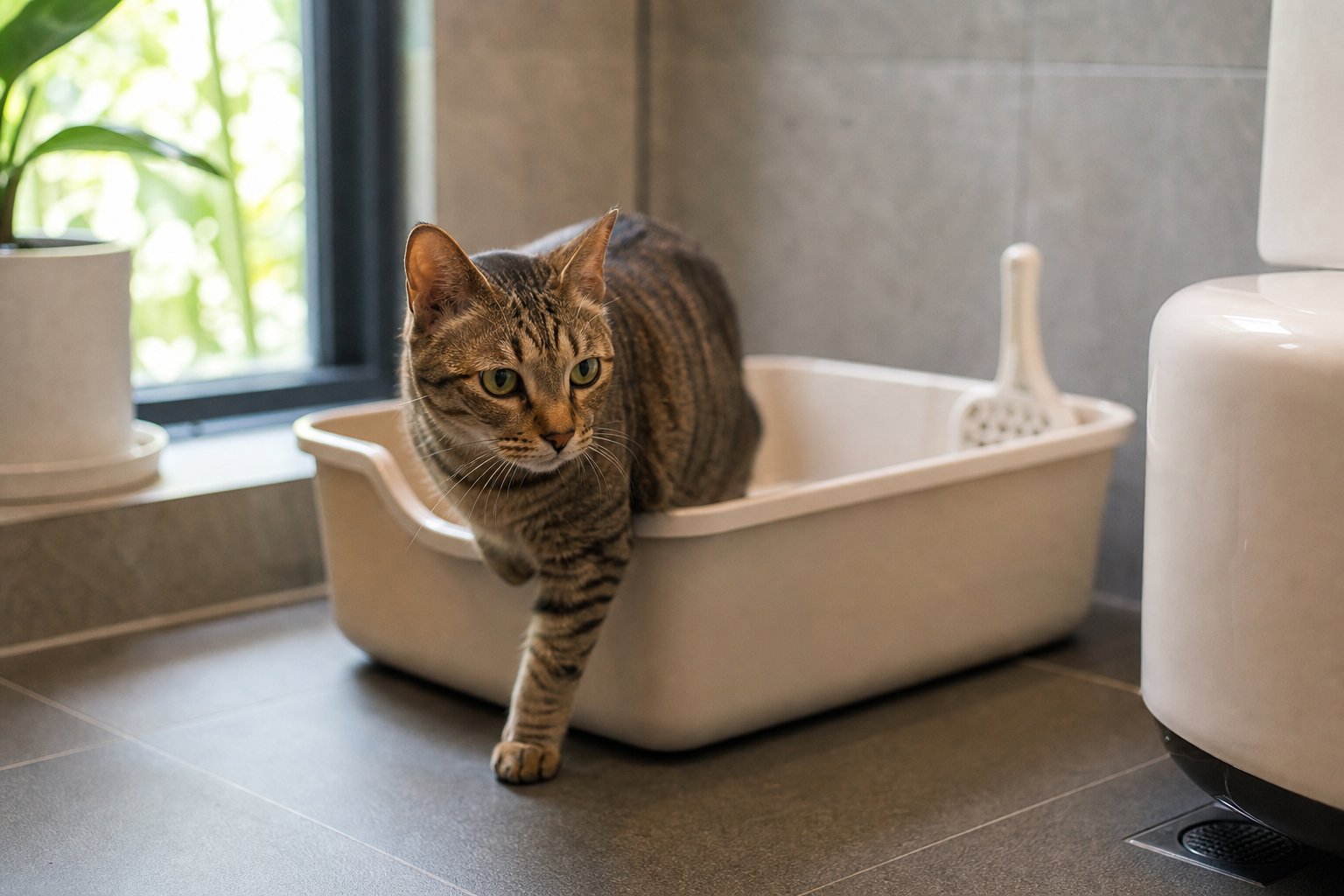
Quick answer: Match litter to your cat's breathing, your home's humidity and how much scooping you will actually do. Low-dust tofu or pine suits sensitive cats and humid flats; clumping mineral litter usually runs cheapest month to month; tapioca and blends balance fast clumping with low dust. Buy a small pack first, switch over seven days, and check current prices with your Malaysian vet or pet retailer.
The 30-second decision table
Start with your cat and your house, not with the shelf display. Every litter type is a trade-off between dust, clumping strength, odour control, weight and how it behaves in tropical damp.
| Your situation | Go with | Why |
|---|---|---|
| Small flat, you want easy clean-up, dust worries you | Tofu | Low dust, firm clumps, can be flushed in small batches |
| Tight budget, several cats, you scoop daily | Mineral (bentonite) | Strongest clumping, usually lowest cost per litre |
| Damp home, you dislike mould risk, you want economical use | Pine | Breaks down instead of clumping; needs a double-layer tray |
| You want low dust but still fast clumps | Tapioca | Starch base clumps quickly with little powder |
| You want all-round performance and strong odour control | Blend (tofu plus tapioca or charcoal) | Combines several materials for layered odour control |
| Your cat or a family member has a breathing sensitivity | Pine or tofu | Both give off the least dust |
| You have a long-haired cat that tracks litter | Tofu or tapioca | Larger granules cling less to fur |
| You travel and want fewer full changes | Strong-clumping litter plus a good tray | Firm clumps mean less litter wasted between changes |
Whichever row you land on, buy the smallest pack first. A litter your cat refuses is money and litter wasted, no matter how good the specification looks.
The five litter types explained
Tofu litter
Made from plant fibre (soybean residue), tofu litter clumps firmly, produces very little dust and can be flushed in small amounts, which makes it a favourite in flats where carrying heavy bags is a chore. Downsides: it usually costs more per litre than mineral, some cats dislike the softer texture, and it absorbs moisture from the air, so it can go musty or mouldy if the tub is left open in a steamy bathroom.
Mineral litter (bentonite)
The traditional clay litter and still the strongest clumping option available. Odour control is steady, clumps lift out cleanly, and it is usually the cheapest way to fill a tray. The trade-offs are real: it is dusty, it cannot be flushed, and a full bag is heavy to carry up stairs. Long-haired cats also pick up more of the fine granules between their toes.
Pine litter
Pine pellets are pressed from natural wood. Instead of clumping, they break down into sawdust when wet, so pine litter is designed for a double-layer tray: pellets on top, an absorbent pad below to catch the dust. Dust levels are extremely low, the natural wood scent helps with odour, and you use less litter over time. You do need to switch trays, allow a longer adjustment period for your cat, and store it carefully because damp pine moulds.
Tapioca litter
A newer category based on tapioca starch. It targets the two complaints people have about tofu: it clumps faster and resists sticking to the tray floor. Dust is low and the material is biodegradable. The downside is choice and price: fewer brands make it, and it usually sits in the mid-to-upper price range.
Blend litters
Blends mix materials — commonly tofu with tapioca, sometimes with charcoal or probiotic additives — to spread the strengths of each. They tend to deliver the best all-round odour control with respectable clumping and low dust. Pricing varies widely with the formula, so compare on cost per litre, not cost per bag.
Side-by-side comparison
| Type | Odour control | Clumping | Dust | Flushing | In humid weather | Best for |
|---|---|---|---|---|---|---|
| Tofu | Very good | Very good | Low | Yes, in small batches | Susceptible to damp; seal it | Flats, low-dust homes, long hair |
| Mineral | Very good | Excellent | High | No | Holds up, but dust drifts | Budget, multi-cat, heavy scoopers |
| Pine | Good | Poor (breaks down) | Very low | Some formulas only | Most vulnerable to mould | Breathing sensitivities, double trays |
| Tapioca | Very good | Very good | Low | Usually yes | Moderate; keep sealed | Fast clumps, easy clean-up |
| Blend | Excellent | Very good | Low | Usually yes | Depends on formula | All-round household use |
Working out the real monthly cost
The sticker price of one bag tells you very little. The number that matters is cost per day:
cost per day = price of the pack ÷ estimated days it lasts, for one cat, one tray, with daily scooping
Rough single-cat lifespan estimates (with daily scooping) are: mineral 10 L about 25–30 days; tofu 18 L about 30–35 days; pine 10 L about 35–45 days; tapioca 2.4 kg about 20–25 days; blend 2.4 kg about 20–25 days. Your actual results will differ with your cat's water intake, how often you scoop and whether you run more than one tray.
Three multipliers change the maths:
- Each extra cat sharing a tray lifts usage by roughly 50–70%. Two cats are not double the cost, but they are close.
- Bigger packs are usually cheaper per litre, so a large sack beats two small ones on unit price. The catch is storage: a partly used sack in a humid utility area will clump and spoil before you finish it.
- Disposal and carrying are costs too. Mineral litter is cheap but heavy to haul and must go into tied bags for the bin. Tofu is praiser per bag yet lighter to move and partly flushable, which saves bin trips.
Because prices move with supply and packaging, treat any figure you see online as a guide only. Ask your Malaysian pet retailer or vet for the current price of the specific pack size you are comparing, and always compare cost per litre or per kilogram.
Humidity, storage and the wet season
Tropical humidity is the single biggest enemy of plant-based litters. Tofu, pine and tapioca all draw moisture from the air; a tub left unsealed in a bathroom after a hot shower will cake, darken and eventually smell sour.
- Transfer opened packs into a lidded plastic container with a desiccant sachet inside.
- Store off the floor and away from the shower splash zone; a shelf in a dry cabinet is ideal.
- Buy smaller, more frequent packs during prolonged wet weather instead of stocking a large sack — storage space saved is spoilage avoided.
- Reject a pack that has already hardened into a solid block, darkened in colour or smells musty. Do not try to rescue it; do a full tray change.
- Mineral litter tolerates damp better than plant litters, but it still cakes if it sits in standing water.
A useful habit: label the container with the date you opened it. If a tofu pack has been open for weeks and the weather has been relentlessly wet, it is cheaper to replace it than to wonder why the tray smells.
Switching litters without triggering a litter strike
Cats are texture-sensitive. A sudden swap can make them avoid the tray entirely, which then turns into inappropriate toileting that looks like a behaviour problem.
Use the 7-day mixing method:
- Days 1–2: three-quarters old litter, one-quarter new.
- Days 3–4: half and half.
- Days 5–6: one-quarter old, three-quarters new.
- Day 7: all new.
Move at your cat's pace, not the calendar. If your cat squats less often, circles repeatedly, scratches outside the tray or goes elsewhere in the house, hold the ratio where it was for another two days. If your cat flat-out refuses the tray, revert to the old litter and try a different texture next time.
Do the switch a full week before any house move or major disruption. Cats under stress are far more likely to reject a brand-new litter texture at exactly the wrong moment.
Daily routine: buy, place, scoop, dispose
Placement. Put the tray in a ventilated area — a bathroom with an exhaust fan works well — and well away from cooking, where odours cling to the litter. Avoid high-traffic corners where your cat can be startled. A converted cabinet or a screened corner keeps litter from scattering across the living room while giving your cat privacy.
Morning. Scoop clumps, top up if the depth has dropped, and wipe the tray rim. Thirty seconds is enough if you do it daily.
Evening. A second scoop keeps overnight odour down, especially with more than one cat sharing.
Disposal. Flushable litters should go down the toilet in small batches — around 200 g, roughly half a rice bowl — flush once, wait ten seconds, then flush again. If the building's pipes are old or have blocked before, put it in the bin instead. Non-flushable litter goes into a sealed, tied bag and out the same day. Use a litter mat under the tray and a static mop for the surrounding floor.
Carrying. If you walk up stairs, choose smaller packs even though they cost more per litre. A 5–6 L bag is manageable in one hand; a 15 L sack is not.
Special-function litters worth knowing
Beyond basic absorbency, some formulas add features:
- Urine-monitoring granules change colour in the presence of blood, which can flag urinary trouble earlier than you would notice it. Useful as an early warning, never as a diagnosis.
- Probiotic or charcoal additives break down odour molecules rather than masking them; they work best alongside daily scooping, not instead of it.
- Pheromone-blended litters are marketed to reduce tray anxiety; results vary and they suit some cats better than others.
- Unscented, low-allergen formulas suit sensitive cats and anyone in the house who reacts to fragrance. Skip perfumed litters for a fussy or newly adopted cat — strong scent is a common reason for rejection.
When to see a vet
Litter choice rarely explains sudden toileting changes on its own. Contact a registered veterinarian promptly if you notice:
- straining in the tray, producing only small drops, or crying out while urinating
- blood in the urine, or no urine passed at all for 24 hours (treat as urgent)
- frequent urination outside the tray, or a suddenly huge increase in drinking
- diarrhoea, weight loss, or litter sticking to an inflamed area
- complete avoidance of a clean, well-placed tray
Pain from urinary tract disease, bladder stones, kidney problems or arthritis can all make a cat stop using its tray. Rule out the medical cause first, keep the litter and tray unchanged while you assess, and let the vet examine your cat rather than guessing from the floor. An online guide cannot diagnose your individual cat.
This article is general purchasing information only and is not veterinary advice. For health concerns, medication or changes in your cat's toileting behaviour, consult a registered veterinarian.
Related reading
- Cat Litter Guide Malaysia 2026: Types, Costs and How to Choose
- Cat Litter in Malaysia: 5 Types Compared and How to Pick the Right One
- Plant-Based Cat Litter in Malaysia: What It Is Made Of, Pros and Cons, and How to Choose
- Auto Litter Box in Malaysia: What to Check Before You Buy (2026 Guide)
- Automatic Litter Box Malaysia 2026: Noise Data, Small-Home Fit, Safety and Monthly Running Costs
- Cat Litter in Malaysia: How to Choose the Right Type for Your Cat and Home
- Tapioca Cat Litter in Malaysia: How It Compares With Tofu Litter, and How to Get It Right